Dan Draper✓

@danieldraper

CipherStash founder, cryptography nerd, Rust zealot.

4.8K Siguiendo7.9K Seguidores6.5K Publicaciones
  1. Dan Draper✓@danieldraper
    Something weird is happening in tech right now that isn’t getting as much airtime as I expected. Big tech is acquiring a lot of open-source startups. Vercel bought BetterAuth Supabase bought Turso Cloudflare bought Deno (and killed most of it!) And many other curious purchases. All for startups with next-to-no revenue and for undisclosed sums. I suspect the valuation secrecy is less about how desperate the seller was and more about not revealing how motivated the buyer was. But what’s really interesting is the trend: Strategic infrastructure is worth more right now than standalone revenue. Sure, developer adoption is a distribution advantage. Bun has almost 100k stars on GitHub. BetterAuth 30k. But that’s not the main driver. AI makes developer infrastructure strategically critical. And almost all of the really important stuff is open source. Anthropic didn't need Bun to generate significant subscription revenue. It needed Bun to help Claude Code run faster and more reliably. The Bun team described it: if Bun breaks, Claude Code breaks. This is about acquiring runtimes, build systems, development tools, and identity infrastructure because these are the essential components of agent-driven software development. The deals involve projects with significant technical credibility, adoption, or exceptionally specialized teams. Because the infrastructure layer is the hardest part to build right! Even for frontier models, it's often cheaper to buy these capabilities than to build them. It's also hard to trust infra if it's proprietary. So, to be a force in tech in years to come, it's all open-source, baby!
    8061.5K
  2. Dan Draper✓@danieldraper
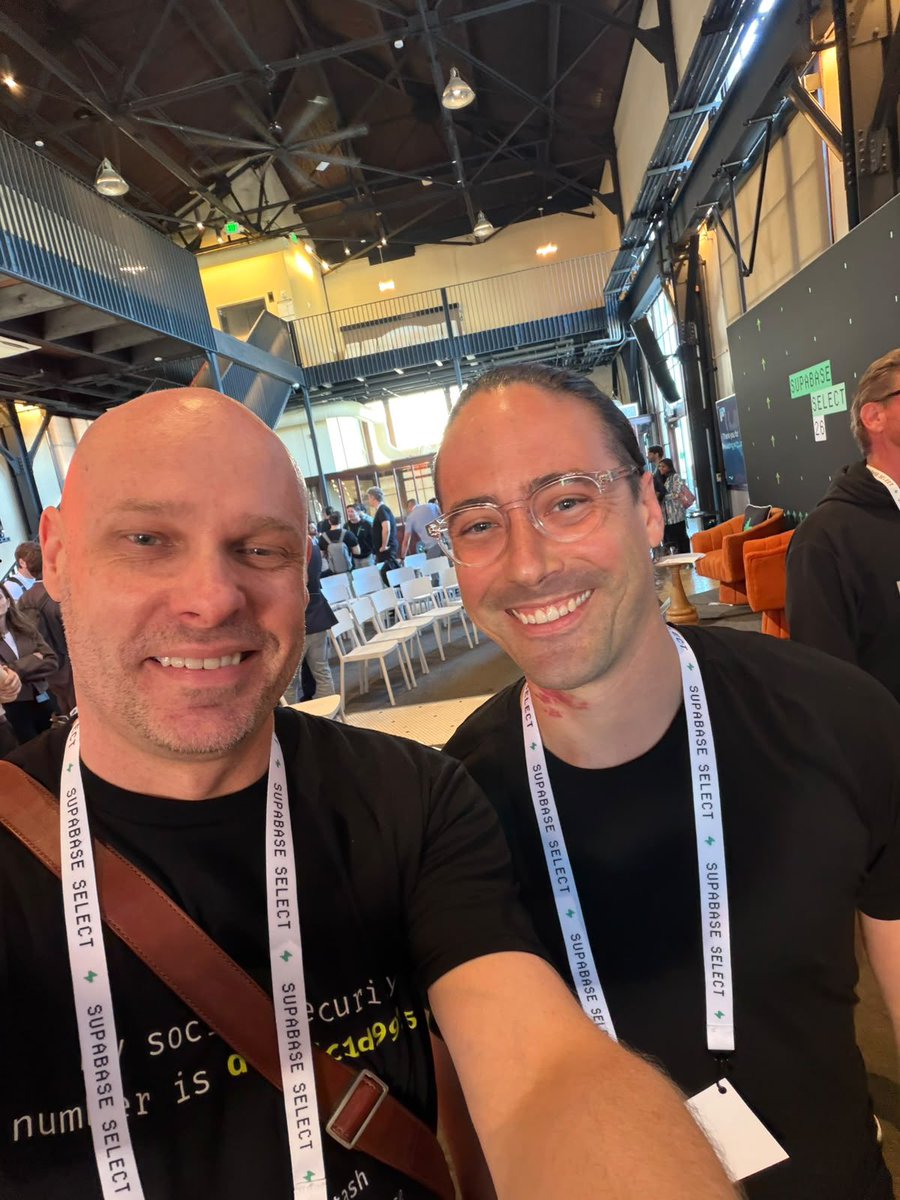
    What an epic event! @supabase select was so much fun. Still so honoured to be partnered with this incredible company.
    Descargar
    1019704
  3. Dan Draper✓@danieldraper
    Anthropic just used Claude to break RSA-896 encryption. It was only 16-days after RSA-260 was broken and RSA-1024 is the next target. Should we be concerned? No. In fact, I think it’s a good thing. The breakthrough here was to use GPUs instead of CPUs to find prime factors in parallel. Reducing the time to just 10 days instead of literally decades. Claude didn’t find a new algorithm - it wrote the code to make GNFS (General Number Field Sieves) work in parallel. Seriously impressive but not for the reason that headlines will have you believe. RSA-896 is old and hasn’t been a standard since 2007. If you still use RSA, you likely use 2048 or 4096-bit keys. Are they at risk? At face value, it seems like it’s just a matter of time before RSA of any size will be easily factored. But the jump from 1024 to 2048 is astronomical compared to the one from 260 to 896. Assuming the GPU approach scales, factoring RSA-2048 would take ~510 million years on the same 2048 GPUs used to break RSA-896. RSA-4096 would take 430 quintillion years - or 31 billion times the current age of the universe! Larger RSA keys are perfectly safe from this kind of attack (though the jury is still out on the practicality of quantum attacks any time soon). So, why do I think this is a good thing? It reminds us that most cryptography is about computational advantage. And AI driven results like this push technology providers to ensure they use the current best practices. There’s no hiding anymore - if there’s a weakness, AI will find it, forcing the adoption of better tech. And that’s a good thing!
    Descargar
    203365
  4. Dan Draper✓@danieldraper
    Publicaciones @danieldraper
    Mutant tooling is available for most languages. Check out Stryker (JS, Scala, C#), Mutmut (Python) or Gremlins (Go). Leave a comment if you know of others! Mutation testing is one tool in the kit. Follow me for more.
    10045
  5. Dan Draper✓@danieldraper
    Publicaciones @danieldraper
    *Probably. A failed mutation test doesn’t guarantee that a test is bad but it is almost always a smell!
    00037
  6. Dan Draper✓@danieldraper
    Dan Draper
    RT @cipherstash: Prisma 8 just hit release candidate. And it has searchable encryption built in thanks to CipherStash. We’ve worked with the Prisma team to give you: 🔎 Encrypted search 🔽 Encrypted Sorting and range queries 📃 Searchable encrypted JSON All natively in Prisma 8’s shiny new API: ✅ Prisma migrations support encrypted data ✅ Prisma schema works with encrypted data types ✅ Prisma queries work with encrypted queries Plus, its fully supported in Prisma Compute and Prisma Postgres. Data Level Access Control just got even easier. Full announcement in the comments.
    0103
  7. Dan Draper✓@danieldraper
    Dan Draper
    RT @cipherstash: Today we're launching the CipherStash + Supabase integration. Developers can now build privacy-first PostgreSQL applications without giving up the features they expect. What you get: * Search encrypted data (equality, range, ordering & full-text) * Encrypt sensitive fields before they ever reach Postgres * Keep keys under your control with ZeroKMS * Add data-level access control tied to identity * Works natively with Supabase and TypeScript This is about making strong security the default—not something that slows developers down. Learn more: Docs: Thanks to the @supabase team for partnering with us. Looking forward to seeing what everyone builds next.
    0102
  8. Dan Draper✓@danieldraper
    This is the one I've been waiting to share. Searchable encryption on @supabase is live! Encrypt your columns and keep querying them. WHERE, LIKE, ORDER BY, JOIN, GROUP BY, even JSON. Basically, zero code change and < 10ms overhead for most queries.
    Supabase @supabase
    CipherStash brings searchable field-level encryption to Supabase. → Encrypt sensitive fields at the application layer, no schema changes → Search, sort, and join over encrypted data without decrypting it → Keys stay under your control with ZeroKMS One command to set up: `npx stash init --supabase` Learn more →
    201189
  9. Supabase✓@supabase
    CipherStash brings searchable field-level encryption to Supabase. → Encrypt sensitive fields at the application layer, no schema changes → Search, sort, and join over encrypted data without decrypting it → Keys stay under your control with ZeroKMS One command to set up: `npx stash init --supabase` Learn more →
    Descargar
    41111212.8K
  10. Dan Draper✓@danieldraper
    I pointed Claude Fable at a major update of one of our crypto libs over night. It more than quadrupled encrypt performance and found an obscure encrypt-side timing security flaw that exists in our scheme as well as all of the current published ORE schemes in the literature. Mind blown. ...and now Fable has been disabled.
    105490
  11. Dan Draper✓@danieldraper
    I love this! Great move from the @prisma team
    Prisma @prisma
    Agents changed how fast we can build software But shipping still feels slower than it should, because your app, database, deploys, logs, and previews all live in different places Prisma Compute is our next step toward bringing that whole loop together
    20112.2K
  12. Prisma✓@prisma
    Agents changed how fast we can build software But shipping still feels slower than it should, because your app, database, deploys, logs, and previews all live in different places Prisma Compute is our next step toward bringing that whole loop together
    Descargar
    12118333.3K
  13. Dan Draper✓@danieldraper
    Most Postgres hardening guides are checklists in no particular order. Attackers don't probe in no particular order. Here's how to secure a Postgres database in the sequence an attacker would actually work through it 🧵
    102216
  14. Dan Draper✓@danieldraper
    Publicaciones @danieldraper
    The fix: encrypt in the application, so Postgres never holds plaintext or key material. The catch was always search. WHERE email = ? dies on random ciphertext. Encrypted indexes solve it: the planner uses them like any other index. A pg_dump shows ciphertext. Nothing else.
    10245
  15. Dan Draper✓@danieldraper
    Publicaciones @danieldraper
    Doors five and six: backups (a complete copy of your database with none of its access controls) and unapplied patches (a door you know is open, and so does everyone else). Work through the doors in order. The attacker will. Runnable commands for all six:
    00030