Greenhouse gas levels hit new record highs, locking in more long-term temperature increase.
The intensifying El Niño may lead to a further surge.
New WMO Greenhouse Gas Bulletin provides authoritative scientific information on the state of our climate. 👉
Exceeding 1.5°C of warming is now unavoidable.
But how much further temperatures rise depends on how quickly we cut emissions.
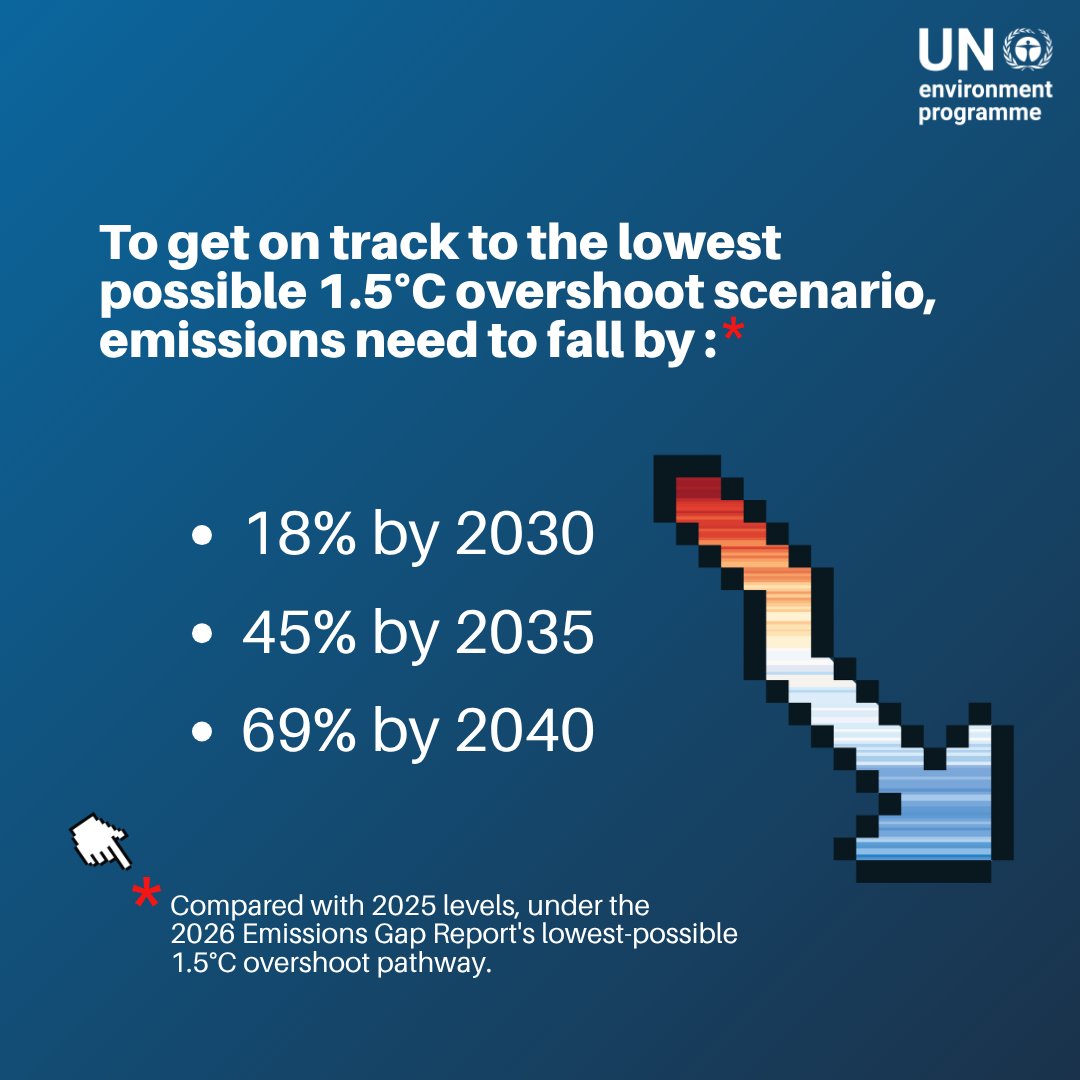
The new #EmissionsGap Report shows how deep those cuts must be to limit warming and make a return to 1.5°C possible.
Explore the findings:
Carbon absorption by forests and grasslands bounced back in 2025 thanks to favourable growing conditions, but El Niño could lead to another sharp slump next year
The UN has publicly announced that climate change never existed!!
Solar power generation was just about vested interests. All man-made!!
That's the whole story!!!
🐸
Can someone please explain how humanity is supposed to adapt to this?
Climate change is making these severe events more severe and more frequent. No time to wait. #ActOnClimate#climate#energy#renewables#spain
The heart, kidneys and lungs already work harder to handle stress as we age. Now a hotter, more polluted and more unpredictable world is making their job even harder
For the first time, we're watching plants breathe in real time.
Plants "breathe" through minuscule openings on their leaves known as stomata—a term derived from the Greek word for "mouths." These tiny pores perform a critical balancing act: they open to allow carbon dioxide (CO₂) to enter for photosynthesis, while simultaneously permitting water vapor to escape into the atmosphere through transpiration. This ongoing compromise influences a plant's growth rate, water requirements, and overall resilience, especially in challenging environments.
Historically, scientists faced significant limitations in studying this dynamic process directly. They could either observe stomatal movements under a microscope (often in artificial or uncontrolled settings) or measure overall leaf gas exchange (which reflects aggregate behavior but obscures microscopic details). A recent breakthrough from the University of Illinois Urbana-Champaign overcomes this divide with an innovative system called Stomata In-Sight.
This integrated tool combines three key technologies in real time:
- A live confocal microscope (specifically laser scanning) that captures high-resolution, three-dimensional images and videos of living stomatal cells and pores without damaging the tissue.
- Precise gas exchange sensors that quantify CO₂ uptake and water loss (stomatal conductance, photosynthesis, and transpiration) from the same leaf section.
- A controlled environmental chamber that maintains specific levels of light, humidity, temperature, and CO₂ to simulate real-world conditions.
By linking microscopic stomatal aperture changes (tracked via machine-learning image analysis for dozens of pores simultaneously) with whole-leaf physiological responses, researchers can now observe how individual stomata behave and contribute to the plant's overall performance under varying scenarios.
The implications are profound, particularly for agriculture. Water scarcity remains the primary constraint on crop yields worldwide. By identifying the genes and mechanisms that govern stomatal efficiency—such as opening/closing speed, density, or aperture size—scientists can develop breeding strategies for crops that conserve water more effectively while maintaining or boosting photosynthesis. This could lead to varieties better equipped to withstand drought, heat, and other effects of climate change, ultimately supporting higher food production with fewer resources.
Stomata In-Sight represents a major advance in plant science, transforming our ability to study—and ultimately engineer—plants that not only endure environmental stress but actively help humanity adapt to a changing climate.
[Crawford, J. D., Mayfield-Jones, D., Fried, G. A., Hernandez, N., & Leakey, A. D. B. (2025). Stomata in-sight: Integrating live confocal microscopy with leaf gas exchange and environmental control. Plant Physiology, 199(4), kiaf600. DOI: 10.1093/plphys/kiaf600]
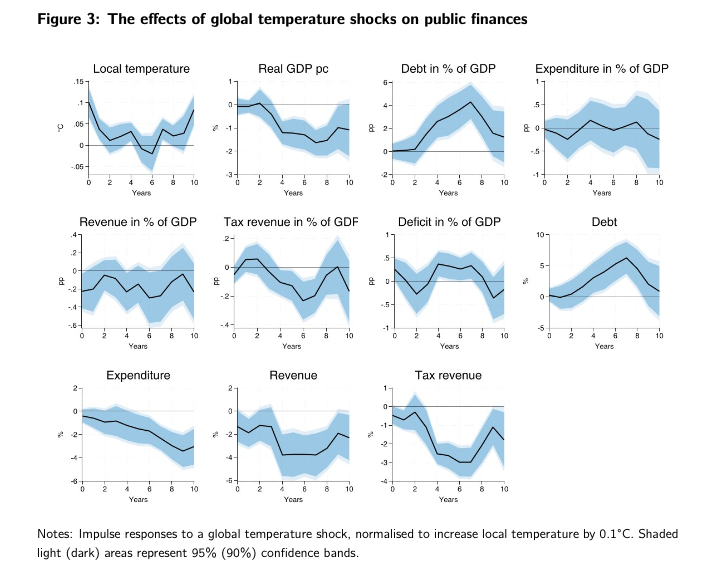
We have a new paper on the fiscal consequences of climate change: global temperature shocks substantially reduce economic output and tax revenue, and raise government debt. Thread 👇
The U.S was the world’s only major economy to see greenhouse gas emissions go up significantly last year. It happened as the Trump administration gutted pollution safeguards and forced dirty coal plants to stay running.
Since the 1960s, carbon dioxide in the atmosphere has increased by more than 30%. The average portion of the planet likely to be covered by heat storms and heat waves has risen more than 12-fold. Explore the first in our series on this climate phenomenon
Today, the Trump administration repealed the endangerment finding: the ruling that served as the basis for limits on tailpipe emissions and power plant rules. Without it, we’ll be less safe, less healthy and less able to fight climate change — all so the fossil fuel industry can make even more money.
Today, the greatest threat of extinction we face is not asteroids or climate change or disease or famine. It’s society’s refusal to heed the warnings of scientists.