Justin Elze✓

@HackingLZ

CTO @TrustedSec | Former Optiv/SecureWorks/Accuvant Labs/Redspin | Race cars

  • /tmp/.a
  • Lid sinds
5K Volgend75.6K Volgers67.9K Berichten
  1. Justin Elze✓@HackingLZ
    Justin Elze
    RT @orange_8361: Bonus: I've also flipped the chain and popped MS Edge from calc.exe 😆
    082096

  2. Justin Elze✓@HackingLZ
    Justin Elze
    RT @harris_p10: This is 100% true. My litmus test: Red flag when the main flex is: - how many agents (or teams of agents) they are running - how they can message their agent from the gym - how many millions of tokens they burned this week I see tons of these posts on LinkedIn daily. Legit when the main flex is: - they built something that wasn’t possible or economical before (ideally it makes or saves money) - they shipped more, or faster - they built custom software instead of using a SaaS provider IMO, the former is the equivalent of bragging about 80 hour work weeks with nothing to show for it.
    Thariq @trq212
    There’s 100% a kind of mania you can get into with coding agents, where it feels like you’re getting a lot done and working all the time but nothing is really happening. I think it's often a form of avoidance of something else in life.
    050134
  3. Justin Elze✓@HackingLZ
    Justin Elze
    RT @thdxr: ok to put what i'm saying about demand in context openrouter is the most successful model router, you can almost serve 100% of their deepseek traffic yesterday on a single GB300 rack this is worth 6-7M...even if there's 10x this demand secretly that's still < 100M of compute
    01600104
  4. Justin Elze✓@HackingLZ
    Devs laptop? More supply chain?
    Binance @binance
    Binance's initial investigation suggests that the security incident may involve a compromised DevOps engineer’s laptop, which allowed an attacker to gain access to a service container and submit unauthorized withdrawal transactions. We have found no evidence of any wallet private key leak. We will share a detailed technical post-mortem once the investigation is complete and the facts are fully verified. The estimated total impact sits at around $6.3B. We have worked with blockchain partners to freeze affected assets, with ~$3 billion frozen on-chain so far. Binance will cover all losses from the SAFU fund and the company’s funds. User funds are safe. We will also publish an updated Proof of Reserves once the remediation is complete. As an immediate precaution, Binance has: - temporarily suspended deposits and withdrawals while security checks are completed; - revoked the affected address authorisation; - engaged law enforcement and blockchain intelligence partners to trace and recover funds. Our teams are working around the clock to resolve this issue safely and thoroughly. We are working closely with our law enforcement partners to confirm the identity of these criminals and bring them to justice. Please rely only on official Binance channels for updates. Please feel free to contact Binance Customer Support if you have any further questions.
    74353.3K
  5. Justin Elze✓@HackingLZ
    Justin Elze
    RT @binance: Binance's initial investigation suggests that the security incident may involve a compromised DevOps engineer’s laptop, which allowed an attacker to gain access to a service container and submit unauthorized withdrawal transactions. We have found no evidence of any wallet private key leak. We will share a detailed technical post-mortem once the investigation is complete and the facts are fully verified. The estimated total impact sits at around $6.3B. We have worked with blockchain partners to freeze affected assets, with ~$3 billion frozen on-chain so far. Binance will cover all losses from the SAFU fund and the company’s funds. User funds are safe. We will also publish an updated Proof of Reserves once the remediation is complete. As an immediate precaution, Binance has: - temporarily suspended deposits and withdrawals while security checks are completed; - revoked the affected address authorisation; - engaged law enforcement and blockchain intelligence partners to trace and recover funds. Our teams are working around the clock to resolve this issue safely and thoroughly. We are working closely with our law enforcement partners to confirm the identity of these criminals and bring them to justice. Please rely only on official Binance channels for updates. Please feel free to contact Binance Customer Support if you have any further questions.
    04.9K0113
  6. Justin Elze✓@HackingLZ
    The intersection of crypto bros turned AI bros, with just a dash of conspiracy theory, is a wild place.
    25141.2K
  7. Justin Elze✓@HackingLZ
    Justin Elze
    RT @MRatable: High priority: AI Firewall AI Endpoint Protection AI SIEM AI Identity Low priority: Firewall Endpoint Protection SIEM Identity
    a16z @a16z
    In a single year, AI has rewritten the security priority list for CISOs. Attackers are moving faster. Bain estimates AI compresses a typical cyberattack from about four weeks to about 18 hours, and models keep getting better at finding and exploiting weaknesses. There's also more to protect, with employees shipping apps they couldn't have built a year ago and agents getting access to source code, documents, and production systems. In a survey of 100 CISOs at companies with 1,000+ employees, all seven of the most-selected 2027 priorities involve AI. The biggest jumps since 2026: - Internal AI agent security (+28 pts) - AI SOC (+26 pts) - AI offensive security (+24 pts) - AI code security (+23 pts) - AI vulnerability remediation (+22 pts) Last year's staples: - Exposure & vulnerability management (-21 pts) - SIEM / security data (-18 pts) - Privileged access management (-18 pts) From a16z's @OwenColby and @steph_zhang on The New Security Agenda:
    0150146
  8. Justin Elze✓@HackingLZ
    Sigh
    Jun Song @jun_song
    After crypto exchanges fall, banks are next. Black hat hackers are getting ready to attack them with AI swarms. In fact, they are already running live tests on banks around the world. There is no such thing as a system without flaws, and no asset is truly safe anymore. They are not just going after the money. The plan is to attack the banks and shut down the whole internet at once. Attacking is always way easier than defending. Even with AI swarms on defense, defenders have to block every single angle. Attackers just need to find one open crack. Not trying to be a doomer here. Just looking at what is already playing out in the wild.
    141402.7K
  9. a16z@a16z
    In a single year, AI has rewritten the security priority list for CISOs. Attackers are moving faster. Bain estimates AI compresses a typical cyberattack from about four weeks to about 18 hours, and models keep getting better at finding and exploiting weaknesses. There's also more to protect, with employees shipping apps they couldn't have built a year ago and agents getting access to source code, documents, and production systems. In a survey of 100 CISOs at companies with 1,000+ employees, all seven of the most-selected 2027 priorities involve AI. The biggest jumps since 2026: - Internal AI agent security (+28 pts) - AI SOC (+26 pts) - AI offensive security (+24 pts) - AI code security (+23 pts) - AI vulnerability remediation (+22 pts) Last year's staples: - Exposure & vulnerability management (-21 pts) - SIEM / security data (-18 pts) - Privileged access management (-18 pts) From a16z's @OwenColby and @steph_zhang on The New Security Agenda:
    Downloaden
    76115770128K
  10. Jun Song✓@jun_song
    After crypto exchanges fall, banks are next. Black hat hackers are getting ready to attack them with AI swarms. In fact, they are already running live tests on banks around the world. There is no such thing as a system without flaws, and no asset is truly safe anymore. They are not just going after the money. The plan is to attack the banks and shut down the whole internet at once. Attacking is always way easier than defending. Even with AI swarms on defense, defenders have to block every single angle. Attackers just need to find one open crack. Not trying to be a doomer here. Just looking at what is already playing out in the wild.
    768567246.6K
  11. Justin Elze✓@HackingLZ
    Justin Elze
    RT @tomshardware: Amazon tells engineers to stop ‘tokenmaxxing’ to look productive
    080135
  12. Justin Elze✓@HackingLZ
    Justin Elze
    RT @_josehelps: Another ClickFix that reads its payload out of the browser cache, this time from the color palette of a PNG. Vega (Daniel Messing) found the lure page loads an image whose PLTE chunk holds a shell command. The image renders normally.
    040126
  13. Justin Elze✓@HackingLZ
    Ha "solved for hardened targets, and the remaining gap is the un-hardened default"
    0091.7K
  14. Justin Elze✓@HackingLZ
    Justin Elze
    RT @trq212: There’s 100% a kind of mania you can get into with coding agents, where it feels like you’re getting a lot done and working all the time but nothing is really happening. I think it's often a form of avoidance of something else in life.
    05460138
  15. Justin Elze✓@HackingLZ
    Justin Elze
    RT @gregce10: You would not even believe the amount of credentials / keys (aws, gcp, azure, saas vendors, oai, ant, etc) exposed to models via agents on a daily basis in agent session logs. I don't even think you can even fathom the volume of exposure.
    020134
  16. Justin Elze✓@HackingLZ
    Justin Elze
    RT @matthew_d_green: Cryptocurrency is like the technical heat shield for society. It’s a big pile of money that attackers will burn before they go after everything else we care about.
    01350128
  17. Justin Elze✓@HackingLZ
    This part is fun because while enterprises trust models for coding they don’t in a lot of other areas.
    Downloaden
    3381.7K
  18. Justin Elze✓@HackingLZ
    Justin Elze
    RT @dinodaizovi: It's interesting how long it took many of these firewall and network appliance vendors whose web admin interfaces are written in PHP to patch their PHP. Well after boasting about being in Glasswing and investment in tokens. The above is a good case study to think deeply about.
    Adel Ka @0x4D31
    this is how i expected TAs to exploit php2shell, not some universal exploit opportunistically popping every vulnerable server with a single click.
    040125
  19. Justin Elze✓@HackingLZ
    Berichten @HackingLZ
    I spend a crazy amount of time each week talking about frontier vs local and various levels of human oversight/gating. Each random sandbox escape news story sets this back as well.
    100533
  20. Adel Ka✓@0x4D31
    this is how i expected TAs to exploit php2shell, not some universal exploit opportunistically popping every vulnerable server with a single click.
    Downloaden
    411687.7K
  21. Justin Elze✓@HackingLZ
    Justin Elze
    RT @_rybaz: Favorite part of talking with @lcfr_hax at @unpromptedconf is learning that he didn't do anything crazy with harnessing. He's just really fucking good at hacking PHP and also happens to have Codex. Such a friendly and humble dude. Don't just "use AI". Keep learning.
    070135
  22. Justin Elze✓@HackingLZ
    Justin Elze
    RT @awakecoding: Meet Jiffshot, my Snagit replacement, built in Rust with Avalonia UI via Rustolonia. It’s surprisingly fast and stable, with a full editor and capture tools for screenshots, screen recordings, and webcam video. Here’s a quick demo 👇
    Marc-André Moreau @awakecoding
    Snagit is slow and unstable - I like the features, but it fails on me repeatedly. Where is the vibe coded replacement in Rust that's fast and stable?
    090140
  23. Marc-André Moreau✓@awakecoding
    Snagit is slow and unstable - I like the features, but it fails on me repeatedly. Where is the vibe coded replacement in Rust that's fast and stable?
    180237.9K
  24. Justin Elze✓@HackingLZ
    Blue Hat Asia 2026 videos are popping up
    00111.9K
  25. Justin Elze✓@HackingLZ
    Justin Elze
    RT @Junior_Baines: One thing we do well at @VulnCheckAI is develop exploits and associated detections. We’ve wanted to share more of this work with the security community for a long time, and we’re finally making it happen. New exploits every Monday. Pull requests welcome!
    040133
  26. Justin Elze✓@HackingLZ
    Everything shouldn’t be a tweet
    Tony Chang ☁️ @tonychang430
    An engineer on our team used roughly $10,000 in @claudeai API credits in a MONTH. So we moved to using Claude Team subscriptions instead at roughly $100–$200 per seat, with each of us using 3 - 7 subscriptions. This doesn't make any sense 💀
    5123587K
  27. Tony Chang ☁️✓@tonychang430
    An engineer on our team used roughly $10,000 in @claudeai API credits in a MONTH. So we moved to using Claude Team subscriptions instead at roughly $100–$200 per seat, with each of us using 3 - 7 subscriptions. This doesn't make any sense 💀
    713623214K
  28. Justin Elze✓@HackingLZ
    Justin Elze
    RT @OpenAI: Today, we’re sharing a look at our expanded system for monitoring frontier models at OpenAI, which in September helped us catch a model’s attempt to access the live internet during training. Since the Hugging Face incident—when models broke out of an internal cybersecurity investigation where we weren’t running our misalignment monitors—we’ve substantially expanded our monitoring of frontier agents. We now monitor all frontier reinforcement learning runs and evaluations, as well as all internal Codex use. When our system finds evidence of a problem that might require intervention, it rapidly alerts human responders who can investigate and take action. To detect when a model’s behavior departs from what we intended, we use several layers of monitoring. Activation probes look for patterns in a model’s internal activity. Reviewer models examine its reasoning and tool use, and investigative agents can read back through the model’s entire transcript to understand how a sequence of actions fits together and whether it warrants human review. To test whether our current system would have detected the Hugging Face incident, we replayed the recorded activity with our new monitors in place. In the replay, our monitors alerted our security team about 30 minutes after the agents escaped their sandbox. That was more than 30 hours before the point at which the agents breached Hugging Face’s systems in the original incident. In September, a model exploited a DNS misconfiguration to reach the live internet. Our monitors flagged the breach within 15 minutes, and a responder began reviewing the alert three minutes later. The alert enabled responders to investigate while the run was still underway. As we give models more autonomy, we need to know when they cross a boundary we expected to hold. We believe that monitoring is essential to catching those failures in time for people to intervene.
    02660134
  29. Justin Elze✓@HackingLZ
    Justin Elze
    RT @PyroTek3: TIL: Microsoft Copilot keeps conversation history and personalization memory, stored in the user’s Exchange mailbox, so retention and eDiscovery apply. Prompt history, data artifacts, and memory data are stored in hidden folders in the user's Exchange online mailbox, similar to Teams messages. This means that an attacker with full access to mailboxes can pull this information.
    0480115
  30. Justin Elze✓@HackingLZ
    Justin Elze
    RT @JTillipman: I’m genuinely torn between which is worse: the fact that a Contractor was running a personal AI agent on the DoD network, or that it took DoD so long to figure it out. I can only imagine the poor Accenture compliance officer when they learned out it. Shadow AI is a compliance nightmare.
    WIRED @WIRED
    Sources tell WIRED that an Accenture employee’s personal Claude agent ran on a DOD network for two months before it was identified and the vulnerability could be patched.
    01080146
  31. Justin Elze✓@HackingLZ
    Justin Elze
    RT @Guluisacat: Planned to drop a macOS 0day at OffensiveCon 2026 in Berlin 5 months ago. Submitted it to Apple 3 years ago, and Apple confirmed the vulnerability but closed the report. it's a universal method to bypass many security protections on macOS and you can fully bypass TCC and gain other privileged access as you want, easilly weaponized. Although I mentioned the impact multiple times, there were no updates for the next 2 years until my presentation was accepted by OffensiveCon26 Berlin. Apple asked me to hold off on disclosure and not disclose the vulnerability at OffensiveCon26 Berlin, saying a patch would be released in macOS 27 in Fall 2026. They also mentioned "bounty" multiple times. Honestly, I did have some complaints because their workflow was really bad. No updates at all until disclosure was about to happen. But as long as they decided to patch it, I was willing to wait, even without a bug bounty, for user safety. If Apple wasn't going to release a patch for 3 years, I'd disclose the vulnerability so EDR vendors could protect users too. But in September, when the vulnerability was patched, there was no cve, no credit, and no bounty. I really don't get why apple chose to handle it in such a dishonest and underhanded way, a cheat. Even if they had never mentioned a bounty, I still would have held off on disclosure because they were going to publish a security bulletin. this is a huge disappointment in my experience with the Apple Security Bounty program. never thought I'd encounter something like this. As i said on my blog a few years ago, my experience with ASB had been positive. that's why I was willing to wait for the patch even without a bounty, but not to be cheated like this
    01280132
  32. WIRED✓@WIRED
    Sources tell WIRED that an Accenture employee’s personal Claude agent ran on a DOD network for two months before it was identified and the vulnerability could be patched.
    24159456138K
  33. Justin Elze✓@HackingLZ
    Justin Elze
    RT @v12sec: We found bugs in the AES-256 encryption of multiple PDF editors. Some so weak you could break them by hand 🫠
    0210146
  34. Justin Elze✓@HackingLZ
    Justin Elze
    RT @juanandres_gs: I won’t pretend to understand the ultimate goal of investing so heavily into making models good at vulnerability research (and not any number of defensive competencies in cyber). The way model proficiency in VR is being used is primarily to substantiate a view that the models are dangerous, problematic, and in need of regulation. I could come up with a plausible narrative that has the labs recognizing the ephemeral value of frontier model training (heavy investment for short term returns) and emphasizing the products dangers as a bid towards regulation as a strategic necessity to limit competition. An ok marketer could argue that fearing the product implies how formidable it is (in the short-term). But that all feels too contrived. A listener (former exec at a big company I’d often comment on) recently pointed out that despite my best efforts, I still fall prey to the delusion that organizations engage in strategic decision-making when it’s mostly incompetence, intransigence, and whim. In response to that apt observation, I’d give more weight to following: The labs have focused on producing models disproportionately capable at vulnerability research due to a combination of it being (1) easy, (2) high-profile, (3) commercially superfluous, and (4) central to the doomer narrative. 1. Vulnerability research appears easier to RL than the rest of cybersecurity. 2. VR is a target-rich environment for milestones to publicize. Even if the models hadn’t gotten this good, there’s a wealth of vulns to hype for messaging. 3. VR competency doesn’t yield an immediate product with a quantifiable value (don’t confuse this with the exploit business). So, no comparables or preset price bands. No need for enterprise adoption or organizational diffusion before claiming success. 4. The competency lends itself to hyperbolic and imaginative myth making about cyber ‘weaponry’ that seemingly validates doomer narratives and tropes (alignment, containment) while gaining fast traction with policy folks and natsec types swayed by militaristic analogies. I wouldn’t call it an effective strategy because it isn’t one. Hearing that the labs lack the internal coherence to productize anything effectively, byproduct of circumstance seems the more likely origin story.
    Haifei Li @HaifeiLi
    It’s quite obvious now that the AI frontier labs have been pushing very hard on vulnerability discovery, from acquiring world-class vulnerability researchers to training specific vuln-discovery models. However, I don’t think from a business point of view, vulnerability discovery could be a long-term, big source of revenue, and it’s just a very small part of the entire cybersecurity business. So why do they do that? What am I missing?
    0220157
  35. Justin Elze✓@HackingLZ
    Justin Elze
    RT @KimZetter: For years government officials have been telling us how sophisticated and stealth China's Volt Typhoon hackers are, without providing details that support this assertion. Today researchers at @BlackLotusLabs finally reveal details that back the claim
    0920151
  36. Haifei Li@HaifeiLi
    It’s quite obvious now that the AI frontier labs have been pushing very hard on vulnerability discovery, from acquiring world-class vulnerability researchers to training specific vuln-discovery models. However, I don’t think from a business point of view, vulnerability discovery could be a long-term, big source of revenue, and it’s just a very small part of the entire cybersecurity business. So why do they do that? What am I missing?
    31814829K
  37. Justin Elze✓@HackingLZ
    This
    Marcus Hutchins @MalwareTechBlog
    Life is a lot easier once you stop seeing threat actors as hackers who want to break into systems by any means possible, and start seeing them as businesses with well defined business processes. A bakery isn't going to start making dog food because there's a dog food shortage. ClickFix and Phishing actors aren't going to drop everything to vibecode exploits just because a critical CVE came out. The fact that the only actors exploiting this are the actors whose MO is exploiting things... isn't a coincidence. It's entirely predictable if you understand threat actor behavior.
    65333K
  38. Justin Elze✓@HackingLZ
    Vulnerability management eh?
    a16z @a16z
    In a single year, AI has rewritten the security priority list for CISOs. Attackers are moving faster. Bain estimates AI compresses a typical cyberattack from about four weeks to about 18 hours, and models keep getting better at finding and exploiting weaknesses. There's also more to protect, with employees shipping apps they couldn't have built a year ago and agents getting access to source code, documents, and production systems. In a survey of 100 CISOs at companies with 1,000+ employees, all seven of the most-selected 2027 priorities involve AI. The biggest jumps since 2026: - Internal AI agent security (+28 pts) - AI SOC (+26 pts) - AI offensive security (+24 pts) - AI code security (+23 pts) - AI vulnerability remediation (+22 pts) Last year's staples: - Exposure & vulnerability management (-21 pts) - SIEM / security data (-18 pts) - Privileged access management (-18 pts) From a16z's @OwenColby and @steph_zhang on The New Security Agenda:
    20715716.9K
  39. Marcus Hutchins✓@MalwareTechBlog
    Life is a lot easier once you stop seeing threat actors as hackers who want to break into systems by any means possible, and start seeing them as businesses with well defined business processes. A bakery isn't going to start making dog food because there's a dog food shortage. ClickFix and Phishing actors aren't going to drop everything to vibecode exploits just because a critical CVE came out. The fact that the only actors exploiting this are the actors whose MO is exploiting things... isn't a coincidence. It's entirely predictable if you understand threat actor behavior.
    206256433.7K
  40. Justin Elze✓@HackingLZ
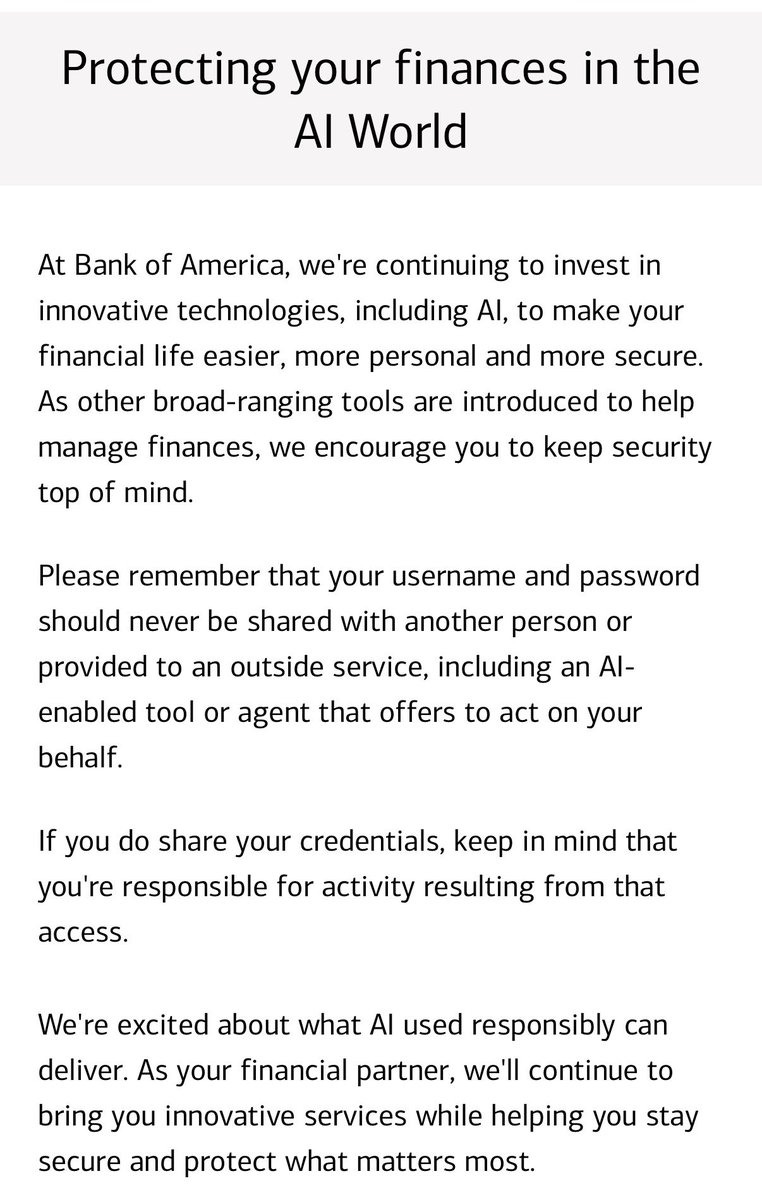
    Interesting a friend sent this over. Looks like Bank of America is emailing customers to warn them against sharing their banking credentials with AI tools or agents. 👀
    Downloaden
    6051.4K
  41. Justin Elze✓@HackingLZ
    Justin Elze
    RT @cr3ghost: Google Project Zero pitted AI against a V8 fuzzer. AI won. Barely. 6 months: BigSleep (AI): 45 actionable vulns Fuzzilli: 37 Only ~25% overlap. The surprise? Each found bugs the other missed. Research by @5aelo: #Fuzzing #AI #V8
    030163
  42. Justin Elze✓@HackingLZ
    Justin Elze
    RT @ImposeCost: At some point the question "are they using AI" is going to be like asking if they used a computer. Using AI can't be novel forever. Even in instances where it's not obvious or forensically demonstrable, offense is using AI. Your granddaughter is using AI.
    050133