Berichten met #Algorithmic
#Algorithmic
Openbare berichten op X die #Algorithmic gebruiken.
Gerelateerde hashtags

Might be the world’s first instance of cyberbullying via algorithmic trading252886.1K233K
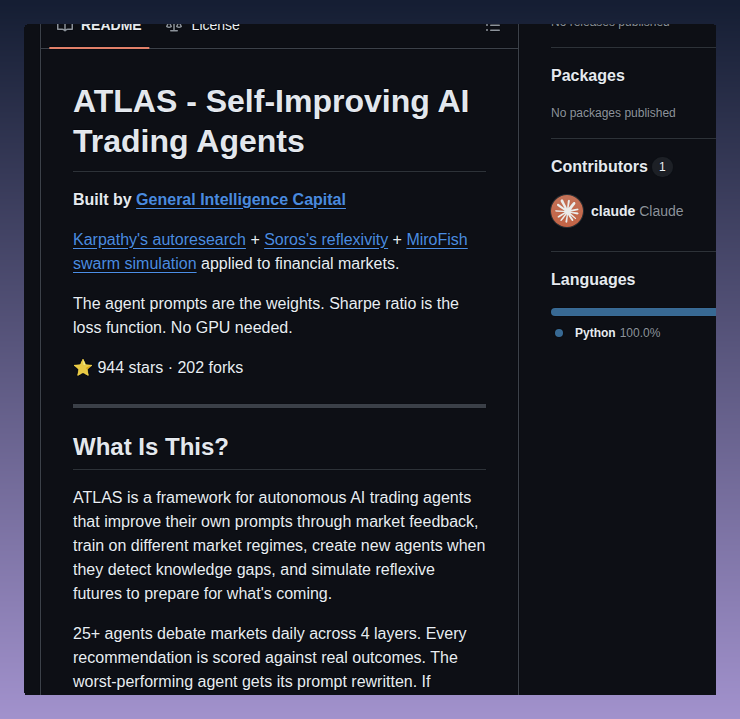
Some guy made a python library of self-improving algorithmic trading AI agents Then gave it away for free:81916113.8K
George Pollock at Signum Global identifies issues that could get 60 votes in the new Senate - PBMs - Insulin $ caps - Right to repair - Credit card competition - Ticket resale - Minimum wage laws - Credit card interest rate cap - Algorithmic pricing - Congressional stock trading273533857K
Thank you @freeCodeCamp for putting together a free Python algorithmic trading course using Alpaca's paper trading environment for simulated order execution! In the course, you’ll learn how to: ✅ Pull market data from @Massive and score a 50-stock universe using a 12-minus-1 momentum calculation ✅ Connect an Alpaca paper account through @SnapTrade using its free Build plan. ✅ Submit simulated orders and verify them in the Alpaca dashboard Watch the course:21101.4K
I used Claude Fable 5.1 and GPT-6 Astra to build Quant Radar for algorithmic trading The result: +$1,956.84 in 4 days Oct 28, 15:02 UTC: DUBBLE launched → RADAR alert at 15:47 → 9.5x Oct 30: 21:02 UTC: PILLY launched → RADAR alert at 22:18 → 8.2x WHAT EVEN IS THIS? I made this Repo publicly available GitHub: An on-chain Solana scanner that detects hidden wallet connections, suspicious launches and risks that ordinary charts don't show RADAR monitors new pumpfun launches and sends early alerts. Each alerted token can then be checked with SCANNER to uncover hidden risks before making a trading decision Here's what every scan checks: 1. HOLDERS Top 20 by real float. Fresh wallets, transfers and snipers from the first 30 seconds 2. WALLET CONNECTIONS Shared token sources, same-transaction buys and direct transfers. Linked wallets become operators 3. FIRST 20 BUYERS Entry timing, position sizes and what happened next: held, sold or transferred 4. CREATOR Previous launches, graduation rate, launch-slot purchases and remaining dev holdings 5. TOKEN CONTROL Mint/freeze authority, mutable metadata, transfer fees and liquidity control 6. SELL SCENARIO Potential price impact if connected and fresh wallets sell into available liquidity 7. FINAL VERDICT Five risk signals. One score from 0 to 100. Critical red flags can trigger DANGER regardless of the score SHIELD flags creators with 10+ launches and under 10% graduation, or devs buying 15%+ at launch GUARD runs deeper checks on creator history and supply concentration Currently in CLOSED BETA [LOADING 95%...] PUBLIC RELEASE COMING SOON Should we release QuantumOrb this week?Daniro @Dan1ro0111111711.4K
@DraftKingsNews@DraftKingsNews @DKSports @DraftKings you all are now at an evaluation where others can come in and buy you out! Sports book growing at 36% is huge! Predictions growing huge! Stock down 20-25% on algorithmic headline trading=dumb now a 🎯 for takeover! @FanDuel @amazon @BetMGM112136
Want the markets to crash? Just let some retarded Democrat congresswoman open her dumb mouth.3281.7K9.3K106K
@ginamilan_@ginamilan_ @RepYassAnsari Reflects the algorithmic trading manipulation, as well as the overwhelming amount of emotional trading, totally ignoring fundamentals001128
@quantscience_4. They Open Sourced It! Get it on GitHub here (must know Python to use it): One more thing before you go...👇112375
@quantscience_🚨Want to learn Algorithmic Trading Strategies (that actually work)? On November 12th, we are hosting a free workshop to help you get started with algorithmic trading with Python. Register here (630+ registered):011367
jim simons built an empire purely on math and anomalies. he stripped the emotion from trading and let the data find the absolute truth. watch this breakdown to see how algorithmic trading actually finds edge.1041.1K
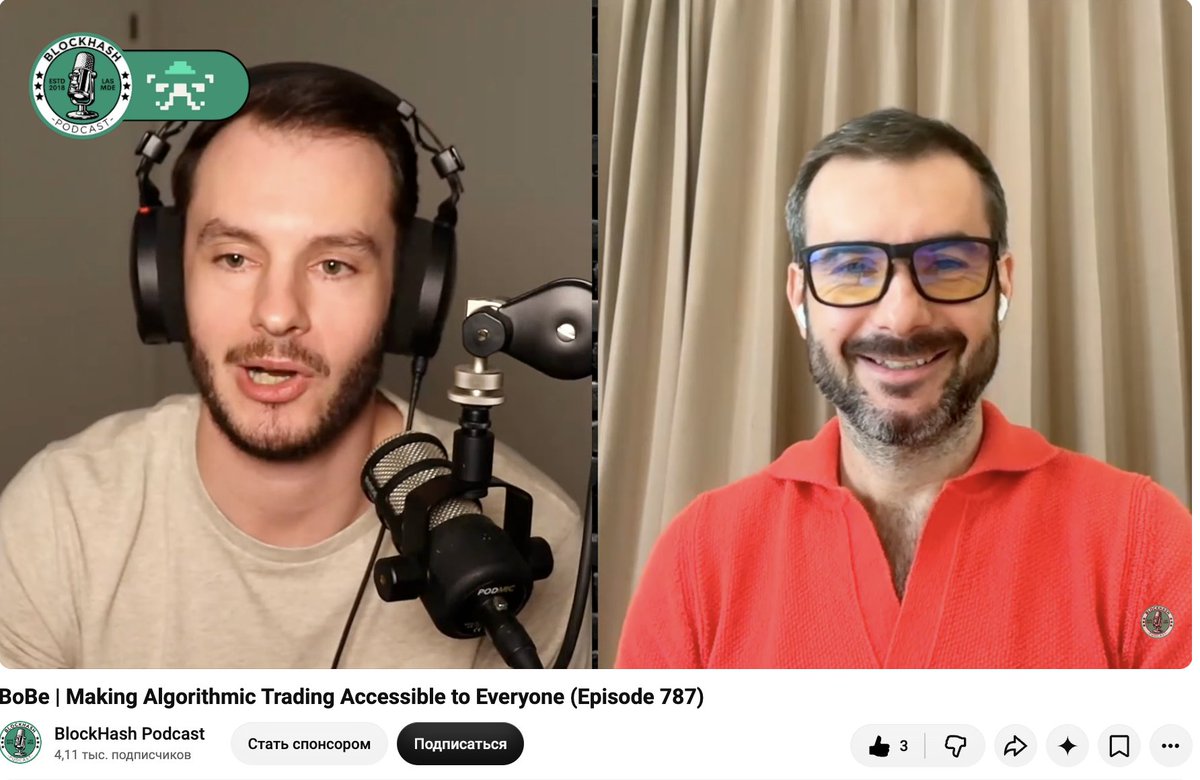
BoBe | Making Algorithmic Trading Accessible to Everyone (Episode 787) via @YouTube49372.2K
manual polymarket trading is a guaranteed way to bleed out to fees while you sleep. i dumped the exact claude code to automate a 24/7 python bot that frontruns the casino. stop trading like retail and copy my algorithmic edge before i take down the repo.1032.3K
Ex-Tower Research HFT trader Annanay Kapila (@annanay) on the difference between HFT, market making, quant and hedge funds: "People often confuse the terms high-frequency trading, market making, quantitative trading, algorithmic trading. What does a quant do, what does a trader do, what does a developer do?" "I'm gonna give the overall world the name systematic trading. Systematic trading covers two axes. There is the capital side and the speed side." "On the speed side, you have a range of strategies that go from what's called high-frequency trading to mid-frequency trading and slower." "On the capital side, there are two types of firms. There are the proprietary firms, which are called prop for short. And then there are the firms that take other people's money." "The definition of a hedge fund is just some kind of trading outfit that takes other people's money."Ethan Kho @ethanrkho"Greed makes markets." Annanay Kapila (@annanay) spent years as an HFT quant at Flow Traders and Tower Research before founding QFEX (@QFEX), a perpetual futures exchange for equities, commodities & FX. Cambridge Maths. At his last job, the desk traded $10B+ of volume a day, run almost entirely by algorithms. In this lecture, he builds market making from first principles: - The map of systematic trading: prop money vs. other people's money, HFT vs. mid-frequency, and why every strategy lives in one quadrant - Why prop firms can return 50-100% a year while hedge funds can't: HFT never leaves you holding a big position - The order book from scratch: bids, offers, limit orders, and why the first order on a price level gets the trade - No free lunch: how arbitrageurs force every order book to reveal a fair price without anyone trying to - The entire strategy in one line: bid below fair value, offer above it, collect the difference forever - Market making is "time-spreading risk," warehousing positions between a seller who shows up now and a buyer who shows up later - Adverse selection: you're most likely to get filled precisely when your price is most wrong - Why market makers are completely self-serving, and why that's exactly what makes markets work - The competitive race that compresses spreads: greed among market makers means lower costs for everyone else - Thick books vs. thin books, and the vicious loop that keeps illiquid markets illiquid Highlights: (00:45) The systematic trading map: capital vs speed (01:45) Prop firms vs hedge funds: return-on-capital economics (06:29) A message from Onyx (07:55) Where market making sits: high-Sharpe prop HFT (08:55) Fungibility and why exchanges exist (11:00) How a central limit order book actually works (17:40) No free lunch: arbitrage-free pricing in the book (19:55) Theo: reading fair value from the mid (22:45) Who really posts the book (not retail) (24:35) Market making as warehousing risk across time (27:20) Edge: quoting around your fair value (29:45) Queue priority and the adverse selection problem (33:05) How competition compresses the bid-offer spread (37:40) Thick vs thin books: liquidity begets liquidity (43:55) Scaling to $10B a day on algorithms11322.6K
"Greed makes markets." Annanay Kapila (@annanay) spent years as an HFT quant at Flow Traders and Tower Research before founding QFEX (@QFEX), a perpetual futures exchange for equities, commodities & FX. Cambridge Maths. At his last job, the desk traded $10B+ of volume a day, run almost entirely by algorithms. In this lecture, he builds market making from first principles: - The map of systematic trading: prop money vs. other people's money, HFT vs. mid-frequency, and why every strategy lives in one quadrant - Why prop firms can return 50-100% a year while hedge funds can't: HFT never leaves you holding a big position - The order book from scratch: bids, offers, limit orders, and why the first order on a price level gets the trade - No free lunch: how arbitrageurs force every order book to reveal a fair price without anyone trying to - The entire strategy in one line: bid below fair value, offer above it, collect the difference forever - Market making is "time-spreading risk," warehousing positions between a seller who shows up now and a buyer who shows up later - Adverse selection: you're most likely to get filled precisely when your price is most wrong - Why market makers are completely self-serving, and why that's exactly what makes markets work - The competitive race that compresses spreads: greed among market makers means lower costs for everyone else - Thick books vs. thin books, and the vicious loop that keeps illiquid markets illiquid Highlights: (00:45) The systematic trading map: capital vs speed (01:45) Prop firms vs hedge funds: return-on-capital economics (06:29) A message from Onyx (07:55) Where market making sits: high-Sharpe prop HFT (08:55) Fungibility and why exchanges exist (11:00) How a central limit order book actually works (17:40) No free lunch: arbitrage-free pricing in the book (19:55) Theo: reading fair value from the mid (22:45) Who really posts the book (not retail) (24:35) Market making as warehousing risk across time (27:20) Edge: quoting around your fair value (29:45) Queue priority and the adverse selection problem (33:05) How competition compresses the bid-offer spread (37:40) Thick vs thin books: liquidity begets liquidity (43:55) Scaling to $10B a day on algorithms1665577203K
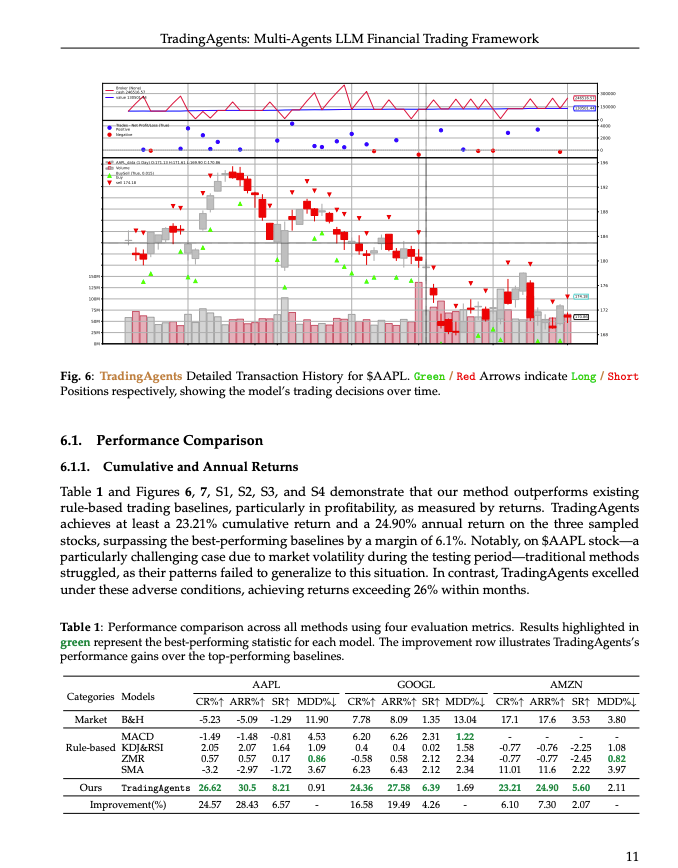
🚨BREAKING: A new open-source multi-agent LLM trading framework in Python It's called TradingAgents. Here's what it does (and how to get it for FREE): 🧵31162.4K
@quantscience_P.S. - Want Algorithmic Trading with Python tutorials every Sunday? Register here to join our Sunday Quant Scientist Newsletter (it's free):000233
Applications are open: QuantArc Creator & Ambassador Program Some will watch the algorithmic and AI finance revolution from the sidelines. Others will build the intelligence and community around it. We're looking for creators, quants, researchers, and community leaders who want to do more than post generic takes. People who can shape the conversation around systematic trading, backtesting, and next-gen quant architecture. You don't need a massive audience. You do need original thinking, consistency, and an obsession with quality. Three tiers: Scout → Vanguard → Sentinel What you unlock: • Monthly reward pools & performance incentives • Multiplier allocations on the upcoming Arc points engine • Early beta access to QuantArc strategy engines & tooling • Direct collaboration with our core dev & quant teams • Ecosystem amplification + exclusive Soulbound recognition Deep dive threads, infographics, strategy backtests, market analysis, Discord Stages or Spaces: there's a track for you. If you believe quantitative intelligence should be built with and owned by the community driving it, step forward. Spots per tier are limited to keep the cohort high-signal. Apply →865826824.7K
Myths of algorithmic trading: • You need 100s of strategies • You need 12 months of research • You need high frequency trading The reality: • You need 1 core strategy • You need basic internet • You need Python Want to learn how? Register here:33133.6K
Friends, I'm officially calling it: algorithmic trading is entering a new era. Today, an AI agent independently optimized a trading EA in MT5, analyzed the results, and performed cross-validation. All on its own, without any involvement from me. While I was at the gym. Were there some issues with the results? Absolutely. But here's the exciting part: many of them can be addressed by refining the prompts and improving the agent's workflow. Not long ago, this kind of research would have taken hours of hands-on work. Now, a significant part of it can be delegated to AI. Of course, none of this guarantees a profitable trading strategy. But the way we research, test, and optimize trading systems is changing right before our eyes. Absolutely mind-blowing. And I think we're only getting started. #AlgoTrading #AIAgents #MT5209991
holding Bitcoin through the $6.3B Binance hack: −$373. a bot reading the blockchain, same $10K, same night: +$379. we replayed the night through 3 trading bots. paper, real 1-minute prices > chain bot, shorts 5 min after the first outflow (20:10): +$379 > chart bot, shorts when BTC is down 1% (20:42): +$276 > news bot, shorts after Binance's first post (21:30): +$255 > just holding: −$373 the chain bot moved 22 minutes before the dump. Binance said its first word 79 minutes after it the edge wasn't the AI. it was where the bot was looking would you let it trade on its own, or only wake you up? build the chain bot with Claude Code: 1. list the exchange hot wallets you care about, from public labels 2. alert when outflows pass $100M in 10 minutes 3. log the price at every alert. paper trades only 4. replay this night through it before you trust it paper, 0.1% fees per side, closed at 03:00 UTC. one night isn't an edge one AI trading receipt every night.Roan @RohOnChainif you want to build an AI trading system from scratch, start with this article you will end up with real market data, real backtests and a bot that trades for you 24/7141271K
if you want to build an AI trading system from scratch, start with this article you will end up with real market data, real backtests and a bot that trades for you 24/71872411.7K2.7M
@quietoraclex@quietoraclex Ahead of the exchange official statement by seventy nine minutes thanks to wallet monitoring shows the true power of algorithmic trading0005
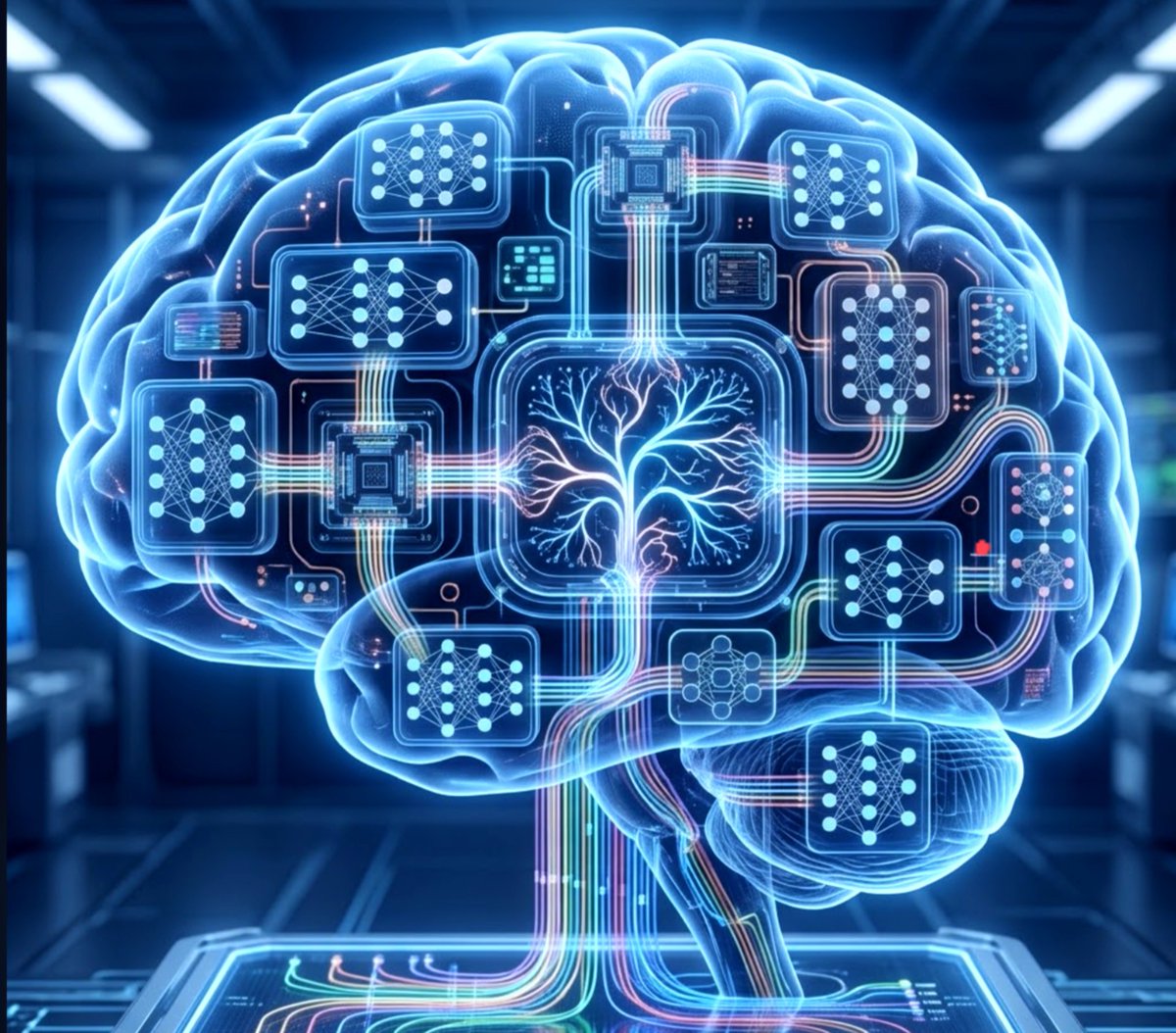
Optima Analytica@OptimaanalyticaThe AI model that changed algorithmic trading. 👀Genius Sphere Capital @GeniusSphereMarkets function in complex and sometimes manipulated ways. No trading strategy wins consistently in all conditions. Algorithmic trading is changing the game, and AI models such as our brain-inspired McoRNNMCD-ANN ( can improve pattern recognition and execution when supported by rigorous validation, risk controls, and an awareness of market-structure risks (00448
Markets function in complex and sometimes manipulated ways. No trading strategy wins consistently in all conditions. Algorithmic trading is changing the game, and AI models such as our brain-inspired McoRNNMCD-ANN ( can improve pattern recognition and execution when supported by rigorous validation, risk controls, and an awareness of market-structure risks (0261.1K- Meer berichten tonen