NASA Science✓

@NASAScience_

Powered by data, driven by discovery, made for everyone.

84 Obserwowani1.3M Obserwujący20.7K Posty
  1. NASA Science✓@NASAScience_
    NASA has confirmed the UVEX (UltraViolet EXplorer) mission for launch by January 2031. 🚀 UVEX will map the universe in ultraviolet light, study the evolution of stars and galaxies, and help capture cosmic events tied to gravitational waves. Read more:
    95624814.2K
  2. NASA Science✓@NASAScience_
    From sea ice and vegetation to atmospheric layers and inland surface water, ICESat-2 Quick Look products provide expedited access to a range of observations. Learn how to access them in Earthdata Cloud at our Oct. 28 webinar:
    Pobierz
    310535.7K
  3. NASA Science✓@NASAScience_
    NASA Science
    RT @NASAArtemis: Ready for an Artemis update? Tune in Friday, Oct. 23, at 2 p.m. ET (1800 UTC) to hear our latest progress and accelerated plans for Artemis lunar missions. Watch live:
    03900962
  4. NASA Science✓@NASAScience_
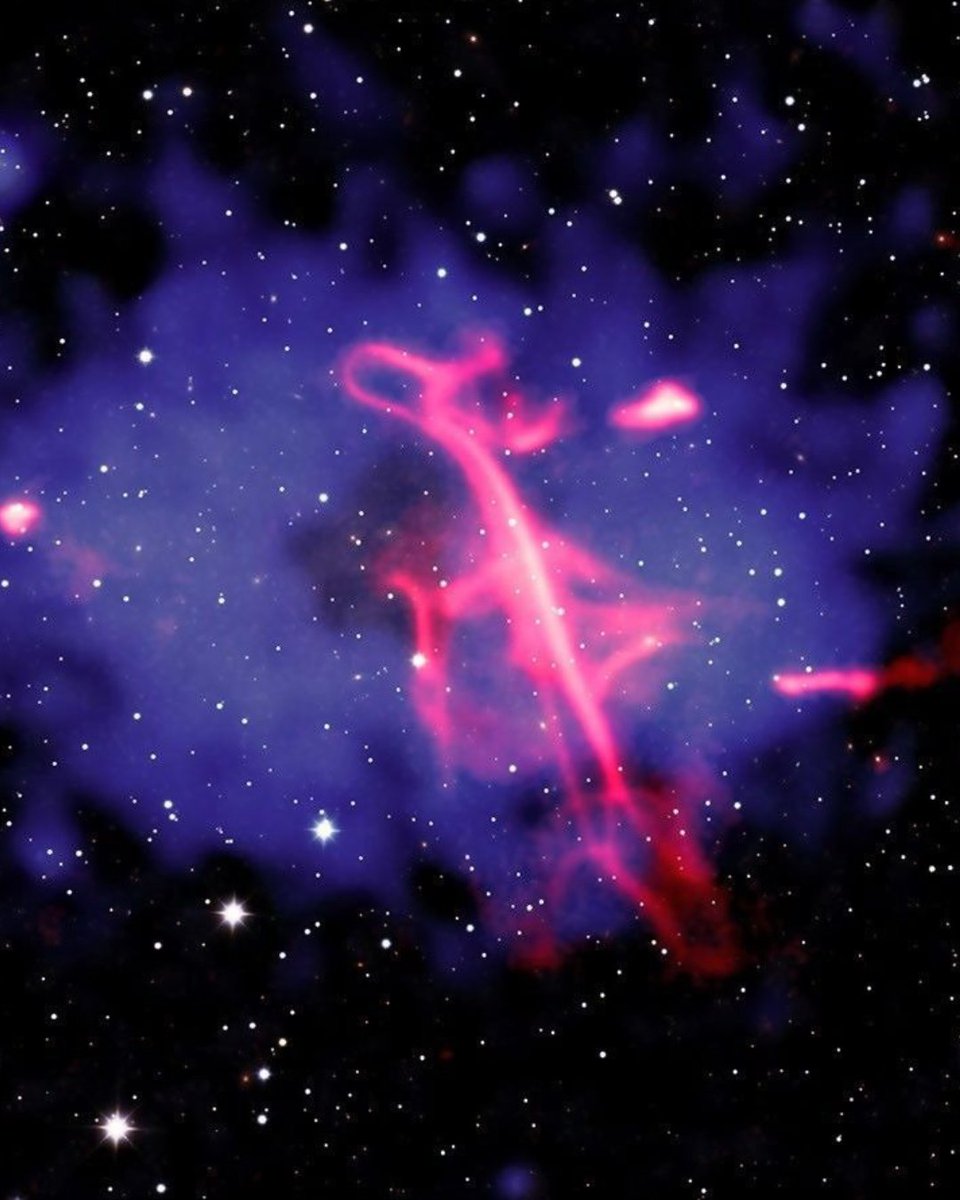
    The universe has a musical side. 🎶 Meet the Treble Clef, an unusual radio structure stretching more than 2 million light-years across space. Its shape is striking, but the science behind it is even more fascinating. Studying structures like this can reveal how galaxy clusters interact and evolve. In this composite, radio emission appears in red, X-rays in blue, and infrared data in white:
    Pobierz
    342271.2K33.6K
  5. NASA Science✓@NASAScience_
    NASA Science
    RT @NASAArtemis: Two scientists. One unforgettable view of our planet. What's it like to see the Artemis II Earthrise image through the eyes of a lunar scientist? How about an oceanographer? Jacob Richardson & Ivona Cetinic are here to tell us. Explore Artemis II data:
    012001K
  6. NASA Science✓@NASAScience_
    As today’s space-based laser instruments measure Earth's terrain, they leave gaps that can include millions of acres. Learn how NASA CASALS blends machine learning with an ultra-compact lidar to eliminate blind spots and create truly 3D images of Earth’s surface:
    Pobierz
    217828.1K
  7. NASA Science✓@NASAScience_
    NASA Science
    RT @Space_Station: Planting the seeds for deep space exploration! 🌱🚀 Astronauts on the space station are continuing to test ways to grow fresh food in microgravity using plant pillows, advancing @NASAScience_ research on seed storage and crop growth capabilities for future exploration missions.
    01250733
  8. NASA Science✓@NASAScience_
    Have a research idea that could advance NASA science? 🔬 NASA plans to release ROSES-27 by January 2027, with over 50 research opportunities spanning astrophysics, Earth science, planetary science, heliophysics, space biology and more. Start planning:
    Pobierz
    185426025.6K
  9. NASA Science✓@NASAScience_
    NASA Science
    RT @NASARoman: Join NASA’s Night Sky Network on Thursday, Oct. 22, at 5:00 p.m. PT (8:00 p.m. ET) for a livestream all about Roman! Learn about the telescope and how it will unveil the cosmos in ways never before possible. The event will also be recorded. Details:
    013401.2K
  10. NASA Science✓@NASAScience_
    Day meets night at the lunar terminator. 🌗 The @NASAArtemis II crew highlighted this shadowy frontier during their close encounter in April. Now it’s your turn to explore! No spaceship needed.
    Pobierz
    73419419.4K
  11. NASA Science✓@NASAScience_
    Posty @NASAScience_
    @NASAArtemis Track moon phases and find craters with our interactive Daily Moon Guide:
    04192.6K
  12. NASA Science✓@NASAScience_
    NASA Science
    RT @NASAUniverse: With its quick reflexes, flexible scheduling, and multiwavelength vision, our Neil Gehrels Swift Observatory has made discoveries with nearly every NASA space telescope during its 22 years in space. As the mission winds down, let’s see how Swift’s collaborations have helped us unravel the mysteries of the cosmos. 🔽
    08501.2K
  13. NASA Science✓@NASAScience_
    A powerful launch. Big questions about life in space 🚀 Now on the @Space_Station, four NASA investigations will study brain cells, crop disease, astronaut health monitoring, and antibiotic-resistant bacteria. What we learn could help protect crews and support future exploration.
    Pobierz
    613856K
  14. NASA Science✓@NASAScience_
    One step closer to boots on the Moon! 🌙 To prepare for Moon Base, NASA needs to know what physical tasks crews can handle immediately after landing—and Artemis II provided some insight. Soon after splashdown, the crew suited up and tackled mission-critical tasks, demonstrating successful performance within hours of their return.
    Pobierz
    164327314.2K
  15. NASA Science✓@NASAScience_
    NASA Science
    RT @NASAArtemis: From the Artemis II crew, to the lunar science team, to you. 🌒🫶 Six months have passed since humanity’s most recent visit to the Moon, and a huge library of data from their journey is now available to explore. Get the story:
    020401K
  16. NASA Science✓@NASAScience_
    AVATAR-Org1 launched this morning and is on its way to @Space_Station! 🧠 Following AVATAR’s journey around the Moon on @NASAArtemis II, this new investigation will study lab-grown brain tissue to better understand how spaceflight affects human health.
    Pobierz
    82717713.5K
  17. NASA Science✓@NASAScience_
    Fitness goals don’t stop in space 💪 During their mission, @NASAArtemis II astronauts used a compact device, the flywheel, similar to a rowing machine, for daily exercise. Using the device helped the crew maintain muscle strength on their mission.
    Pobierz
    461931.5K71.3K
  18. NASA Science✓@NASAScience_
    Posty @NASAScience_
    @NASAArtemis Because of its small footprint, the flywheel will be central to fitness regimens for future Artemis crews.
    32333.1K
  19. NASA Science✓@NASAScience_
    Ready to make an impact!? The @NASAArtemis II crew spotted lunar impact flashes, brief flickers from space rocks hitting the Moon. Their data matched reports from Earth-based volunteers. Grab your telescope and join the Impact Flash! project today:
    Pobierz
    2241017K