#Module içeren gönderiler

#Module

X'te #Module kullanan herkese açık gönderiler.

İlgili etiketler

  1. The Verge✓@verge
    BlueChip is a new line of laptops coming in 2027 from Anduril and Qualcomm, starting with a rugged military-focused model.
    43414090.6K
  2. Palmer Luckey✓@PalmerLuckey
    @verge
    This article is full of blatant misinformation. "The components Luckey specified that are planned to be American-made from the start are the display glass, the frame around the display, and parts of the ribbon component." No. That is not what I said. This was a response to a specific question about the display modules in the current prototype vs the final product. As I explicitly said, BlueChip has American chips, batteries, metallics, plastics, glass, etc, and we have a clear technical roadmap to 100% American components. "It sounds like BlueChip’s first laptop will be well below the 65-percent requirement to count as American-made" This is nuts. There is a reason no other reporter has came to this conclusion. One hint might be the extended discussion we had explicitly about the government requirements for American-made hardware and why meeting that bar is so important. "Palmer Luckey is of course a controversial figure, with his history of fueling right wing troll farms" This never happened. You are pushing a lie The Verge has pushed for over a decade now. Yes, you have written a bunch of stories claiming this happened, but it just ain't so. I gave $9,000 to a group that ran a single anti-Clinton billboard. The "right wing troll farms" narrative was a fabricated story pushed shortly before the 2016 election because Dems desperately wanted a right-wing equivalent to the actually-real Correct The Record, an online astroturfing organization that paid people to troll and "correct" Trump supporters online. But there was no such thing. It was all disinformation. Which is why most of the stories about it were later deleted. Yet here you are, lying again.
    1632575.5K241K
  3. ChargePoint✓@ChargePointnet
    What does it take to engineer up to 600 kW of DC fast charging into a single standalone foundation? Take a look inside ChargePoint Express Solo from ChargePoint and @eatoncorp. Here is the engineering breakdown of the physical hardware: 🔹 Compact Power Footprint: Power conversion and dispensing integrated into a single enclosure. Delivering up to 72 kW/sq. ft.—up to 40% more kW per square foot than competing hardware. 🔹 Built-in Cable Theft Protection: Cut-resistant charging cables paired with an active security alert system to protect critical infrastructure from copper theft and vandalism. 🔹 What's Inside: Solid-state air-cooled Silicon Carbide (SiC) power modules. 98% efficiency with zero liquid coolant loops, zero mechanical pumps, and zero chiller servicing. 🔹 Overhead Ergonomics: Integrated 17-foot swing arm keeps heavy charging cables suspended completely off the pavement—preventing ground abrasion, moisture damage, and vehicle drive-overs. 🔹 Industrial Grid Specs: 200 kW, 400 kW, and 600 kW configurations, 480VAC / 600VAC (Canada grid ready), 1,000A peak output per port, native Omni Port (CCS1 & NACS), and a high-visibility 15-inch touchscreen. Heavy-duty industrial charging engineered for real-world reliability. Explore the hardware architecture: #EVCharging #HardwareEngineering #CleanTech #FleetOperations #ElectricalEngineering #ChargePoint
    İndir
    013470
  4. LONGi Solar@longi_solar
    An inspiring week at All Energy Australia! 🇦🇺 From HPBC 2.0 module debuts and TÜV certifications to new strategic partnerships across Australia and New Zealand, LONGi continues to strengthen its commitment to the ANZ market. 🤝 #LONGi #AllEnergyAU
    İndir
    001143
  5. Marvell Technology✓@MarvellTech
    Marvell experts are taking the stage at WISH Conference 2026, the flagship event from the @GlobalSemi Women’s Leadership Initiative. Approximately 1,000 technology leaders, entrepreneurs and STEM students will gather at the Santa Clara Convention Center to celebrate women’s achievements in technology, build networks and advance gender parity across the industry. Marvell engineers will lead a breakout session, join a main stage panel and present two posters on advanced packaging and optical modules. See the full lineup and learn more on our website:
    İndir
    51272K
  6. Roxx✓@Roxx_0x
    OH MY F*CKING GOD Minecraft was rewritten from scratch in rust, and every mod you own just died with it this was never about rust being faster. it is about java mods having no door to knock on WHY JAVA MODDING WAS ALWAYS GOING TO HIT A WALL → a java mod does not call an interface. it performs surgery. the loader rewrites the game's own bytecode while it loads, and mixins inject into methods nobody designed to be touched → that is why two mods editing the same method fight each other, and why a single update breaks a hundred of them at once → the ceiling was never the language. it was that the game had no front door, so every mod cut its own hole in the wall WHAT THE REWRITE ACTUALLY CHANGED → horizon is not a loader bolted onto the old game. it is its own program in rust that reads the same worlds and generates the same terrain → mods are rust compiled to webassembly, loaded as sandboxed modules against a real api, instead of being injected into the engine's internals → it ships a mod api, a server api, a shader api and an agent control api, which means the game now has a surface built for something to drive it HOW YOU PROVE A REWRITE IS NOT A LIE → rewriting is the easy half. proving you matched the original is the half nobody wants to do → 281 differential harnesses feed identical input to both games and compare the output subsystem by subsystem, and every subsystem it covers comes back matching → and the giveaway detail: the rust side was made to copy java's floating point behaviour on every platform, because otherwise the terrain generates differently and the whole thing is a different game wearing the same name for fifteen years modding meant editing a running program now there is a door, and somebody built one
    İndir
    301832944.2K
  7. ALEX SUZUKI✓@X_FINALBOSS
    I hosted a $15M+ LIVE masterclass in front of 3400 people. How I generated $3.24M in 8 months. 90 minutes long with 52 steps. usually millionaires only, $3K+ to access BUT I'm releasing the full recording FREE for the next 24 hours. What I REVEALED : 1. how I went from $0 → $3.24M in 8 months with digital products 2. the exact funnel that generates $40K+ every 7 days on autopilot ( 1 hr daily ) 3. 21 case studies of X accounts doing $30K+ per month each 4/ the AI system that writes 300 posts in 15 minutes and gets 1M+ views/month 52 modules covers: - account setup to first sale in under 48 hours - how to generate $10K/month with one $500 digital product - the automation stack that runs the entire business for $38/month - how to scale to $30K/month with 5+ accounts DELETING IN 24 HOURS comment "MASTERCLASS" and I'll DM it to you (including full 2 hour training video) ** must be following + retweet to receive
    İndir
    1687614810.4K
  8. Luca Greco✓@lucagrecoita
    BMW's new X5 uses two aluminium rear rails instead of a one-piece Gigacasting 🚗 The body was presented at EuroCarBody 2026, BMW's X5 comes in five different versions with five different powertrains. For those five versions, BMW uses four different rear-floor modules. The two cast rails are shared across every version and form an H-shaped frame at the back of the underbody. Martin Lagler reported that BMW chose this deliberately over a full Rear Gigacasting. Nemak casts the rear rails, which it calls the X5 longitudinal member, at its new, highly automated plant in Georgia. The parts are cast on a 6,100-ton die casting machine, a Bühler Carat 610 with a two-cavity die, and they save 11 kg. The parts are cast by the supplier and shipped to BMW's Spartanburg plant. A full rear-floor casting would have added logistics on that route. BMW sees the two rails as the best balance of integration, weight, manufacturing and logistics. 📰 Full article: 📷: Nemak
    İndir
    6913911.3K
  9. Mobile Hacker@androidmalware2
    Unpacking Cardputer ADV with CC1101 & NFC, and LoRa expansion modules
    İndir
    11202.4K
  10. AdriMark@SMTAdriMark
    Adding some technical modules to my #bedrock client 🤔Any others I should add?
    İndir
    1121961
  11. ForumElectrical.com@ForumEIectrical
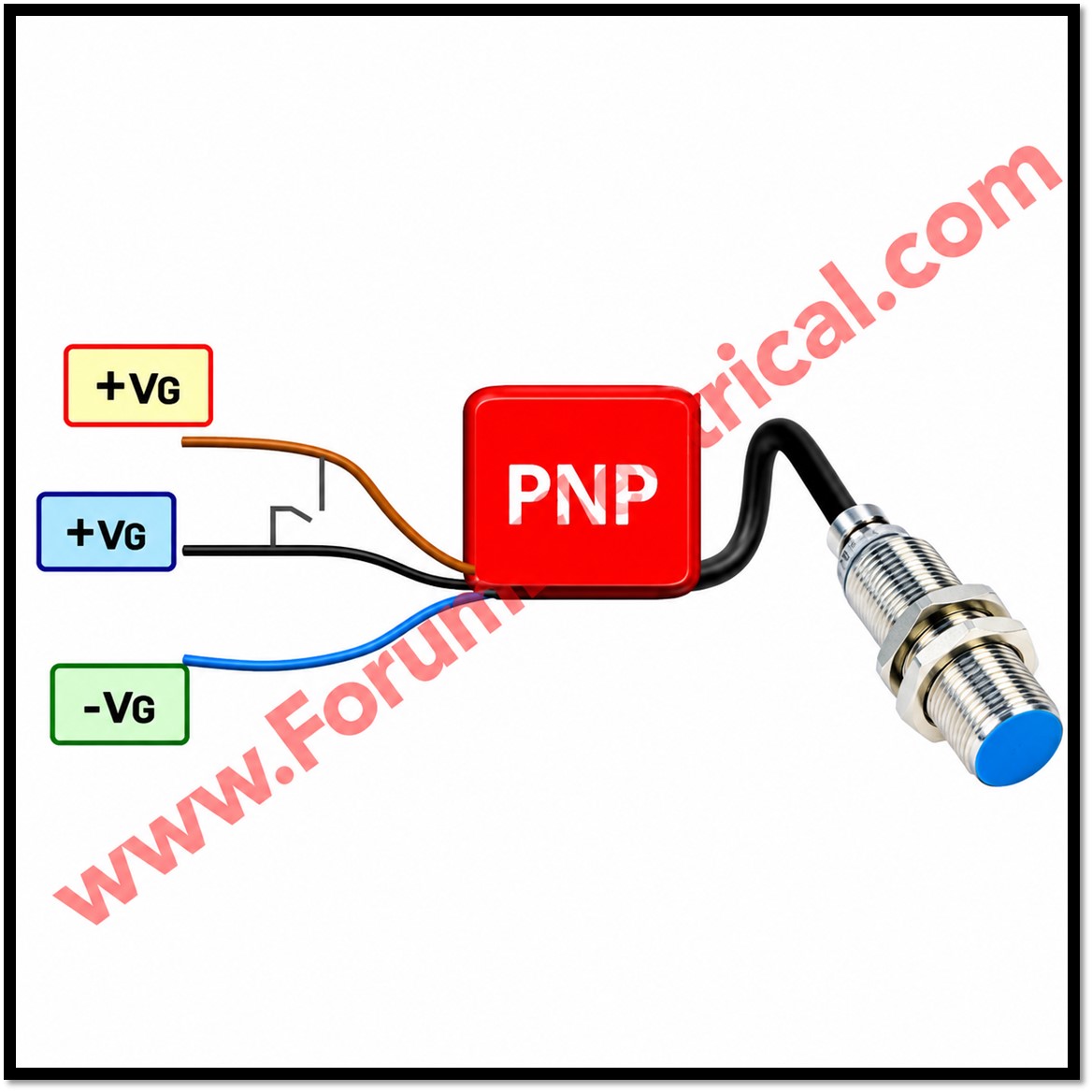
    PNP Sensors in Industrial Automation PNP proximity sensors are widely used in industrial automation to interface field devices with PLC digital input modules. A PNP sensor switches the output signal to the positive supply voltage, typically +24V DC, when the sensor detects an object. Understanding PNP sensor wiring, sourcing output configurations, PLC input status monitoring, and DC control circuit operation is essential for efficient fault diagnosis and reliable machine performance. Key technical points include PNP sensor output switching, 24V DC control supply verification, PLC input LED status checks, signal continuity testing, and troubleshooting sensor-to-PLC communication faults. #IndustrialAutomation #PLC #PNPSensor #ProximitySensor #PLCDigitalInputs #24VDC #SensorWiring #SourcingOutput #ElectricalEngineering #Mechatronics #MaintenanceEngineering #IndustrialControlSystems #PLCTroubleshooting #AutomationEngineering #ElectricalMaintenance
    İndir
    0333636
  12. mirku✓@mirku21
    THIS IS AN ABSOLUTE F*CKING GOLD Anthropic just revealed one of the sharpest setups for Claude Code The idea: run autonomous agent teams across Opus 5.5, Sonnet 5.5, and Haiku 5.5, while keeping Fable 5.1 on call as adversary Zero coordinator bottlenecks and way fewer tokens: teammates talk directly over peer-to-peer mailboxes and claim tasks on their own You just launch Claude Code like this: CLAUDE_CODE_EXPERIMENTAL_AGENT_TEAMS=1 claude --model opus here's how it splits: → Opus 5.5 acts as team lead: breaks epics into a shared task list, arbitrates conflicts, and signs off on pull requests → Sonnet 5.5 powers builder teammates: hammers out frontend and backend modules in parallel, messaging peer-to-peer without coordinator drag → Haiku 5.5 swarms lightweight scouts: maps AST call sites, audits dependencies, and verifies API specs at 340 tok/s → Fable 5.1 monitors the peer bus on call: audits cross-session messages and catches subtle edge cases before code merges → you stop burning Opus context on routine implementation loops and keep the lead session lean Fable 5.1 only steps in at three moments: → before a contract locks: does the frontend payload match the backend schema? → when a test breaks twice: are we fixing the root cause or just patching symptoms? → before calling it done: what security hole or invariant did everyone overlook? Opus leads · Sonnet builds · Haiku scouts · Fable challenges JEV engineering is the same move one layer down: the forks that need no thinker (which file, which tool, retry or stop) go to JEV in milliseconds, and the big models only see the ones that split the full tree > Opus 5.5 coordinates the team and manages the shared task list at ~/.claude/tasks/ > Sonnet 5.5 runs builder teammates with direct peer-to-peer mailboxes at ~/.claude/teams/ > Haiku 5.5 runs fast scout teammates at 340 tok/s with zero coordinator lag > Fable 5.1 stays on call as adversary to challenge contracts and audit diffs > task dependencies unblock automatically as teammates mark work complete > JEV routes micro-forks in milliseconds paste the tree and this prompt into Claude Code ↓ "Rebuild my Claude Code setup around this tree: 1. Enable autonomous agent teams by setting CLAUDE_CODE_EXPERIMENTAL_AGENT_TEAMS=1 in settings.json 2. Run the main lead session on Opus 5.5 to manage architecture and the shared task list 3. Spawn Sonnet 5.5 teammates for feature builds and Haiku 5.5 for 340 tok/s repo sweeps 4. Keep Fable 5.1 on call as adversary to audit peer-to-peer messages and test failures 5. Add one rule to CLAUDE.md: teammates must consult Fable before locking API contracts, after two test failures, and before final PR sign-off 6. Route fast deterministic forks through JEV, show all changes as diffs first. No edits until I say go" ↳ save it, you'll use this every single day
    İndir
    mirku @mirku21
    223325130.3K
  13. mirku✓@mirku21
    31827482.3M
  14. The JLMP✓@JLMPCoordinator
    𝐇𝐨𝐰 𝐉𝐋𝐌𝐏 𝐢𝐬 𝐄𝐧𝐬𝐮𝐫𝐢𝐧𝐠 𝐆𝐞𝐧𝐝𝐞𝐫 𝐌𝐚𝐢𝐧𝐬𝐭𝐫𝐞𝐚𝐦𝐢𝐧𝐠 𝐢𝐧 𝐋𝐚𝐛𝐨𝐮𝐫 𝐌𝐢𝐠𝐫𝐚𝐭𝐢𝐨𝐧 𝐆𝐨𝐯𝐞𝐫𝐧𝐚𝐧𝐜𝐞 The #JLMP mainstreams gender as a core, cross-cutting element of labour migration governance across Africa by supporting the development of coherent gender-sensitive policies at Member State and Regional Economic Community levels, delivering targeted capacity-building training modules and engagements on gender-responsive policy formulation and implementation, strengthening sex-disaggregated data systems for evidence-based decision-making, and providing practical tools such as gender-responsive access-to-justice and reporting mechanisms for migrant workers. These actions ensure migrant workers can access decent work, social protection, and rights protections.
    İndir
    12476
  15. Autodesk Fusion✓@adskFusion
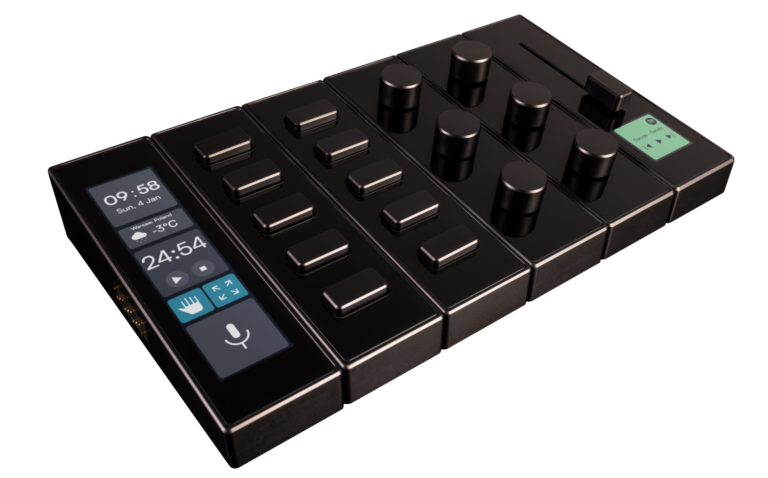
    modue (@modue_com) is creating a more intuitive way to control and personalize gaming, music production, and everyday digital workflows. Using Autodesk Fusion from first concept to production design, the team built a modular control deck with customizable modules. Read more:
    İndir
    13191.4K
  16. Moody@MoodyWriter13
    An interesting statement, especially the second part, and it’s one reason why I avoid companies like $LITE, $AAOI and $COHR and prefer a different stock instead. Today, Lumentum and Coherent earn a lot of money from finished transceiver modules. If standards like co-packaged optics take hold, the optics move directly into the chip package. Broadcom, Nvidia or Marvell will then build the optical engine themselves together with TSMC, and the classic module business becomes smaller and more interchangeable. Soitec $SOI is better positioned for this because it sits one level lower. No matter who ends up building the optical engine, the photonics chip starts on an SOI wafer, and around 95 % of those come from Soitec. An established standard based on silicon photonics strengthens exactly this platform rather than threatening it. And consolidation among module makers only changes who buys the wafers, not whether they are needed. Of course, this isn’t risk-free either. A few large buyers like TSMC or Broadcom have more bargaining power and a strong incentive to build up a second supplier. I don’t see one yet, though, not before 2030. So Lumentum and Coherent carry an architecture risk. Soitec carries more of a pricing risk. Its product remains necessary. That is by far the smaller problem. I own shares of Soitec.
    Ben Bajarin @BenBajarin
    Who knows if $mrvl buys $lite, but the broader interconnect/supplier market is due for consolidation by those who control more critical IP (like SerDes or networking silicon). Also both $lite and $COHR are not as ideally positioned once optical standards emerge.
    7310319.6K
  17. Ben Bajarin✓@BenBajarin
    Who knows if $mrvl buys $lite, but the broader interconnect/supplier market is due for consolidation by those who control more critical IP (like SerDes or networking silicon). Also both $lite and $COHR are not as ideally positioned once optical standards emerge.
    936727.9K
  18. Nathaniel Fried✓@nattyfried
    Find accounts linked to any username across 2,500+ apps. @mxrchreborn just added 2,000 new username search modules to our platform. Try it 👇
    İndir
    OSINT Industries @OSINTindustries
    USERNAME SEARCH NOW COVERS 2.8K+ MODULES 🔎 A single handle can now be traced across more than 2,800 platforms, turning one username into a map of everywhere your subject has been online. Try it now 👇
    41301.5K
  19. OSINT Industries✓@OSINTindustries
    USERNAME SEARCH NOW COVERS 2.8K+ MODULES 🔎 A single handle can now be traced across more than 2,800 platforms, turning one username into a map of everywhere your subject has been online. Try it now 👇
    İndir
    24152K
  20. Daha fazla gönderi göster