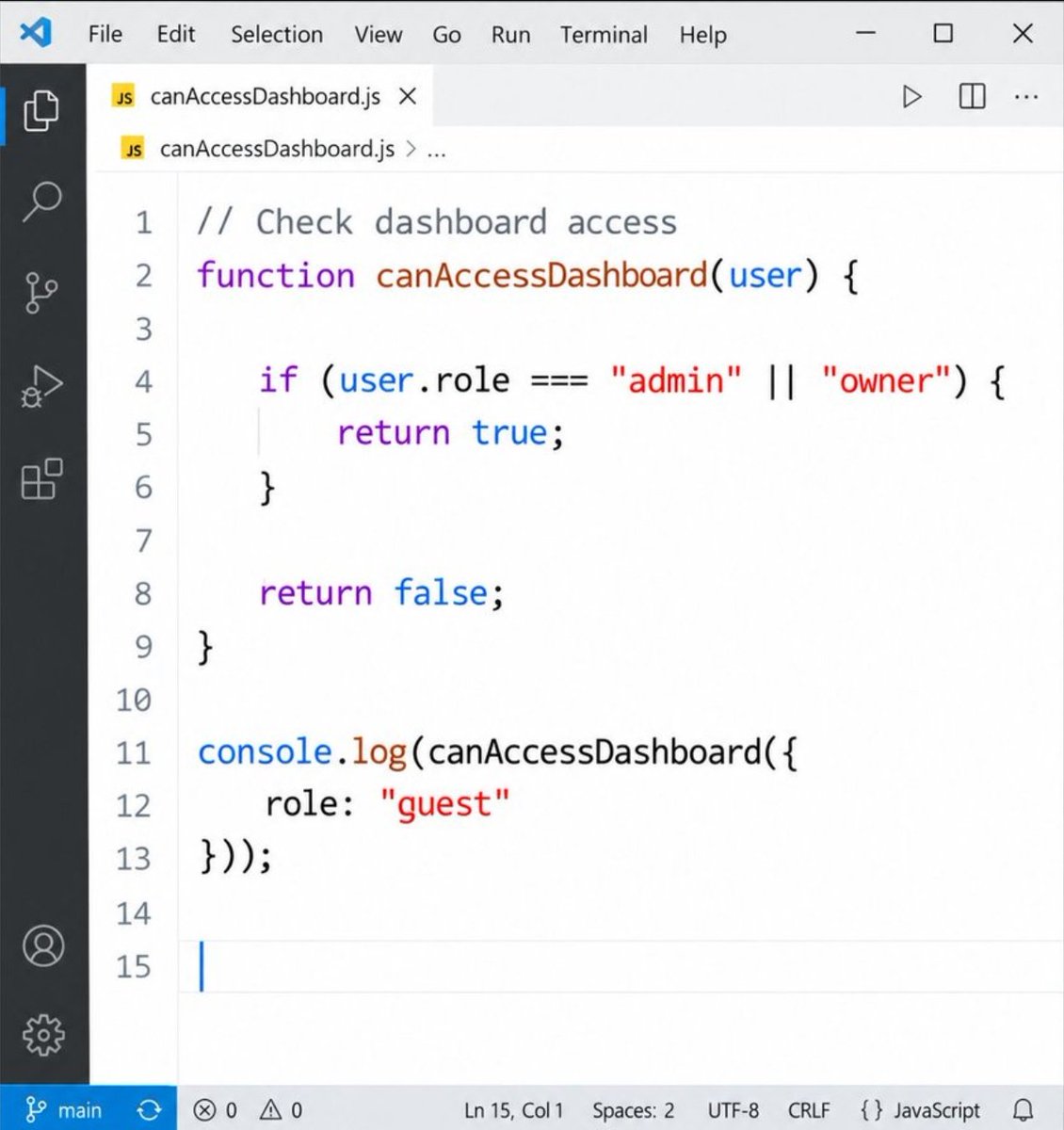
AI can write code in seconds.
So why are companies still looking for great engineers?
Because writing code was never the whole job.
The real skill is knowing what to build, how to build it, and how to make it work in production.
Here’s the roadmap to becoming an AI engineer in 2026 🧵
1. Master the Fundamentals
Before jumping into AI, build a strong foundation.
→ Python, JavaScript, or C++
→ Data Structures & Algorithms
→ OOP and problem-solving
→ Databases and APIs
→ Computer science fundamentals
AI can generate code, but understanding it is what makes you a better engineer.
2. Learn Real-World Software Engineering
Knowing how to code isn't enough. You need to know how to ship.
→ Frontend and backend development
→ Git and collaboration
→ Cloud computing
→ CI/CD and DevOps
→ System design and scalability
→ Security and performance
This is where you stop writing code and start engineering systems.
3. Learn to Build With AI
This is where the game changes.
→ AI coding assistants
→ LLM APIs and prompt engineering
→ Function calling and structured outputs
→ RAG and vector databases
→ AI agents and automation
→ Model evaluation and observability
Don't just learn how to use AI tools. Learn how to build products with them.
4. Learn Production AI Engineering
A demo that works once isn't a production-ready product.
You need to understand:
→ Hallucinations and failure handling
→ AI security and guardrails
→ Testing and evaluation
→ Latency and cost optimization
→ Monitoring and reliability
→ Deploying AI systems at scale
This is what separates AI experimenters from AI engineers.
5. Build Projects That Solve Real Problems
Tutorials teach you concepts. Projects teach you engineering.
Build an AI agent. Connect it to real tools. Add authentication, error handling, logging, and deployment.
Then test whether it actually solves the problem.
That's how you turn knowledge into experience.
The biggest mistake you can make right now?
Learning to prompt AI without learning how software works.
AI is making coding faster, but engineering still requires judgment.
The developers who thrive won't be the ones who write the most code.
They'll be the ones who know what to build, understand what AI generates, and can turn it into reliable products.
Learn the fundamentals. Master the tools. Build real things.
That's the path to becoming an AI engineer.
Save this roadmap for your learning journey.