Posts con #javascriptcode

#javascriptcode

Posts públicos de X que usan #javascriptcode.

Hashtags relacionados

  1. Neo Kim✓@systemdesignone
    The best tech stack for web development (in 2026): 1. Programming Languages: > Python > JavaScript > Go > Java > Rust 2. Frameworks: > FastAPI > NodeJS > Spring Boot > Django >ASP NET 3. Databases: > PostgreSQL > MySQL > MongoDB > Redis > DynamoDB 4. Cloud & Deployment: > AWS > Docker > Kubernetes > GCP > Azure 5. CI/CD & Version Control: > GitHub > GitHub Actions > GitLab > Jenkins > CircleCI Remember, you don’t need the whole stack. Pick one tool from each layer & build. Anything else you'd add? === 1. RT to help others start with web development. 2. If you want to get good at backend engineering, @systemdesignone will help you get there.
    Descargar
    173619910.7K
  2. Charly Wargnier ♨️✓@DataChaz
    that moment you realize knowing html, css, and JavaScript was enough to land a $150K job
    Descargar
    115785
  3. JavaScript FAN✓@javascript_fan
    JavaScript Array Methods Cheat Sheet for Beginners
    Descargar
    214772.7K
  4. Timie@Timieweb
    If programming languages were paid tools • Which would make the most money AND have the most users? 1. Python 2. JavaScript 3. Java 4. PHP
    Descargar
    22736541
  5. Next.js✓@nextjs
    We cut nearly 2 MB of compressed JavaScript across 𝚟𝟶.𝚊𝚙𝚙 and 𝚟𝚎𝚛𝚌𝚎𝚕.𝚌𝚘𝚖 using coding agents and the Next.js Bundle Analyzer. See how to trace imports, compare snapshots, and use our optimizer skill to reduce your bundles.
    282241633.6K
  6. JavaScript FAN✓@javascript_fan
    JavaScript Quiz: Comment your answer first: 🔹 A 🔹 B 🔹 C 🔹 D A) 14 B) 54 C) 10 D) 52
    Descargar
    84343K
  7. komal sharma✓@itz_komal01
    Which programming language is best to learn as a beginner ?? 1) JAVA 2) Python 3) C++ 4) JavaScript
    Descargar
    12161538.4K
  8. Shu✓@shuding
    UI and math time! UI = f(props) is the most famous line in React. But that f is JavaScript, not math. Inspired by @_chenglou’s Handwired project, I compiled a <Dashboard/> component into a real math function, and asked what becomes possible.
    Descargar
    602152.5K199K
  9. Jonny✓@aiwithjonny
    10000+ Pages Programming Notes - 💯 FREE ❯ Java ❯ Python ❯ JavaScript ❯ SQL ❯ DSA ❯ C ❯ C++ ❯ Node.js ❯ HTML5 ❯ CSS ❯ Linux ❯ Git ❯ ALL BOOKS (40+ Subjects) Follow @aiwithjonny for more.
    Descargar
    7421505.7K
  10. AA✓@measure_plan
    working on an instrument that turns hand drawn scribbles into sound y axis = pitch, x = time made with javascript, web audio api, roboflow RF-DETR keypoints for tracking hand movements
    Descargar
    762222K263K
  11. Shivii✓@heyyyyyieeee
    Only real developers will get this right 👀 What will this JavaScript code print? console.log(1 + "2" + 3 - 4); A) "119" B) "119 - 4" C) "119" as a string D) "119" is impossible No Googling. No running the code. Just your brain💀
    413581.6K
  12. BUSY – Advanced Focus Timer✓@BusyFocusApp
    You can now create and run custom JavaScript apps directly on BUSY Bar 🛠️ Write your own code or use AI coding tools to create something entirely your own.
    Descargar
    12431.9K
  13. Felix Vance✓@felixvance1243
    𝗖𝗔𝗡 𝗔𝗡 𝗔𝗜 𝗦𝗞𝗜𝗟𝗟 𝗥𝗘𝗔𝗗𝗬 𝗬𝗢𝗨 𝗙𝗢𝗥 𝗬𝗢𝗨𝗥 𝗡𝗘𝗫𝗧 𝗝𝗢𝗕? Getting shortlisted is only one part of the job search. The real challenge begins when you have to prove your knowledge, explain your experience, and respond confidently to unexpected questions. I explored the Interview Simulator Skill on @FinchTechAI to see how it approaches this challenge through a structured recruitment simulation. For this experiment, I created a fictional applicant and used a Junior Software Developer position as the target opportunity. 𝗧𝗵𝗲 𝗧𝗲𝘀𝘁 𝗦𝗰𝗲𝗻𝗮𝗿𝗶𝗼 Candidate: Alex Morgan Position: Junior Software Developer Organization: GlobalTech Solutions (Fictional) The sample profile included programming experience with Python, JavaScript, and Java, along with knowledge of React, Node.js, PostgreSQL, REST APIs, and two academic projects. Rather than offering a random collection of questions, the Skill transformed this profile into a structured interview preparation exercise. 𝗔 𝗙𝗶𝘃𝗲-𝗦𝘁𝗮𝗴𝗲 𝗘𝘃𝗮𝗹𝘂𝗮𝘁𝗶𝗼𝗻 𝗣𝗮𝘁𝗵 The simulation covered 25 questions across five professional assessment areas: 01. Professional Background & Motivation Explored personal introductions, career interests, communication abilities, teamwork, and future ambitions. 02. Programming Knowledge & Logic Covered coding fundamentals, debugging techniques, programming languages, problem solving exercises, and time complexity. 03. Practical Project Understanding Focused on software architecture, development choices, individual responsibilities, API integration, and technical challenges. 04. Workplace Judgment & Decision Making Presented situations involving prioritization, limited resources, business awareness, and handling unexpected problems. 05. Professional Maturity & Strategic Thinking Examined accountability, leadership potential, decision-making, personal strengths, and long-term career direction. 𝗜𝗻𝘀𝗶𝗱𝗲 𝗘𝗮𝗰𝗵 𝗤𝘂𝗲𝘀𝘁𝗶𝗼𝗻 One useful aspect was the additional context provided alongside the interview questions. The preparation material included: - The skills and competencies an interviewer wants to evaluate. - The reasoning behind asking a particular question. - Suggestions for structuring an effective response. - Example answers based on the fictional candidate. - Follow-up questions that could lead to deeper discussions. This made the experience more informative than simply reading a list of frequently asked interview questions. 𝗪𝗵𝗲𝗿𝗲 𝗧𝗵𝗲 𝗖𝗮𝗻𝗱𝗶𝗱𝗮𝘁𝗲 𝗡𝗲𝗲𝗱𝗲𝗱 𝗠𝗼𝗿𝗲 𝗪𝗼𝗿𝗸 The preliminary resume-based evaluation produced an illustrative score of 13 out of 25. The assessment breakdown was: - HR: 3/5 - Technical: 3/5 - Project Knowledge: 3/5 - Situational Judgment: 2/5 - Leadership: 2/5 It also identified several areas that needed attention, including unclear project ownership, performance claims without supporting evidence, limited professional experience, and gaps in technical preparation. 𝗙𝗿𝗼𝗺 𝗔𝘀𝘀𝗲𝘀𝘀𝗺𝗲𝗻𝘁 𝘁𝗼 𝗔𝗰𝘁𝗶𝗼𝗻 The generated recommendations provided a practical direction for further preparation: - Build a confident personal introduction within 60–90 seconds. - Improve knowledge of data structures, algorithms, and Big-O notation. - Revise core programming concepts and database fundamentals. - Prepare project explanations using the STAR framework. - Clearly describe individual contributions and support achievements with verifiable evidence. 𝗔 𝗙𝗲𝘄 𝗧𝗵𝗶𝗻𝗴𝘀 𝗧𝗼 𝗞𝗲𝗲𝗽 𝗜𝗻 𝗠𝗶𝗻𝗱 The experiment was based on a fictional resume, so the generated assessment should not be treated as a real hiring decision. The 13/25 result represented an initial resume-based estimate, not performance measured through completed live interview answers. The downloaded package also functions as an offline preparation utility. It does not provide a live voice-based interview or independently validate the candidate's qualifications. 𝗪𝗵𝘆 𝗧𝗵𝗶𝘀 𝗔𝗽𝗽𝗿𝗼𝗮𝗰𝗵 𝗜𝘀 𝗪𝗼𝗿𝘁𝗵 𝗘𝘅𝗽𝗹𝗼𝗿𝗶𝗻𝗴 What makes this Skill interesting is its ability to connect a candidate's listed qualifications with the types of questions they may face during recruitment. It offers a way to recognize preparation gaps, organize study priorities, and think more carefully about how to communicate professional experience. For someone preparing for a technical position, that kind of structured guidance can be a useful starting point. The process can be summarized as: 𝗣𝗥𝗢𝗙𝗜𝗟𝗘 → 𝗔𝗦𝗦𝗘𝗦𝗦𝗠𝗘𝗡𝗧 → 𝗣𝗥𝗔𝗖𝗧𝗜𝗖𝗘 → 𝗙𝗘𝗘𝗗𝗕𝗔𝗖𝗞 → 𝗥𝗘𝗙𝗜𝗡𝗘𝗠𝗘𝗡𝗧 A good interview begins long before entering the interview room. Knowing what to improve can make that preparation more purposeful. 🔹 Discover the Interview Simulator Skill: 🔹 Visit FinchTech: @FinchTechAI
    Descargar
    115095695
  14. 𝓗𝓮𝓷𝓻𝔂 👨🏾‍✈️@Henry_on_xxx
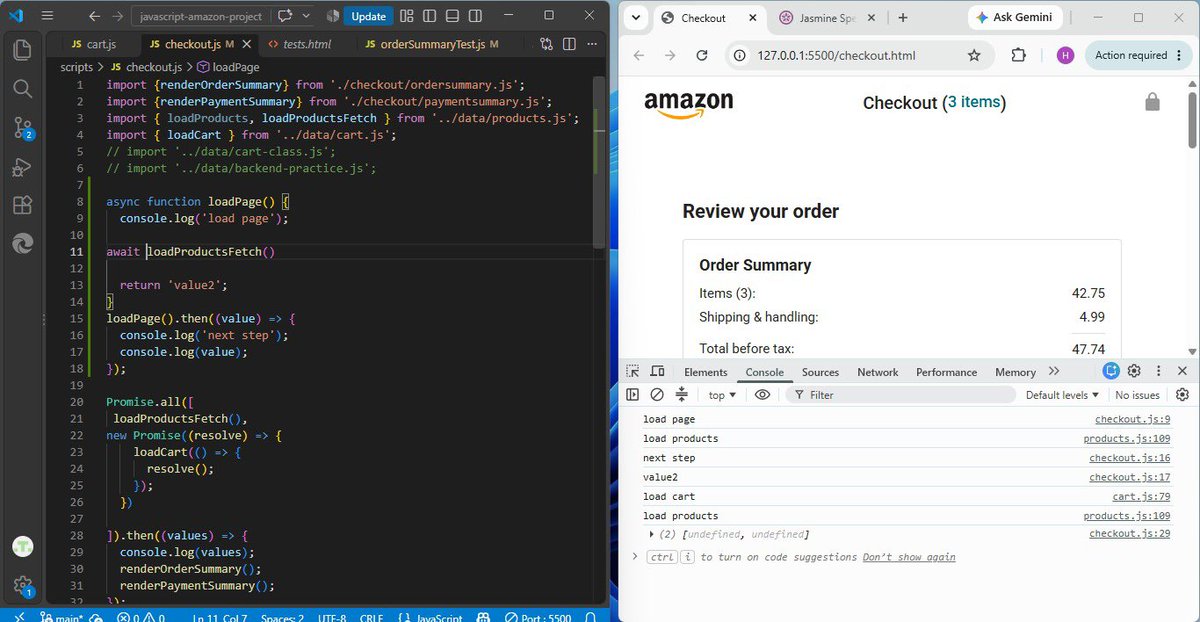
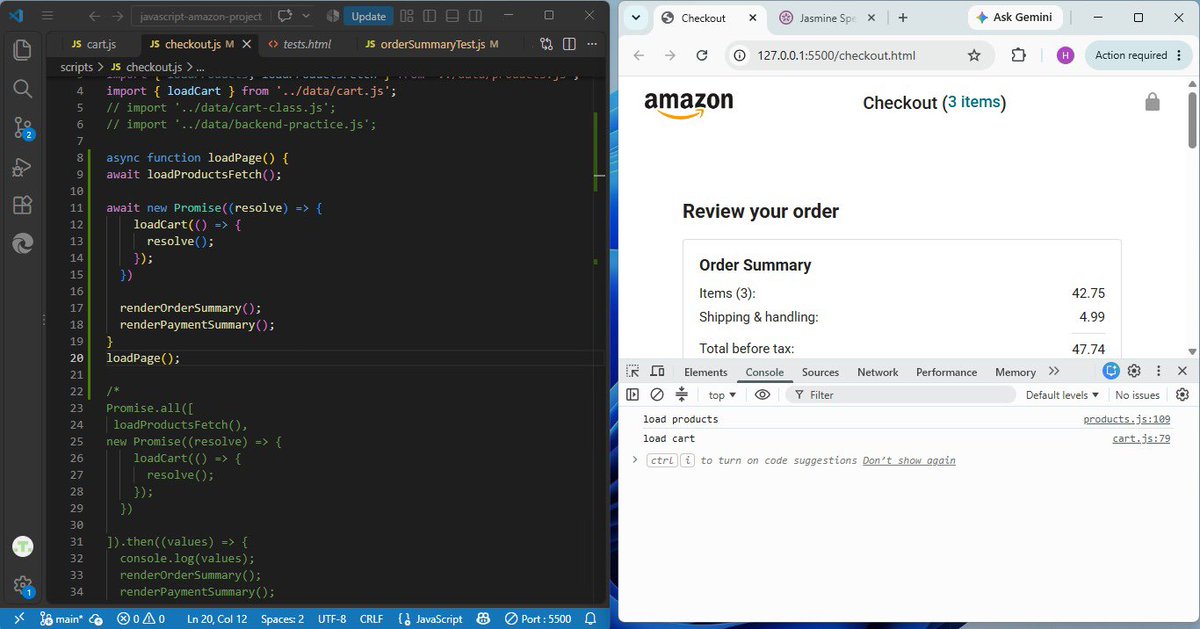
    I FINISHED THE JAVASCRIPT COURSE! 🥹🎉 From callbacks and Promises to async/await, error handling, HTTP requests, and URL parameters. I also applied what I learned to my Amazon project. Still learning, but proud of how far I’ve come! #JavaScript #FrontendDevelopment
    Descargar
    𝓗𝓮𝓷𝓻𝔂 👨🏾‍✈️ @Henry_on_xxx
    Today, I learned about Promises, .then(), Promise.all(), and the Fetch API in JavaScript. I also replaced XMLHttpRequest with fetch() in my Amazon project! Learning by building. #JavaScript #FrontendDevelopment
    9447725
  15. JUICE.sol🧃✓@Juicefr07
    JavaScript day 139. Gm and Happy weekend frens!
    Descargar
    JUICE.sol🧃 @Juicefr07
    JavaScript day 138.
    358481.5K
  16. ayoub__dev✓@ayoub_el77927
    JavaScript developers, no Googling. What does this print? console.log(1 &lt; 2 &lt; 3, 3 &gt; 2 &gt; 1); A) true true B) true false C) false true D) false false
    13118528
  17. Jian Wang✓@jianw851
    AI can write code in seconds. So why are companies still looking for great engineers? Because writing code was never the whole job. The real skill is knowing what to build, how to build it, and how to make it work in production. Here’s the roadmap to becoming an AI engineer in 2026 🧵 1. Master the Fundamentals Before jumping into AI, build a strong foundation. → Python, JavaScript, or C++ → Data Structures & Algorithms → OOP and problem-solving → Databases and APIs → Computer science fundamentals AI can generate code, but understanding it is what makes you a better engineer. 2. Learn Real-World Software Engineering Knowing how to code isn't enough. You need to know how to ship. → Frontend and backend development → Git and collaboration → Cloud computing → CI/CD and DevOps → System design and scalability → Security and performance This is where you stop writing code and start engineering systems. 3. Learn to Build With AI This is where the game changes. → AI coding assistants → LLM APIs and prompt engineering → Function calling and structured outputs → RAG and vector databases → AI agents and automation → Model evaluation and observability Don't just learn how to use AI tools. Learn how to build products with them. 4. Learn Production AI Engineering A demo that works once isn't a production-ready product. You need to understand: → Hallucinations and failure handling → AI security and guardrails → Testing and evaluation → Latency and cost optimization → Monitoring and reliability → Deploying AI systems at scale This is what separates AI experimenters from AI engineers. 5. Build Projects That Solve Real Problems Tutorials teach you concepts. Projects teach you engineering. Build an AI agent. Connect it to real tools. Add authentication, error handling, logging, and deployment. Then test whether it actually solves the problem. That's how you turn knowledge into experience. The biggest mistake you can make right now? Learning to prompt AI without learning how software works. AI is making coding faster, but engineering still requires judgment. The developers who thrive won't be the ones who write the most code. They'll be the ones who know what to build, understand what AI generates, and can turn it into reliable products. Learn the fundamentals. Master the tools. Build real things. That's the path to becoming an AI engineer. Save this roadmap for your learning journey.
    Descargar
    163617817.3K
  18. Mostrar más posts