Next Science✓

@NextScience

Science • Space • Cosmic Mysteries Explained simply. Follow for what comes next.

37.1K Abonnements41.6K Abonnés2.9K Posts
  1. Next Science✓@NextScience
    ⏳ Scientists have proposed a strange new state of matter that behaves like a liquid—but through time. What if matter could maintain a rhythm without staying perfectly synchronized? Physicists have proposed a fascinating concept called a discrete time liquid. Ordinary crystals have repeating patterns in space, while time crystals display repeating patterns in their behaviour over time. In a new theoretical study, researchers used computer simulations to investigate interacting magnetic spins exposed to fluctuating electromagnetic fields. Something unexpected happened: the particles maintained a repeating rhythm but occasionally slipped out of sync. The researchers called this unusual behaviour a discrete time liquid. Even more surprisingly, their simulations suggested that moderate thermal fluctuations could help this rhythmic pattern emerge rather than simply destroy it. But there's an important catch. This is a theoretical proposal based on mathematical modelling and simulations, not an experimentally confirmed state of matter. The research is also awaiting peer review. If future experiments confirm the idea, it could reveal new insights into how order emerges from disorder. Source: Wang, Z., Schindler, P. M., Bukov, M., & Michael, M. H. (2026). Discrete time liquids. arXiv.
    Télécharger
    125358
  2. Next Science✓@NextScience
    🚨Scientists flipped the nucleus of a single atom in a way they couldn’t fully explain. Inside every atom lies a tiny nucleus with a quantum property called spin—a feature linked to magnetism. Scientists at Delft University of Technology in the Netherlands have now discovered something unexpected: they could flip a single nucleus’s spin using precisely controlled signals, even when the usual connection with the atom’s electrons was largely switched off. The mystery is that the nucleus responded when researchers expected it not to. Using an advanced microscope and carefully tuned signals, the team demonstrated this surprising effect, but the exact mechanism behind it remains unknown. The discovery could eventually help scientists develop new ways to store and read quantum information. For now, one tiny atom has raised a big question: What are physicists still missing about the quantum world? Source: Vennema, H. G., et al. (2026). Nuclear magnetic resonance on a single atom with a local probe. Nature Communications. Read the original research announcement from Delft University of Technology
    Télécharger
    27303.7K
  3. Next Science✓@NextScience
    ⚡ Reality Isn’t What It Seems… What if everything around you is hiding a secret world you can’t see? A place where the rules of reality completely break down…Welcome to Quantum Physics. At this tiny level, particles can exist in multiple places at once… and simply observing them can change what they do. It sounds impossible—but it’s real, and it’s happening right now beneath everything you see. The truth? Reality isn’t as solid as it looks. It’s mysterious, unpredictable… and far stranger than we ever imagined. Source Griffiths, D. J., & Schroeter, D. F. (2018). Introduction to quantum mechanics (3rd ed.). Cambridge University Press.
    Télécharger
    31139918
  4. Next Science✓@NextScience
    Warming your feet triggers a biological shortcut to deeper, more restorative sleep. Slipping on a pair of socks before climbing under the covers might be the simplest biohack for a better night's rest. When your feet are warm, your blood vessels undergo a process known as vasodilation. This expansion allows heat to redistribute from your core to your extremities, effectively lowering your internal body temperature. This physiological shift serves as a critical biological signal to the brain that the body is ready to transition into a sleep state, making it easier to drift off without tossing and turning. The benefits go beyond just falling asleep quickly; they also impact the duration and depth of your rest. Researchers at Seoul National University discovered that participants who wore socks to bed not only fell asleep significantly faster but also enjoyed longer sleep cycles with fewer interruptions throughout the night. For those who frequently struggle with cold feet or insomnia, this low-cost habit supports the body's natural circadian rhythms, ensuring a more seamless and refreshing sleep experience. source: Ko, Y., & Lee, J. (2017). Effects of feet warming using bed socks on sleep quality and thermoregulatory responses in a cool environment. Journal of Physiological Anthropology.
    Télécharger
    810492K
  5. Next Science✓@NextScience
    🚨 “A Single Injection That Could Restore Feeling?” Scientists at MIT have developed an experimental injectable gel that may help repair damaged nerves. This gel mimics natural body tissue and supports nerves as they regrow and reconnect. In early studies, it has shown restored sensation and movement, something traditional treatments rarely achieve. While still in early research stages, the results are giving hope for future treatments of nerve injuries. Source: Massachusetts Institute of Technology. (n.d.). Research on injectable hydrogels for nerve regeneration.
    Télécharger
    12682599.6K
  6. Next Science✓@NextScience
    🌌 The universe is full of secrets we may never uncover—from black holes and dark matter to consciousness and alien life.
    Télécharger
    53111.2K
  7. Next Science✓@NextScience
    🧬 PCOS May Be Hiding a Much Bigger Problem Than Many Realize! For years, PCOS was seen mainly as an ovarian condition. But the real story is more complex. It involves hormones, metabolism, and sometimes insulin resistance. Insulin resistance can affect how the body manages blood sugar and may contribute to higher androgen levels, leading to irregular periods, acne, and excess hair growth. It can occur even in women who are not overweight. And here's something surprising: despite its name, you can have PCOS without ovarian cysts. The condition affects women differently, and its causes are complex. Understanding PCOS as more than an ovary problem could help improve awareness, diagnosis, and treatment. Source: Teede, H. J., et al. (2023). Recommendations from the 2023 International Evidence-based Guideline for the Assessment and Management of Polycystic Ovary Syndrome. Human Reproduction, 38(9), 1655–1679
    Télécharger
    27221.2K
  8. Next Science✓@NextScience
    Doctors 3D-printed a windpipe for a patient, opening a new chapter in transplant medicine. In South Korea, doctors performed a groundbreaking windpipe transplant in a woman who had lost part of her trachea during thyroid cancer surgery. The team created a custom implant using 3D printing, living cells, and a biodegradable material for structural support. One remarkable detail stands out: the patient did not need immunosuppressant drugs after the procedure. Normally, these medications help prevent the immune system from attacking transplanted tissue. Using a patient's own cells in engineered tissues may reduce this risk, although the implant's materials and other biological factors also matter. This procedure was an important step forward, but it does not mean scientists can yet print fully functional replacement organs on demand. Long-term safety, durability, and successful regeneration remain major challenges. The future of transplantation may not be limited to finding a donor. It may one day involve engineering replacement tissues tailored to each patient. Source: BBC Science Focus, March 2024.
    Télécharger
    226792K
  9. Next Science✓@NextScience
    🧠 Neuralink is developing a brain implant that could help people who are blind perceive visual information. Elon Musk's neurotechnology company is working on Blindsight, an experimental device designed to bypass damaged eyes and send signals directly to the brain's visual cortex. The concept involves a camera capturing images and an implant stimulating the brain to produce visual perceptions. Initially, any resulting vision may be very limited rather than clear, detailed images. In September 2024, the U.S. FDA granted Blindsight Breakthrough Device Designation. This helps facilitate development and regulatory review, but it does not mean the device is approved or proven to restore sight. Significant research is still needed to establish its safety and effectiveness. Blindsight remains experimental, and its potential to help people with severe blindness has yet to be demonstrated in human clinical trials. Could brain implants one day give people who have lost their sight a new way to perceive the world? Scientists are working toward that possibility. Source: U.S. Food and Drug Administration (FDA) — Breakthrough Devices Program. Neuralink's Blindsight designation was announced in September 2024.
    Télécharger
    29903257.5K
  10. Next Science✓@NextScience
    Scientists are copying mosquitoes to make injections less painful. Researchers at Kansai University in Japan developed a microneedle inspired by the mosquito’s mouthparts. Its tiny, serrated components and vibrating motion are designed to penetrate skin with less force than conventional needles. The goal is to make injections and blood sampling more comfortable, particularly for people who need frequent medical procedures. The technology is promising, but it is still experimental. More research is needed to establish how well it reduces pain in real-world medical use. Source: Journal of Micromechanics and Microengineering — Research on mosquito-inspired microneedle fabrication.
    Télécharger
    414441.8K
  11. Next Science✓@NextScience
    SOME RECTAL CANCER PATIENTS MAY AVOID CHEMOTHERAPY, RADIATION, AND SURGERY! What if fighting cancer didn’t always require removing the tumor through major surgery? For some patients, a remarkable treatment may offer another path. On October 19, 2026, the U.S. FDA approved dostarlimab (Jemperli) for certain adults with locally advanced rectal cancer whose tumors have specific genetic features called dMMR or MSI-H. Here’s what makes it fascinating: This immunotherapy blocks a signal that helps cancer hide from the immune system, allowing the body to recognize and attack cancer cells. In the Phase 2 AZUR-1 study, 71% of patients in the reported analysis had no disease progression and needed no additional cancer treatment after dostarlimab alone. For eligible patients whose tumors disappear completely, this approach may help them avoid chemotherapy, radiation, and rectal surgery. But there’s an important catch: This treatment does not work for everyone. Only a small percentage of rectal cancers have these genetic features, and patients need careful monitoring by cancer specialists. The big picture: Could helping the immune system fight cancer reduce the need for major surgery? For some patients, this approach is already offering new hope. Source: U.S. Food and Drug Administration. (2026, October 19). FDA approves immunotherapy that may allow certain patients with rectal cancer to avoid chemotherapy, radiation and surgery.
    Télécharger
    45231.3K
  12. Next Science✓@NextScience
    A SCIENTIFIC MYSTERY: Hidden Memories Could Help Extract Energy From the Environment! What if information hidden in a system’s past could help unlock energy that scientists once struggled to explain? In a fascinating experiment published in *Nature Physics*, researchers demonstrated that **hidden environmental memory can help extract useful work from tiny particles.** Using a particle trapped by light in a special fluid, they showed that information carried over from the past could improve energy extraction. The secret lies in **Maxwell’s demon**, a famous physics thought experiment exploring how information can be turned into useful energy. This new finding reveals that even a system’s hidden history can hold valuable physical information. Scientists aren’t extracting energy from human memories. Instead, they’re uncovering how a system’s physical past can become a source of useful work. Could this insight help inspire more efficient microscopic machines? Source: Muruga, L., Ginot, F., Loos, S. A. M., et al. (2026). The extraction of work from hidden degrees of freedom. *Nature Physics
    Télécharger
    214592K
  13. Next Science✓@NextScience
    CAN TWO SOULS CONNECT ACROSS THE UNIVERSE? What if two things could remain connected even when separated by enormous distances? Quantum physics reveals a strange phenomenon called quantum entanglement, where particles share connections that cannot be explained by ordinary, everyday experience. But here is the mystery: Can this connection explain how two people sometimes seem to feel each other's emotions or think of each other at the same moment? Science has not found evidence that quantum entanglement allows souls to communicate. In fact, entanglement cannot be used to send messages faster than light. Some scientists have explored whether quantum processes could play a role in consciousness, but these ideas remain controversial and unproven. Still, there is something beautiful to consider: we do not fully understand consciousness, and the human experience of love and connection continues to fascinate us. Have you ever thought of someone just before they called you? Was it coincidence, intuition, or something we don't yet understand? Source: Horodecki, R., Horodecki, P., Horodecki, M., & Horodecki, K. (2009). Quantum entanglement. Reviews of Modern Physics, 81(2), 865–942.
    Télécharger
    13624697120.4K
  14. Next Science✓@NextScience
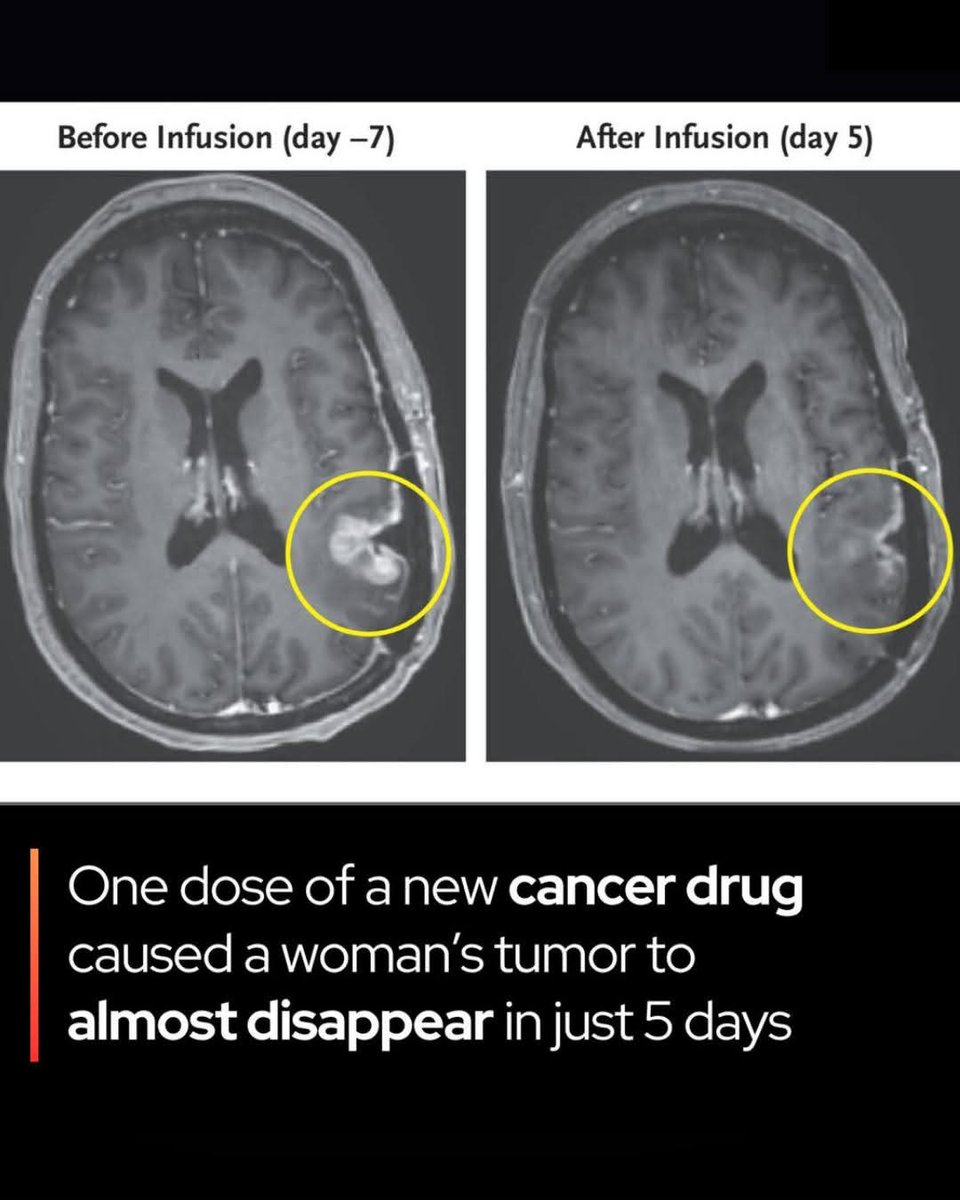
    🎗 A brain tumor nearly vanished in just 5 days after one dose of a breakthrough treatment. Experts say this may be the beginning of a cure. In a landmark clinical trial at Massachusetts General Cancer Center, researchers have reported rapid and dramatic responses to a next-generation CAR-T cell therapy in patients with glioblastoma—one of the deadliest and most treatment-resistant brain cancers. The personalized treatment reprograms a patient’s immune cells to attack the tumor, and in one extraordinary case, nearly eliminated the cancer within just five days. This novel therapy is designed to target multiple features of the tumor at once, a strategy that may help overcome the common challenge of treatment resistance in solid tumors like glioblastoma. Although the tumors eventually returned, the early outcomes were described as unprecedented. One patient saw a 60% reduction in tumor size that lasted for half a year—an impressive result in a cancer known for its aggressiveness. The trial’s success marks a major step forward for immunotherapy in brain cancer and raises new hopes for long-term control or even a cure. Researchers are now working to refine the treatment and extend its effects, with the ultimate goal of turning a once-terminal diagnosis into a survivable condition. source Source: Mass General Cancer Center. “A Major Milestone in Glioblastoma Research.”
    Télécharger
    7261013.4K
  15. Next Science✓@NextScience
    Vitamin B3 May Help Protect Nerve Function in Glaucoma Could vitamin B3 help protect the cells responsible for vision? Scientists are investigating nicotinamide, a form of vitamin B3 that helps the body produce NAD+, a molecule essential for cellular energy production. In a randomized clinical trial involving 57 people with glaucoma, nicotinamide supplementation improved certain measures of retinal function over a short period. However, the evidence is still preliminary. Researchers have not established that it prevents long-term vision loss or restores vision already lost to glaucoma. ⚠️ Important: High-dose nicotinamide can cause serious side effects, including liver injury. It is not a replacement for prescribed glaucoma treatment. Consult an eye specialist before considering supplementation. *Source: Hui et al. (2020), *Clinical & Experimental Ophthalmology*.
    Télécharger
    215612K
  16. Next Science✓@NextScience
    A Surgeon Performed an Operation From 35 Miles Away On October 25, 2026, Dr. Vipul Patel performed a robotic prostatectomy on a 66-year-old man with prostate cancer from another hospital in Florida, approximately 35 miles away. The surgeon controlled the robotic instruments remotely from AdventHealth Celebration while the patient was at AdventHealth Minneola. A surgical team, including another surgeon, remained beside the patient and could intervene if necessary. The procedure marks a reported first between two U.S. hospitals. It was part of an FDA-authorized clinical research study evaluating the technology's safety and effectiveness. Remote robotic surgery could eventually help patients access specialized surgeons without travelling long distances, but technical reliability and patient safety remain essential challenges. Source: AdventHealth, October 26, 2026. Official Report
    Télécharger
    822421.9K
  17. Next Science✓@NextScience
    🧠 Your brain can think about its own thinking. Scientists call this ability *metacognition*—the process of examining your own thoughts, recognizing mistakes, questioning assumptions, and evaluating what you know. The prefrontal cortex and other brain networks help support these processes, allowing you to reflect on your decisions and adjust your approach. Developing metacognitive skills can help you learn more effectively, solve problems, and make better-informed decisions. Your brain doesn't just think—it can also reflect on how it thinks! Source: Flavell, J. H. (1979). *Metacognition and cognitive monitoring.* American Psychologist, 34(10), 906–911.
    Télécharger
    3712844712.1K
  18. Next Science✓@NextScience
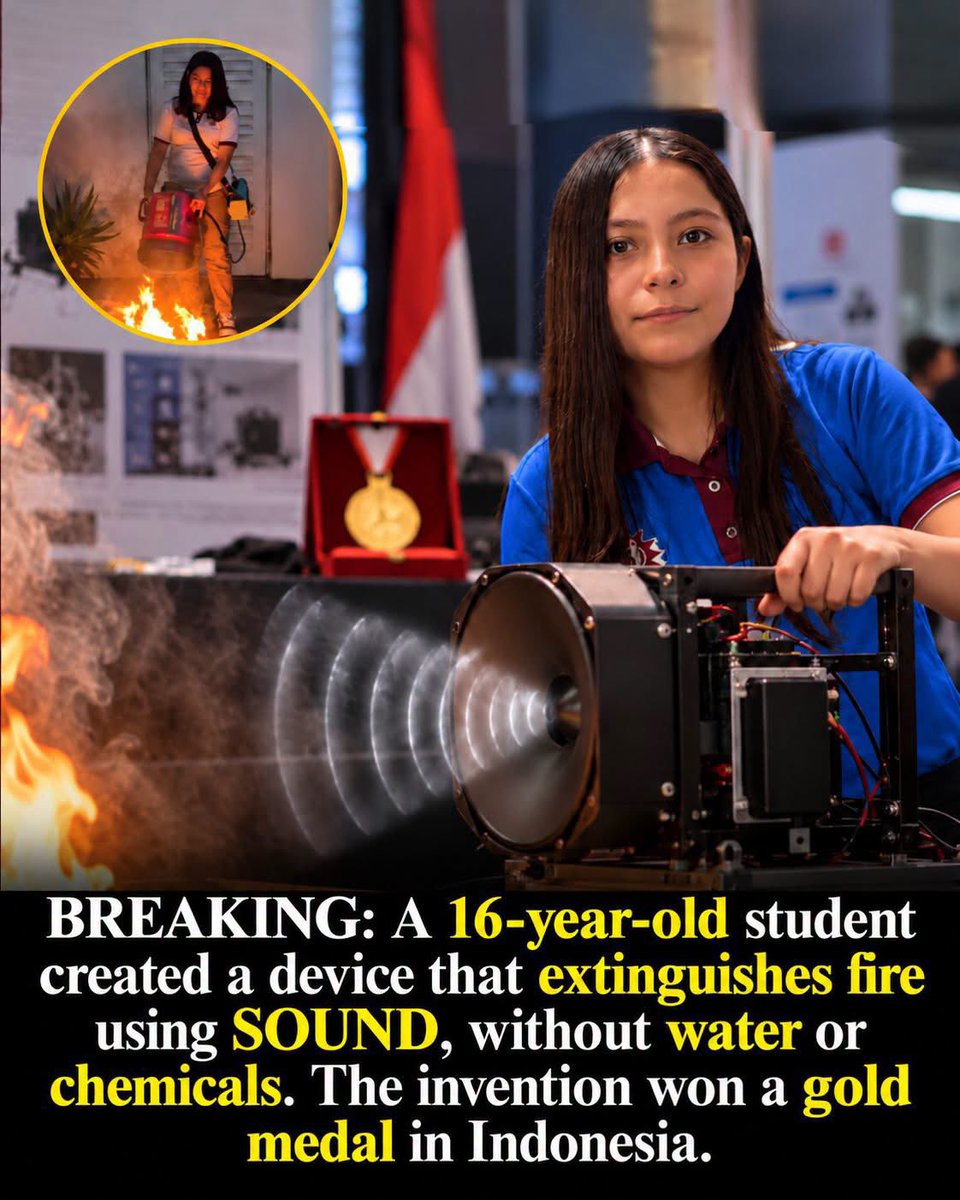
    🚨 A Student Has Developed a Fire Extinguisher That Uses Sound Waves A Mexican student has developed an experimental device called Vortex Tech, which uses low-frequency sound waves to extinguish small flames. Her invention reportedly won a gold medal at an international science competition in Indonesia in October 2026. How does it work? The prototype uses a sound generator, an amplifier, and a speaker to produce low-frequency sound waves. These waves create disturbances in the surrounding air, disrupting the conditions that allow a flame to keep burning. Why is this technology promising? Unlike conventional extinguishing agents, sound waves leave no water damage or chemical residue. This could make the technology useful in certain specialized environments if further testing demonstrates its safety and effectiveness. There is still more research to do. The device is an experimental prototype designed for small flames. It has not been established as a replacement for certified fire extinguishers, particularly for large or spreading fires. This fascinating project builds on years of research into acoustic fire suppression and shows how scientific principles can inspire new approaches to everyday challenges. Source: El País (2026). Reporting on Ángela Karime Venegas Hernández and her Vortex Tech invention.
    Télécharger
    5331212.6K
  19. Next Science✓@NextScience
    🌌 Reality May Be Stranger Than We Ever Imagined… What if the tiniest particles in the universe behave in ways that seem impossible in our everyday world? In quantum physics, particles can show both wave-like and particle-like behavior. Before a measurement, a quantum system can exist in a combination of possible states. When scientists measure it, they observe a specific outcome. But does observation change reality? Not in the way our eyes or human consciousness might suggest. In quantum physics, measurement involves a physical interaction with the system—and understanding exactly what this means remains one of the field’s most fascinating challenges. The deeper scientists explore the quantum world, the more they discover that reality at its smallest scale is far stranger than it appears. Is the universe hiding secrets we are only beginning to understand? Source: Griffiths, D. J., & Schroeter, D. F. (2018). Introduction to quantum mechanics (3rd ed.). Cambridge University Press.
    Télécharger
    1026923K
  20. Next Science✓@NextScience
    🧠 An Experimental Drug Helped Repair Damaged Brain Insulation in Mice! What if scientists could help the brain repair damaged nerve fibers instead of simply treating the symptoms? A promising experimental compound called LL-341070 may offer a new direction for research into diseases such as multiple sclerosis (MS). Myelin is the protective coating around nerve fibers that helps electrical signals travel efficiently. When this coating is damaged, communication between the brain and body can become disrupted, sometimes affecting vision and movement. In animal studies, LL-341070 stimulated the cells responsible for rebuilding myelin. Researchers also observed improvements in myelin repair and activity in brain pathways involved in visual processing. The compound showed stronger effects than clemastine in the reported experiments. Could damaged nerve pathways recover? These findings raise exciting possibilities for future treatments that aim to repair damage rather than just manage symptoms. However, the research was conducted in animals, and scientists still need to determine whether the drug is safe and effective in humans. The biggest question remains: could a treatment like this one day help restore functions affected by myelin damage? Further research may bring us closer to an answer. Source: Nature Communications. (2025). Research article on LL-341070 and myelin repair.
    Télécharger
    121791.9K