
Modern Python features like structural pattern matching and `lru_cache` eliminate massive amounts of boilerplate code.
In production backend services today, do you use `match/case` blocks or stick to `if/elif` chains?


5231156.3K

@PythonDvz
🐍 Python, AI & Distributed Systems Architect. • Daily Python Quizzes & Logic Traps • Junior vs. Senior Code Refactoring • AsyncIO, Memory & Clean Code 👇
Dvz | Python Architect @PythonDvzREST, GraphQL, gRPC, and WebSockets solve completely different network latency bottlenecks in distributed backend systems. For internal service-to-service communication in 2026, do you stick with REST or deploy gRPC?


Dvz | Python Architect @PythonDvzPython Big O race animations show O(log n) beating O(n) in 3 steps vs 8 steps, yet contiguous array scans crush binary tree lookups on real CPU caches. Do you spot why 8 linear steps beat 3 pointer hops in CPython?
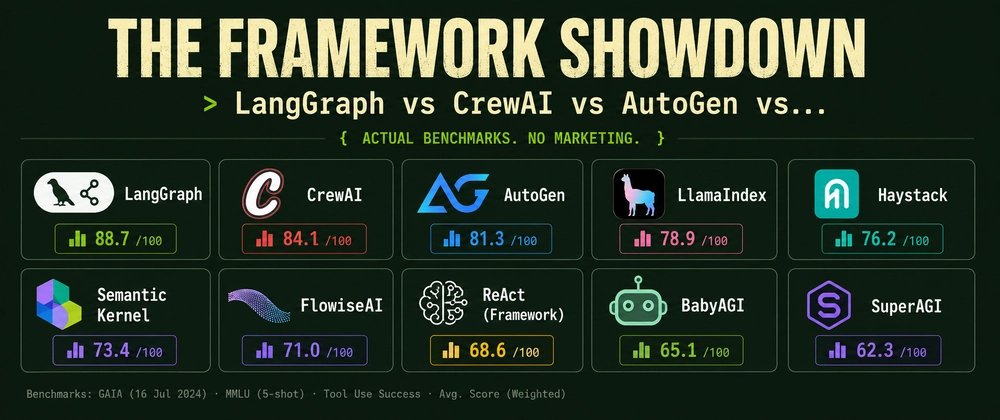
Dvz | Python Architect @PythonDvzLangGraph, CrewAI, and AutoGen dominate multi-agent Python benchmarks when evaluating tool use reliability and state orchestration. When deploying production agent workflows in 2026, do you run LangGraph or CrewAI?
Dvz | Python Architect @PythonDvzPython Big O race animations show O(log n) beating O(n) in 3 steps vs 8 steps, yet contiguous array scans crush binary tree lookups on real CPU caches. Do you spot why 8 linear steps beat 3 pointer hops in CPython?
Dvz | Python Architect @PythonDvzPython Big O race animations show O(log n) beating O(n) in 3 steps vs 8 steps, yet contiguous array scans crush binary tree lookups on real CPU caches. Do you spot why 8 linear steps beat 3 pointer hops in CPython?
Dvz | Python Architect @PythonDvzREST, GraphQL, gRPC, and WebSockets solve completely different network latency bottlenecks in distributed backend systems. For internal service-to-service communication in 2026, do you stick with REST or deploy gRPC?
Dvz | Python Architect @PythonDvzPython Big O race animations show O(log n) beating O(n) in 3 steps vs 8 steps, yet contiguous array scans crush binary tree lookups on real CPU caches. Do you spot why 8 linear steps beat 3 pointer hops in CPython?
Dvz | Python Architect @PythonDvzPython and TypeScript codebases in 2026 are drowning in LLM API calls for deterministic logic that a 1-line check handles in nanoseconds. When reviewing PRs today, do you reject unnecessary agent calls or let them ship?
Dvz | Python Architect @PythonDvzPython RAG pipelines often hit severe latency bottlenecks when teams pick a standalone vector database too early. For production AI agents under 10M vectors in 2026, do you stick with pgvector or deploy Qdrant/Milvus?
Dvz | Python Architect @PythonDvzPython list manipulation quizzes look trivial until 'res->insert(0, x)' on line 7 silently shifts every element in memory on each odd number. Does this output A, B, C, or D—and why does line 7 kill performance?
Dvz | Python Architect @PythonDvzvLLM, SGLang, and TensorRT-LLM each solve distinct GPU bottlenecks across KV cache exhaustion and batch inference throughput. When serving production LLM pipelines in 2026, do you default to vLLM, SGLang, or TensorRT-LLM?
Dvz | Python Architect @PythonDvzPython concurrency architectures force a brutal tradeoff between isolated process memory via slow IPC and fast shared-memory threads that risk silent data corruption. Multiprocessing or free-threaded Python in 2026?
Dvz | Python Architect @PythonDvzPython, Node.js, Go, and Rust each dominate a distinct tier of modern backend and AI system architecture. When building high-concurrency API gateways for AI agents in 2026, do you deploy Python, Go, Node.js, or Rust?
Dvz | Python Architect @PythonDvzPandas to Polars syntax guides are everywhere, yet three Polars rows in this chart silently throw runtime exceptions in production. Do you spot the broken Polars methods or trust this migration guide?


