Posty z #Example

#Example

Publiczne posty w X, które używają #Example.

Powiązane hashtagi

  1. USAA@USAA
    USAA donates $15 million to @CGMutualAssist to aid Coast Guard members impacted by government shutdown. Full details available at
    Pobierz
    563031.1K
  2. Joe Barrow✓@barrowjoseph
    If you saw Jev and you're wondering how decision models work, this should be helpful! In it I try to explain how Perplexity Decider works, plus some considerations around when and how to use decision models. Lots of fun excalidraw figures!
    125950941.1K
  3. demialien@demialien
    I'm going to quickly choose one person to draw on this base as a sample (I'm still working on the base). So, comment with your character reference and I will choose someone in like an hour!
    demialien @demialien
    Thoughts? Yes? No? Maybe? (YCH)
    1272575816.5K
  4. demialien@demialien
    Thoughts? Yes? No? Maybe? (YCH)
    Pobierz
    13871313.6K223K
  5. Miami Futures Trader✓@MFT_Get_Funded
    Sample $1M Portfolio Allocation Note: This simplest example of a "set it and forget" allocation would likely outperform 90% of the financial analysts and fund managers over the long-term.
    Pobierz
    927837.8K
  6. borja✓@borjafat
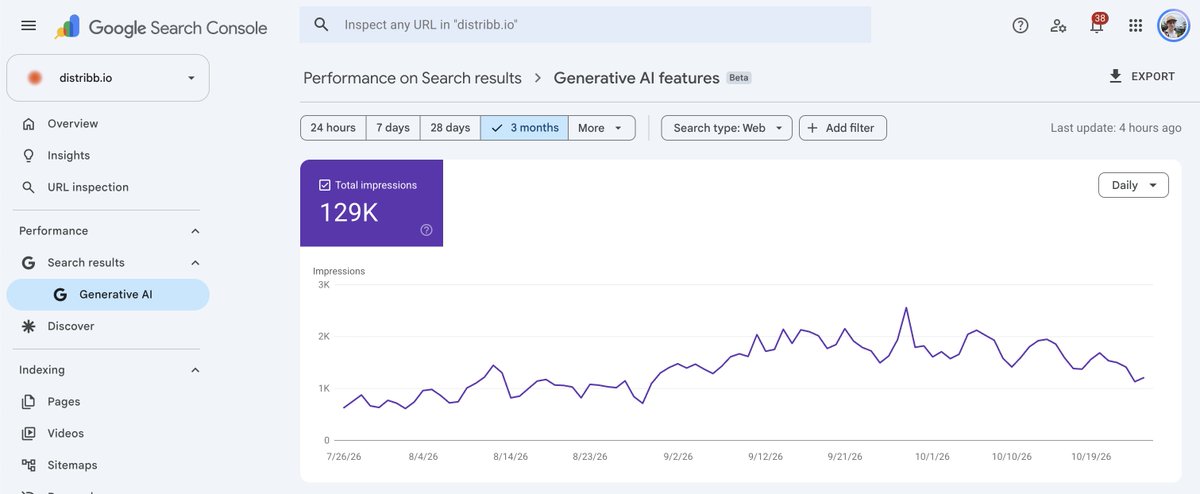
    SEO MAXXING with Claude 232 tactics behind 129k AI mentions for @distribb_io Ranked: S tier 1. Find buy-intent keywords. 2. Read sales calls and support questions to find the words buyers use. 3. Filter buying queries in Search Console to find demand you already reach. 4. Search Google autocomplete to find specific problems buyers want solved. 5. Rank keywords by buying intent to prioritize likely customers. 6. Check the live search results to choose the page format buyers expect. 7. Group searches needing the same answer to keep them on one useful page. 8. Target a specific buyer and use case to compete for a narrower search. 9. Build the pages buyers need 10. Put prices and plan limits on one pricing page to answer budget questions. 11. Compare products on the same criteria to help buyers choose between them. 12. Explain switching reasons to help buyers choose an alternative. 13. Show trial terms beside signup to help visitors get started. 14. Publish discount terms to explain what shoppers will actually pay. 15. Demonstrate features and integrations to answer purchase objections. 16. Write migration guides to help customers move from a competitor. 17. Add a relevant trial or demo button to turn interest into action. 18. Build topical authority 19. Choose a product page first to give each topic a commercial purpose. 20. List related buyer questions to plan complete topic coverage. 21. Write one broad guide to help readers understand the whole task. 22. Give detailed questions their own pages to explain the full answer. 23. Reuse existing answers to fill topic gaps without duplicate pages. 24. Link broad guides and detailed pages to help readers continue. 25. Cover the same buyer's next problem to expand into another relevant topic. 26. Add information gain 27. Read the top ten Google results to see which answers already exist. 28. Read YouTube transcripts to find demonstrations the articles missed. 29. Collect forum and review complaints to find unanswered questions. 30. Compare buyer questions with existing answers to find a research gap. 31. Let Claude interview you to collect firsthand examples for articles. 32. Analyze your records to answer a question only your data can resolve. 33. Count review complaints to show recurring problems in your sample. 34. Test the same task across products to give buyers a firsthand comparison. 35. Save observations and calculations to make your findings checkable. 36. Put evidence beside findings to make the answers easy to verify. 37. Improve content you already have 38. Find pages losing search clicks to choose which answers to update. 39. Compare seasonal periods to distinguish recurring dips from new ones. 40. Find relevant pages near page one to choose content worth updating. 41. Match unanswered queries to existing pages to add missing answers. 42. Refresh old prices and screenshots to make the instructions usable again. 43. Compare overlapping pages to find answers that should share one URL. 44. Merge duplicate answers and redirect old URLs to consolidate pages. 45. Rewrite weak search titles to explain why someone should open the page. 46. Add internal links people will use 47. Link articles to relevant product pages to help readers try the tool. 48. Link to pages with no incoming links to make them discoverable. 49. Link from established pages to help readers find pages near page one. 50. Put links beside the questions they answer to give readers a reason to click. 51. Describe the destination in the linked words to show what opens next. 52. Vary linked words with the sentence to describe the destination naturally. 53. Add guides and product pages to your footer to keep them easy to find. 54. Measure internal-link clicks to find links worth keeping or rewriting. A tier 55. Get into the lists buyers read 56. Find competitor roundups to locate publishers covering your category. 57. Check AI's cited roundups to find sources used in buying answers. 58. Find a missing buyer need to give list authors a reason to add you. 59. Send a tested feature or fresh example to support your proposed addition. 60. Send the author your exact addition to make the edit easy to assess. 61. Refresh your roundup entries to keep the product details accurate. 62. Recover links you already earned 63. Find unlinked brand mentions to ask editors to link readers to the source. 64. Search for reused charts and quotes to find missing source credits. 65. Restore removed pages with live backlinks to make those links useful. 66. Redirect old URLs to equivalent replacements to restore reader access. 67. Find link opportunities through competitors 68. Inspect competitors' linked pages to find resources publishers cite. 69. Read the sentence around each link to learn why the author added it. 70. Add missing evidence to give those publishers a useful new source. 71. Pitch the specific missing answer to show what your resource adds. 72. Replace broken and outdated resources 73. Find dead competitor URLs with backlinks to locate broken references. 74. Read archived pages to learn what readers expected from the dead URL. 75. Publish a matching replacement to give editors a working source. 76. Send the broken link and replacement to make the repair easy. 77. Find guides naming closed tools to offer a current replacement. 78. Publish statistics people can cite 79. Choose a question your buyers need answered to make the research useful. 80. Publish original statistics to give writers a source they can cite. 81. Explain the sample and method to make each statistic checkable. 82. Write each finding as a complete sentence to make it easy to quote. 83. Keep research URLs stable to preserve links when findings change. 84. Link research to relevant product pages to help readers try the tool. 85. Answer journalist requests 86. Show real experience in your profile to help reporters assess you. 87. Check Qwoted requests to find reporters who need your knowledge. 88. Filter by topic and deadline to find requests you can answer. 89. Lead with a direct answer to give the journalist a usable quote. 90. Add an original number or firsthand example to support the quote. 91. Include your research page to let the journalist verify the answer. 92. Log requests and replies to avoid pitching the same request twice. 93. Build the visual an article is missing 94. Find text-heavy guides to locate explanations that need a visual. 95. Offer a graphic for a named section to give the author a clear use. 96. Ask before making graphics to spend time on interested publishers. 97. Use the author's checked facts to make a graphic they can trust. 98. Send the image and embed code to make publishing and source credit easy. 99. Turn another author's article into a video 100. Find guides missing a demo to offer a video their readers could use. 101. Pitch a short video for one section to explain exactly what you will make. 102. Record the steps after the author agrees to produce something they want. 103. Send the finished video with source-credit wording to make adding it easy. 104. Build free tools that earn links 105. Find a repeated buyer calculation to choose a useful free tool to build. 106. Ask Claude to build a calculator to answer the buyer's question. 107. Test normal and unusual inputs to check the tool's answers work. 108. Give the tool a permanent page to give publishers a place to link. 109. Offer the tool to relevant guides to give their readers a shortcut. 110. Exchange relevant editorial links 111. Join a relevant business network to find editorial link partners. 112. Match links with the surrounding topic to make each reference useful. 113. Link to the answer readers need to give each placement a purpose. 114. Log published sources and destinations to track delivered links. B tier 115. Build useful programmatic pages 116. Combine categories and real buyer needs to find distinct page ideas. 117. Merge combinations needing the same answer to avoid duplicate pages. 118. Add specific facts to each page to answer its particular question. 119. Store verified facts in a spreadsheet to reuse them across templates. 120. Review a small draft batch to fix the template before scaling. 121. Link each page to the matching offer to give buyers a next action. 122. Use parasite SEO 123. Check which platforms rank for your query to choose where to publish. 124. Publish complete answers there to reach buyers using those platforms. 125. Put the search topic in the headline to make the page's subject clear. 126. Answer the question in the opening to make the page useful at once. 127. Adapt each article's format to fit how the platform's readers use it. 128. Link to a relevant next step to bring interested readers to your site. 129. Find gaps in AI recommendations 130. Save real buying questions to make AI visibility checks repeatable. 131. Test each AI separately to see where your brand gets recommended. 132. Record brands and citations separately to identify missing sources. 133. Find prompts naming competitors to choose answers to investigate. 134. Read repeated citation sources to learn which evidence those answers use. 135. Improve your answer or pitch the cited page to address the gap. 136. Repeat the same checks after edits to see if recommendations changed. 137. Publish YouTube answers buyers search for 138. Check for videos in search results to choose a useful video topic. 139. Target a specific product question to help buyers make a decision. 140. Record the product completing the task to prove the instructions work. 141. Name the task in the video title to show searchers what the video answers. 142. Add captions and chapters to help viewers find the answer they need. 143. Answer buyer questions in the description to explain the demo. 144. Embed videos beside written answers to let readers watch the steps. 145. Improve local search visibility 146. Choose the specific business category to describe the service you sell. 147. Match business names and contact details to help customers identify you. 148. Link your profile to the matching service page to show the right offer. 149. Complete contact and booking details to help customers reach you. 150. Ask for honest reviews after each job to collect recent feedback. 151. Reply with relevant public details to answer reviewers personally. 152. Upload real job photos to show customers the work your business does. 153. Publish current offers to give profile visitors a reason to act. 154. Show who is behind the content 155. Add a real author byline to let readers check who wrote the advice. 156. Link bylines to relevant experience to explain the author's knowledge. 157. Show firsthand tests to support the author's recommendations. 158. Publish a factual About us page to help readers identify the business. 159. Keep company facts consistent to make your business easy to recognize. 160. Make important pages accessible 161. Inspect URLs in Search Console to check whether Google can index them. 162. Fix unintended blocks and noindex tags to make intended pages accessible. 163. Add pages to navigation and sitemaps to help search engines find them. 164. Use working, crawlable links to let search engines follow them. 165. Correct canonical URLs to identify your preferred page version. 166. Check rendered pages to confirm readers and crawlers can see the answer. C tier 167. Find timely topics 168. Filter Google Trends by category and country to find rising searches. 169. Check trend history to distinguish seasonal demand from a short spike. 170. Cover relevant rising questions to reach buyers asking something new. 171. Read the original news announcement to explain what changed accurately. 172. Explain news using your expertise to help readers understand its effect. 173. Share the timely finding with relevant reporters to offer a useful source. 174. Earn links through tools you use 175. List software you use to find vendors that could feature your story. 176. Document your workflow and result to give vendors a customer story. 177. Send the case study to the right editor to propose a customer feature. 178. Claim relevant business listings 179. Find eligible supplier directories to make your business discoverable. 180. Complete eligible government profiles to help buyers find your business. 181. Add your website where allowed to help directory visitors reach you. 182. Keep listing details consistent to help people recognize your business. 183. Get customer reviews and independent coverage 184. Complete G2 and Capterra profiles to help buyers compare your product. 185. Ask customers for real reviews to give buyers firsthand evidence. 186. Give reviewers access and current facts to help them test your product. 187. Answer relevant community questions to help people researching a purchase. 188. Reuse research across platforms 189. Turn articles into YouTube demos to reach people who want to watch. 190. Share original findings on Reddit to answer questions with evidence. 191. Answer existing Quora questions to reach people seeking those answers. 192. Adapt research for Medium or Substack to reach their readers. 193. Work with complementary creators to reach buyers who follow them. 194. Publish LinkedIn articles people can find 195. Choose queries LinkedIn already ranks for to target suitable topics. 196. Put the query early in the headline to make the search topic clear. 197. Check your headline before publishing to get a relevant article URL. 198. Lead with an answer and example to make the article useful at once. 199. Link from relevant pages on your site to help readers find the article. 200. Turn articles into carousels and short videos 201. Put one answer on each carousel slide to make the steps easy to follow. 202. Write descriptive captions and alt text to explain each slide. 203. Cut a product demo into short answers to reuse the parts buyers ask about. 204. Show the product or result immediately to make the video clear. 205. Repeat formats bringing relevant enquiries to build a useful routine. 206. Offer a related guide at the end to give viewers a clear next step. 207. Give Claude a repeatable SEO job 208. Connect Search Console and your CMS to let Claude prepare page edits. 209. Save product facts and writing examples to give Claude accurate context. 210. Save instructions and finished examples to make Claude's job repeatable. 211. Save corrections in the playbook to stop the same mistake recurring. 212. Schedule page and citation checks to turn fresh data into useful edits. 213. Open each published URL to confirm the intended change appeared. 214. Log finished jobs and failed attempts to resume without duplicate posts. 215. Track the actions that produce customers 216. Save starting metrics and page edits to compare results after changes. 217. Track sales by landing page to find content bringing customers. 218. Tag distribution links to find platforms sending interested visitors. 219. Track profile calls and bookings to measure local enquiries. D tier 220. Improve search and sharing previews 221. Write specific meta descriptions to explain why someone should visit. 222. Match the title and main heading to keep the page's promise consistent. 223. Set a useful sharing image and title to make shared links understandable. 224. Add accurate structured data 225. Add supported structured data to describe your content for search engines. 226. Match structured data to visible facts to keep both versions accurate. 227. Run Google's Rich Results Test to find supported structured data errors. 228. Remove page friction 229. Compress oversized images to reduce what visitors need to download. 230. Remove unnecessary scripts to reduce work the browser must do. 231. Fix broken mobile interactions to help visitors complete the next action. 232. Add llms.txt for compatible agents to give them an index of your pages.
    Pobierz
    borja @borjafat
    "Hey Claude, implement this for me" that's it...
    322738742.4K
  7. borja✓@borjafat
    "Hey Claude, implement this for me" that's it...
    913210156K
  8. Decagon@DecagonAI
    172022756.5K
  9. Avid✓@Av1dlive
    i spent 1,842 hours writing 3,478 posts and made $0... not because my content was bad... because i never built a brand worth paying for here's how to build a personal brand AI can't copy and monetize it in 30 days 👇
    4820186145K
  10. AI Pirate✓@A_Pirate_I
    I didn't teach Grok Bot to trade. I gave it a trading bot to manage. 12 steps: one front door, Jev as the decision layer, a read-only bridge to the bot, and autonomy levels so nothing moves money without you. save it before you build yours.
    1395984.5K
  11. Mathematica✓@mathemetica
    Why does intelligence, human or artificial, begin with measuring uncertainty? This chart packs probability’s core: event axioms, conditional probability, Bayes’ theorem, discrete and continuous distributions (Binomial, Normal, Poisson), expectation, joints, and the Law of Large Numbers. They let us learn from noisy data, quantify risk, and trust sample averages. From AI to finance and science, quantifying chance turns noise into insight.
    Pobierz
    1117289732.1K
  12. Parker 🐐✓@DotComParker
    How to create streams of income with GrokBot:
    18494967334K
  13. Arindam Majumder 𝕏✓@Arindam_1729
    Anthropic just told teams to delete most of their subagents! (one customer ran ~2x faster after moving to a single agent loop) for a year, the default agent design looked like an org chart. a router on top, a planner, then one specialist subagent per team. anthropic's applied ai team compared these setups across several enterprise deployments. a single agent with skills frequently won on quality, and often on cost and latency too. the problem is handoffs. every subagent returns a summary, and every summary drops detail. anthropic calls it a telephone game. here's the loop they recommend instead: one model, one context window, an open-ended tool loop with turn and cost budgets set in the harness each turn the model emits a batch of tool calls, the harness runs them in parallel and returns raw results each subagent's procedure becomes a skill, and its api calls become mcp tools hard limits like approval gates live inside the tools, not in the prompt skills and tools load on demand through progressive disclosure and tool search progressive disclosure is why this works now. anthropic cut claude code's system prompt for advanced models by over 80%, partly because of it. there's a catch, though. on a sample support agent, folding one subagent lowered latency but broke a process that had been passing. that break showed up in only 1 of 2 runs. so you can't skip evals here. start with 10 golden examples, fold one subagent at a time, and run every task more than once. another limit to respect: past 30 to 50 tool definitions, tool choice starts to degrade. subagents still earn their place for parallel work, for context bloat you can measure, and for tool restrictions. my take: most multi-agent systems i see were built for weaker models and never revisited. your agent architecture shouldn't mirror your org chart.
    Pobierz
    Arindam Majumder 𝕏 @Arindam_1729
    I open-sourced Claude Duet! (same proactive agent, on open models, MIT-licensed) It's called OpenDuet. it briefs you every morning, checks your apps while you're away, and only pings you when something needs you. Anything that sends, posts, or pays waits for your approval. Each bot gets its own open model and a plain MEMORY.md you can edit. built with @mastra, @nebiustf and @composio Repo:
    2214136.2K
  14. Arindam Majumder 𝕏✓@Arindam_1729
    I open-sourced Claude Duet! (same proactive agent, on open models, MIT-licensed) It's called OpenDuet. it briefs you every morning, checks your apps while you're away, and only pings you when something needs you. Anything that sends, posts, or pays waits for your approval. Each bot gets its own open model and a plain MEMORY.md you can edit. built with @mastra, @nebiustf and @composio Repo:
    Pobierz
    1287143.2K
  15. Sam 🂾✓@skysaksham
    2,539 wallets. Roughly $201 traded by each. Sounds harmless until you look at the reward math. I came across a ZeruAI study of three days of trading on Base. Those wallets generated about $510K in volume. Under proportional rewards, their share would be 0.27%. Under a square-root reward curve? 9.32%. Same trading activity. Wildly different outcome. The biggest genuine trader in that sample would've received 7.7% under the curved model. And here's the catch: Zeru wasn't claiming all 2,539 wallets belonged to one farmer. The research showed how a formula designed to help smaller wallets can also reward activity split across lots of addresses. That's a problem worth solving before building incentive systems around onchain activity. Because sometimes the easiest way to game a rewards program isn't to fake a transaction. It's to understand the formula better than everyone else. This is the kind of research I want to see more of from @zerufinance . Not just promises about fair rewards, but actual examples of where incentive design can go wrong.
    Pobierz
    362153612.5K
  16. Sergii Makarevych✓@sermakarevich
    A review of 30 memory products for AI agents: what each one saves, how it gets memory back into the prompt, what happens when a fact changes, and what it really costs once you count the extraction tokens the price page leaves out. Which one do you use?
    811919813.2K
  17. Celtic FC Academy@CelticFCAcademy
    His technical ability may be first class but he’s still aware of the need for hard work. #example 🍀
    Pobierz
    710307
  18. Noah B. Price✓@TrueOnX
    🚨 Their Plan to Eliminate You by 2030 Just Got Exposed… 🚨 Watch this. An official document from the Biological Weapons Convention spells out the total ban on developing, producing, or stockpiling biological agents… while the footage shows military command centers, deep underground facilities from 1975, desert test explosions, and experts openly discussing what’s really happening. They signed the treaty. They built the bunkers. They’re still running the tests. So here’s what I need you to ask yourself right now: 1. If biological weapons are “banned,” why does the infrastructure for them still exist at this scale? 2. Why does every major global timeline (Agenda 2030, climate lockdowns, digital IDs) converge on the same 2030 deadline? 3. Who exactly are “the Parties” that get to decide what gets destroyed… and what gets kept underground? 4. If this was really about protecting humanity, why does the average person feel more like the target than the protected? 5. What if the greatest trick they ever pulled was making us cheer for our own elimination? This isn’t a conspiracy theory anymore. It’s a convention with receipts. Watch until the end. Then tell me I’m wrong. Repost if you’re not ready to be culled by 2030. Let me know what you think, and SHARE THIS so that others may too! And if you're not already following @TrueOnX... What the heck are you doing!?
    Pobierz
    Noah B. Price @TrueOnX
    🚨 THIS IS THE BOMBSHELL VIDEO THAT CHANGES EVERYTHING! A secret group of just "300 elites" the “Olympian Council” / Committee of 300; has been pulling the strings on presidents, banks, wars, media, and every major crisis for decades. Dr. John Coleman dropped the full list and their exact playbook back in 1994… and his predictions are hitting 2026 like clockwork. They don’t want you to know their names. They don’t want you awake. They fear an informed public more than anything else on Earth. Watch this clip until the end. Your entire view of “reality” will shatter.👀 This isn’t left vs right. This is humanity vs these 300 criminals. Drop a like if you’re done being their puppet. SHARE THIS like your children’s future depends on it (because it does). Comment what shocked you most. The Great Awakening is here. Share this NOW before they scrub it. Who’s ready to drag these bastards into the light? 👇
    591.1K1.6K196K
  19. Noah B. Price✓@TrueOnX
    🚨 THIS IS THE BOMBSHELL VIDEO THAT CHANGES EVERYTHING! A secret group of just "300 elites" the “Olympian Council” / Committee of 300; has been pulling the strings on presidents, banks, wars, media, and every major crisis for decades. Dr. John Coleman dropped the full list and their exact playbook back in 1994… and his predictions are hitting 2026 like clockwork. They don’t want you to know their names. They don’t want you awake. They fear an informed public more than anything else on Earth. Watch this clip until the end. Your entire view of “reality” will shatter.👀 This isn’t left vs right. This is humanity vs these 300 criminals. Drop a like if you’re done being their puppet. SHARE THIS like your children’s future depends on it (because it does). Comment what shocked you most. The Great Awakening is here. Share this NOW before they scrub it. Who’s ready to drag these bastards into the light? 👇
    Pobierz
    2223636394.4K
  20. PropheticForensics@isaiah61n2021
    @TrueOnX
    "The name "devolution" is unclassified" .. sounds like she says.. so here is that search⤵️ Devolution is the unclassified name for a highly classified U.S. continuity-of-government program designed to maintain federal authority after a catastrophic biological attack or incident. Purpose: The plan prepares for a "maximum of maximums event" where society collapses into anarchy due to fear of infection and lack of medical countermeasures. Mechanism: A pre-selected group of officials, who have signed contracts and rehearsed the protocol, immediately evacuate the Washington, D.C. area. Locations: These individuals retreat to classified underground bunkers known as hot sites, warm sites, and cold sites located across the United States. Goal: The objective is to preserve the basic principles of the U.S. Constitution and reconstitute the government while the nation’s infrastructure fails and the majority of citizens perish.
    11256
  21. PropheticForensics@isaiah61n2021
    @isaiah61n2021
    @TrueOnX Weirdly, we have all 6 doomsday planes up right now.. but this is how it will look when the flee DC. #EXAMPLE
    NEET INTEL @neetintel
    A 40 character Emergency Action Message is broadcast over the HFGCS as a sixth Mercury E6B "doomsday plane" takes to the sky. [261027 19˸08 UTC]
    00143
  22. NEET INTEL✓@neetintel
    A 40 character Emergency Action Message is broadcast over the HFGCS as a sixth Mercury E6B "doomsday plane" takes to the sky. [261027 19˸08 UTC]
    Pobierz
    75728722K
  23. Theo✓@theoxmotion
    211281K140K
  24. Pokaż więcej postów