Posts with #Example

#Example

Public posts on X that use #Example.

Related hashtags

  1. demialien@demialien
    I'm going to quickly choose one person to draw on this base as a sample (I'm still working on the base). So, comment with your character reference and I will choose someone in like an hour!
    demialien @demialien
    Thoughts? Yes? No? Maybe? (YCH)
    1282575515.5K
  2. demialien@demialien
    Thoughts? Yes? No? Maybe? (YCH)
    Download
    13671313.6K199K
  3. USAA@USAA
    USAA donates $15 million to @CGMutualAssist to aid Coast Guard members impacted by government shutdown. Full details available at
    Download
    563031.1K
  4. Daily Picture Theme✓@DailyPicTheme2
    Thursday 20 March Today’s Daily Picture Theme is ‘Example' RT or reply with your own photo Tomorrow’s theme will be ‘Friendship' #DailyPictureTheme An #example of a luxurious taste in cars!
    Download
    115121168.2K
  5. Avid✓@Av1dlive
    i spent 1,842 hours writing 3,478 posts and made $0... not because my content was bad... because i never built a brand worth paying for here's how to build a personal brand AI can't copy and monetize it in 30 days 👇
    4721177141K
  6. diva✓@divaagurlxw
    Evals are the most underrated skill in AI engineering. 1. Start with error analysis, not metrics Sample 100+ production traces. Annotate each failure in free text (open coding), then cluster them into failure categories (axial coding). Count frequency per category. Your top 3 categories are your first metrics. 2. Build a versioned golden dataset Store inputs, expected outputs or rubrics, and metadata (intent, difficulty, user segment) in a versioned dataset. Stratify it so rare but critical cases aren't drowned out by easy ones. Version it alongside your prompts so every score is reproducible. 3. Generate synthetic data along explicit dimensions Don't just ask an LLM for "test questions." Define dimensions (persona × intent × complexity × edge case), generate combinations as tuples, then turn each tuple into a natural input. You get coverage instead of 200 near-identical examples. 4. Deterministic assertions first JSON schema validation, regex checks, required fields, length limits, code execution, SQL that actually runs against a test DB. These are cheap, fast, and have zero variance. Reserve model-based grading for what code genuinely can't check. 5. Evaluate retrieval separately from generation For RAG, measure retrieval with recall@k, MRR, or nDCG against labeled relevant chunks. Measure generation with faithfulness (is every claim supported by retrieved context?). If you only score the final answer, you can't tell which half is broken. 6. Trajectory evals for agents Log every step: tool name, arguments, result, tokens. Score tool-call precision and recall against a reference path, argument correctness, step count, and error recovery. An agent that reaches the right answer in 14 calls when 3 would do is a cost and latency bug. 7. pass@k vs pass^k pass@k = succeeded at least once in k runs. pass^k = succeeded in all k runs. At 80% per-run success, pass^5 drops to roughly 33%. Production reliability lives in pass^k, so run each case multiple times at your real temperature. 8. Simulated users for multi-turn Give an LLM a persona, a hidden goal, and constraints, then let it converse with your system until the goal is met or a turn limit hits. Grade goal completion, turns-to-resolution, and policy violations. Single-turn evals miss most state and memory bugs. 9. Align your LLM judge like a classifier Hand-label 100+ examples as pass/fail. Split into train/dev/test. Iterate on the judge prompt using dev, then report TPR and TNR on test. Use binary outputs with a written rubric, require a short critique before the verdict, and pin the judge model version. 10. Control judge bias in pairwise comparisons LLM judges have position bias and often prefer longer answers. Run every A/B comparison twice with swapped order and only count consistent verdicts. Normalize or cap length if verbosity is skewing results. 11. Respect statistics With 100 examples at 80% accuracy, your 95% confidence interval is about ±8 points. A jump from 80% to 83% is probably noise. Use bootstrapped confidence intervals, or a paired test on the same examples, before declaring a win. 12. Gate deploys in CI Run the eval suite on every PR that touches prompts, models, tools, or retrieval config. Set per-category thresholds instead of one global score, so a big win in one area can't hide a regression in another. Fail the build on a regression. 13. Online evals in production Sample a percentage of live traffic, run your judges asynchronously, and alert on drift per failure category. Use shadow deployments to run a new prompt or model on real traffic without showing users the output. 14. Make cost and latency first-class metrics Track tokens per request, cost per successful task (not per call), and p50/p95 latency next to quality. A change that keeps quality flat while cutting cost 40% is a real win and deserves to ship. 15. Close the loop Every production failure becomes a new labeled test case. Every new model release gets run against the full suite before anyone debates switching. Over time your eval set becomes the most valuable asset in the codebase. Prompts are disposable. Models get replaced every few months. Your eval infrastructure is what compounds.
    1111342K193K
  7. Keshe@KesheWrites
    They said they would make an #example of me. And so I did. I became an example of everything I ever wanted myself to be #vss365 #poetry
    9890
  8. Arindam Majumder 𝕏✓@Arindam_1729
    Anthropic just told teams to delete most of their subagents! (one customer ran ~2x faster after moving to a single agent loop) for a year, the default agent design looked like an org chart. a router on top, a planner, then one specialist subagent per team. anthropic's applied ai team compared these setups across several enterprise deployments. a single agent with skills frequently won on quality, and often on cost and latency too. the problem is handoffs. every subagent returns a summary, and every summary drops detail. anthropic calls it a telephone game. here's the loop they recommend instead: one model, one context window, an open-ended tool loop with turn and cost budgets set in the harness each turn the model emits a batch of tool calls, the harness runs them in parallel and returns raw results each subagent's procedure becomes a skill, and its api calls become mcp tools hard limits like approval gates live inside the tools, not in the prompt skills and tools load on demand through progressive disclosure and tool search progressive disclosure is why this works now. anthropic cut claude code's system prompt for advanced models by over 80%, partly because of it. there's a catch, though. on a sample support agent, folding one subagent lowered latency but broke a process that had been passing. that break showed up in only 1 of 2 runs. so you can't skip evals here. start with 10 golden examples, fold one subagent at a time, and run every task more than once. another limit to respect: past 30 to 50 tool definitions, tool choice starts to degrade. subagents still earn their place for parallel work, for context bloat you can measure, and for tool restrictions. my take: most multi-agent systems i see were built for weaker models and never revisited. your agent architecture shouldn't mirror your org chart.
    Download
    Arindam Majumder 𝕏 @Arindam_1729
    I open-sourced Claude Duet! (same proactive agent, on open models, MIT-licensed) It's called OpenDuet. it briefs you every morning, checks your apps while you're away, and only pings you when something needs you. Anything that sends, posts, or pays waits for your approval. Each bot gets its own open model and a plain MEMORY.md you can edit. built with @mastra, @nebiustf and @composio Repo:
    2024235.9K
  9. Arindam Majumder 𝕏✓@Arindam_1729
    I open-sourced Claude Duet! (same proactive agent, on open models, MIT-licensed) It's called OpenDuet. it briefs you every morning, checks your apps while you're away, and only pings you when something needs you. Anything that sends, posts, or pays waits for your approval. Each bot gets its own open model and a plain MEMORY.md you can edit. built with @mastra, @nebiustf and @composio Repo:
    Download
    977042.3K
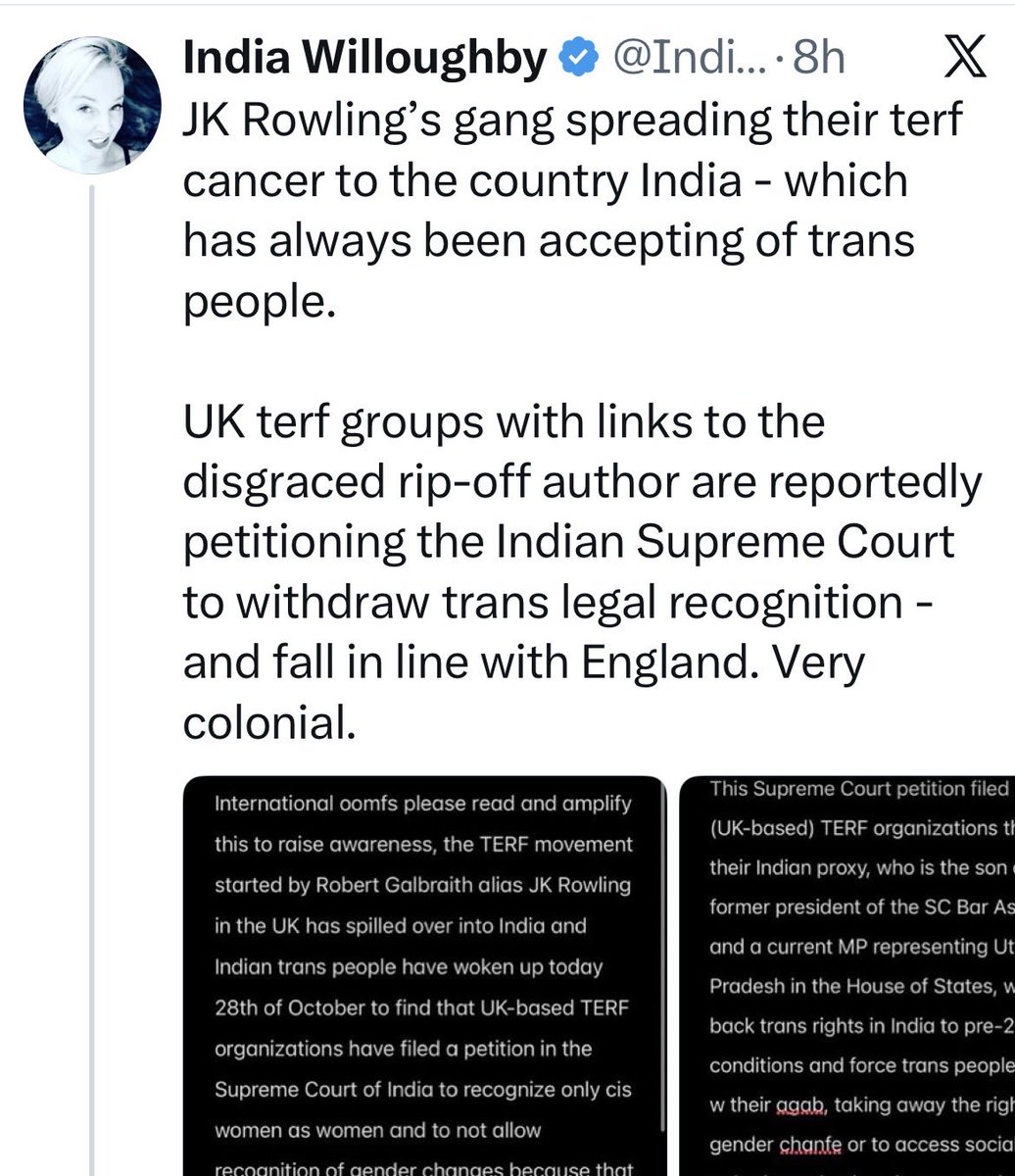
  10. Fruella_🦝✓@FruellaDeBrille
    I’m so glad he clarified “the country”
    Download
    137561.1K
  11. Alicia✓@ali_allon
    @FruellaDeBrille
    @FruellaDeBrille Yep. He can’t have us thinking JK Rowling’s gang spreading their terf cancer to the cunt India, can he now?
    10125
  12. Dr Natalie Reilly-Johnson@nreillyjohnson
    ‘Fancy a game of Murdle?’ ‘You mean Wordle?’ ‘No. It’s a new one I made up.’ ‘Quordle, Worldle, Heardle… this is just another #example of jumping on a trend. Can’t you come up with something more original?’ ‘That’s 1 strike. You have 5 more.’ ‘Then what?’ ‘You’ll see…’ #vss365
    Download
    221373
  13. Catholics for Catholics 🇺🇲✓@CforCatholics
    Archbishop Sample says none of the political parties in this country embody all of Catholic Social Teaching. But the Democrat party embodies ideas that are specifically ANTI-Catholic social teaching; pro-abortion, pro-euthanasia, anti-family & pro-LGBT. When we start with our Catholic faith, it's not hard to see which party's political platforms are more in line with church teaching.
    Download
    5018073912.7K
  14. Sedberry Jr@SedberryJr
    ✊🏾💪🏾🖤 💭 As we close out Black History Month 🗓 and we recognize people of color. The month can’t end without recognizing my 🐐, my hero, my mentor, and my DAD! In my 👀’s he’s the best to ever do it! Professionally and Personally! #lovemydad #toughlove #example
    Download
    1721221
  15. Nick Chow✓@nicholasachow
    11138011.8K
  16. Sergii Makarevych✓@sermakarevich
    A review of 30 memory products for AI agents: what each one saves, how it gets memory back into the prompt, what happens when a fact changes, and what it really costs once you count the extraction tokens the price page leaves out. Which one do you use?
    761918811.6K
  17. Show more posts