A simulation of the dielectric breakdown model described in Fractal Dimension of Dielectric Breakdown
L. Niemeyer, L. Pietronero, and H. J. Wiesmann
Phys. Rev. Lett. 52, 1033 – Published 19 March 1984
Made with #python, #numpy and #matplotlib.
Each blob is an eigenvalue. At every frame, I apply small random perturbations and compute eigenvalues each time, this builds the blobs. A real parameter t drives the animation. Thanks to @reidatcheson for making me think about pseudospectra.
Made with #python#numpy#matplotlib
The two blobs show the eigenvalues of a 2×2 matrix. At every frame, I apply small random perturbations to the matrix entries and compute eigenvalues, this builds the blobs. A real parameter t drives the animation.
Made with #python#numpy#matplotlib
From mazes to bacteria like structures, the Gray-Scott reaction-diffusion model reveals how small tweaks to diffusion rates (Du, Dv) and reaction parameters (F, k) produce different emergent morphologies. Mathematical beauty in action!
Made with #python#matplotlib#mlx
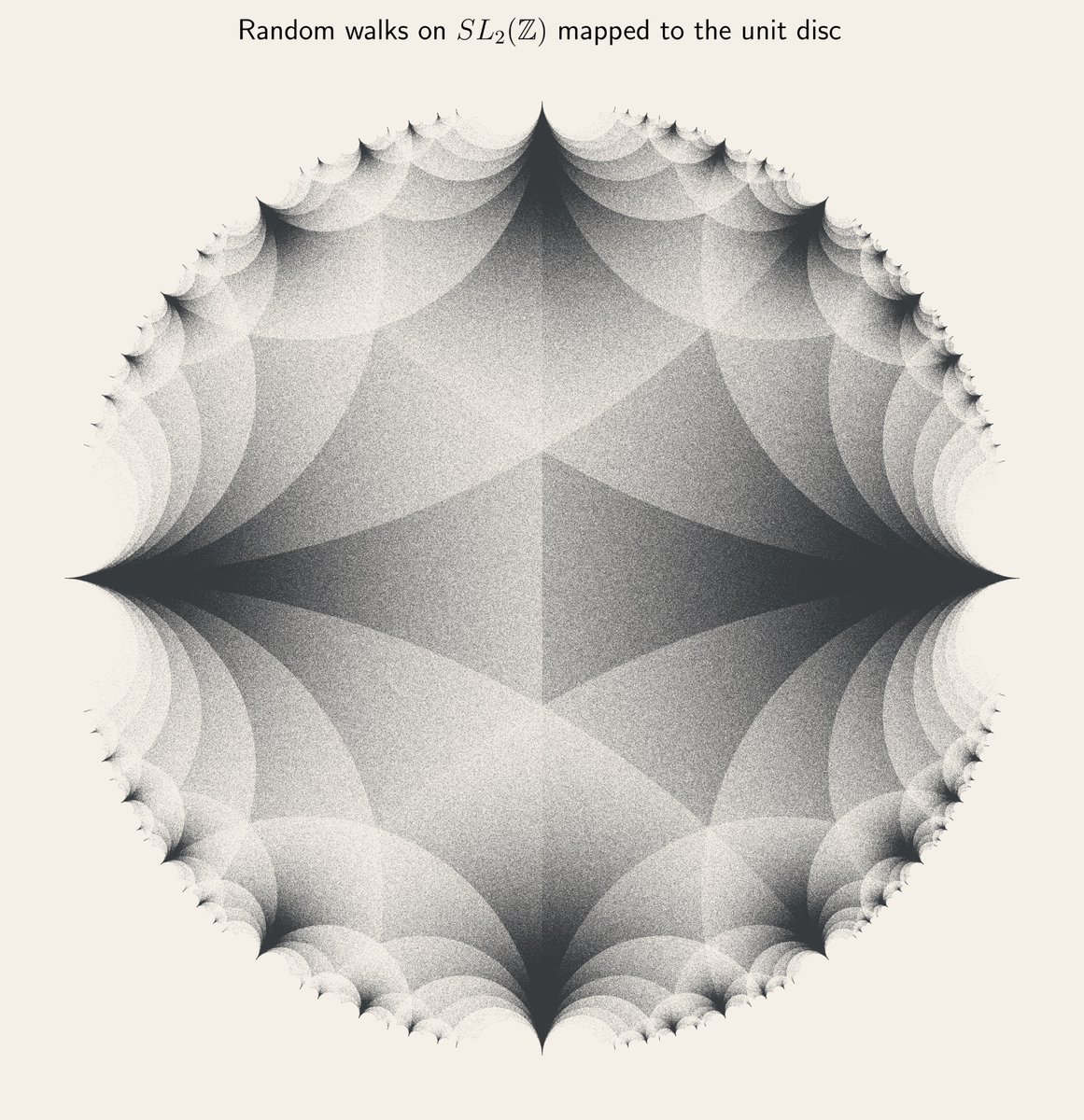
Ten million random walks on SL_2(ℤ) in the upper-half complex plane and then mapped to the unit disc by z→(z-i)/(z+i). Each walk starts from a point inside the fundamental domain of SL_2(ℤ).
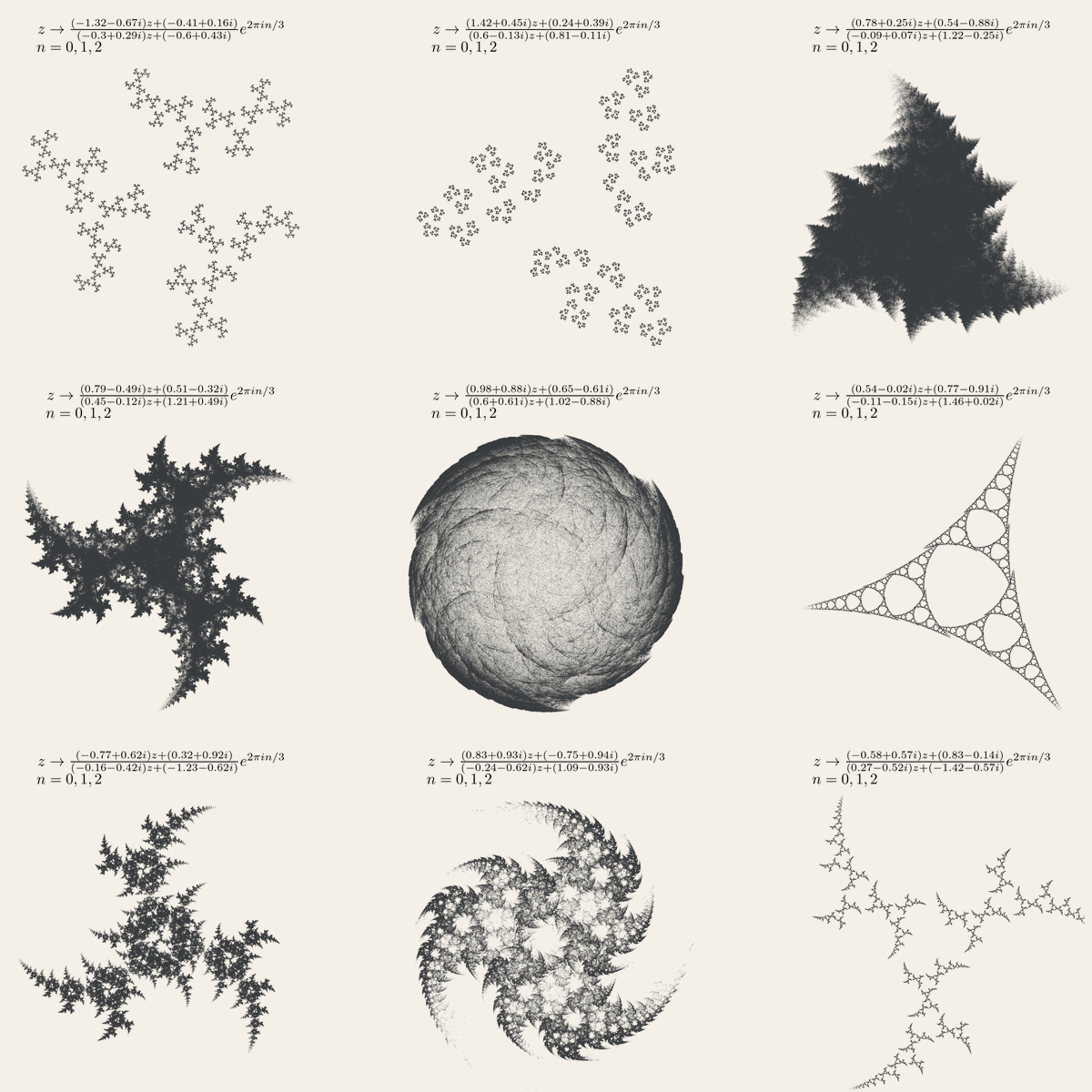
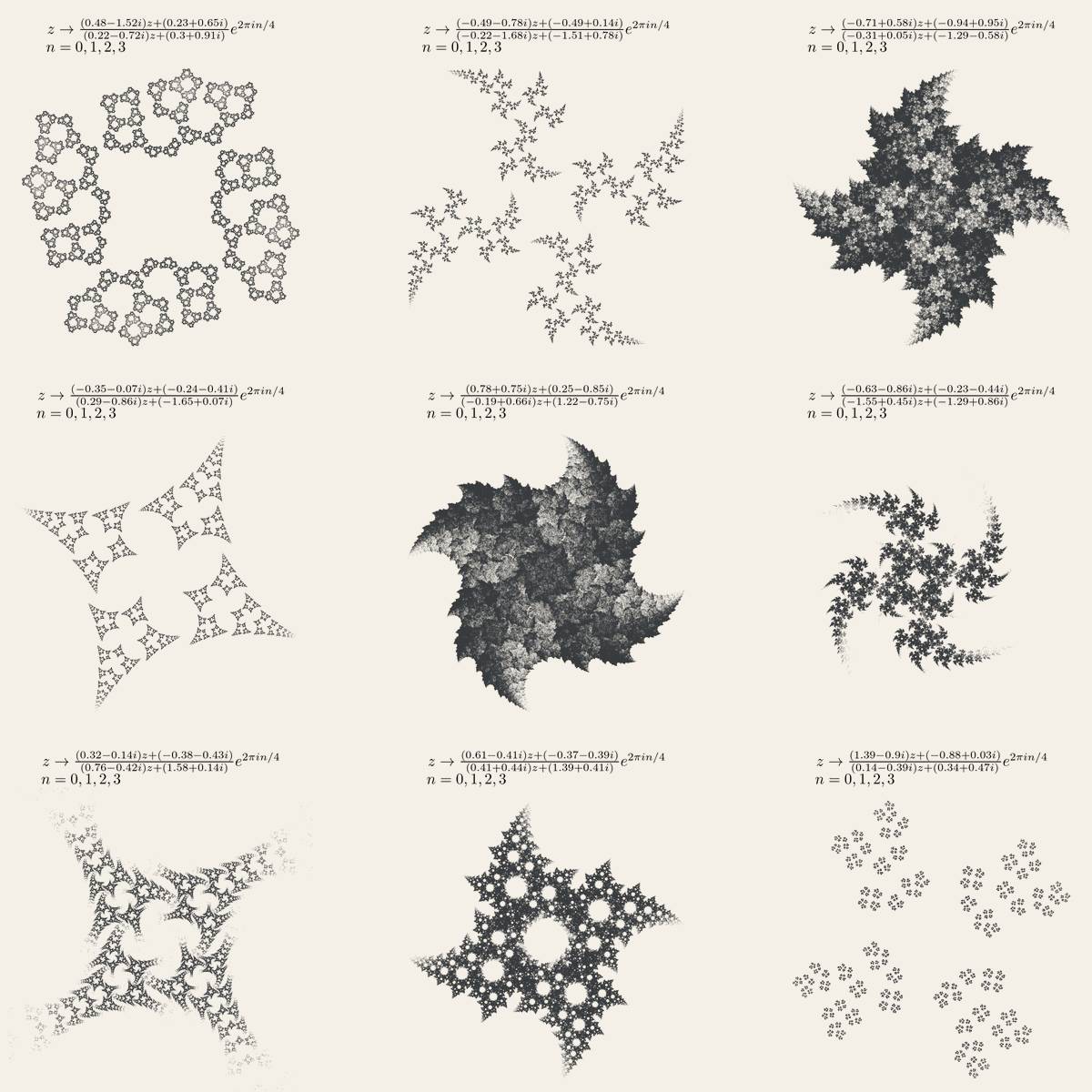
Made with #python, #matplotlib and #numpy.
Fractals generated using the chaos game of the iterated function system defined by the Möbius transformations below. Made with #python, #matplotlib and #numpy.
First energy levels of a 2D quantum harmonic oscillator. Each pattern shows where you're most likely to find the particle.
Made with #Python#NumPy#Matplotlib on the train coming back from @pyconit#PyConIT2025