1. Arc<T> — share ownership across threads
Concept: Atomically reference-counted shared ownership.
Arc<T> allows multiple threads to share ownership of the same data safely. Unlike Rc<T>, Arc<T> uses atomic reference counting and is suitable for multithreaded programs.
1. Async/Await — write asynchronous functions
Concept: Asynchronous programming with Rust.
async defines an asynchronous function, while .await waits for its future to produce a result. Rust requires an asynchronous runtime, such as Tokio, to execute this program.
1. Async/Await — write asynchronous functions
Concept: Asynchronous programming with Rust.
async defines an asynchronous function, while .await waits for its future to produce a result. Rust requires an asynchronous runtime, such as Tokio, to execute this program.
4. filter_map() — filter and transform simultaneously
Concept: Filter out unwanted values while transforming the remaining elements.
parse() returns a Result. The .ok() converts it into an Option, and filter_map() keeps only successful conversions.
NEW Rust Video: 9 Best Practices by Example
(Part 2/3)
- Utils & Extension Trait
- Examples
- Unit & Integration Tests
#rustlang#tutorials#RustProgramming
Made a small new project by docs and diving into the world of #Rust! Excited to learn a new programming language and see the possibilities it brings. Here's to a journey of growth and creativity! #RustProgramming#LearningRust#CodingJourney
Happy 10th Birthday, Rust! 🎉 🦀
A decade of safety, performance, and amazing community. What's your favorite thing about Rust?
#RustLang#Rust10#RustProgramming
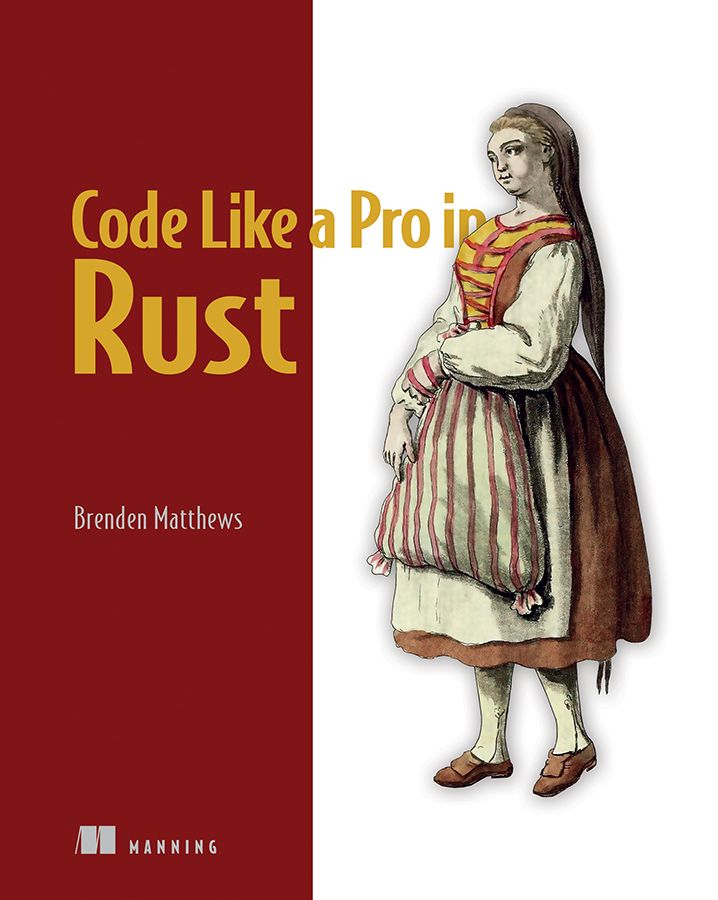
🏷️Deal of the Day🛒
Programmers prize #Rust for its safety, performance, and security.
Skip the fluff and get right to the heart of #Rustlang with Brenden Matthews:
#Rustprogramming#Rustacean
🏷️Deal of the Day🛒
Programmers prize #Rust for its safety, performance, and security.
Skip the fluff and get right to the heart of this powerful modern language with Brenden Matthews:
#Rustlang#Rustprogramming#Rustacean
1. Box<T> — store data on the heap
Concept: A Box<T> owns a value stored on the heap.
Box::new() creates a box that owns its value on the heap. Rust automatically cleans it up when the box goes out of scope.
2. Option::map — transform a value if it exists
Concept: Transform the value inside an Option without manually matching every case.
map() applies a function to the value inside Some. If the original value is None, the result remains None.
2. Option::map — transform a value if it exists
Concept: Transform the value inside an Option without manually matching every case.
map() applies a function to the value inside Some. If the original value is None, the result remains None.
Iterating over &scores borrows the map rather than consuming it. Remember that HashMap iteration order is not guaranteed, so the output order may vary.
🏷️Deal of the Day🛒
Programmers prize #Rust for its safety, performance, and security.
Skip the fluff and get right to the heart of #Rustlang with Brenden Matthews:
#Rustprogramming#Rustacean
📢New liveProject📢
Ready to take your #Rustlang skills to the next level?
Learn to create and deploy a highly configurable, robust load-testing CLI that supports a wide range of real-world scenarios:
#AsyncRust#Rustprogramming