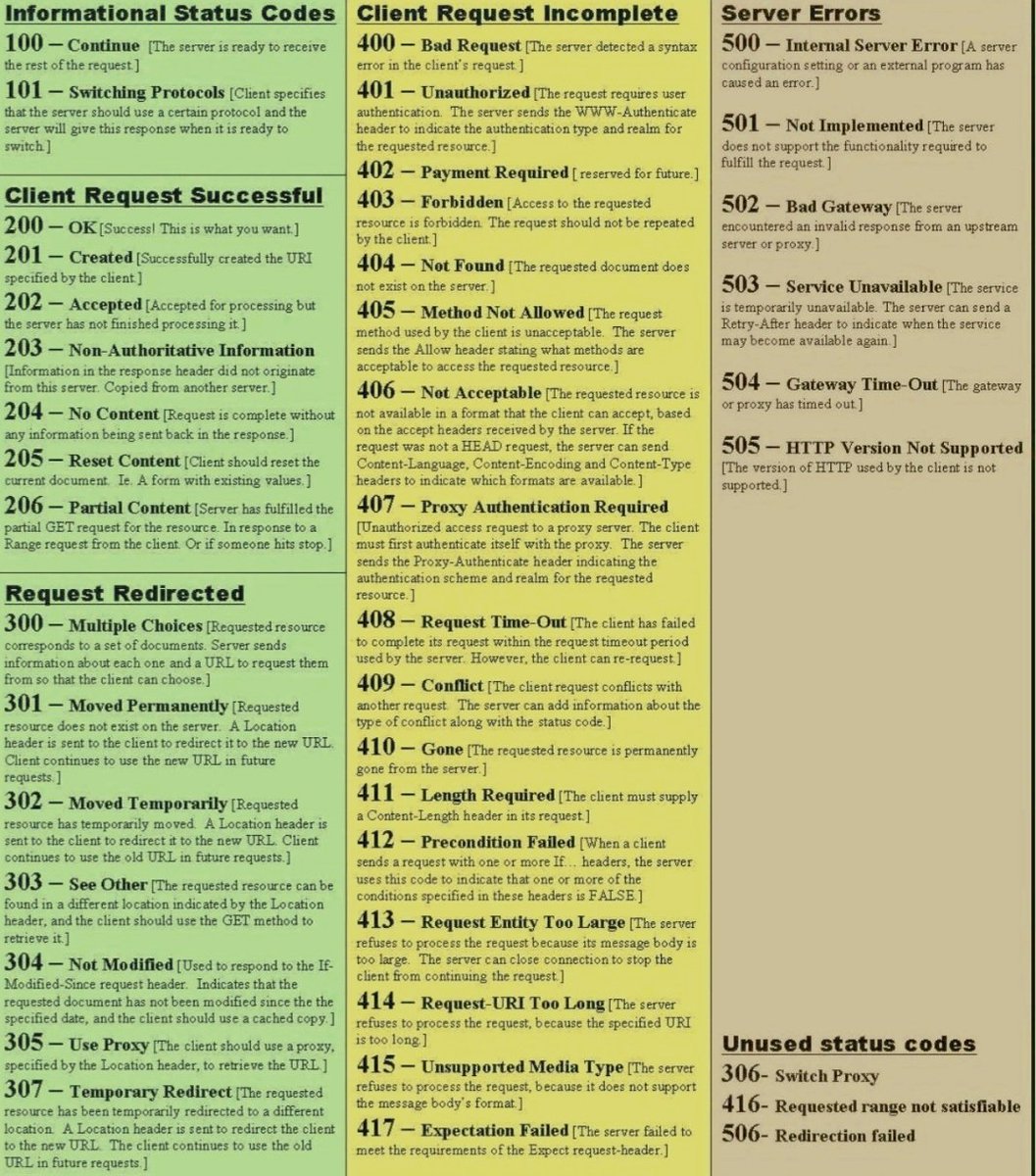
🚀 𝗨𝗻𝗱𝗲𝗿𝘀𝘁𝗮𝗻𝗱𝗶𝗻𝗴 𝗛𝗧𝗧𝗣 𝗦𝘁𝗮𝘁𝘂𝘀 𝗖𝗼𝗱𝗲𝘀 𝗳𝗼𝗿 𝗕𝗲𝘁𝘁𝗲𝗿 𝗪𝗲𝗯 𝗣𝗲𝗿𝗳𝗼𝗿𝗺𝗮𝗻𝗰𝗲
Learn the ins and outs of HTTP status codes and how to manage them effectively in our latest blog:
#WebDevelopment#HTTPStatusCodes#TechVraksh
503 (Service Unavailable): Taking a break 🛠️
504 (Gateway Timeout): Patience, please ⏳
405 (Method Not Allowed): Not this way 🚷
406 (Not Acceptable): Pickier than expected 🍽️
Follow @abhinandcoder for more tech insights 💯
#HTTPStatusCodes
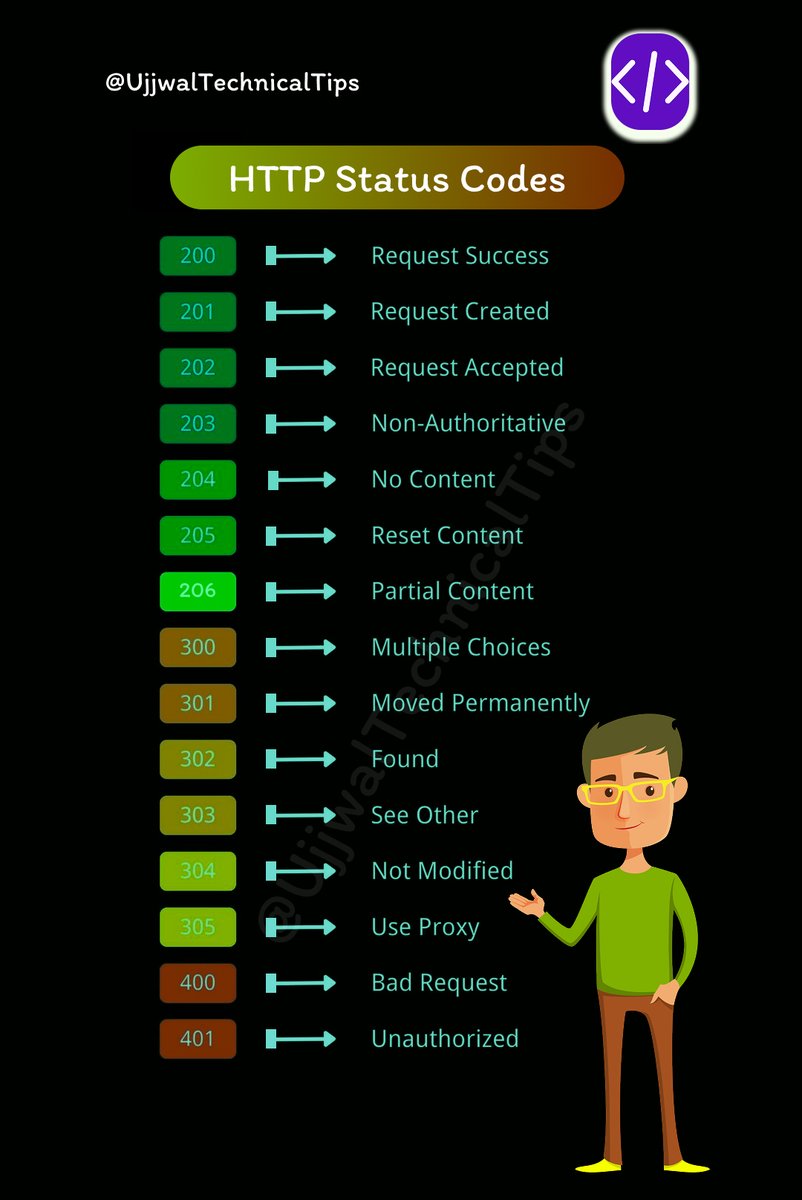
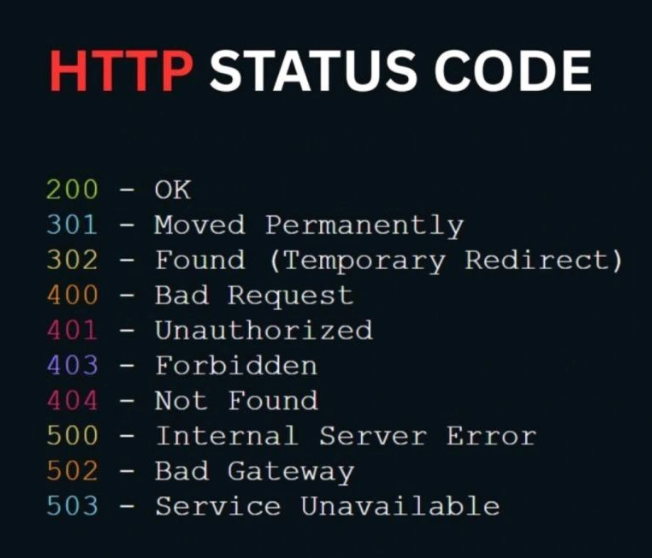
✅ HTTP Status Codes:
200: OK
201: Created
204: No Content
400: Bad Request
401: Unauthorized
403: Forbidden
404: Not Found
429: Too Many Requests
500: Internal Server Error
501: Not Implemented
502: Bad Gateway
503: Service Unavailable
#WebDevelopment#HTTPStatusCodes
Not only "200 OK"! There are many quirky HTTP status codes.
🔄 301 "Moved Permanently"
🙅♂️ 403 "Forbidden"
🤷♀️ 404 "Not Found"
🔥 500 "Internal Server Error"
These chaotic companions are easy to understand at a glance and are bound to resonate with engineers!#HTTPStatusCodes
🌐 Status Codes Demystified! HTTP status codes are like messages from websites. Here's a quick cheat sheet:
Crack the code for a smoother web experience! 🚀 #HTTPStatusCodes#WebDevelopment
🔍 HTTP Status Codes - Series #1
🚫 404 - Not Found
"Page doesn't exist!" The server being honest about a missing page.
Your server's "Wrong address!"
🤔 Coming up:
→ 403 Forbidden
→ 500 Error
→ 200 OK
Which confuses you? 👇
#WebDevelopment#HTTPStatusCodes#DevCommunity
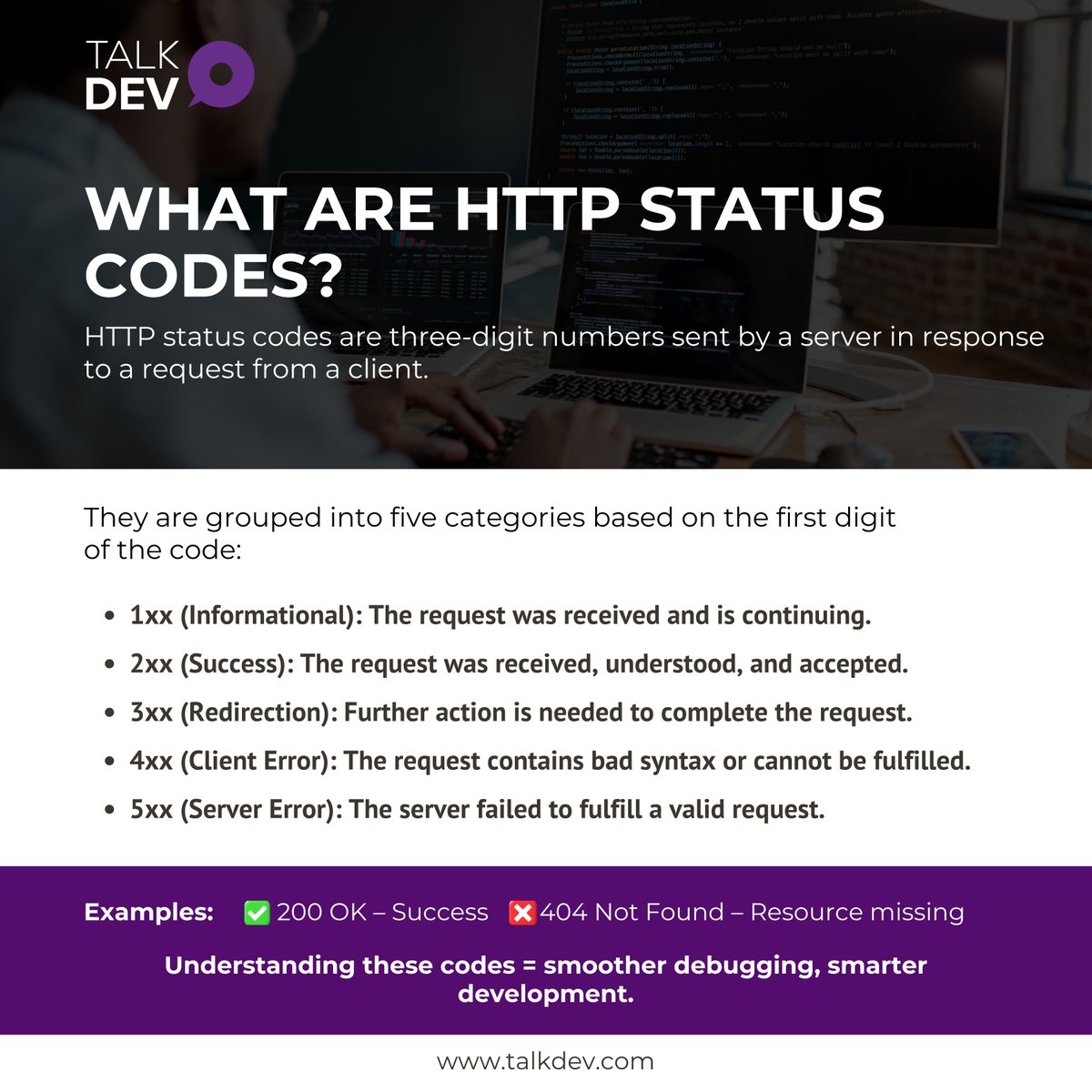
In this post we’ll take a look at all of the HTTP status response code categories, the individual codes you might encounter or hear about, and what they mean.
#httpstatuscodes#websiteerrorcodes#digitalmarketing