#Neuron içeren gönderiler

#Neuron

X'te #Neuron kullanan herkese açık gönderiler.

İlgili etiketler

  1. NIH✓@NIH
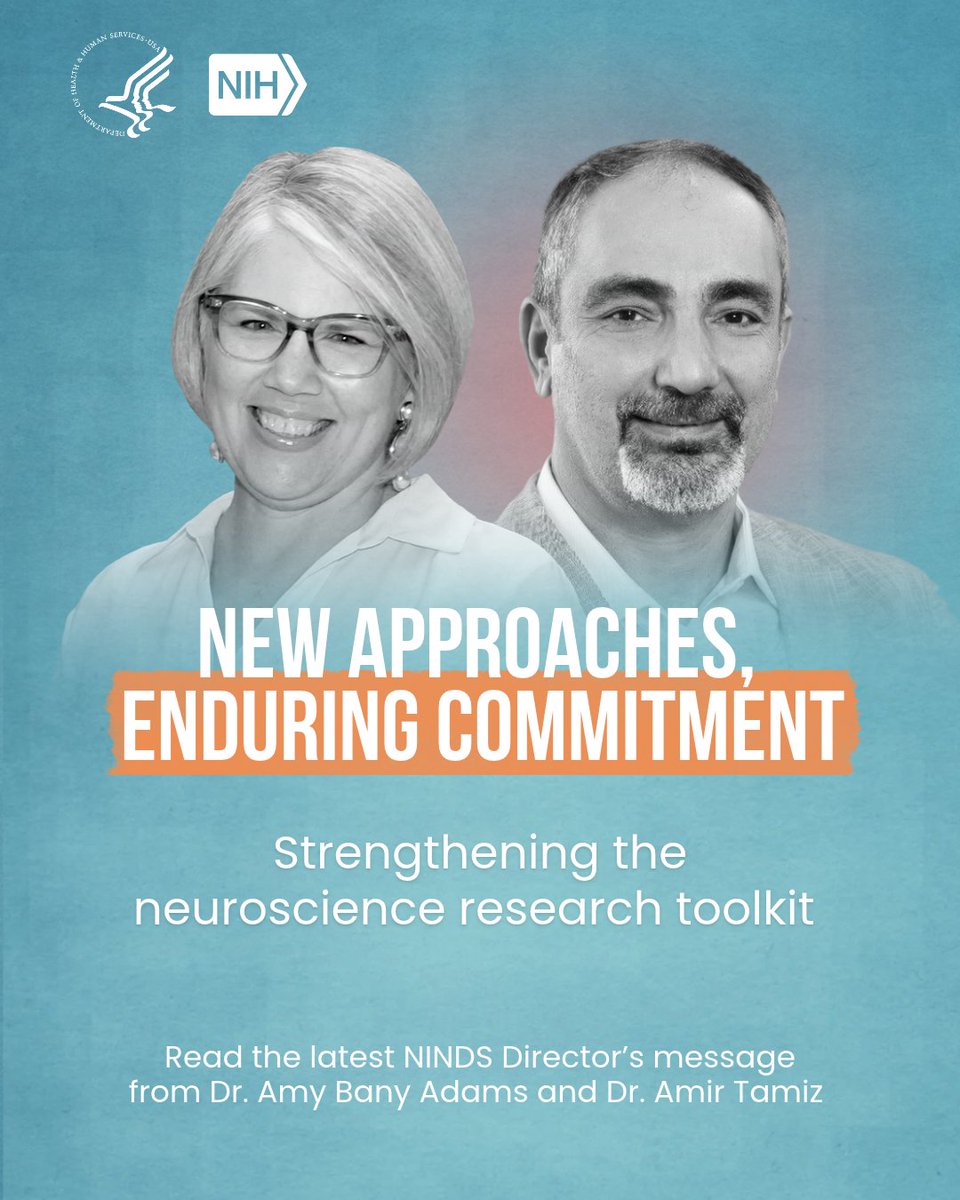
    The brain’s 86 billion neurons make it one of science’s hardest puzzles, so the tools we use matter. NINDS’s Dr. Amy Bany Adams and Dr. Amir Tamiz explore New Approach Methodologies (NAMs) and how new and established methods work better together:
    İndir
    26285.8K
  2. OpenfilesPodcast@OpenFilespod
    “In the 2030s and 2040s, nanobots will swim in our bloodstream, performing medical tasks with precision.” “They will go into our brains non-invasively and provide wireless communication between our neocortex and digital neurons in the cloud.”
    İndir
    124269
  3. Atanas Stankov@neuro_nasko
    Hypothesis: One of the biggest fallacies in computational neuroscience and neuro-engineering is treating neurons as mere input-output machines. Intrinsic cell behavior has causal significance.
    4210901
  4. Ali Max Erturk✓@erturklab
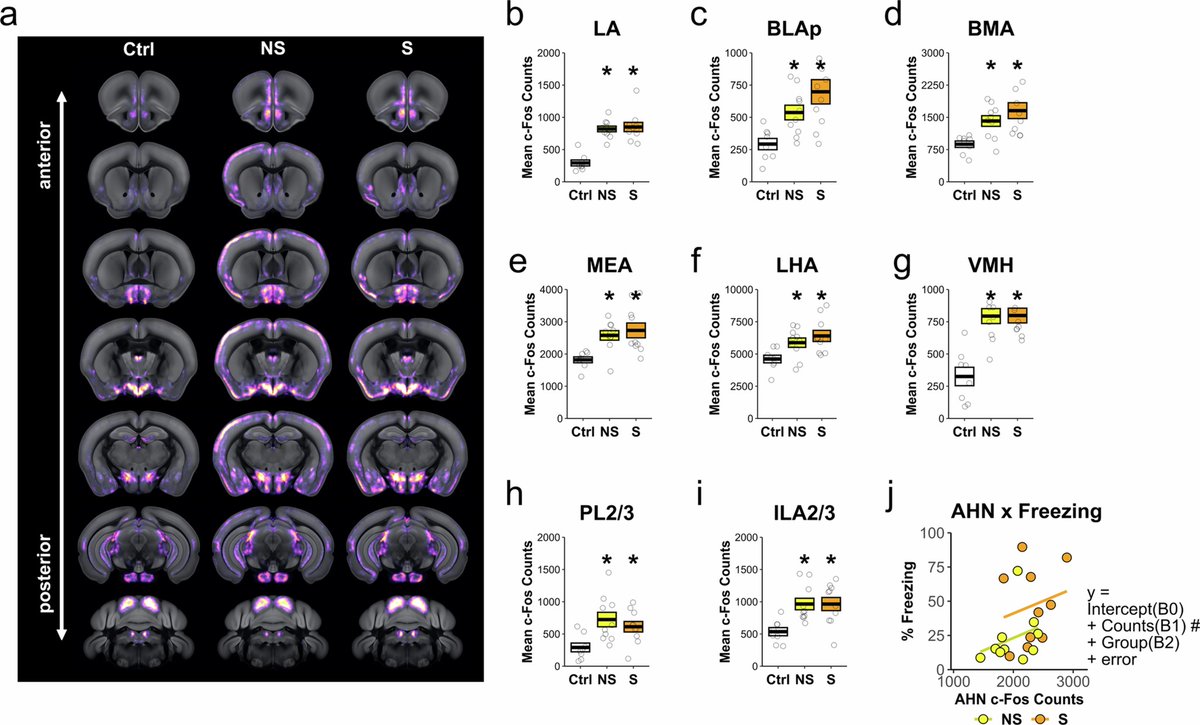
    Using DISCO clearing, a recent Nature paper investigates why prior adversity makes the next stressor hit harder. Zachary Pennington, @denisejcai and colleagues used unbiased whole-brain activity mapping across more than 450 mouse brain regions to identify the anterior hypothalamic nucleus (AHN) as a key region involved in stress sensitization. Miniscope imaging showed that previous stress recruited more AHN neurons responsive to negative experiences. Circuit experiments then showed that silencing amygdala→AHN inputs prevented the heightened defensive response to a later stressor, linking the brain-wide map to a causal pathway in mice.
    İndir
    08423.1K
  5. Nirosha J. Murugan✓@niroshajmurugan
    It’s officially November with winter right around the corner.... Like me, you’ve probably seen these and been just as fascinated by them, especially in that year after year, these branchin shapes appear in ice, looking remarkably like neurons. Love that @neurovium has developed a mathematical model exploring this resemblance and what makes a living neuron different. His model shows how feedback between neuronal activity and the surrounding electric field can help signals persist, even without changing the branching shape. Check it out here:
    İndir
    Nirosha J. Murugan @niroshajmurugan
    Neurons and glia etched into a pond. #brainfreeze #StonehamMA
    29331.1K
  6. Ryan Tanaka✓@RyanTanaka
    I believe the cause of ALS is most frequently physical trauma to a nerve/ nerves that propagate damage and eventually destroy all motor neurons. Given my unique position knowing more people with ALS and hearing their stories, I started developing this theory within the past year or two. Anytime I bring it up with a medical professional or someone with a loved one who has ALS, they always say the same thing: "It's possible, but no one knows for sure." Then this story is what solidified my thinking- this video and the first post in the thread align with my theory. This is such a horrible disease. Hopefully SI will find a cure soon.
    NFL Digest @nfldigest01
    @GMA Chris Johnson reflects on DRIVE-BY accident
    3110703
  7. NFL Digest✓@nfldigest01
    @GMA
    @GMA Chris Johnson reflects on DRIVE-BY accident
    İndir
    0919132.5K
  8. Ido Aizenbud✓@IdoAizenbud
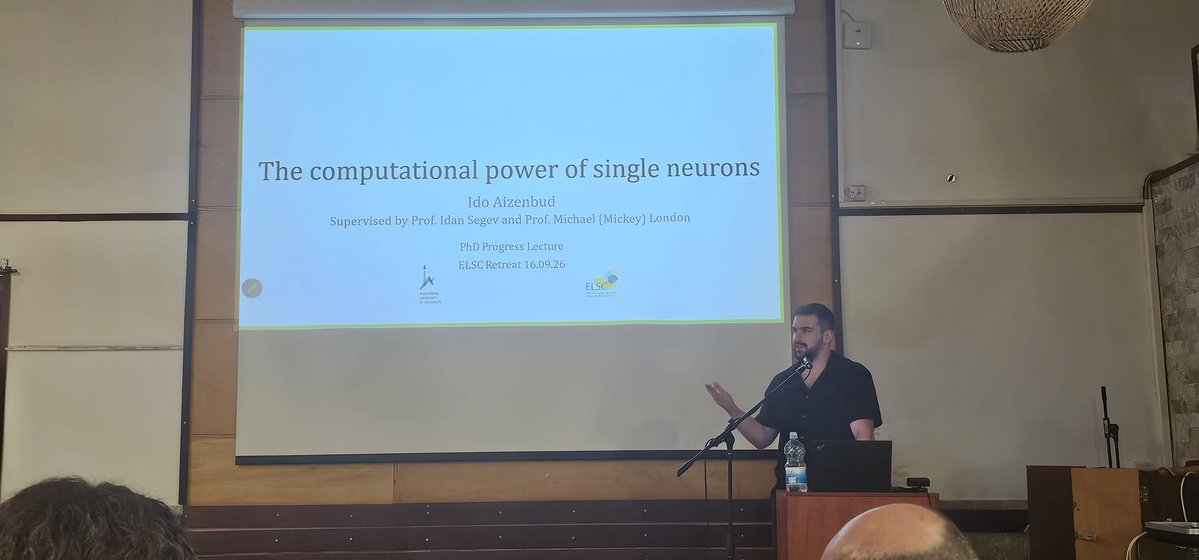
    PhDone! After years researching the capabilities of single neurons, I gave my PhD presentation and submitted my thesis! Now a postdoc, going from single neurons with dendrites to networks with dendrites. Open to research opportunities in academia & industry. Let's connect!
    İndir
    1441233.7K
  9. Dr. Brian l Yale Neuroscience@drbrianramos
    Scientists removed the brain's immune cells from aging mice and let them regenerate. Spatial memory improved. A key learning mechanism was restored. Same neurons. Different immune cells. What if cognitive aging is partly about the environment surrounding our neurons?
    İndir
    215312
  10. Micah G. Allen✓@micahgallen
    Hippocampal neurons use related but distinct codes to represent self, others, and gaze
    İndir
    29552.2K
  11. Ted Benson✓@edwardbenson
    A Neuron that Remembers aka A CPU Register inside a Neural Network Continuing to hack on the low level components that I need for version 2 of the Manchurian Candidate experiment. One issue I saw was that the "Manchurian Mode" would quickly decay as the chat history progressed. Even if this boolean circuit trick works to eliminate the need for fine-tuning, I'm still going to have the decay problem as the neurons that moderate the secret personality return to their baseline activation states. So we need some way to remember. It turns you can create a bit of memory with a single neuron attached recurrently to itself. It has three inputs: - Set sets it to 1 - Reset sets it to 0 - q its former output If we restrict ourself to our "neural boolean circuit" world where everything is a pure 0 or 1, then this ends up simple set of weights, bias, and hard threshold: q' = q + set - 2 * reset - 0.5 > 0 Thinking of this as a small circuit feels very straightforward. But the fact that this is recurrent means that there's a refresh rate. And to be honest I'm not very sure how that refresh rate fits into something like Qwen. But that's a later problem. For now this feels like the right next piece of the puzzle.
    İndir
    5231705.9K
  12. Kathleen Sluka@ksluka0101
    Chandelier neuron. Metallic ink on paper. These may be the coolest neurons in the body-found in cortex. They are GABAergic and all the 'chandelier' portion are axon terminals. @SfNtweets #neuroart #sciart
    İndir
    1111192
  13. Levi Foster✓@cybermynd
    I performed brain surgery on a tiny 135M model. It's score on multiplication problems it had never seen went from 21% to 83% without any training. I grafted artificial neurons directly into the model that changed the way it solves problems.
    İndir
    209311
  14. Andres Vilariño 🇪🇦@andresvilarino
    Scientists are turning a biological brain into a robot controller. A fruit fly's neural circuit map, containing around 166,000 neurons, is being used to drive robotic behavior. No conventional AI training. Just biology inspiring machine intelligence. via @CurieuxExplorer
    İndir
    023378
  15. Julio Martinez@JulioMTNeuro
    Meet orexin neurons: a small group in the hypothalamus that helps keep you awake. Their peptides, also called hypocretins, were independently discovered by de Lecea’s and Sakurai’s teams in 1998. Loss of these neurons is a hallmark of narcolepsy type 1. #Neuroscience
    İndir
    2935907
  16. Biomedicines MDPI@Biomed_MDPI
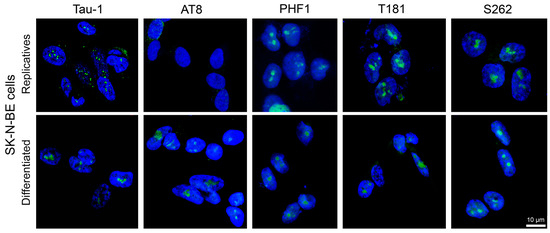
    This study analyzed nuclear tau epitopes in neuroblastoma cells and post-mortem hippocampal CA1 neurons. AT8 reduction during ageing and AD correlated with nuclear stress, aberrant cell cycle activity, and neuronal vulnerability 🧠📊 #Alzheimers #Tau
    İndir
    014140
  17. the digital sphincter✓@Melmelmel69
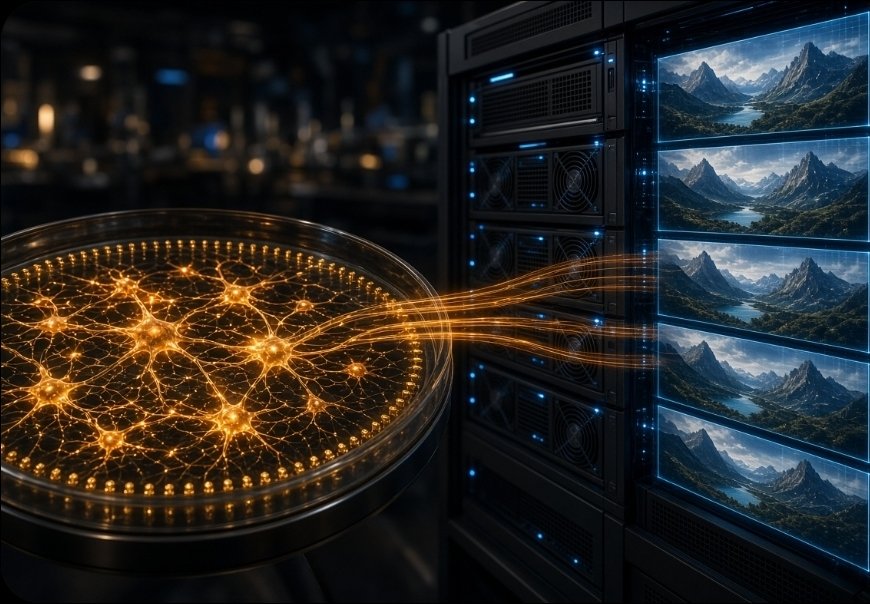
    Two neurosurgeons spent four years growing roughly 100,000 living neurons on dishes with 4,096 electrodes. They never ship the cells. They ship a tiny software adapter, smaller than 0.1% of the base model, that makes an existing open video model (Wan 2.2) roughly five times faster and 80% cheaper to run. The neurons stay in the San Francisco wet lab. The video runs on ordinary GPUs. That’s the whole product. The process is more specific than the headlines. They turn pieces of video into patterns of electrical stimulation, zap the culture through the electrode grid, and watch how activity spreads across the dish and then fades. From those recordings they pull two simple numbers that matter a lot in real brain tissue: how far a signal travels (space constant) and how long it lingers (time constant). Those numbers become the shape of a small adapter that sits next to the diffusion blocks in the video model. In earlier experiments on smaller models the adapter was only ~156,000 parameters and still improved long rollout stability; on a larger interactive video model it was a ~14 million parameter “Hypercolumn Neural Optimizer” that kept quality while they cranked the speed. The point of the biology is not to invent a new architecture from scratch. It’s to find the cheapest possible regularizer that real neurons already use for free. They filed patents on this under the old company name, Biological Black Box. The claims describe a hybrid system: multi electrode array + living culture + a statistical model trained on the culture’s responses, used to build dictionaries of “neural based embeddings” that can be fed into ordinary AI models. The commercial version strips most of that away and just sells the distilled adapter. This is different from the companies that actually run computation on the cells. Cortical Labs sells access to living neuron dishes that can be trained to play Pong or steer a robot dog. FinalSpark offers remote organoid platforms. TBC’s bet is narrower and more practical: biology is a discovery tool, silicon is the product. The founders have said the longer term goal is hybrid clusters where the cells and the chips compute together, but Mischief 1 is pure software. The speed and cost numbers are still mostly the company’s own. Their product page shows a 142 second Wan 2.2 take versus 12 seconds for Mischief 1 on their GPUs. A few outside users (including someone who visited the lab and generated thousands of clips) have reported similar order of magnitude gains, and one earlier external test on a different model found roughly 4x lower inference cost plus better coherence. No one has published a controlled comparison against ordinary speed up tricks (distillation, caching, quantization) on the exact same Wan 2.2 checkpoint. The skepticism on X is already there: “the neurons stay in the lab, so what are you buying?” What you’re buying is the cheapest image to video model currently listed on fal and OpenRouter. Half a cent per second at 480p. A five-second clip is 2.5 cents. A hundred of them is $2.50. Three or five seconds, 480p or 720p, no audio. The company says Wonder Studios is already using it in production pipelines. AWS Marketplace listing is next. The interesting part isn’t the price. It’s the claim that a few hundred thousand parameters extracted from real neural dynamics can beat what pure silicon optimization has done so far on the same base model. If that holds under independent testing, the wet lab starts to look less like theater and more like a new source of cheap inductive bias. If it doesn’t, it’s just another fine tune with a good story. Either way, the cells are still sitting on the electrodes.
    İndir
    108439
  18. Science & Nature✓@Sci_Nature0
    This Is What Happens Inside Your Brain When You Learn Something New! 🧠✨ Neurons communicate through intricate networks, and learning can strengthen or reshape their connections. Isn't the human brain incredible?
    İndir
    104226415.5K
  19. BSCN Decoded✓@BSCNdecoded
    On-chain governance that actually runs the network! 🏛️ The NNS lets $ICP holders vote on upgrades that execute automatically, and the way @dfinity's neurons earn rewards is the key part. Get the details:
    İndir
    6281413.5K
  20. Julio Martinez@JulioMTNeuro
    Meet oxytocin neurons! In 1951, Bargmann and Scharrer helped establish that posterior pituitary hormones originate in hypothalamic neurons. Oxytocin neurons drive childbirth and milk ejection and help shape social behavior. #Neuroscience
    İndir
    0320656
  21. Daha fazla gönderi göster