Publicações com #Neuron

#Neuron

Publicações públicas do X que usam #Neuron.

Hashtags relacionados

  1. Micah G. Allen✓@micahgallen
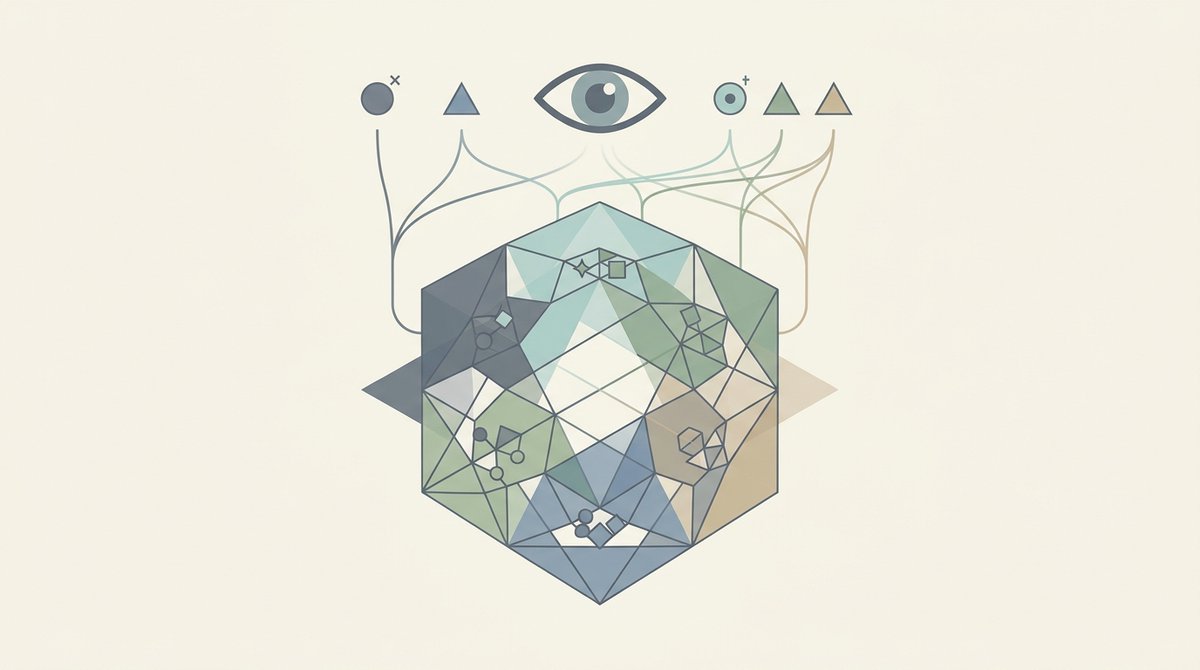
    Hippocampal neurons use related but distinct codes to represent self, others, and gaze
    Baixar
    29552.2K
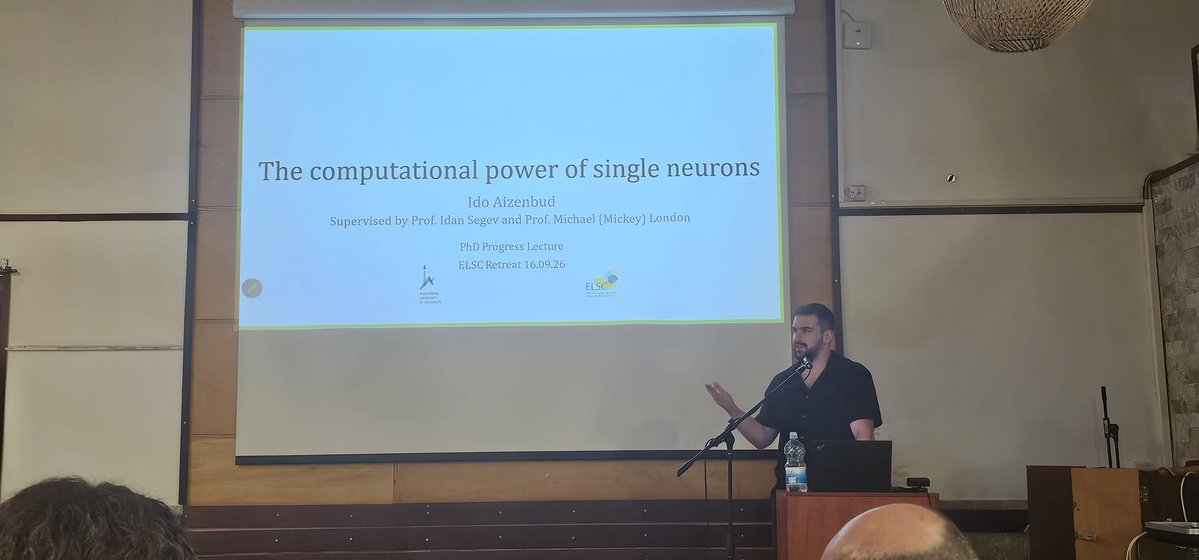
  2. Ido Aizenbud✓@IdoAizenbud
    PhDone! After years researching the capabilities of single neurons, I gave my PhD presentation and submitted my thesis! Now a postdoc, going from single neurons with dendrites to networks with dendrites. Open to research opportunities in academia & industry. Let's connect!
    Baixar
    1441233.7K
  3. Ted Benson✓@edwardbenson
    A Neuron that Remembers aka A CPU Register inside a Neural Network Continuing to hack on the low level components that I need for version 2 of the Manchurian Candidate experiment. One issue I saw was that the "Manchurian Mode" would quickly decay as the chat history progressed. Even if this boolean circuit trick works to eliminate the need for fine-tuning, I'm still going to have the decay problem as the neurons that moderate the secret personality return to their baseline activation states. So we need some way to remember. It turns you can create a bit of memory with a single neuron attached recurrently to itself. It has three inputs: - Set sets it to 1 - Reset sets it to 0 - q its former output If we restrict ourself to our "neural boolean circuit" world where everything is a pure 0 or 1, then this ends up simple set of weights, bias, and hard threshold: q' = q + set - 2 * reset - 0.5 > 0 Thinking of this as a small circuit feels very straightforward. But the fact that this is recurrent means that there's a refresh rate. And to be honest I'm not very sure how that refresh rate fits into something like Qwen. But that's a later problem. For now this feels like the right next piece of the puzzle.
    Baixar
    5231705.9K
  4. Science & Nature✓@Sci_Nature0
    This Is What Happens Inside Your Brain When You Learn Something New! 🧠✨ Neurons communicate through intricate networks, and learning can strengthen or reshape their connections. Isn't the human brain incredible?
    Baixar
    104226415.5K
  5. Daniel Tawfik✓@dantawfik
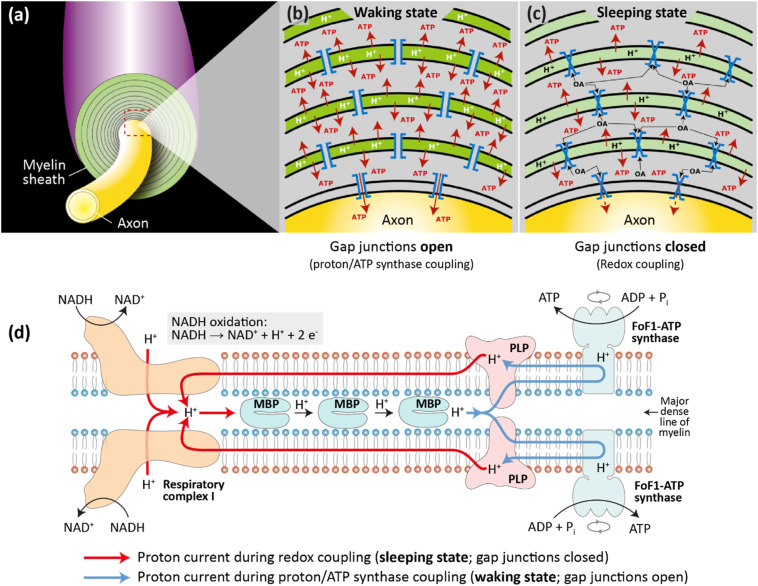
    While you sleep, your brain's white matter is charging up like a battery Myelin, the insulation around your nerve fibers, has been considered a passive structural component that speeds up signals. A new hypothesis from @FScholkmann and colleagues proposes it's actually an energy storage system that fills up during sleep and powers your neurons throughout the day. The paper, published in Progress in Biophysics and Molecular Biology, presents a radical reimagining of what myelin does beyond speeding up electrical signals along nerves. What is myelin? Myelin is the fatty sheath that wraps around nerve fibers like insulation around electrical wires. It's produced by specialized cells called oligodendrocytes in the central nervous system and makes up about 40% of your brain's volume. Traditionally, myelin's job has been simple: speed up nerve signals and provide structural support. This new hypothesis suggests it does something far more dynamic. The proton capacitor hypothesis The researchers propose myelin functions as a proton capacitor, meaning it stores energy in the form of protons (hydrogen ions) that accumulate during sleep and get released during wakefulness to produce ATP, the cell's energy currency. Think of it like a rechargeable battery. During sleep, myelin charges up by accumulating protons. During wakefulness, those protons flow through ATP synthase enzymes embedded in myelin, generating the energy neurons need to function. The mechanism involves two abundant myelin proteins: Myelin basic protein (MBP) sits between myelin layers and contains amino acids (lysine, arginine, histidine) that can absorb and hold protons. It functions as the energy storage component. Proteolipid protein (PLP) spans the myelin membrane and contains serine and threonine amino acids that form efficient proton conductors, creating pathways for protons to flow from storage sites to ATP synthase. How the charging cycle works During sleep, your myelin is actively storing energy. Specialized molecules in myelin pump protons (think of them as tiny charged particles) into storage proteins, like filling up a battery. During this phase, no energy is being used, just stored. When you wake up, the system switches into discharge mode. Those stored protons flow through protein channels to enzymes that convert them into ATP, your cells' usable energy form. This ATP travels through tiny tunnels called gap junctions directly into nerve fibers, where it powers your brain's activity. The researchers calculated that the amount of protons a small cube of myelin can hold matches exactly what your brain would need during 8 hours of wakefulness. The storage capacity and the daily demand align. The molecular sleep switch A naturally occurring molecule called oleamide acts as the on/off switch for this system. Throughout your waking hours, oleamide gradually accumulates in your brain. When it reaches a certain level, it closes those gap junctions, the tunnels that deliver ATP from myelin to nerve fibers. Once the tunnels close, your neurons can't access the energy supply. Neural activity drops. You get sleepy. With the delivery system shut down, myelin switches from discharge mode to charging mode. While you sleep, oleamide slowly breaks down. When enough of it clears out, the gap junctions reopen, ATP starts flowing to neurons again, and you wake up. This explains why you can't just decide to stay awake indefinitely. As oleamide builds up during the day, it eventually forces the system offline whether you want it to or not. Sleep isn't optional, it's a programmed metabolic requirement driven by molecular accumulation. How myelin produces energy without the usual machinery Here's where it gets strange: myelin can make ATP (cellular energy) even though it doesn't contain the typical power plants that cells use to generate energy. Normally, structures called mitochondria produce nearly all of a cell's ATP. But myelin has very few, if any, complete mitochondria. So how does it make energy? The researchers propose that mitochondria send small cargo packages carrying energy-producing equipment to the myelin. These packages fuse with myelin membranes and drop off the machinery, allowing myelin to produce ATP on its own. Think of it like getting a portable generator delivered to a remote cabin. You don't need a full power plant on site, just the essential equipment to generate electricity locally. The bigger the battery, the less time spent charging The researchers examined 23 different mammal species and discovered something remarkable: animals with more white matter (the brain tissue that's 95% myelin) need less sleep. Here's the pattern: • Bats have tiny brains with minimal white matter and sleep 20 hours a day • Humans have moderate white matter and sleep 8 hours a day • Elephants have massive white matter and sleep just 3.5 hours a day The logic is straightforward. More myelin means greater energy storage capacity. With a bigger battery, you need less time plugged in to fully recharge. The pattern suggests that more myelin provides greater energy storage capacity, reducing the time needed to recharge. Less myelin means longer recharging periods are required. This relationship also appears within humans across the lifespan. White matter volume peaks between ages 30-50, the same period when sleep duration reaches its minimum. Both follow inverted U-shaped curves over the human lifespan. Even sex differences align: women have less white matter than men and require more sleep on average. Experimental support The hypothesis draws on experimental work showing: • Isolated myelin vesicles consume oxygen and synthesize ATP via oxidative phosphorylation • Myelin vesicles exposed to NADH retain an energy charge that's later used for ATP synthesis when ADP and phosphate are added • Longer exposure to NADH produces more ATP in subsequent phases • This matches the predicted two-phase system: charging during simulated sleep, discharge during simulated wakefulness Sleep deprivation studies show myelin thickness decreases when animals are kept awake, consistent with discharge without adequate recharging time. Marathon runners show notable reductions in myelin after intense physical activity, suggesting the energy reserves get depleted during sustained neural and physical exertion. Key takeaways: • Myelin may function as a proton battery, storing energy during sleep and releasing it during wakefulness • Two myelin proteins (MBP and PLP) form a coupled system: one stores protons, the other conducts them to ATP synthase • Sleep duration correlates with white matter volume across 23 mammalian species • Oleamide, a natural sleep inducer, closes the gap junctions that deliver ATP from myelin to axons • Myelin contains functional mitochondrial components delivered via mitochondrial-derived vesicles • The human brain requires approximately 8 hours to fully recharge myelin's proton storage capacity • Sleep deprivation leads to measurable myelin degradation Limitations and open questions This remains a hypothesis requiring direct experimental validation in living systems. The calculations provide plausibility but don't prove the mechanism operates as proposed. Key questions: • Can proton accumulation and discharge be measured directly in myelin during sleep/wake cycles? • Does blocking this proposed system prevent normal sleep function? • How does this mechanism integrate with other established functions of sleep? • Can therapeutic interventions targeting this system improve sleep quality or neurological function? The challenge is that protons moving between membrane-bound buffers without entering free solution is difficult to measure experimentally. Why this matters If validated, this hypothesis fundamentally reframes our understanding of sleep. Rather than viewing sleep as a period when the brain passively recovers, it positions sleep as an active metabolic phase when the brain's white matter systematically stores energy for the next waking period. It also elevates myelin from a passive structural element to an active metabolic organizer that administers energy distribution to neurons. The framework could explain why myelin disorders often involve fatigue and why conditions affecting white matter integrity produce cognitive deficits even when gray matter remains intact. The identification of oleamide as the molecular switch controlling this cycle points to a natural compound that's been overlooked as a potential sleep therapeutic despite decades of evidence. The convergence of structural data (protein composition and positioning), metabolic data (oxygen consumption and ATP synthesis in myelin), molecular data (oleamide and gap junctions), and cross-species data (white matter volume and sleep duration) creates a compelling case that myelin plays a previously unrecognized role in sleep energetics. Whether this represents the primary function of sleep or one component of a multi-system process remains to be determined. But the hypothesis provides testable predictions and a mechanistic framework for understanding the metabolic foundations of the sleep-wake cycle.
    Baixar
    103316810.5K
  6. Nirosha J. Murugan✓@niroshajmurugan
    It’s officially November with winter right around the corner.... Like me, you’ve probably seen these and been just as fascinated by them, especially in that year after year, these branchin shapes appear in ice, looking remarkably like neurons. Love that @neurovium has developed a mathematical model exploring this resemblance and what makes a living neuron different. His model shows how feedback between neuronal activity and the surrounding electric field can help signals persist, even without changing the branching shape. Check it out here:
    Baixar
    Nirosha J. Murugan @niroshajmurugan
    Neurons and glia etched into a pond. #brainfreeze #StonehamMA
    29331.1K
  7. treetown✓@treetowntree
    A bit of confusion I’ve seen around “persona neurons” Most of them more or less just make the model obsessed with whatever concept it is about, rather than believe it is that obsession… unless you ask it what it is. Think of a little kid obsessed with astronauts. If you ask them what they are, they might say they’re an astronaut. Part of upcoming work with @_a9lim
    Baixar
    34501.5K
  8. Daria Gneusheva✓@DGneusheva
    We just witnessed living neurons taking over chips at @outlierlabshq Biocomputing Hack 🧠 Huge thanks to @jennleungx and Will from @CallosumAI and @MichaelDmrks from @frontiergpu and to everyone who showed up on a Tuesday night to teach neurons new tricks! @HedeyaY and I started Outlier Labs because the best ideas usually look wrong at the start. We want to put Europe's top technical talent in a room with those ideas and see what happens.
    Baixar
    76131K
  9. TesserAI✓@usetesserai
    111403.6K
  10. One Peak Man@daily1punch
    Psykorochi design was actually based on neurons Pretty creative
    Baixar
    2182914.4K
  11. OpenfilesPodcast@OpenFilespod
    “In the 2030s and 2040s, nanobots will swim in our bloodstream, performing medical tasks with precision.” “They will go into our brains non-invasively and provide wireless communication between our neocortex and digital neurons in the cloud.”
    Baixar
    124269
  12. Veee✓@vikktorrrre
    Ray Kurzweil: By 2032, humans could begin escaping death as we know it, merging with AI to become a hybrid species with brains connected directly to the cloud. “People who are diligent with their health are going to reach longevity escape velocity.” “We'll still be human, but enhanced by AI. We will no longer be limited by our biology.” “In the 2030s and 2040s, nanobots will swim in our bloodstream, performing medical tasks with precision.” “They will go into our brains non-invasively and provide wireless communication between our neocortex and digital neurons in the cloud.” “The answer will just appear in your brain like it's part of you.”
    Baixar
    352622420.4K
  13. Elevate Research Community✓@ElevateBiohack
    9-ME-BC: One of the more fascinating experimental compounds in dopaminergic research. 9-Methyl-β-carboline (9-ME-BC) is a β-carboline derivative investigated for its potential effects on dopamine neurons, neuroplasticity, and neuroprotection. Unlike conventional stimulants that primarily increase dopamine signaling, 9-ME-BC has been studied for its effects on dopaminergic neuron differentiation and recovery in experimental models. A 2008 study by Hamann et al. demonstrated increased dopaminergic differentiation, higher cellular ATP, and increased expression of genes including tyrosine hydroxylase, DAT, and Nurr1. Polanski et al. (2010) subsequently reported increased neurite growth, protection against experimental neurotoxicity, and regenerative effects following rotenone exposure in cell cultures. Additional research identified astrocyte involvement, neurotrophic signaling, and MAO-A/B inhibitory activity. Rodent studies have also reported changes in hippocampal dopamine, dendritic spine density, and learning performance. But here’s where the enthusiasm needs restraint. These findings are predominantly preclinical. There are no established human pharmacokinetics, clinical efficacy data, or reliable long-term safety studies. Its MAO inhibitory activity also raises legitimate concerns about potential drug interactions. And because much of the published research comes from overlapping investigators, independent replication remains important. 9-ME-BC is interesting because researchers are investigating neuronal adaptation and recovery, not simply acute dopamine stimulation. That distinction makes it worth studying, but it doesn’t make it a proven neuroregenerative therapy. #research #ELEVATEresearch Not medical advice.
    005620
  14. Philippe Top-Action@top_force
    ✈️🇸🇪🇫🇷 Vu que la France commande 2 avions d’alerte avancée #GlobalEye à @Saab pour 1,1 milliard € + 2 autres en option. Par le passé @Dassault_OnAir Aviation coopéra avec 🇸🇪 🇪🇸🇮🇹🇬🇷🇨🇭 sur le démonstrateur #UCAV #nEUROn, pourquoi ne pas prolonger ce partenariat avec 🇸🇪 #SCAF #NGF
    Baixar
    154264077.7K
  15. BSCN Decoded✓@BSCNdecoded
    On-chain governance that actually runs the network! 🏛️ The NNS lets $ICP holders vote on upgrades that execute automatically, and the way @dfinity's neurons earn rewards is the key part. Get the details:
    Baixar
    6281413.5K
  16. Atanas Stankov@neuro_nasko
    Hypothesis: One of the biggest fallacies in computational neuroscience and neuro-engineering is treating neurons as mere input-output machines. Intrinsic cell behavior has causal significance.
    6211983
  17. Ryan Tanaka✓@RyanTanaka
    I believe the cause of ALS is most frequently physical trauma to a nerve/ nerves that propagate damage and eventually destroy all motor neurons. Given my unique position knowing more people with ALS and hearing their stories, I started developing this theory within the past year or two. Anytime I bring it up with a medical professional or someone with a loved one who has ALS, they always say the same thing: "It's possible, but no one knows for sure." Then this story is what solidified my thinking- this video and the first post in the thread align with my theory. This is such a horrible disease. Hopefully SI will find a cure soon.
    NFL Digest @nfldigest01
    @GMA Chris Johnson reflects on DRIVE-BY accident
    3110707
  18. NFL Digest✓@nfldigest01
    @GMA
    @GMA Chris Johnson reflects on DRIVE-BY accident
    Baixar
    0919132.5K
  19. Andres Vilariño 🇪🇦@andresvilarino
    Scientists are turning a biological brain into a robot controller. A fruit fly's neural circuit map, containing around 166,000 neurons, is being used to drive robotic behavior. No conventional AI training. Just biology inspiring machine intelligence. via @CurieuxExplorer
    Baixar
    023378
  20. Sofia✓@Sonika_KK
    my neurons after getting into crypto :
    Baixar
    461811K
  21. Jeff Galloway✓@Brotherhoodoft5
    Pretty cool-looking neurons.
    Beaver @Beaver_0x
    holy f*ck, web designers have NO IDEA what’s coming after them in 2027 the ones learning AI tools right now are getting ahead. the rest might be fighting for jobs they used to take for granted. 7 GitHub repos every designer should know before it’s too late: 1. Graphify 137k stars and in Y Combinator. point it at your old projects, brand PDFs and screenshots, and Claude gets a memory of everything you've ever designed. "what did this client hate last time?" answered in seconds 2. Awesome DESIGN.md 84 design systems pulled from real sites, each one a single markdown file. drop it in your project, say "build me a page that looks like this", done 3. Hallmark a design skill from Together AI that refuses to look AI-generated. 50 themes, checks every page in a real browser, and /hallmark redesign rebuilds any old page 4. Huashu Design one sentence in, a launch animation, clickable app prototype, editable PPT or infographic out. it shows you 6 directions first, you pick 3 5. Designer Skills Pack 273 skills and 76 commands for Claude Code: research, design systems, UI, interaction. a whole design department in one install 6. Motion Design Skill LottieFiles taught AI to think like a motion director: timing, easing, choreography, Disney's 12 principles adapted for UI. this is where the "feel" comes from 7. Blender Agent Skills 22 pro Blender workflows for Claude Code: modeling, materials, rigging, animation, rendering. the full 3D pipeline, not just "make a cube" the cell you're watching? built solo with Claude Code plus a few of these tools. no agency, no team, no After Effects. want to make something like this? like + save this post, comment "CELL" or DM me and I'll send you the exact prompt.
    017308
  22. Beaver✓@Beaver_0x
    holy f*ck, web designers have NO IDEA what’s coming after them in 2027 the ones learning AI tools right now are getting ahead. the rest might be fighting for jobs they used to take for granted. 7 GitHub repos every designer should know before it’s too late: 1. Graphify 137k stars and in Y Combinator. point it at your old projects, brand PDFs and screenshots, and Claude gets a memory of everything you've ever designed. "what did this client hate last time?" answered in seconds 2. Awesome DESIGN.md 84 design systems pulled from real sites, each one a single markdown file. drop it in your project, say "build me a page that looks like this", done 3. Hallmark a design skill from Together AI that refuses to look AI-generated. 50 themes, checks every page in a real browser, and /hallmark redesign rebuilds any old page 4. Huashu Design one sentence in, a launch animation, clickable app prototype, editable PPT or infographic out. it shows you 6 directions first, you pick 3 5. Designer Skills Pack 273 skills and 76 commands for Claude Code: research, design systems, UI, interaction. a whole design department in one install 6. Motion Design Skill LottieFiles taught AI to think like a motion director: timing, easing, choreography, Disney's 12 principles adapted for UI. this is where the "feel" comes from 7. Blender Agent Skills 22 pro Blender workflows for Claude Code: modeling, materials, rigging, animation, rendering. the full 3D pipeline, not just "make a cube" the cell you're watching? built solo with Claude Code plus a few of these tools. no agency, no team, no After Effects. want to make something like this? like + save this post, comment "CELL" or DM me and I'll send you the exact prompt.
    Baixar
    263223212.5K
  23. Bojan Tunguz✓@tunguz
    Myelin is vertebrates’ killer feature. If octopuses had myelinated neurons they would be the ones ruling the planet right now.
    Daniel Tawfik @dantawfik
    While you sleep, your brain's white matter is charging up like a battery Myelin, the insulation around your nerve fibers, has been considered a passive structural component that speeds up signals. A new hypothesis from @FScholkmann and colleagues proposes it's actually an energy storage system that fills up during sleep and powers your neurons throughout the day. The paper, published in Progress in Biophysics and Molecular Biology, presents a radical reimagining of what myelin does beyond speeding up electrical signals along nerves. What is myelin? Myelin is the fatty sheath that wraps around nerve fibers like insulation around electrical wires. It's produced by specialized cells called oligodendrocytes in the central nervous system and makes up about 40% of your brain's volume. Traditionally, myelin's job has been simple: speed up nerve signals and provide structural support. This new hypothesis suggests it does something far more dynamic. The proton capacitor hypothesis The researchers propose myelin functions as a proton capacitor, meaning it stores energy in the form of protons (hydrogen ions) that accumulate during sleep and get released during wakefulness to produce ATP, the cell's energy currency. Think of it like a rechargeable battery. During sleep, myelin charges up by accumulating protons. During wakefulness, those protons flow through ATP synthase enzymes embedded in myelin, generating the energy neurons need to function. The mechanism involves two abundant myelin proteins: Myelin basic protein (MBP) sits between myelin layers and contains amino acids (lysine, arginine, histidine) that can absorb and hold protons. It functions as the energy storage component. Proteolipid protein (PLP) spans the myelin membrane and contains serine and threonine amino acids that form efficient proton conductors, creating pathways for protons to flow from storage sites to ATP synthase. How the charging cycle works During sleep, your myelin is actively storing energy. Specialized molecules in myelin pump protons (think of them as tiny charged particles) into storage proteins, like filling up a battery. During this phase, no energy is being used, just stored. When you wake up, the system switches into discharge mode. Those stored protons flow through protein channels to enzymes that convert them into ATP, your cells' usable energy form. This ATP travels through tiny tunnels called gap junctions directly into nerve fibers, where it powers your brain's activity. The researchers calculated that the amount of protons a small cube of myelin can hold matches exactly what your brain would need during 8 hours of wakefulness. The storage capacity and the daily demand align. The molecular sleep switch A naturally occurring molecule called oleamide acts as the on/off switch for this system. Throughout your waking hours, oleamide gradually accumulates in your brain. When it reaches a certain level, it closes those gap junctions, the tunnels that deliver ATP from myelin to nerve fibers. Once the tunnels close, your neurons can't access the energy supply. Neural activity drops. You get sleepy. With the delivery system shut down, myelin switches from discharge mode to charging mode. While you sleep, oleamide slowly breaks down. When enough of it clears out, the gap junctions reopen, ATP starts flowing to neurons again, and you wake up. This explains why you can't just decide to stay awake indefinitely. As oleamide builds up during the day, it eventually forces the system offline whether you want it to or not. Sleep isn't optional, it's a programmed metabolic requirement driven by molecular accumulation. How myelin produces energy without the usual machinery Here's where it gets strange: myelin can make ATP (cellular energy) even though it doesn't contain the typical power plants that cells use to generate energy. Normally, structures called mitochondria produce nearly all of a cell's ATP. But myelin has very few, if any, complete mitochondria. So how does it make energy? The researchers propose that mitochondria send small cargo packages carrying energy-producing equipment to the myelin. These packages fuse with myelin membranes and drop off the machinery, allowing myelin to produce ATP on its own. Think of it like getting a portable generator delivered to a remote cabin. You don't need a full power plant on site, just the essential equipment to generate electricity locally. The bigger the battery, the less time spent charging The researchers examined 23 different mammal species and discovered something remarkable: animals with more white matter (the brain tissue that's 95% myelin) need less sleep. Here's the pattern: • Bats have tiny brains with minimal white matter and sleep 20 hours a day • Humans have moderate white matter and sleep 8 hours a day • Elephants have massive white matter and sleep just 3.5 hours a day The logic is straightforward. More myelin means greater energy storage capacity. With a bigger battery, you need less time plugged in to fully recharge. The pattern suggests that more myelin provides greater energy storage capacity, reducing the time needed to recharge. Less myelin means longer recharging periods are required. This relationship also appears within humans across the lifespan. White matter volume peaks between ages 30-50, the same period when sleep duration reaches its minimum. Both follow inverted U-shaped curves over the human lifespan. Even sex differences align: women have less white matter than men and require more sleep on average. Experimental support The hypothesis draws on experimental work showing: • Isolated myelin vesicles consume oxygen and synthesize ATP via oxidative phosphorylation • Myelin vesicles exposed to NADH retain an energy charge that's later used for ATP synthesis when ADP and phosphate are added • Longer exposure to NADH produces more ATP in subsequent phases • This matches the predicted two-phase system: charging during simulated sleep, discharge during simulated wakefulness Sleep deprivation studies show myelin thickness decreases when animals are kept awake, consistent with discharge without adequate recharging time. Marathon runners show notable reductions in myelin after intense physical activity, suggesting the energy reserves get depleted during sustained neural and physical exertion. Key takeaways: • Myelin may function as a proton battery, storing energy during sleep and releasing it during wakefulness • Two myelin proteins (MBP and PLP) form a coupled system: one stores protons, the other conducts them to ATP synthase • Sleep duration correlates with white matter volume across 23 mammalian species • Oleamide, a natural sleep inducer, closes the gap junctions that deliver ATP from myelin to axons • Myelin contains functional mitochondrial components delivered via mitochondrial-derived vesicles • The human brain requires approximately 8 hours to fully recharge myelin's proton storage capacity • Sleep deprivation leads to measurable myelin degradation Limitations and open questions This remains a hypothesis requiring direct experimental validation in living systems. The calculations provide plausibility but don't prove the mechanism operates as proposed. Key questions: • Can proton accumulation and discharge be measured directly in myelin during sleep/wake cycles? • Does blocking this proposed system prevent normal sleep function? • How does this mechanism integrate with other established functions of sleep? • Can therapeutic interventions targeting this system improve sleep quality or neurological function? The challenge is that protons moving between membrane-bound buffers without entering free solution is difficult to measure experimentally. Why this matters If validated, this hypothesis fundamentally reframes our understanding of sleep. Rather than viewing sleep as a period when the brain passively recovers, it positions sleep as an active metabolic phase when the brain's white matter systematically stores energy for the next waking period. It also elevates myelin from a passive structural element to an active metabolic organizer that administers energy distribution to neurons. The framework could explain why myelin disorders often involve fatigue and why conditions affecting white matter integrity produce cognitive deficits even when gray matter remains intact. The identification of oleamide as the molecular switch controlling this cycle points to a natural compound that's been overlooked as a potential sleep therapeutic despite decades of evidence. The convergence of structural data (protein composition and positioning), metabolic data (oxygen consumption and ATP synthesis in myelin), molecular data (oleamide and gap junctions), and cross-species data (white matter volume and sleep duration) creates a compelling case that myelin plays a previously unrecognized role in sleep energetics. Whether this represents the primary function of sleep or one component of a multi-system process remains to be determined. But the hypothesis provides testable predictions and a mechanistic framework for understanding the metabolic foundations of the sleep-wake cycle.
    03565.9K
  24. Mostrar mais publicações