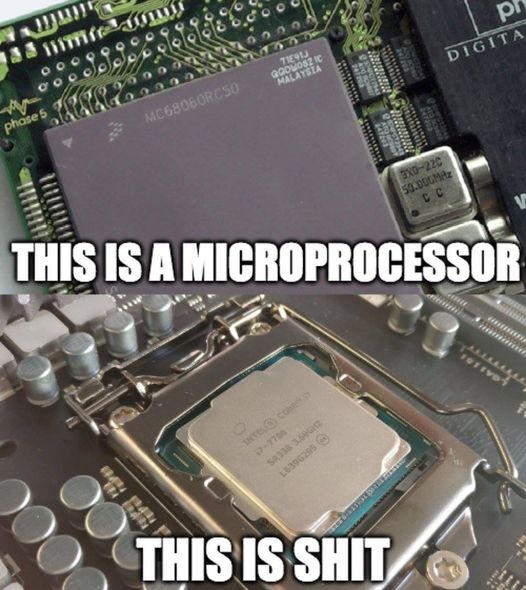
It’s #Intel‘s first 8bit #microprocessor!
This week, I finally worked on the kind donation of the awesome #computermuseum called ENTER Technikwelt in Solothurn, Switzerland. The request was to make die shots of the famous INTEL i8008 from 1972 made in 10 micron PMOS…
(1/n)
Dr. Mark Dean helped invent the ISA bus. He led the team that created the first gigahertz #microprocessor. After earning 40 patents, he took the time to pass on what he's learned to others. Hear his story on #CommandLinePod:
Usually we don't realize that having a #microprocessor running #Linux, with a direct interface to an #FPGA is probably the most important achievement in decades for #embedded systems.
From my point of view.
📦😎Developing Portenta H7 applications in the common Arduino IDE is a quick procedure thanks to the built-in Boards Manager. We'll explore this in today's Ubuntu-focused setup video.
▶️
#microcontroller#microprocessor#IoT
This week in 1971, #Intel released the world’s first commercial single-chip #microprocessor, the 4004, with an advertisement in Electronic News -- though the chip may have been delivered earlier in the spring to some customers. It was the first complete #CPU on one chip! @IEEEorg
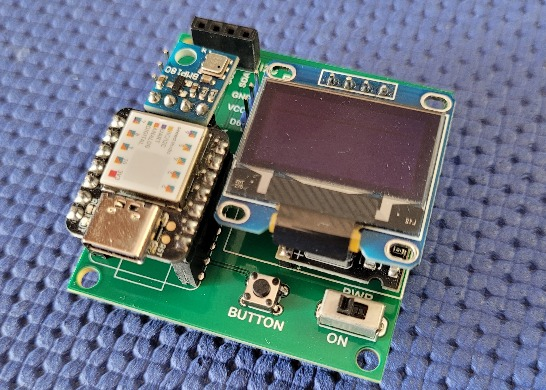
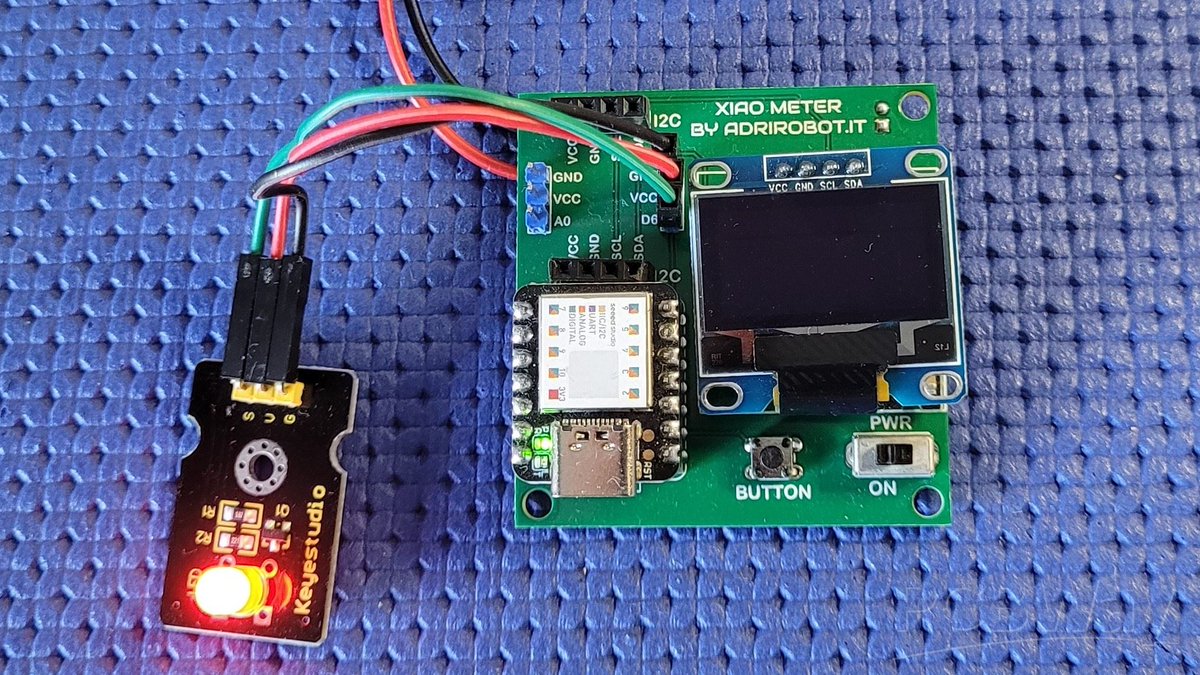
The module measures only 20×17.5×3.5mm and features a #Cortex-M0 #microprocessor, 11 I/O ports, UART, I2C and SPI serial connections. Compatible with the #Arduino IDE.
❤️Sharing from adrirobot(ins)
-More info:
The new PIC64HX in our 64-bit MPU portfolio enables mission-critical intelligent edge applications with high-performance compute, AI, TSN, and security. Details: #Microprocessor#64bit#PIC64HX#TSN#EthernetSwitch
The tech firm Heatbit recently introduced Bitwater, a specialized hardware component engineered to replace standard internal resistance coils inside common household electric water heaters. Instead of functioning as a simple metal wire loop, this drop-in upgrade features twenty integrated application-specific integrated circuit mining chips. These silicon microprocessors operate at a power consumption of up to six hundred watts while executing approximately thirty-four trillion cryptographic hash operations every second. This computational processing secures the underlying decentralized network, generating continuous cryptocurrency payouts for the property owner.
Rather than dispersing the massive thermal output into a room via loud mechanical ventilation fans, the system utilizes the surrounding tank liquid as a direct cooling agent, capturing the thermodynamic dissipation to warm the household water supply. The physical dimensions of the component conform precisely to the standard one-inch opening commonly found on most thirty-to-eighty-gallon residential electric storage tanks throughout the United States and Canada. This standardized design allows homeowners to complete the installation process independently after safely draining the municipal reservoir.
The foundational value proposition centers on converting standard utility expenses into productive dual-purpose energy usage. Independent financial projections indicate that operating the system at maximum continuous load can generate roughly one dollar and twenty-five cents daily, which translates to approximately four hundred and fifty-five dollars annually. However, actual monetary yields remain subject to volatility driven by global cryptocurrency market evaluations and fluctuating network computation difficulty metrics.
Because the hardware generates thermal energy at a slower rate than the traditional forty-five hundred-watt heating elements typically found in residential systems, it is designed to replace only the secondary heating element. The primary upper element inside the storage tank remains active to handle heavy demand spikes during high-use morning periods. Initial product reservations are currently being accepted, with the earliest commercial distribution logistics scheduled to begin in early 2027.
[Decrypt. (2026). Heatbit's $899 water heater element mines Bitcoin while it heats your tank. Decrypt]
These days the term Real-Time Operating System (RTOS) is used when referring to an operating system designed for use in embedded microprocessors or controllers. The “Real Time” part refers to the ability to implement applications that can rapidly responding to external events in a deterministic and predictable manner. RTOS-based applications have to meet strict deadline constraints while meeting the requirements of the application. One way of ensuring that urgent operations are handled reliably is to set task priorities on each task and to assign higher priorities to those tasks that need to respond in a more timely manner.