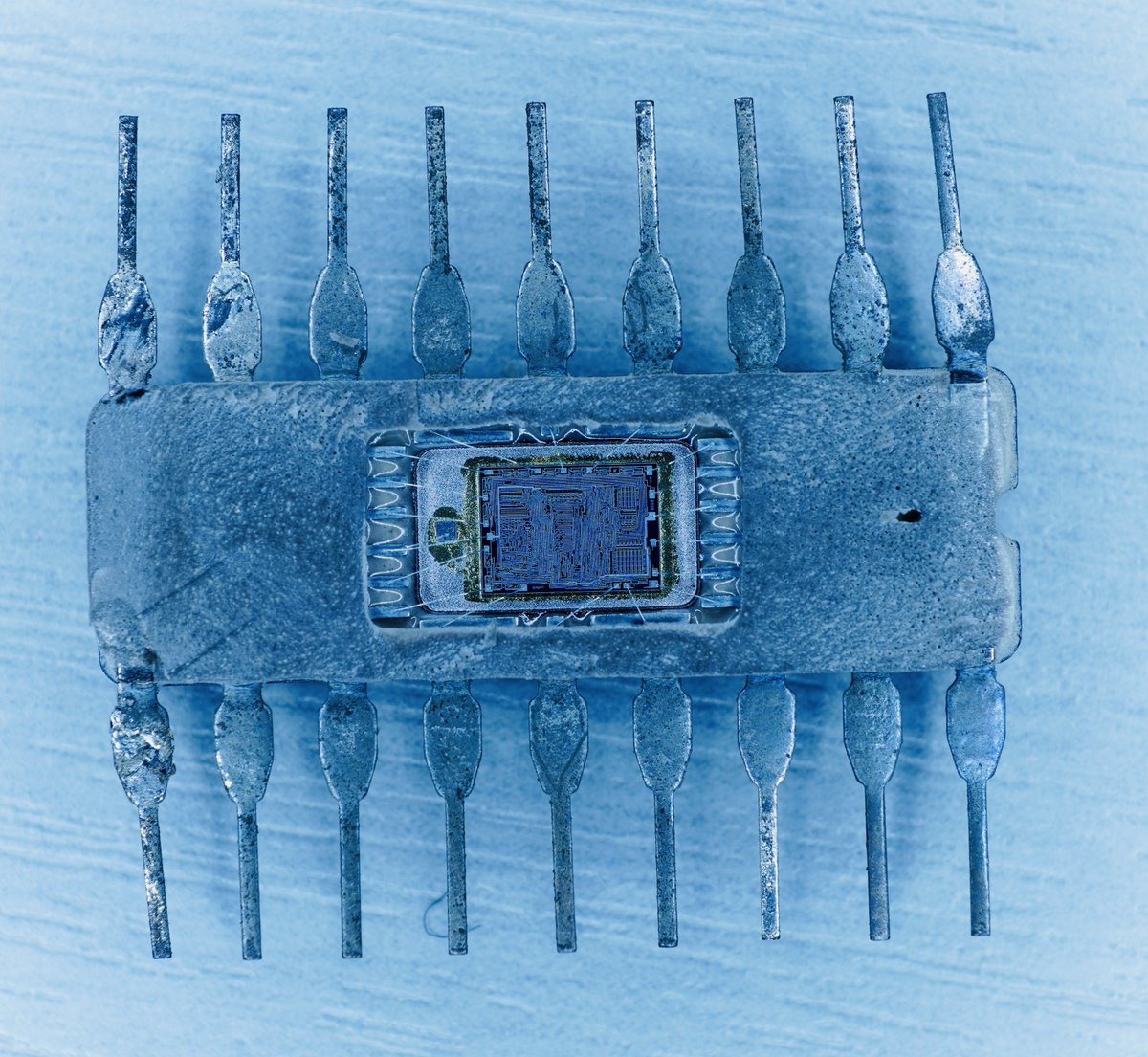
DARPA: THE FUTURE OF WARFARE
At any given time in history, what DARPA scientists are working on, most notably in the agency's classified programs, is ten to twenty years ahead of the technology in the public domain. ¹ The world becomes the future because of DARPA. Is it wise to let DARPA be the harbinger of what lies ahead?
DARPA, by its mandate, pioneers advanced military science in secret. ² A revolution is not a revolution unless it comes with an element of surprise. Once DARPA technology is revealed on the battlefield, other nations inevitably acquire the science that DARPA pioneered. In the early 1960's, during the Vietnam War ⁴, DARPA began developing unmanned aerial vehicles, or drones. ³
It took three decades to arm the first drone, which then appeared on the battlefield in Afghanistan in October 2001. ⁵ By the time the public knew about drone warfare, U.S. drone technology had advanced by multiple generations. ⁶ Shortly thereafter, numerous enemy nations began engineering their own drones. By 2014, 87 nations had military-grade drones. ⁷
*** END OF X POST. ENTHUSIASTS SEE BELOW ***
EXPLANATORY NOTES AND HISTORICAL REFERENCES
¹ DARPA's classified technological development and the 10–20-year estimate
The assertion that DARPA's classified research and development programmes are approximately ten to twenty years ahead of publicly available technology is based on direct confirmation received by the author from members of DARPA.
This is presented as an author-sourced assessment, rather than an estimate inferred from publicly available research. The underlying classified programmes, their technical capabilities and their development timelines are not independently accessible for public verification.
² DARPA's mandate and technological surprise
DARPA's published mission is to create and prevent technological surprise for US national security. Its work encompasses transformational military technologies and research with potential strategic applications.
Not all DARPA programmes are classified. The distinction here is between the agency's publicly documented research and the classified programmes that are central to the argument in this article.
DARPA+1
³ Earlier unmanned aircraft during the Second World War
Unmanned aircraft were already being used during the Second World War, well before the development of modern long-endurance UAVs.
A particularly relevant example is the American Navy's Interstate TDR-1, which saw operational use in the Pacific in September 1944.
The TDR-1 was a radio-controlled aircraft capable of carrying a 1,000 lb bomb or torpedo. It was controlled remotely by an operator aboard a modified TBM Avenger aircraft, using a television guidance system receiving images from the unmanned aircraft.
During its operational deployment, 50 TDR-1 aircraft were launched, with 31 recorded hits against Japanese-held targets.
Although an important technological development for its time, the TDR-1 was substantially less sophisticated than the later long-endurance Predator systems in its communications, sensing, endurance and control architecture.
Importantly, the TDR-1 represents an earlier and separate technological development. It is not part of the DARPA Amber, Gnat 750 and Predator development lineage discussed in this article.
Naval History and Heritage Command+1
⁴ Vietnam-era reconnaissance UAV development
The publicly documented American UAV programme associated with the Vietnam War includes the Ryan Model 147, also known as the Lightning Bug, developed from the Ryan Firebee target drone for the US Air Force.
The US National Museum of the United States Air Force records the use of these aircraft for reconnaissance and intelligence collection, including 138 missions flown between March 1967 and July 1971 by the AQM-34N variant.
This is an important historical distinction. The Vietnam-era Ryan programme and the later DARPA-funded Amber programme are separate technological and programme histories.
This note distinguishes the publicly documented programme attribution; it does not purport to exclude other classified DARPA research during that period.
⁵ The development timeline and the first armed Predator
The reference to the first armed drone should be understood in the context of the modern American Predator development trajectory, rather than as a claim that no armed unmanned aircraft existed previously. The Second World War TDR-1 is an earlier example.
The three-decade reference also raises an important chronological distinction.
DARPA's publicly documented Amber demonstration took place in 1988. The US Air Force records that Predators flew unarmed operational missions from 18 September 2001 until 7 October 2001, when the first armed Predator mission took place during Operation Enduring Freedom.
Consequently, the Amber-to-first-armed-Predator interval was approximately thirteen years. The period from the early 1960s to October 2001 was closer to four decades. The three-decade reference should therefore be understood as a broad description of the evolution of UAV technology, rather than a precise duration for the publicly documented Amber-to-Predator programme.
DARPA+2
⁶ DARPA's Amber programme, the Gnat 750 and the Predator lineage
This connection is particularly important to the central technological argument.
Under the joint Teal Rain programme with the US Navy, DARPA funded the development of an unmanned aircraft known as Amber.
In 1988, Amber completed a flight lasting more than 38 consecutive hours, reaching an altitude of 25,000 feet.
The aircraft incorporated important advances in digital flight controls, composite materials, microprocessors and satellite navigation.
DARPA's own historical account explicitly identifies the Amber demonstration as leading to the Gnat 750 and the Tier 2 Predator.
This publicly documented connection between DARPA's research and the subsequent development of the American long-endurance Predator family.
There is an additional historical nuance. The 2014 Drone Primer, published by the Centre for the Study of the Drone at Bard College, also documents Abraham Karem's work, whose Gnat 750 design General Atomics acquired in 1990 and subsequently developed into the Predator.
The two accounts should be understood as describing contributions to a wider technological development lineage, rather than assuming that Amber itself was renamed the Predator.
⁷ The proliferation of military UAV technology and the 87-nation statistic
The 87-nation figure is traced to the 2014 Drone Primer, published by the Centre for the Study of the Drone at Bard College.
The report estimated that, by 2013, 87 militaries were either developing or acquiring military UAVs
Crucially, these systems covered a wide range of capabilities, from sophisticated medium-altitude and high-altitude long-endurance aircraft to smaller, unarmed reconnaissance platforms. The report also cautioned that measuring the extent of indigenous drone development was difficult.
A subsequent 2015 analysis by the Centre for a New American Security also identified 87 countries known to operate drones. Only ten possessed armed drones. At least twenty additional countries were developing armed capabilities.
The distinction is important: the 87-nation statistic demonstrates widespread military UAV proliferation, but does not establish that all 87 countries possessed armed, high-end systems or had independently reverse-engineered American technology.