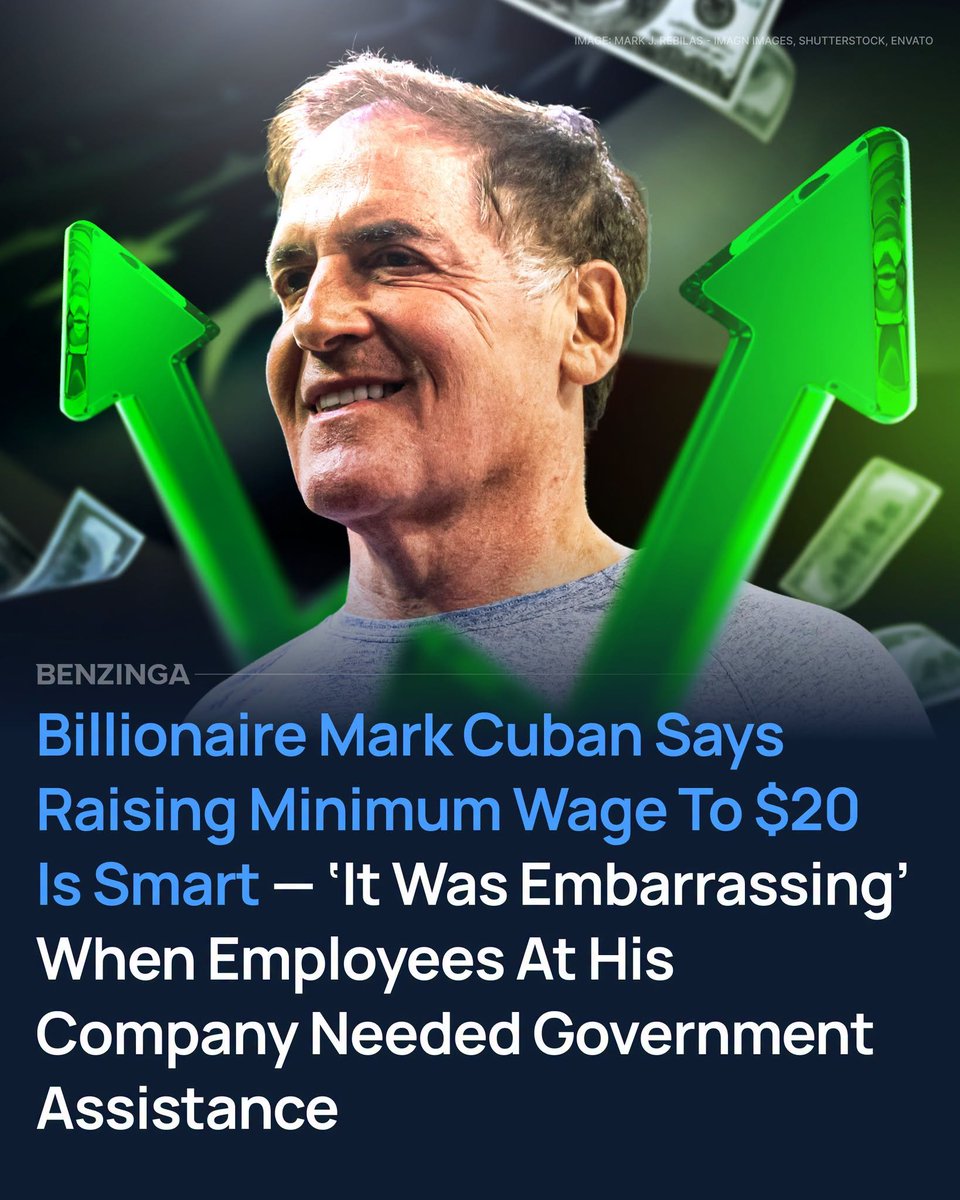
Mark Cuban said raising the federal minimum wage to $20 would be a smart policy, arguing that stronger wages can improve workers’ financial security and reduce dependence on government assistance.
Cuban said his view was shaped partly by personal experience after discovering that employees at a company he invested in needed public assistance. He said he was embarrassed by the situation and pushed for workers to receive raises.
His broader economic philosophy centers on what he calls “trickle up” rather than trickle-down economics, which he dismissed as ineffective.
Under Cuban’s approach, higher wages and greater opportunities for workers to build ownership and wealth can strengthen the economy from the bottom up.
He also criticized “eat the rich” rhetoric, arguing that attacking successful people may be politically useful but does little to solve the underlying problems facing workers.
Cuban defended entrepreneurs as well, noting that many founders take significant financial risks, accumulate debt and spend years struggling without ever becoming wealthy.
He emphasized the importance of small businesses to employment and economic growth, while arguing that successful entrepreneurs often reinvest their wealth by hiring workers, raising wages, funding education and backing new businesses.
Cuban’s broader message is that economic policy should focus less on demonizing wealth and more on creating higher wages, ownership opportunities and conditions that allow workers and entrepreneurs to build financial security.