
Mining & Intelligence Disrupt® - March 22-24, 2027@MiningDisrupt
Difficulty just adjusted at block 973,728: ▲5.54% to 148.36 T.
Difficulty now sits at 148.36 T.
Next one at block 975,744.
Follow us for fresh daily Bitcoin network metrics.


000292
@MiningDisrupt
World’s Largest Bitcoin Mining Educational Expo + Ai Infrastructure, HPC & Ai Conference Sponsor - Exhibit - Speak - Educate - Attend - Learn, Got Tickets?


PC Gamer @pcgamer'It’s like stealing pure gold bars': $100 million of AI data center freight stolen since June


TechCulture @LifeoflineeNvidia unveiled its DSX POD, a modular AI factory that pairs Vera Rubin hardware with pre‑built containers, aiming to speed AI data‑center rollouts and cut installation effort while improving energy efficiency. (via Latest from TechRadar)


Robert Friedland @robert_ivanhoeThe AI data center buildout is not just a software or capital investment story. It’s quickly becoming a physical infrastructure challenge, and the supply of materials and equipment is paramount in determining how quickly we can build. If we want the US to become a leader in superintelligence, we first need to become a leader in the underlying commodities required to build the technology. This technology requires more than capital and chips. We need transmission lines (copper), transformers (grain oriented electrical steel), fuel cells (scandium), and many more critical minerals that the US is fighting to procure. The future of AI doesn’t begin in a lab, it starts in the ground. A great article on data center risk from AIxEnergy: @aixenergy

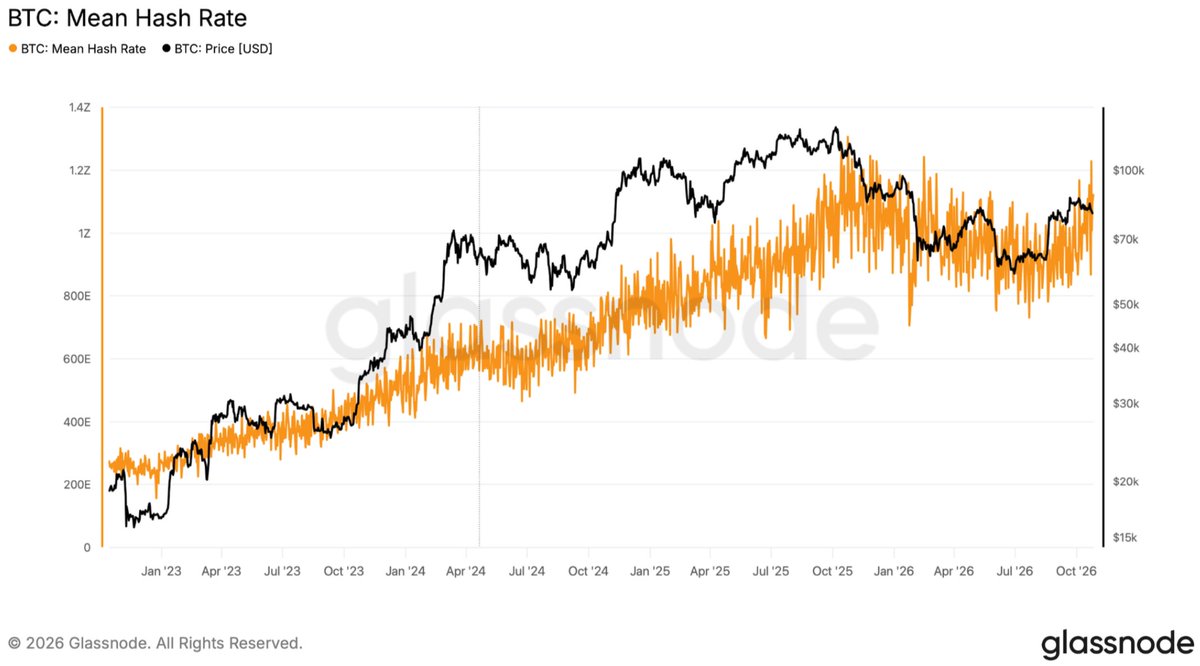
Lark Davis @LarkDavisBitcoin network security is roaring back. Hashrate is back up to 1.1 ZH/s—closing in on the late-2025 all-time high of 1.3 ZH/s after a 9-month lull. Drivers: 🔹 Next-gen ASICs deployed 🔹 Price recovery boosting profitability 🔹 Smaller operators capturing hash left by miners pivoting to AI workloads (source: Glassnode)

ᗰIᑕKEY 🧞 @mickeyDeCURATORA lot of people want exposure to digital asset earnings and mining, but the barriers to entry expensive ASIC rigs, high electricity tariffs, and technical maintenance push most retail participants away early. That friction point is precisely where @eagletop3compan is positioning its platform. You see i have spent some time looking into its setup, interface, and mechanics. Here’s a high level, objective breakdown of what it’s building on the surface. 1. The Virtual Mining Model Rather than requiring users to purchase and operate physical mining equipment, EAGLE offers structured virtual mining plans. Tiered Contracts: Users can select from multiple mining tiers, ranging from entry level packages to higher capacity plans. Periodic Rewards: Each plan has a defined operational lifecycle, with advertised daily rewards credited to the user's dashboard. Concurrent Activation: The platform allows users to activate multiple mining plans simultaneously. The key distinction is that a simplified mining experience doesn't automatically establish that physical mining operations are generating the advertised returns. 2. The Asset Layer: Eagle Coin Earnings within the system are denominated in the platform's proprietary ecosystem asset Eagle Coin • Rewards from active virtual miners are credited to an integrated in-app wallet. • Eagle Coin serves as the platform's internal accounting unit for balances and rewards. • Users' ability to realize those earnings depends on the token's redemption options, applicable fees, and the platform's ability to honor sell-back requests. A balance displayed on a dashboard isn't necessarily equivalent to withdrawable cash. 3. Closed-Loop Utility & Settlement Rails EAGLE has designed an internal ecosystem around its token to facilitate transactions beyond mining rewards. Internal Routing & P2P: The platform lists internal transfers between user wallets, subject to a stated 1.5% fee. Liquidation & Utility: Selling Eagle Coin back to the platform carries a stated 5% fee. The platform also describes utility related redemption options. Hybrid Gateways: The platform advertises USDT deposits and local payment integration through Flutterwave. The stated exchange rate and settlement terms should be verified before depositing funds. These mechanisms make the platform easier to navigate, but they don't independently establish the token's liquidity or the sustainability of its reward model. Initial Research Observations The product flow and interface appear designed to reduce the friction typically associated with proof-of-work mining. However, looking at the model analytically, a few core architectural variables stand out for closer evaluation. Liquidity & Backing: Because distributions are paid in Eagle Coin, the ability to realize earnings depends on the available redemption mechanisms and the platform's capacity to honor sell-back requests. Independent evidence of sufficient reserves remains important. Static vs. Dynamic Yield: Advertised daily rewards are predetermined by the plans rather than transparently tied to changing electricity costs, network difficulty, or independently verified mining revenue. The source of those rewards needs to be established. Proof of Compute: Independent verification of physical hardware operations, public hashrate data, and attributable mining activity would help establish whether real computational work underpins the model. Reward Consistency: The advertised reward rates and the terms governing those rewards should be examined together. Any inconsistencies need clarification before users rely on the stated returns. If you want to explore the interface and review the dashboard yourself, you can take a look here: Safe 🦄


TBPN @tbpn.@GavinSBaker explains how most people don't understand how hard it is to stand up energized compute, and that a lot of 'amateurs' will get cleaned out by 2027. "Standing up a big GPU cluster is like running an F1 team." "A bunch of people who have no relevant experience have acquired some land and power, then they get a zero down payment offtake agreement from someone, and a lot of that is being cleaned up." "This is a forcing function to allocate GPUs to people who can actually bring on a cluster, energize the GPUs, and run it well." "Companies like CoreWeave, Crusoe, Nebius, SpaceX, etc." "It takes most people 3-6 months to get the GPUs energized. If we can, through Jensen's new DSX product, get that time down, I think that that's also healthy because that effectively takes a lot of working capital out of the market."

Secure Sovereign 🚀₿🧡 @secsovereignWhoever did the most work should have the most say. That is the standard defense of Bitcoin's informal governance, and Bitcoin itself rejects it. Even a miner with majority hashrate who breaks consensus rules gets the block rejected by every node. Proof of work earns the right to propose, and nothing earns the right to skip verification. A developer's track record is a weaker credential than hashpower. Anyone can buy ASICs and mine, but a commit only counts after someone with merge access accepts it. Seniority is issued by the people it ranks. Experience matters, and written rules give it a defined role where objections are stated and answered on the record. Without them, the right person's objection is a veto with no appeal, and people are calling that freedom and a healthy ecosystem.

Bitcoin Archive @BitcoinArchiveTwo solo Bitcoin miners defy the odds and hit jackpot blocks on consecutive days. 🔸One ran a 16 TH/s setup: $500–$1.5k 🔸One used FutureBit gear: $900-$2k 🔸Both kept the full 3.125 BTC + fees Congrats to those lucky miners!


