Physics In History✓
@PhysInHistory
Photos from the history of physics | © with mentioned Archives. Shared for educational purposes. Einstein portrait © Ullsteinbild. Subscribe for curated papers.
0 Following1.1M Followers15.6K Posts
- Gravity Isn’t a Force (Einstein) : ✍️ Gravity isn’t a force-it's the curvature of spacetime caused by mass and energy, as described by Einstein’s General Relativity. Massive objects like planets bend spacetime, and other objects follow these curves, creating what we perceive as gravitational attraction.
 308050723.4K
- What would a "quantum computer" mean for solving problems in physics and beyond? ✍️
 161318514.3K
- Simulated Reality Hypothesis: ✍️ This hypothesis suggests that what we perceive as reality might actually be an artificial simulation, akin to a highly advanced computer program. This raises questions about the nature of existence and reality. If our experiences and perceptions are simulated, does that make them any less real? And who, or what, might be running such a simulation?
 201511511.6K
- The very fabric of space-time at the smallest scales is thought to be extremely turbulent and chaotic, described as a frothy sea called quantum foam. This concept, stemming from quantum mechanics and general relativity, suggests that the very nature of space-time is bubbling with tiny wormholes and fluctuations that appear and disappear within fractions of a second. 📷by Johann Rosario325843929.1K
- Handwritten notes by Charles Babbage, computer pioneer, ca. 1822.

 1510874131.7K
- Alan Turing's paper demonstrating how the operations of a computer can be controlled through a program of instructions stored in its memory.
 96657532.2K
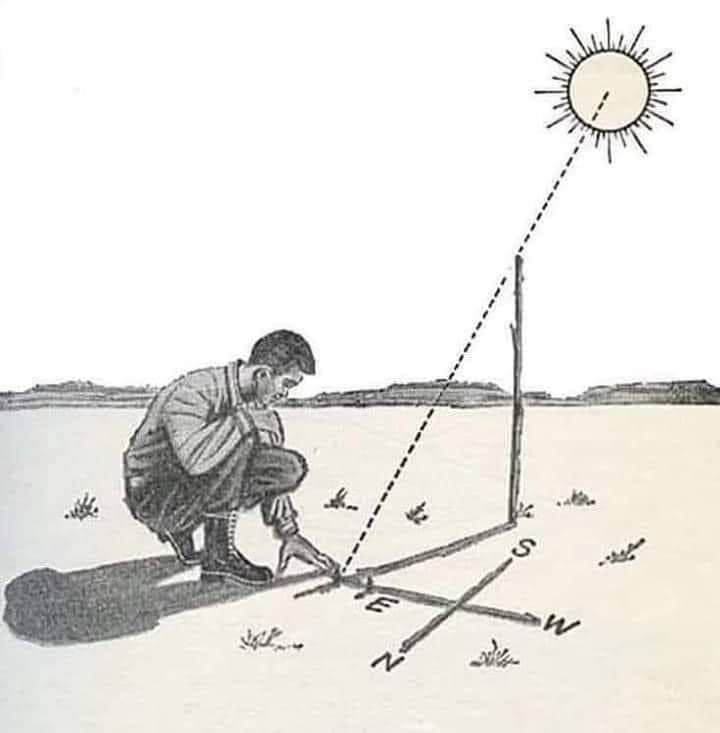
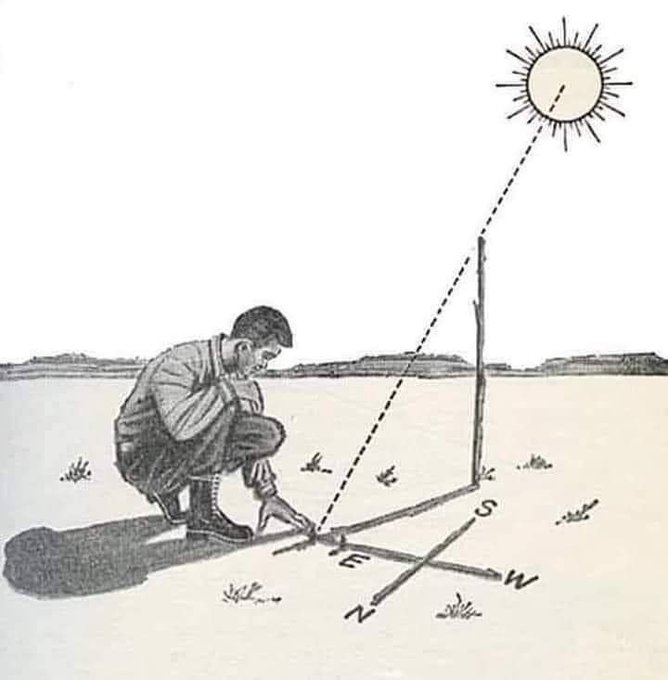
- Use of Sun and Stick for direction. ✍️ 1. Place a stick upright in the ground. 2. Mark the tip of the shadow cast by the Sun. 3. Wait 15-30 minutes, then mark the new shadow tip. 4. Draw a line between the two points — this line runs East-West. 5. The first mark is West; the second mark is East.
 1410361034.4K
- Nikola Tesla's denial of Einstein's relativity (1932) ✍️ I hold that space cannot be curved, for the simple reason that it can have no properties. It might as well be said that God has properties. He has not, but only attributes and these are of our own making. Of properties we can only speak when dealing with matter filling the space. To say that in the presence of large bodies space becomes curved is equivalent to stating that something can act upon nothing. I, for one, refuse to subscribe to such a view.
 1822111.4K93.8K
- The ancient Maya were adept astronomers who could predict solar eclipses with great accuracy. They used a complex system of calendars to track celestial events, including solar eclipses. The Dresden Codex, one of the few surviving pre-Columbian Maya books, contains tables that are thought to be used for predicting solar eclipses.
 156133418.7K
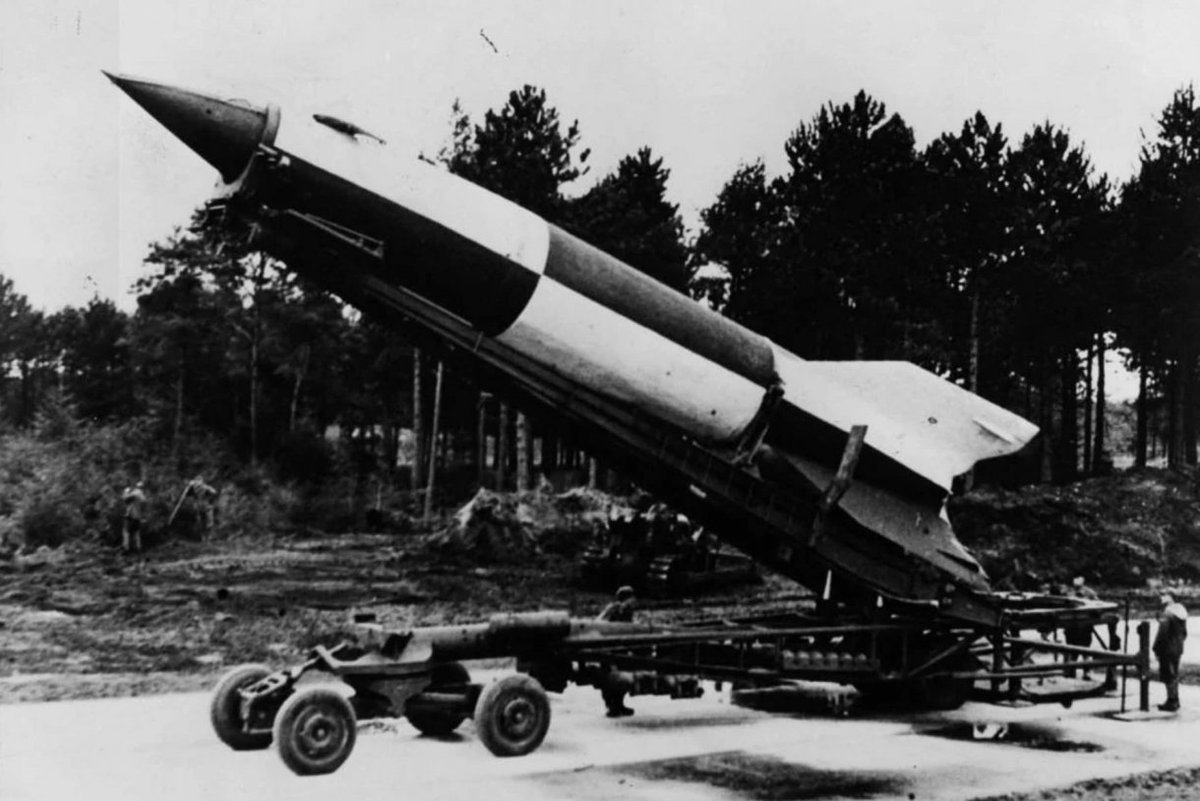
- During World War II, German engineer Wernher von Braun developed the V-2 rocket, the world's first long-range guided ballistic missile. After the war, von Braun and many of his team members were brought to the United States under Operation Paperclip. This controversial operation paved the way for the U.S. space program, and von Braun became a leading figure in the development of the Saturn V rocket that took humans to the moon.
 224631019.8K
- Galileo Galilei's manuscript with drawings of the Moon 🌖
 168759725.3K
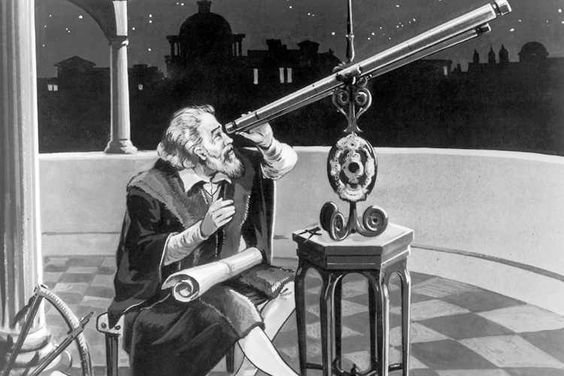
- If you could see the earth illuminated when you were in a place as dark as night, it would look to you more splendid than the moon. - Galileo Galilei
 188052822.6K
- Leonardo da Vinci on the model of the solar-system 🌖 The earth is not in the centre of the Sun's orbit nor at the centre of the universe, but in the centre of its companion elements, and united with them. And any one standing on the moon, when it and the sun are both beneath us, would see this our earth and the element of water upon it just as we see the moon, and the earth would light it as it lights us. 📷Hulton Archive/Getty Images
 112217213.8K
- Henry Moseley, the inventor of the modern periodic table, was killed at the age of 27 by a sniper in the Gallipoli battle in 1915.
 369264130.7K