The SETI Institute✓
@SETIInstitute
Our mission is to lead humanity's quest to understand the origins and prevalence of life & intelligence in the universe and share that knowledge. #notjustaliens
1.8K Following680K Followers26.5K Posts
- What happens when teachers get to experience science at 45,000 feet? ✈️🔭 Through the SETI Institute's NASA-funded Airborne Astronomy Ambassadors program, educators flew aboard NASA's SOFIA airborne observatory, working alongside scientists, engineers, and mission teams to bring authentic research experiences back to their classrooms. And the impact went far beyond the flight. A WestEd evaluation found that students taught with the program's astronomy curriculum scored 5–7% higher on a science assessment than students receiving standard instruction. The curriculum ultimately reached more than 64,000 students! WestEd looks back at the program's legacy, featuring insights from the SETI Institute's Coral Clark and Dana Backman. Read the story: #ScienceEducation #STEMEducation #Astronomy #SETIInstitute1072.8K
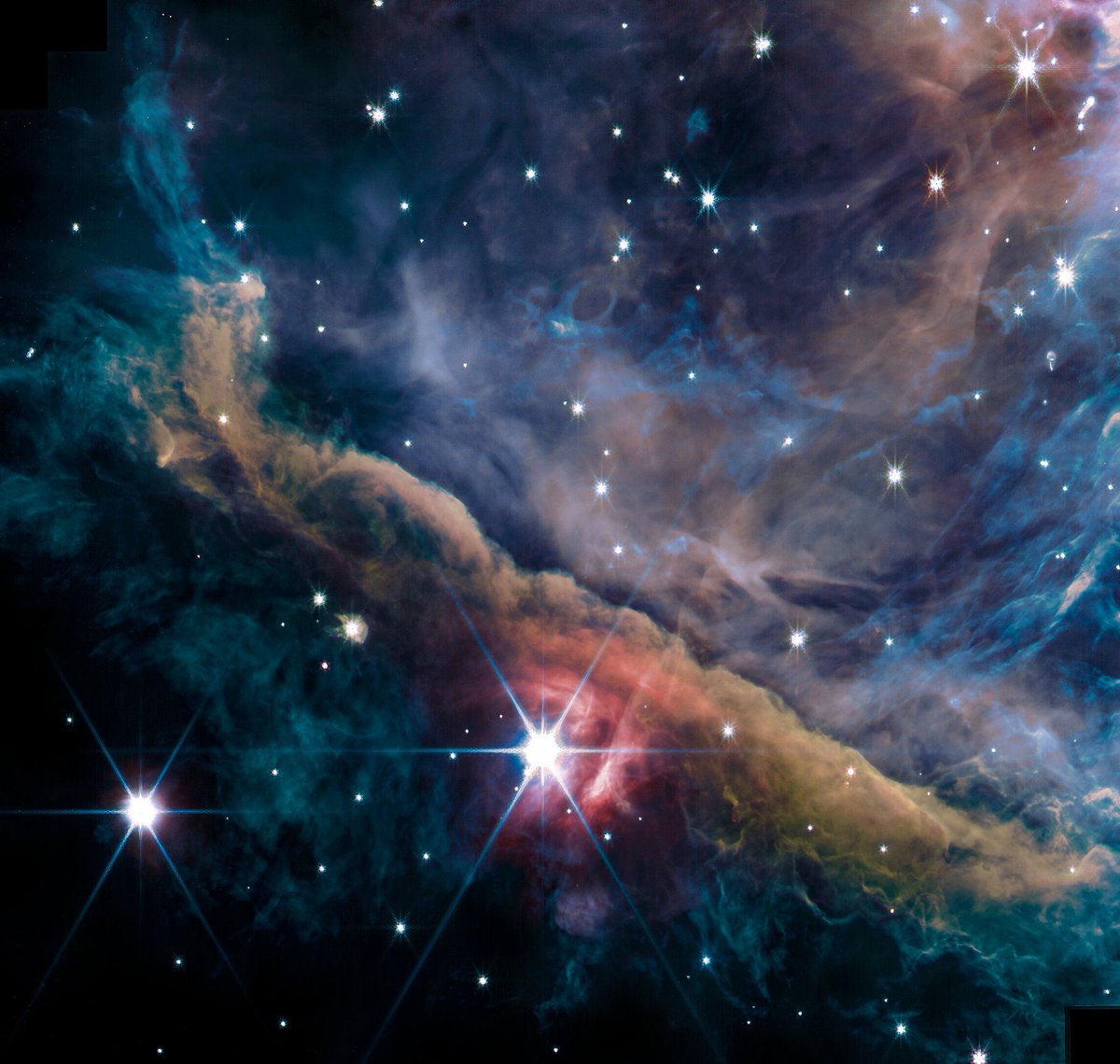
- #PPOD: Orion Through New Eyes ✨️ More than 140 years after the first photograph of the Orion Nebula, NASA's JWST reveals this familiar stellar nursery in extraordinary infrared detail. Captured on September 11, 2022, by the telescope's Near-Infrared Camera (NIRCam), this view peers into the nebula's inner regions, where young stars emerge from vast clouds of gas and dust approximately 1,350 light-years from Earth. Unlike visible-light observations, JWST's infrared vision can penetrate much of the dust that obscures newborn stars, revealing structures and stellar populations previously hidden from view. Powerful ultraviolet radiation from the massive stars of the Trapezium Cluster illuminates and sculpts the surrounding material, while dense clouds shelter the next generation of stars and potential planetary systems. From Henry Draper's pioneering photograph in 1880 to JWST's remarkable infrared observations, the Orion Nebula continues to transform our understanding of how stars and planets are born. Credit: @NASA @ESA @csa_asc #astronomy #orionmonth
 6271464.9K
- 🛰️ Attending the 2026 Division for Planetary Sciences (DPS) meeting? Don't miss the RMS Node Users Group meeting this Thursday! Join SETI Institute planetary scientist Matt Tiscareno to discuss the Ring-Moon Systems Node of NASA's Planetary Data System (PDS), including resources and tools for accessing planetary data. 📅 Thursday, October 29 🕚 11:45 am–12:45 pm Pacific 📍 Room 206A 💻 Hybrid attendance available via Zoom Interested in joining remotely? Contact Matt Tiscareno for Zoom access and to join the mailing list. Explore the RMS Node: #SETIInstitute #DPS2026 #PlanetaryScience #NASA #PDS
 12184.3K
- 🔴 Nearly 50 years ago, NASA's Viking missions did something no Mars mission has attempted since: directly search for living organisms on the Red Planet. SETI Institute planetary scientist @pascalleetweets explains what made Viking revolutionary and how our approach to searching for life on Mars has evolved. 🎧 Hear the full conversation in the latest SETI Live podcast episode, "50 Years at Mars: From Viking to Today's Rovers", available wherever you listen to podcasts! #SETILive #Mars #Viking #Astrobiology #SpaceExploration17194.2K
- #PPOD: The Pink City From Space 🏠 This detailed satellite view captures the historic city of Toulouse along the Garonne River, taken by the Pléiades Neo mission. Located in southwestern #France, Toulouse is known as "la ville rose", or the pink city, for the distinctive terracotta tiles that give its rooftops their warm reddish hues. From orbit, the densely packed historic center contrasts with green parks, winding waterways, and the surrounding urban landscape. The Garonne winds through the city, crossed by numerous bridges and flanked by islands, including Île du Grand Ramier, where Toulouse Stadium is visible as a bright oval. The Brienne, Midi, and Garonne canals also trace the city's long relationship with its waterways. With a resolution of up to 30 centimeters, Pléiades Neo satellites can reveal remarkable details of Earth's cities, helping researchers study urban development, land use, and environmental change. Credit: Airbus DS (2024), processed by @ESA #planetaryscience
 21213.2K
- 🛸 Newly released Pentagon files detail UFO sightings over California's Catalina Island in the 1940s and 1950s. But do these decades-old reports suggest extraterrestrial visitors? SETI Institute President and CEO Bill Diamond spoke with CBS Los Angeles about the sightings, the importance of skepticism, and why the possibility of life beyond Earth doesn't necessarily mean aliens are visiting us. Read the story and watch the interview: #SETIInstitute #UFO #UAP #ExtraterrestrialLife17147112.1K
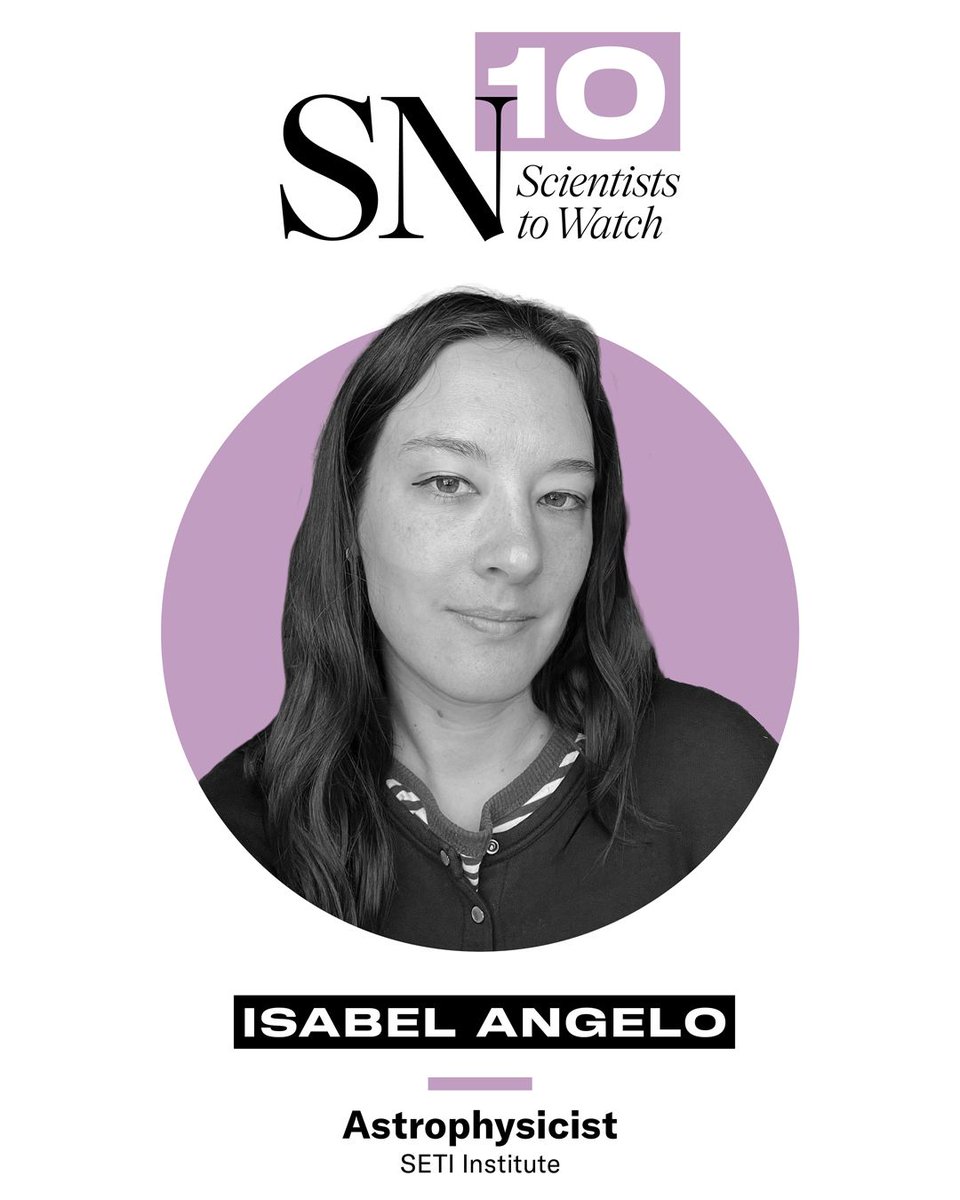
- 🎉 Congratulations to SETI Institute scientist Isabel Angelo on being named one of @ScienceNews’ "2026 SN 10: Scientists to Watch!" The SN 10 recognizes early- and mid-career scientists whose research is pushing the boundaries of discovery. We're thrilled to see Isabel and her work recognized alongside this year's outstanding scientists! Learn more: #SETIInstitute #ScienceNews #Astronomy #Exoplanets
 35163.1K
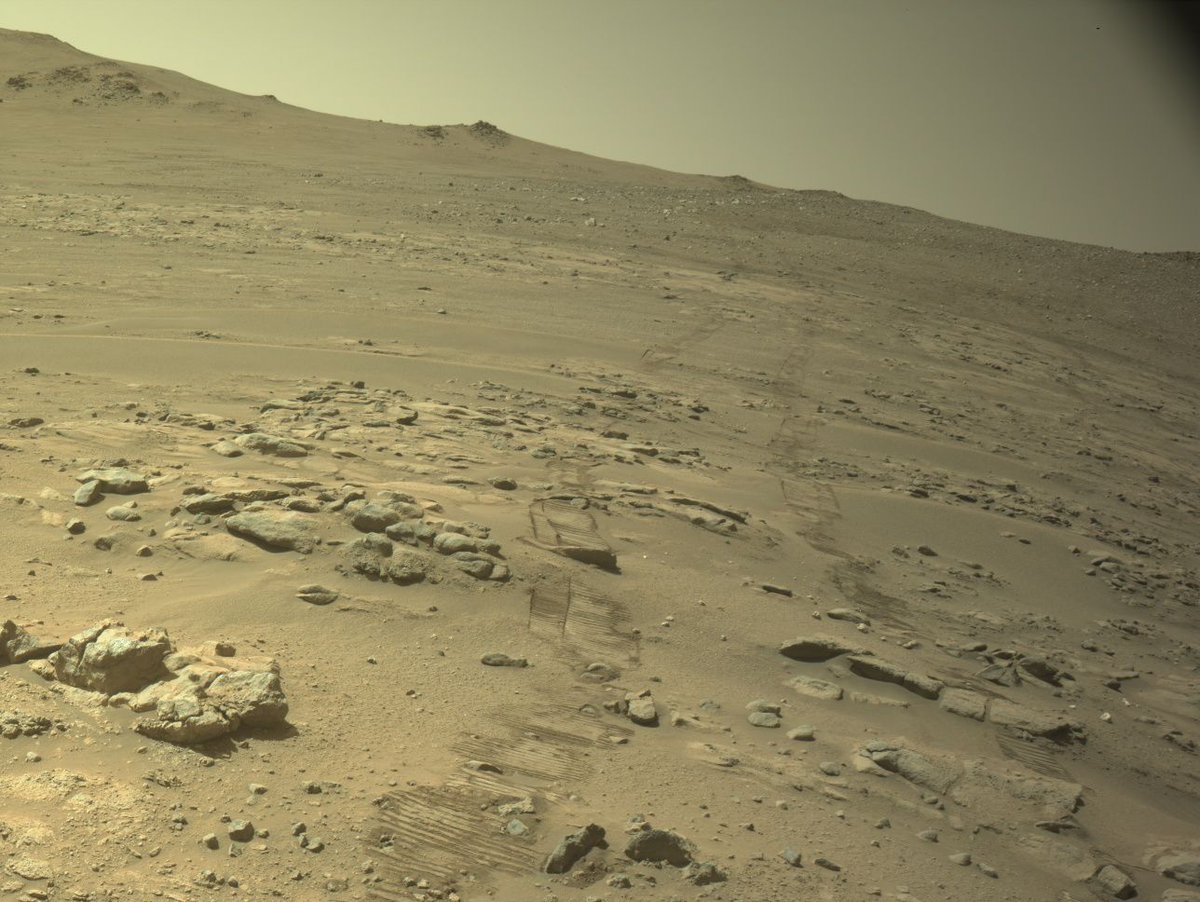
- #PPOD: Going the Distance on Mars 🔴 @NASAPersevere has made history! On October 11, 2026, the rover reached a total distance of 45.22 kilometers across #Mars, surpassing the 45.16-kilometer record set by its predecessor, Opportunity. This Navcam image captures Perseverance's tracks stretching across the Martian terrain during the drive that made it the farthest-traveling vehicle on another world. Since landing in Jezero Crater in February 2021, Perseverance has explored ancient lakebed sediments, collected rock samples, and climbed toward the crater's rim in search of clues to Mars's watery past. Its autonomous navigation system, AutoNav, lets the rover identify obstacles and plan routes with less guidance from Earth, helping it cover more ground across challenging terrain. With new geological targets ahead, Perseverance's record-breaking journey is far from over. Credit: @NASA @NASAJPL @Caltech #planetaryscience
 4171065.1K
- Beneath the thick ice of Antarctica's Lake Untersee lies a hidden world that could help us understand life's earliest chapters on Earth—and where to search for life beyond our planet. SETI Institute astrobiologist Dale Andersen is returning to Lake Untersee for another field season, joining international collaborators to investigate the lake's ancient microbial ecosystems and geological history. This expedition will focus on collecting sediment cores that could reveal how the lake and its remarkable microbial communities have changed over time. The findings may also inform the search for life on Mars and the icy moons of the outer solar system. Follow Dale's Antarctic adventures, starting with a preview of the expedition: #Astrobiology #Antarctica #SETIInstitute #LakeUntersee14213.5K
- 📡 #ICYMI: Are fast radio bursts more common toward galaxy clusters? New research suggests these mysterious cosmic flashes occur more often toward galaxy clusters than expected. But how confident are astronomers in that result? In this clip from #SETILive, Dr. Mawson W. Sammons explains the statistical significance of the finding, while SETI Institute astronomer @astro_sgro puts the odds into perspective. Watch the clip, then catch the full conversation! 🔴 #FastRadioBursts #GalaxyClusters #Astronomy #Astrophysics36184.5K
- Robert (Rob) French is a planetary scientist at the SETI Institute who studies the rings and moons of the outer solar system. His research includes Saturn's rings, Uranus's inner moons, and the co-discovery of a moon of Neptune. Rob also helps scientists make the most of spacecraft data. As a co-investigator with NASA's PDS Ring-Moon Systems Node, he develops tools for exploring planetary observations and has helped make approximately 500,000 images from Cassini, New Horizons, Voyager, and Galileo easier for researchers to use. Not Just Aliens is the SETI Institute’s weekly series featuring scientists exploring astrobiology, heliophysics, planetary science, and more — expanding the search for life beyond Earth. #PlanetaryScience #Space #Science #SETI #NotJustAliens


 15313.5K
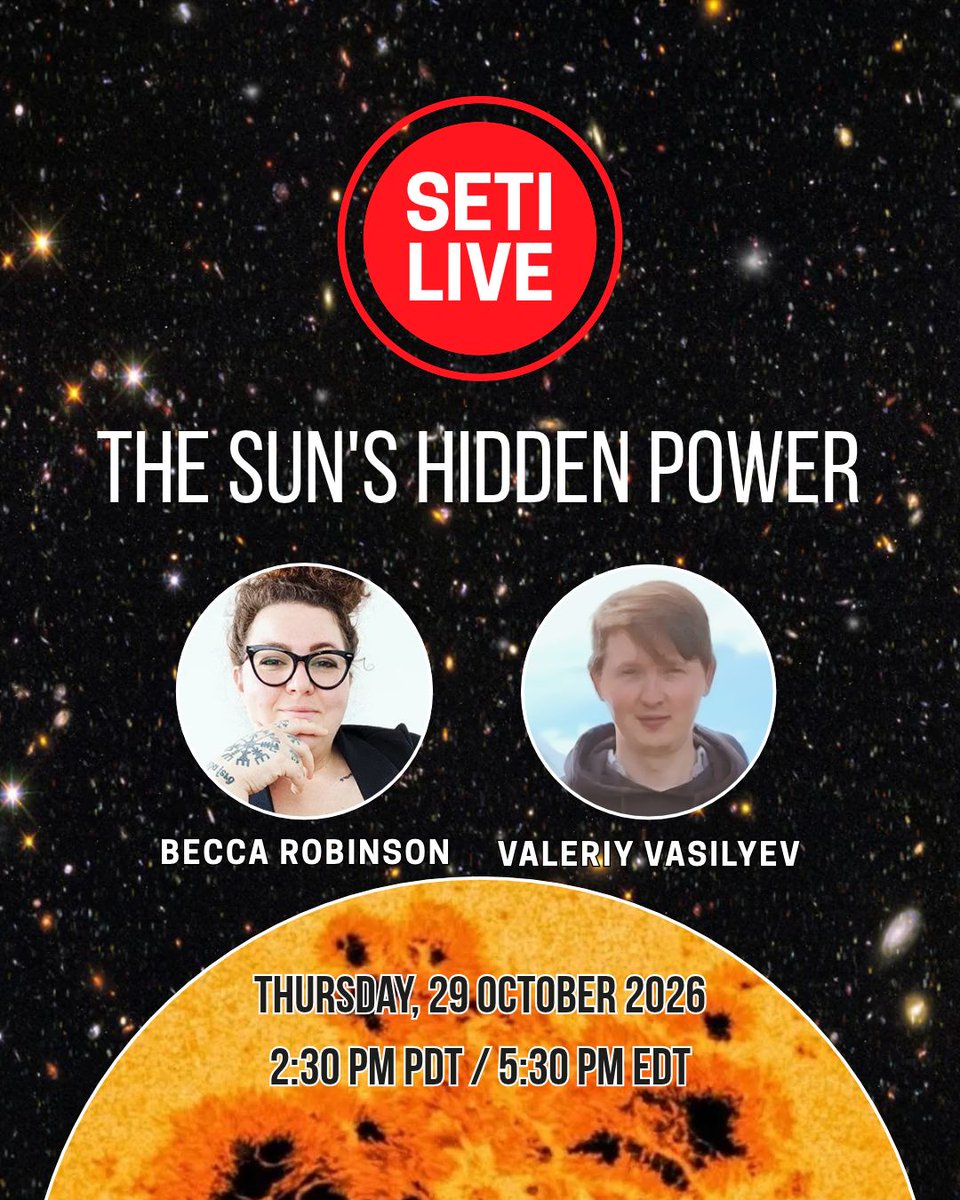
- ☀️ Could our Sun unleash a superflare? In 1947, astronomers observed an enormous sunspot with the potential to produce an explosion far more powerful than the solar flares we've witnessed in modern times. What does this historic sunspot reveal about the Sun's explosive capabilities? Join SETI Institute heliophysicist Dr. Becca Robinson and Dr. Valeriy Vasilyev of the Max Planck Institute for Solar System Research for a new #SETILive exploring the science of solar superflares and what they could mean for Earth. 📅 Thursday, October 29, at 2:30 p.m. PDT 🔴 Watch live: #SolarScience #SpaceWeather #Astronomy
 13182.9K
- 👽 Could AI help us find evidence of alien technology in telescope data we've already collected? Astronomers have accumulated enormous archives of observations, and new analysis techniques could help researchers look for signals that earlier searches may have missed. In this episode of SETI Live, Dr. Ben Zuckerman joins Dr. Lauren Sgro to discuss broadband searches for extraterrestrial intelligence and how existing astronomical data could contribute to the search. 🎧 Listen to the podcast: #SETI #Astronomy #ExtraterrestrialIntelligence49253.2K
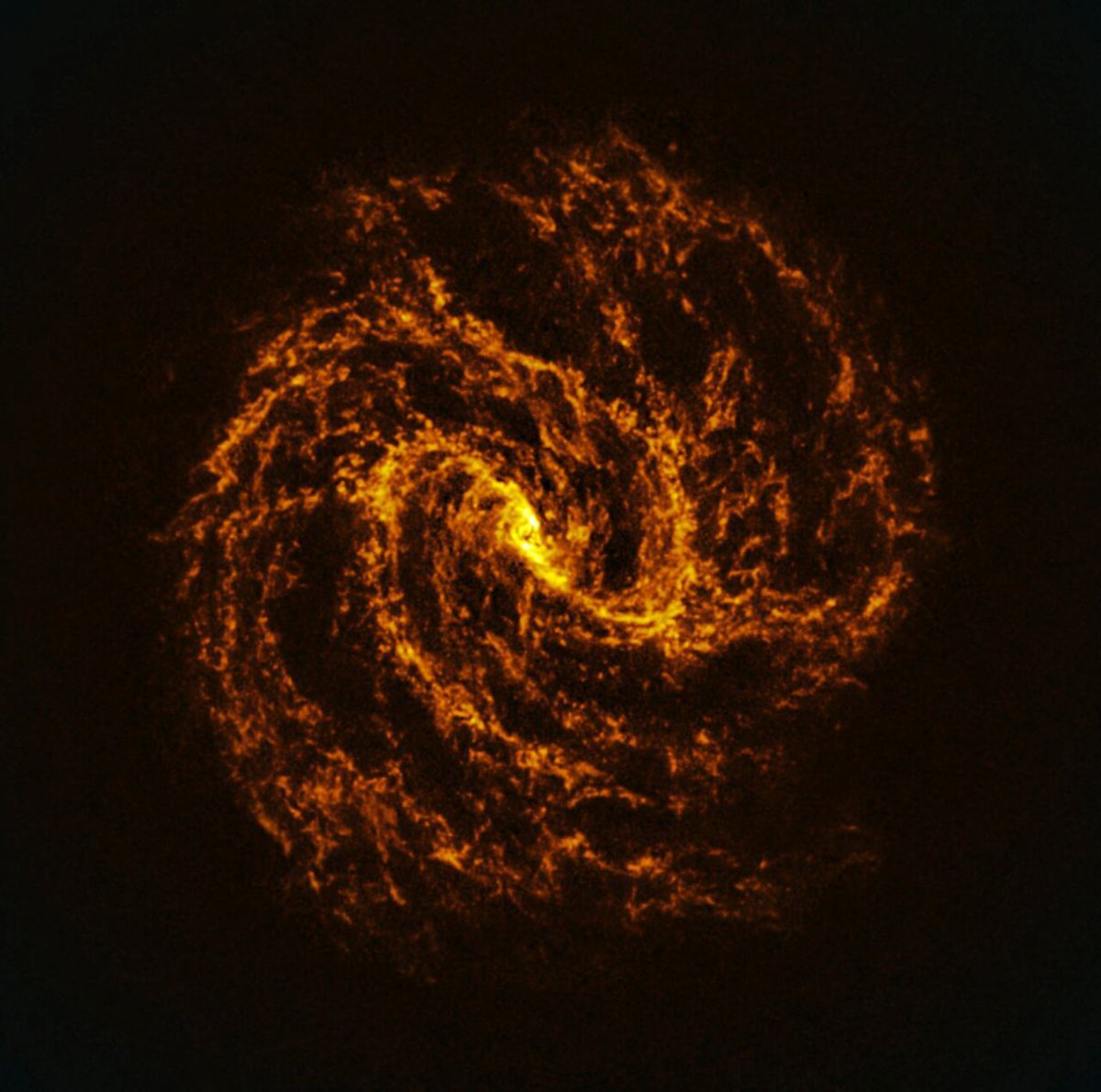
- #PPOD: A Swirling Galaxy 🌀 The graceful spiral arms of Messier 83, also known as the Southern Pinwheel Galaxy, reveal a hidden world of cold gas in this view from Chile's Atacama Large Millimeter/submillimeter Array (ALMA). Located approximately 15 million light-years from Earth, M83 is a nearby spiral galaxy whose sweeping arms contain vast reservoirs of molecular gas—the raw material from which new stars are born. Rather than observing visible starlight, ALMA detects radiation at millimeter and submillimeter wavelengths, allowing astronomers to trace the distribution and properties of cold molecular clouds throughout the galaxy. By studying how these clouds vary across M83's spiral arms, central regions, and the spaces between them, researchers can investigate how galactic environments influence new star formation. The observations reveal the intricate relationship between a galaxy's structure and the processes that continually shape its stellar population. Credit: @ALMAObs ( @ESO @prcnaoj_en @TheNRAO ) / J. Koda et al. #astronomy
 219913.8K
- 🚀 Could Mars' mysterious moon Phobos be hiding pieces of the Red Planet itself? Japan's Martian Moons eXploration (@mmx_jaxa_en) mission aims to collect samples from Phobos and return them to Earth, potentially revealing how Mars' moons formed and what the planet was like billions of years ago. SETI Institute planetary scientist @pascalleetweets joined @NewsNation's "Hot Take with Jesse Weber" to discuss the mission, its tiny robotic rover, and what scientists hope to discover about Mars' ancient history and the building blocks of life. 🎥 Watch the interview: #Mars #Phobos #MMX #PlanetaryScience44274K
- #PPOD: The First Look at Venus On October 22, 1975, the Soviet Union's Venera 9 spacecraft made history by transmitting the first photograph from another planet's surface. Landing on Venus at about 32° south latitude, the spacecraft survived for 53 minutes in crushing atmospheric pressure and temperatures hot enough to melt lead. The black-and-white panorama reveals a rocky landscape dominated by angular, partially weathered stones roughly 30–40 centimeters across, many partly buried in soil. The bright white shape at the bottom is part of the lander, while the scene's curved appearance results from the camera's imaging system. Although Venera 9 returned only this single view, it gave humanity its first direct glimpse of Venus's surface, transforming a world hidden beneath thick clouds into a place we could finally see. Credit: Soviet Academy of Sciences #otd #planetaryscience
 19333.2K
- PRESS RELEASE 🔭 LaserSETI has reached a new milestone! Two new LaserSETI stations are now operational at AlUla Manara in Saudi Arabia, establishing the SETI Institute's first LaserSETI observing site in Asia and the fifth worldwide. Unlike conventional telescopes that focus on individual targets, LaserSETI continuously monitors large areas of the night sky for brief flashes of light. These could reveal unusual astronomical events—or potentially signs of technology beyond Earth. By expanding the network across the globe, scientists can observe more of the sky for longer periods and compare unusual events detected from different locations. Learn more about this collaboration between the SETI Institute and the Royal Commission for AlUla: #SETIInstitute #LaserSETI #Astronomy #Technosignatures
 114263.8K
- 📡 LIVE IN TWO HOURS! Are galaxy clusters producing more fast radio bursts? Astronomers have discovered something intriguing: mysterious radio flashes appear more often toward galaxy clusters than expected. But what's behind this unexpected concentration? Do galaxy clusters contain more sources of these powerful bursts, or does gravitational lensing magnify signals from more distant galaxies? Join SETI Institute astronomer Dr. Lauren Sgro and lead author Dr. Mawson W. Sammons TODAY on #SETILive to explore the evidence and what it could reveal about our universe. 🕙 10:00 am Pacific 🔴 Watch live: #FastRadioBursts #GalaxyClusters #Astronomy #Astrophysics
 15142.4K
- 👻 Witches, vampires, cosmic skulls, and a planet with a terrifying secret... The universe has some seriously spooky places! From a nebula brewing newborn stars to a lunar crater trapped in eternal darkness, discover the science behind 11 of the cosmos' creepiest sights. 🎃 Sign up for the SETI Institute's email newsletter to explore "11 Spookiest Places in the Universe", a Halloween treat written by SETI Institute scientist Simon Steel. #Halloween #Astronomy #SpaceScience
 10252.7K
- Show more posts