VarunWadia

@WadiaVarun

Postdoc @CedarsSinai & @Caltech, working for @dortsao+@uelirutishauser. Interested in mechanisms of visual scene parsing and episodic memory. Avid Musician

  • Joined
148 Following310 Followers38 Posts
  1. VarunWadia@WadiaVarun
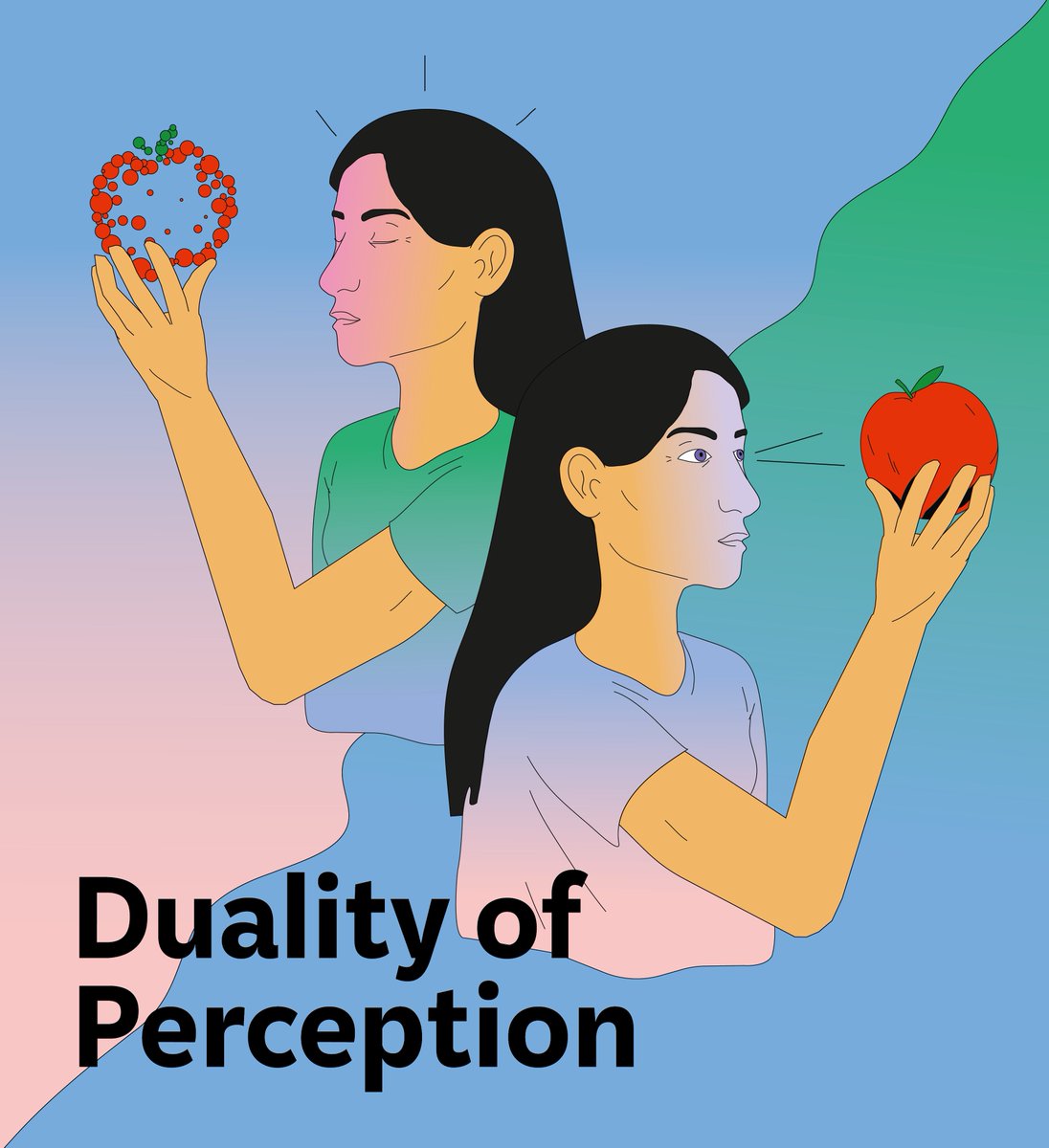
    1/8 Our preprint is now a peer-reviewed paper :) Big thanks to our reviewers who pushed us to examine our results more carefully and Olivier Wyart ( for the exquisite visual.
    Download
    34113651.1K
  2. VarunWadia@WadiaVarun
    Posts @WadiaVarun
    7/8 Comparison to more detailed category models: A plethora of neuroimaging and electrocorticography findings demonstrate that visual category information is robustly represented across VTC. We examined a wide variety of possible categorical representations and examined their goodness-of-fit to the neural data. We show that all examined categorical representations do not fit the neural data better than the axis model regardless of how the categories are defined: (1) manually labelled as in the original manuscript, (2) clustering images in visual feature space, or (3) by clustering the ImageNet labels in a word2vec space. Moreover, reconstruction of objects which we could do in both vision and imagery with the axis model is something a categorical representation simply cannot do.
    Download
    1061.1K
  3. VarunWadia@WadiaVarun
    Posts @WadiaVarun
    8/8 Many thanks to everyone who helped me along the way (especially @doristsao, @UeliRutishauser and their labs). Up next: Where does the trigger signal for reactivation come from? How does inter-area connectivity change between top-down and bottom-up conditions (visual imagery vs vision)? How does familiarity with an object change its representation?
    21121K
  4. VarunWadia@WadiaVarun
    1/10 Very excited to announce that my thesis project is now a preprint! We present the first detailed study of mental imagery in human ventral temporal cortex, bringing together the interests of @doristsao and @UeliRutishauser.
    65022854.9K
  5. VarunWadia@WadiaVarun
    Posts @WadiaVarun
    9/10 These results are a strong addition to a growing body of evidence that the human brain possesses a generative model, capable of synthesizing detailed sensory content from an abstract semantic representation (i.e. verbal command). Generative models have captured societal imagination with their remarkable capabilities namely self-supervised learning, inference under ambiguity, object-based attention, etc., so to reveal a neural substrate for these capacities in ourselves paves the way to understanding things like artistic creative processes and even the representations of single episodic memories that have so far remained out of reach.
    15242.4K
  6. Show more posts