Ahmed Fouad Alkhatib✓

@afalkhatib

Geopolitics & MidEast; Pro-Palestine, anti-Hamas; Proud American; Gaza native; Director @rfpalestine; Member @CFR_org; Senior Fellow @AtlanticCouncil

1.4K Following98.5K Followers5.6K Posts
  1. Ahmed Fouad Alkhatib✓@afalkhatib
    In an op-ed for The New York Times, I argue that saving Gaza & its Palestinian people requires resisting Hamas, weaving in personal themes, addressing issues with the Left & "pro-Palestine" movement & proposing a vision for Gaza's future Transformation.
    1726902.9K322K
  2. Ahmed Fouad Alkhatib✓@afalkhatib
    Many of Gaza’s displacement zones, home to tens of thousands of tents, have been flooded by a severe winter storm, marking the fourth winter that Gaza’s population has endured dire living conditions and a humanitarian crisis incompatible with even the most basic standards of human survival. Naturally, Hamas responded with remarkable political maturity: taking full responsibility for Gaza’s devastation, admitting that its October 7 “al-Aqsa Flood” attack was among the worst catastrophes ever inflicted on Gazans, pledging billions from its coffers for relief, and promising a swift exit from power to enable a demilitarized Gaza to rebuild. Oooopppsss, just kidding! Hamas’s Islamofascist regime in Gaza and its wealthy leadership abroad issued statements that instead blamed Israel, Arab states, the Muslim world, and the international community for Gaza’s misery while demanding more money and aid be poured into the Strip. This despite the group’s well-documented theft and diversion of tents, winterization supplies, and humanitarian resources entering Gaza in recent months. In other words, Hamas remains committed to the same strategy: leveraging images of Palestinian suffering to generate international sympathy, keep attention fixed on Israel, and deflect scrutiny from its own disastrous decisions and governance. Gaza’s suffering is real and urgent, but viewing the catastrophe in isolation from Hamas’s role in creating and perpetuating it is precisely what the group wants. Do not lose sight of Hamas’s responsibility.
    Download
    5418464817.4K
  3. Ahmed Fouad Alkhatib✓@afalkhatib
    Healing and Reconciliation After October 7, Between Israelis and Palestinians? Today, I met Michal Uziyahu, Mayor of the Eshkol Regional Council in Israel’s “Gaza Envelope,” home to many of the communities hardest hit by Hamas’s October 7 attack. Roughly 70% of the massacre occurred within Eshkol, including the sites of the Nova music festival and the kibbutzim of Be’eri, Re’im, Nir Oz, Holit, Kissufim, Kerem Shalom, and Sufa. Hundreds of Eshkol residents were murdered that day, and 119 hostages were taken from its communities. Michal shared countless stories of pain, loss, and suffering endured by her residents on a scale few could ever imagine. She described a community whose worldview was rooted in coexistence, partnership, and long-term peace with its Palestinian neighbors in Gaza. Like many leaders in the region, she had envisioned a future that included industrial and economic zones where Gazans could work for international companies in technology, manufacturing, education, and other sectors in the kibbutzim near Gaza. Those aspirations were shattered by Hamas’s barbaric violence and Jihadist terrorism on October 7. Since then, Michal has led the effort to rebuild her communities and restore the spirit of the kibbutzim that became ground zero for one of the most consequential chapters in the Israel and Palestine conflict. She insists that her nearly 20,000 residents are survivors, not victims. Rather than trauma centers, she is helping to establish resilience centers. Instead of fostering dependency, she is working to create a model of recovery, perseverance, and renewal. Most movingly, Michal demonstrated a profound capacity to recognize the humanity of Palestinians in Gaza. She expressed genuine sorrow for the loss of innocent life, including the deaths of dozens of my own family members in Israeli airstrikes. While we share the goal of ending Hamas’s rule over Gaza, we also acknowledged the reality that our peoples’ futures remain intertwined, even though healing, reconciliation, and the rebuilding of trust will take years. I offered my deepest condolences, sympathy, and apology for everything her community and other “Gaza Envelope” residents have endured since October 7. Michal is currently in the United States raising resources to rebuild her communities physically, psychologically, educationally, and economically. Contrary to common assumptions, much of the funds raised after October 7 did not reach those most in need, a reality I had long heard about and which Michal confirmed. Many “Gaza Envelope” communities had already suffered years of neglect from the Israeli government, the Finance Ministry, and even segments of Jewish philanthropic networks. The devastation of October 7 only compounded those challenges after what was the worst security failure in Israel’s history and the deadliest single day for Jews since the Holocaust. That is why I encourage those with the means to support Michal and the Eshkol Regional Council in their efforts toward rebuilding, rehabilitation, and resilience to do so. @BillAckman @wolfejosh @shaunmmaguire @AriDavidPaul @AdamMilstein @jfunders @eJPhil @JCFNY @schusterman_fdn @InsidePhilanthr @TheAssociated @WilliamDaroff @MikeBloomberg @Spokoiny @JCCAssociation This is what radical pragmatism, shared empathy, holding space for multiple truths and tragedies, and advancing healing between Israelis and Palestinians looks like. My hope is that both the Israeli communities surrounding Gaza and the Palestinian people of Gaza can one day experience lasting peace, security, and coexistence.
    Download
    1813065617.9K
  4. Ahmed Fouad Alkhatib✓@afalkhatib
    Say no to the “pro-Palestine” industrial complex, Islamism, and cultural relativism: These scenes cannot become normal in the Western world. Earlier today in Copenhagen, Palestinian and Arab immigrants and their descendants were filmed chanting for Hamas, the al-Qassam Brigades, Yahya Sinwar, Abu Obaida, jihad, the destruction of Tel Aviv, and terrorism under the banner of being “pro-Palestine” (video source: Moumen Al-Natour @moumalnatour). For three years since October 7, this behavior has been excused, minimized, or dismissed as fringe. In reality, it has become a recurring and alarming trend across North America, Europe, and Australia. As Palestinians in Gaza increasingly reject Hamas, segments of diaspora Arab, Palestinian, and Muslim communities have embraced the group as the embodiment of “resistance” and the supposed voice of Gazans. Equally troubling is how academics, journalists, influencers, activists, politicians, and celebrities have obscured these pro-Hamas sentiments by presenting them as merely advocacy for Palestinian rights. Some have relied on “cultural relativism” that blurs basic moral distinctions. Yet there is nothing complicated about condemning Hamas’s torture of Palestinians, theft of aid and resources, disastrous two-decade rule, decision to launch October 7, devastation of Gaza, and perpetration of the worst massacre of Jews since the Holocaust. The tolerance of Islamist extremism in Western societies, and the reluctance to confront openly hateful and pro-terror rhetoric, risks deepening polarization and instability. It is long past time to scrutinize pro-Hamas ideology, activism, and narratives that have gained traction among politicians, students, journalists, and protest movements. Nor is it “racist” or “Islamophobic” to oppose campaigns targeting Jewish-owned businesses or attempts to pressure businesses into adopting political litmus tests. Democratic societies should confront extremism consistently, regardless of who promotes it.
    Download
    554901.5K44.7K
  5. Ahmed Fouad Alkhatib✓@afalkhatib
    Ahmed Fouad Alkhatib
    RT @amirtibon: שלושה נתונים שאנחנו הישראלים חייבים להכיר לגבי הבחירות בארצות-הברית: 1. המועמדים הדמוקרטים המצליחים ביותר, אלה ש"הפכו" מדינות רפובליקאיות, אלה שהיכו בתדהמה את הסקרים, אלה שאחראים ל"רוב המפלצתי" של הדמוקרטים בקונגרס, הם המועמדים המתונים יותר של המפלגה. התקשורת הישראלית עוסקת המון בעבדול א-סייד, המועמד הקיצוני שניצח במישיגן, אבל בין כל הדמוקרטים שניצחו בסנאט, הוא הביא את המספרים הכי חלשים. מישיגן היא מדינה מתנדנדת קלאסית, הוא ניצח שם בפער של 7%. לשם השוואה, בטקסס, המועמד הדמוקרטי ג'יימס טלאריקו ניצח בפער של 12% (!), אירוע שהוא באמת רעידת אדמה פוליטית. בג'ורג'יה, הסנאטור היהודי ג'ון אוסוף, ניצח בפער של 18%, הישג בלתי-נתפס. אוסוף נבחר לראשונה לסנאט ב-2020 עם ניצחון דחוק של אחוז אחד בלבד. אפילו בקנזס, מדינה סופר-שמרנית, המועמד הדמוקרטי אדם המילטון, ניצח בפער של 5%... ניצחון דמוקרטי ראשון לסנאט שם מאז המאה ה-19 (!) הניצחונות המרשימים מאד של המועמדים הללו, צובעים באור חיוור את הניצחון של א-סייד. מישיגן זו מדינה שהדמוקרטים היו צריכים לנצח בפער דו-ספרתי לפי הנתונים של אתמול. ובאמת, המועמדת הדמוקרטית למושלת מישיגן, ג'וסלין בנסון, ניצחה בפער של 11%... אבל היו יותר מ-100 אלף דמוקרטים שהצביעו עבורה ולא הצביעו עבור א-סייד. 2. בגלל גודלו החריג של הניצחון הדמוקרטי, האגף הקיצוני במפלגה הולך להיות הרבה פחות משפיע בקונגרס הקרוב. לדמוקרטים יהיו 56 סנאטורים ו-250 חברי קונגרס, וזה נותן הרבה מרחב תימרון למנהיגי המפלגה. בואו נדמיין רגע לילה אחר של הדמוקרטים, לילה של ניצחון דחוק, שמסתיים עם 51 או 52 סנאטורים, כולל א-סייד. במצב כזה, "כל ממזר מלך", אי-אפשר לקדם אף חוק בלי התמיכה של א-סייד, והסיכויים של צ'אק שומר הציוני הגאה להיבחר למנהיג הרוב הדמוקרטי בסנאט, שואפים לאפס. בואו נדמיין רגע שבמקום 250 חברי קונגרס, היו לדמוקרטים רק 225, מתוכם 10-15 שמתנגדים לכל סוג של סיוע לישראל כולל כיפת ברזל. במצב כזה, שוב, אי-אפשר לעשות כלום בלי האגף הכי קיצוני של המפלגה, שיכול לקחת את כולם בני-ערובה לטובת אג'נדה אנטי-ישראלית. אבל זה לא המצב. ג'פריס, מנהיג הדמוקרטים בקונגרס, לא צריך את הרדיקלים כדי לשלוט בסדר היום, כי יש לו 250 אצבעות. זה רוב עצום. אי-אפשר לסחוט אותו. וחשוב לזכור, זה בן-אדם שביקר בישראל פעמים רבות בקריירה שלו, מכיר אישית את הצמרת הישראלית (תיכף נדבר על נתניהו והחובה הדחופה להעיף אותו), ואמנם יש לו ביקורת קשה על ישראל בנושאים מסוימים, אבל הוא ממש לא נגדנו. 3. וכאן מגיע החלק הכי חשוב: בהתנהלות מדינית חכמה, ישראל יכולה למצוא שותפים בקונגרס הדמוקרטי החדש, וגם בקרב מושלי המדינות הדמוקרטים ששולטים כיום ברוב המדינות בארצות-הברית. נציין בהקשר הזה את ידיד ישראל ג'וש שפירו, המושל היהודי של המדינה הכי חשובה בפוליטיקה האמריקאית, פנסילבניה, שנבחר מחדש ברוב עצום של 22% (!). אבל ישראל לא יכולה להרשות לעצמה עוד קדנציה של בנימין נתניהו. האיש הזה שרף את כל הגשרים לדמוקרטים המתונים. ג'פריס, שומר, שפירו, האנשים בפוליטיקה האמריקאית *שאוהבים את מדינת ישראל*, לא יכולים לשמוע את השם שלו, לא יכולים לראות את הפרצוף שלו, ואם הוא סמל השלטון של מדינת ישראל, אז אנחנו הולכים לאבד אותם. נקודה. הערה לסיום: החלפת נתניהו לא תפתור את כל הבעיות שלנו באמריקה. מי שחושב ככה, טועה בגדול. אבל השארת נתניהו זה מתכון לאסון מדיני שיהיו לו השלכות מסוכנות על ביטחון ישראל. נתניהו שרוף לא רק בצד הדמוקרטי, אלא גם אצל הרפובליקאים - סגן הנשיא מאשים אותו ישירות בהפסד שלהם בבחירות. ישראל חייבת קודם כל לצמצם את הסכנה המיידית שנובעת מהזיהוי המוחלט שלה עם המותג הרעיל והשרוף נתניהו. אחרי זה, תהיה עוד המון, המון עבודה. אבל כל עוד הוא בשלטון, אי-אפשר אפילו להתחיל לתקן את הנזקים.

    07380416
  6. Ahmed Fouad Alkhatib✓@afalkhatib
    Ahmed Fouad Alkhatib
    RT @Nadav_Eyal: 6/Seven. The alliance will have to change. Americans are saying so at the ballot box and in the polls. And America will call the shots. After his first meeting with Prime Minister Benjamin Netanyahu in 1996, President Bill Clinton reportedly complained to his advisers: “He thinks he is the superpower and we are here to do what he requires.” These days are over - and they should have never happened in tje first place. But this relationship was built on interests and values, and it still serves America in a region whose global weight, energy included, has not gone away. In recent months the major Arab states, for all their distaste for Netanyahu and his extremists, have come to appreciate Israel's steadiness and its ability to strike and deter the main threat to stability in the region: Iran. So this administration and the ones that follow, along with Congress, will need to manage the change carefully and with an eye on America's allies, unless they want the region to go up in an even worse conflict of blood and fire. Sharp turns carry serious costs, for the United States too. There is no hit-and-run option. Finally. The smartest move for Israel is to replace this government and Netanyahu himself, who is toxic in Washington and well beyond. The new Knesset has 67 of 120 members opposed to him, the largest anti-Netanyahu majority since 2009. That makes a unity government less sensible, not more. With Netanyahu at its head, the world will see no change. And he will block what is needed most: cracking down on Jewish terrorism in the West Bank, rebuilding Gaza, having a framework for a shared and just future between Israelis and Palestinians - and repairing the alliance with Washington. end
    050375
  7. Ahmed Fouad Alkhatib✓@afalkhatib
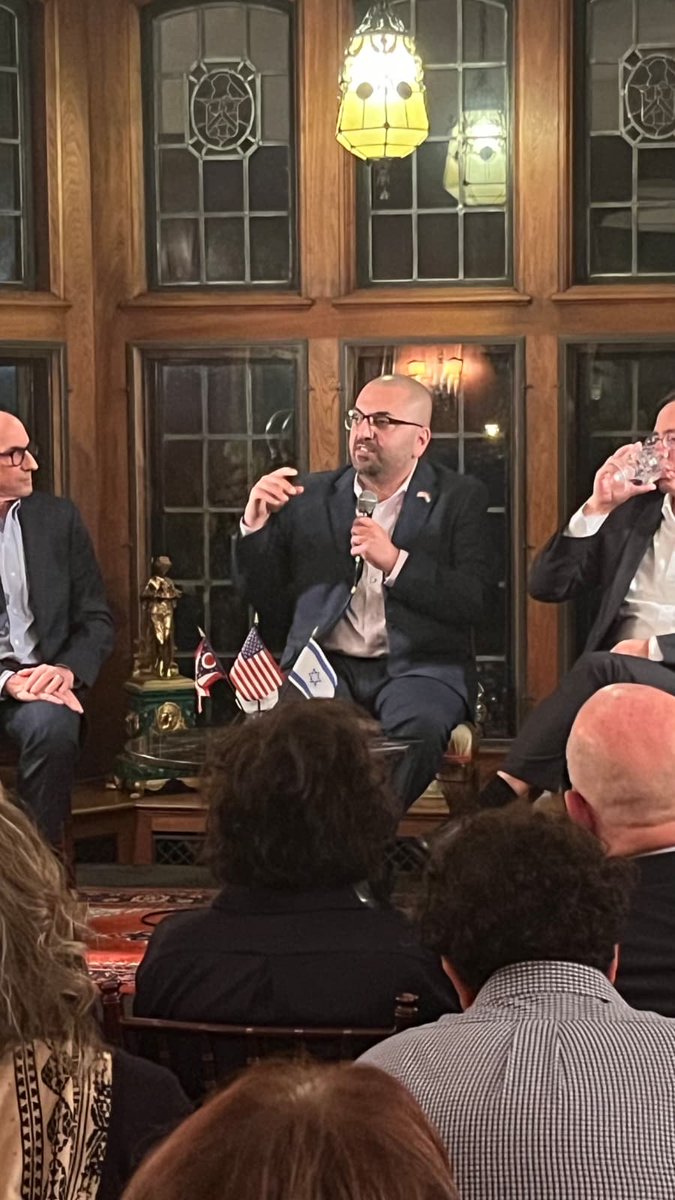
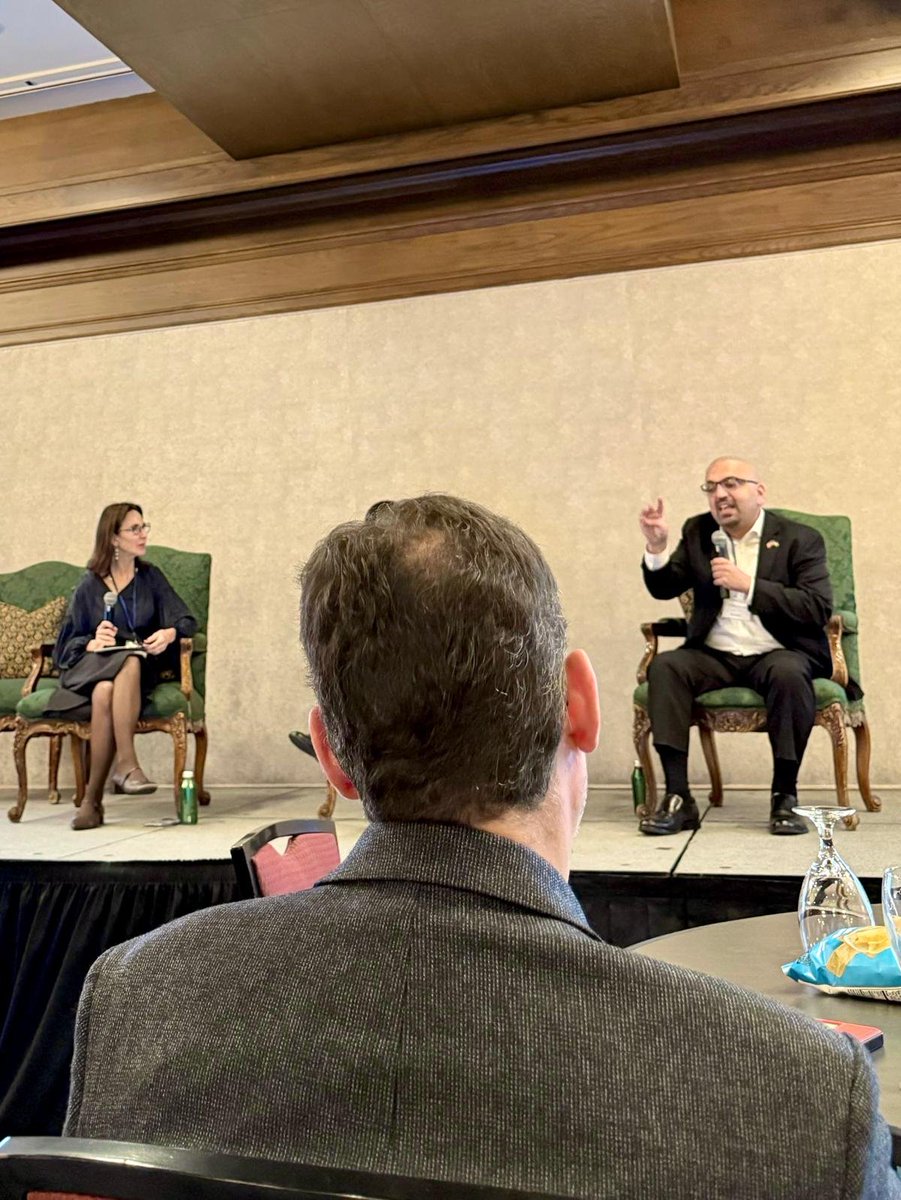
    Gaza is not hopeless. Despite Hamas’s entrenchment in the 30% of the Strip it still controls, its defeat is achievable, regardless of clichés like “you can’t kill an idea” propagated since October 7. During speaking events with veteran Israeli journalist Nadav Eyal (@Nadav_Eyal) at Ohio State University and with community members, I challenged the notion that Gaza’s people and Hamas are one and the same. Most Gazans oppose Hamas, even if they retain anti-Israel sentiments. Their anger and disillusionment with the armed “resistance” narrative offer an opening for an alternative nation-building agenda that ensures Gaza never again becomes a citadel of isolation, hate, violence, and Islamist terror. With a newly elected Congress whose members speak extensively about Gaza and the Israeli-Palestinian conflict, radical pragmatism is essential: make a difference, not just a point. Cooperation with Israel, especially if a new coalition emerges after its elections, will be key to transforming Gaza’s prospects. The first step is to establish Hamas-free zones and communities across the “Yellow Line,” in the Israeli-controlled parts of the Gaza Strip, and begin separating civilians from Hamas. Meaningful progress is impossible while the group holds two million Palestinians hostage and uses them as bargaining chips. Thank you to Nadav Eyal, Ohio State University Hillel, and everyone who organized and attended these events for engaging in difficult but necessary conversations, even amid disagreement.
    Download
    94927212.1K
  8. Ahmed Fouad Alkhatib✓@afalkhatib
    Ahmed Fouad Alkhatib
    RT @jpanikoff: Some early thoughts on what last night’s results mean for US policy toward the Middle East…. 1) If President Trump‘s going to strike Iran intensely again, it’s going to happen during this lame-duck period as he’ll want to finish the entirety of US action before the new Congress takes over. 2) On the other-hand the likelihood the region faces a long-term low intensity conflict without a full resolution — a potential new normal the Gulf has already accepted — probably increases. The U.S. leaves, the Gulf states make their own own accommodations, and Israel faces a challenge of having to decide how to manage the challenge of Iran’s ballistic missile and nuclear capabilities potentially without nearly as much U.S. support. 3) Longer-term the result reinforces the already mounting bipartisan likelihood that most aid to Israel is likely to end in the way we know it, even as joint production is possible. But…. 4) An underestimated is that a consequence of that is it is also likely to seriously endanger aid to Jordan and Egypt as well. 5) The election results are probably good news for the Israeli opposition including Eisenkot but are not going to be determinative as to what happens next in Israel’s government formation. But they perhaps will be a final death knell to what has been a terrible Israeli foreign policy effort over the last decade, that its foreign policy can, and perhaps even should, be partisan. 6) Gulf states will have a tough balancing act. They’re likely to align with Democrats on not restarting the war but are at risk of being part of the corruption accusations with the administration that are about to come. 7) On the other-hand as farmers and ranchers and many in the U.S. have learned, the Gulf states and the Strait of Hormuz and the Red Sea are critical to their lives, as well, with prices of energy and petroleum-derived products, fertilizers and helium, commodities across the board, dependent on the global market place. Reinforcing once again that like it or not, the Middle East is in the middle of the world and cannot be geographically wished away. 8) Policymakers across the aisle should be careful not to throw out the baby with the bath water. The war in Iran has been an unnecessary, unmitigated disaster that has diminished U.S. leverage and influence in the region and vastly overestimated, again, the likelihood that that hitting the Iranian regime hard would lead to its collapse. But the U.S. does have vital interests in the region and cooperation, partnership, and engagement there is critical for U.S. national security, including economic security — as the war has proven, they are one in the same. @AtlanticCouncil @ACMideast
    0140409
  9. Ahmed Fouad Alkhatib✓@afalkhatib
    An American flag next to the Palestinian flag would not hurt; the Palestine issue may be what got you relevance and power, but I hope you don't lose sight of who and where your constituents are and what they need; representing their state, not a foreign state. 🇺🇸
    Aber Kawas @AberKawas
    We made history. 🇵🇸
    192539114.6K
  10. Ahmed Fouad Alkhatib✓@afalkhatib
    Hamas, the Muslim Brotherhood, the Islamic Republic of Iran, and an array of anti-Western groups and networks are unsurprisingly celebrating the Democrats’ sweep of the House and Senate. While the wars in Gaza and Iran contributed to yesterday’s Republican wipeout, most Americans are focused on their worsening economic prospects. High energy costs, persistent inflation, job outsourcing, AI anxiety, doubts about the value of university education, and fears of permanent middle-class stagnation drove the results. Some candidates blamed the President and Republicans for corruption, indifference, inequality, and reckless spending; others emphasized aggressive deportations, racism, bigotry, elitism, and deteriorating civil discourse. For some Democratic candidates, however, anti-Israel politics, Israel and Palestine, and the war with Iran anchored both their campaigns and political identities. They linked affordability to aid to Israel and the Iran war, presenting America’s political crises and voters’ broader troubles as the consequence of pro-Israel lobbying and politics. The question now is whether these newly elected Democrats intend to actually tackle affordability, or whether it was a Trojan horse to ascend to power and gain relevance. Blaming aid to Israel will do little to lower grocery prices, especially when this aid is likely to end soon and is a negligible line item of overall U.S. expenditure. Many voters care about Gaza, the Middle East, Russia, and Iran, and deeply consider their geopolitical and economic implications, but most prioritize their immediate circumstances over foreign policy. Yesterday’s winners must be frustrated American voters; not Hamas, the Iranian regime, or the Muslim Brotherhood.
    Download
    712242713.7K
  11. Ahmed Fouad Alkhatib✓@afalkhatib
    During speaking events at universities across the United States, I am often asked whether my assessment that Hamas's October 7 attack ultimately failed is accurate. After all, by several measures, the Islamist terror group appears to have achieved significant success. Massive "pro-Palestine" protests, campus encampments, the rise of new anti-Israel political voices in Congress, growing efforts to delegitimize Israel in mainstream discourse, and renewed global attention to the Palestinian cause all suggest that October 7 succeeded in thrusting the conflict back onto the international agenda. More importantly, Israel's overwhelming response produced devastating images of death and destruction that shifted global attention away from Gaza's internal realities and toward the rhetoric and conduct of Israel's government. My response is always the same: look at the consequences of October 7. Whether measured through humanitarian outcomes, quality of life degradation, geostrategic realities that are unfavorable for the Palestinians, or setbacks to the Palestinian national interest, the attack and the "resistance" narrative surrounding it have been profoundly damaging to the Palestinian people's legitimate aspirations for freedom, dignity, and prosperity. In winning the battle for global public opinion, Hamas lost the very people it claimed to represent; the Palestinian people of Gaza, who are now overwhelmingly against the Islamist terror group and its “resistance” agenda. Many Gazans have concluded that if advancing the Palestinian cause within the media, academic, political, activist, and social-media ecosystems requires their death, displacement, and destruction, then they want no part of such a project. If the "cause" demands the loss of their homes, livelihoods, and loved ones, many ask whether it is a cause worth pursuing at all. In other words, Hamas's October 7 attack may have generated images of Palestinian suffering that transformed public discourse in the United States and around the world, even contributing to unprecedented political debates about U.S. support for Israel; yet these developments remain largely disconnected from the daily realities of hundreds of thousands of Gazans who are displaced, impoverished, and paying the price for events over which they had little or no control. Hamas may have gained ground in the global narrative war, but in doing so, it lost the confidence of many of the people on whose behalf it claims to fight. The majority of Palestinians in Gaza do not wish to serve as cannon fodder for a nihilistic jihadist project that has brought catastrophe upon their society. Thank you to the University of North Carolina at Chapel Hill for hosting a thoughtful discussion on Gaza's current realities, the role of the United States, and meaningful pathways forward.
    Download
    119941113.6K
  12. Ahmed Fouad Alkhatib✓@afalkhatib
    The announcement by President Trump that he intends to end U.S. military aid to Israel at the end of this year is undoubtedly aimed at influencing the midterm elections. The declaration comes months after statements by Prime Minister Netanyahu favoring a gradual phaseout of U.S. aid and a transition toward a partnership model that provides Israel greater procurement flexibility, political independence, and policy sovereignty. The current $3.8 billion annual assistance package, consisting of $3.4 billion in foreign military financing and $500 million for missile defense under the existing Memorandum of Understanding (MOU), was set to expire in two years, with discussions already in progress regarding its renewal or transformation. Beyond this package, Israel has received supplemental assistance, as it did in 2024, as well as indirect forms of support, including U.S. military assets and munitions used to defend Israel during the wars with Iran, or U.S. deployments such as the positioning of an aircraft carrier in the eastern Mediterranean after October 7. While the President can influence foreign aid policy, terminating military assistance ultimately requires congressional approval. Large segments of Congress remain firmly committed to sustaining aid to Israel. At the same time, voices in both parties have increasingly questioned foreign military financing, under which U.S. taxpayer dollars support Israeli defense procurement, which largely benefits the American defense industry through weapons purchases and contracts. Notably, calls to end military aid have also come from pro-Israel advocates and Israelis themselves, who argue that Israel's economic strength allows it to absorb a $3.8 billion addition to its budget expenditure without undermining its security. There is also mounting discomfort with the leverage Washington derives from its aid relationship, giving successive administrations opportunities to pressure Israeli leaders on policy decisions. Proponents of ending aid contend that Israel should enjoy greater freedom to pursue what it perceives as its national interests, independent of American domestic and foreign policy considerations. More importantly, they argue that shifting from aid recipient to strategic partner status would give Israel greater flexibility in selecting military platforms, vendors, and contractors while boosting defense cooperation with both domestic suppliers and emerging partners in Europe and Asia, ultimately augmenting Israel's long-term military edge. Today’s announcement doesn’t signal the beginning of the end of the U.S.-Israel alliance. What Trump's announcement has done is create a permission structure for debating an issue that was long politically taboo, while allowing Republicans and the "America First" camp to claim consistency in their skepticism toward foreign aid, whether directed to developing nations or close allies. Yet the announcement raises a host of consequential questions: will critics of Israel now shift their focus from aid to military sales? Can a new framework centered on procurement, industrial cooperation, and joint technological development generate benefits that exceed direct assistance? How will Congress, pro-Israel advocacy groups, and longtime supporters of robust aid respond? And could an outcome many viewed as inevitable eventually reduce U.S. involvement in the Israeli-Palestinian conflict while reshaping Washington's relationships with other military aid recipients such as Egypt, Jordan, and, to a degree, Lebanon? Trump's statements may ultimately prove to be a political maneuver timed to boost vulnerable congressional allies. But even if he later reverses course, a seal has been broken. The debate over ending military aid to Israel has entered the political mainstream, potentially establishing a new norm in American foreign policy.
    Download
    7218214.3K
  13. Ahmed Fouad Alkhatib✓@afalkhatib
    Shaimaa Rabah is a newly elected councilwoman in Deir al-Balah, central Gaza Strip, and a member of Fatah, who was part of a limited set of local municipal elections inside Gaza back in April. After Al Jazeera aired a documentary featuring exclusive footage from Hamas’s al-Qassam Brigades about the life of slain military leader Mohammed al-Deif, Shaimaa Rabah shared a Facebook post condemning what she viewed as the glorification of Hamas, which she blamed for Gaza’s devastation. She described the program as “a rich meal of animal feed for the Muslim Brotherhood” and criticized Al Jazeera’s efforts to portray Hamas as heroic despite the destruction and suffering that followed its rule and the 10/7 terror attack. In response, Hamas and its supporters pressured members of Shaimaa Rabah’s clan with a wave of threats and harassment to compel her to delete the post and issue a public apology, which she did. Even that has not satisfied her critics, who are now demanding her resignation from the Deir al-Balah municipal council, arguing that her status as the council’s first elected woman does not entitle her to disparage the memory of those they regard as “martyrs.” This episode is a reminder to those who believe elections can produce meaningful political change while Hamas retains effective control over Gaza. Democracy is not the foundation of a free society but the product of one. It depends on the prior existence of independent civil institutions, a free press, freedom of expression, and mechanisms for holding power accountable. I have shared this concern with Dahlan-affiliated Fatah reformists, EU officials, Arab ministers, and others who advocate elections as a solution to the Palestinian Authority’s legitimacy crisis and the search for an alternative to Hamas. In today’s Gaza, any non-Hamas voice can be rapidly silenced, making meaningful reform, let alone a challenge to the entrenched “resistance” narrative, nearly impossible. Before any credible democratic process can take place, Hamas’s system of control must be dismantled. Until then, the most realistic path forward is a transitional administration focused on restoring basic services and rebuilding a truly free civil society while removing the coercive structures Hamas and its patrons have spent decades creating.
    Download
    476201.9K67.6K
  14. Ahmed Fouad Alkhatib✓@afalkhatib
    Two days after a Hamas-affiliated clan fired thousands of rounds into the air at the funeral of a relative killed in an Israeli strike and created horrific scenes and chaos that reverberated around the world, a prominent Israeli news site, Walla!, reports that the government has instructed the military to grant “immunity” to senior Hamas governance officials in Gaza. Under the reported policy, the security establishment will spare high-ranking Hamas government and municipal administrators while continuing to target some of the group’s military/terror operatives and leaders. The rationale is that eliminating Hamas’s administrative apparatus could trigger total collapse and civil chaos in the enclave, with direct consequences for Israel’s security. Officials reportedly doubt that international NGOs could fill the vacuum. Frustratingly, the Israeli government continues to block every alternative: the Palestinian Authority’s return, the Board of Peace’s plans, and a gradual handover of governance to the Palestinian technocratic committee (NCAG) alongside disarmament. This echoes the pre-October 7 logic, when a supposedly contained Hamas was preferred over a non-Islamist, nonviolent alternative. Prime Minister Netanyahu may once again see the group as a “useful idiot.” It keeps Palestinians divided, blocks a reformed polity uniting the West Bank and Gaza, and lets him manage the conflict rather than resolve it. And this time Hamas is a shell of its former self. Its infrastructure and leadership are largely destroyed, and the IDF controls nearly 70% of the Strip. The policy is deeply flawed and dangerous, and it freezes the war in place. It combines what pro-Hamas voices have long demanded, a ceasefire that resolves nothing, while Israel’s far right wishes to keep Gaza as a standing argument against any future of Palestinian self-governance, freedom, and prosperity. The immediate alternative is to use the territory under Israeli control, beyond the “yellow line,” to offer Gazans the option to relocate to Hamas-free zones and areas. Arrivals can be vetted for Hamas members and weapons, creating a self-selected population that could become the nucleus of a deradicalized Gaza. Those who choose to stay under Hamas, amid armed militias and violent clans, do so at their own risk. Until that option exists, Hamas will keep terrorizing Gaza’s people, and nothing meaningful will change. If civilians are moved out of the way, this makes it easier to discern who is Hamas, and if the Israeli government actually decides to get rid of the terror group, it would be able to do so without unacceptable levels of harm to uninvolved civilians and the associated global backlash. No more support for Hamas, and no more containment, whether from the “pro-Palestine” industrial complex or from Netanyahu’s government.
    Download
    165323118.2K
  15. Ahmed Fouad Alkhatib✓@afalkhatib
    My greatest regret is never having become fluent in Hebrew. A new school in Gaza’s Al-Mawasi humanitarian zone is now teaching displaced Palestinian children to speak and write the language. Hebrew was taught in Gaza three decades ago, before the Palestinian Authority assumed control of the Strip, but that ended. Hamas later offered it only in limited settings as “the language of our enemy.” I vividly remember older generations of Gazans, especially those who worked in Israel, speaking Hebrew and using it to build relationships across the Palestinian-Israeli divide. My hope is that, alongside English, Hebrew becomes a standard part of education for Gaza’s future generations, strengthening connectivity and enabling Palestinians to communicate directly with neighbors who matter immensely, whether we like it or not. Recently, I met senior Israeli military and political officials whose fluency in Arabic gave them a deeper, more nuanced understanding of Palestinian society. Palestinians likewise need a better grasp of Israeli society, politics, media, and public discourse. Healing and reconciliation require a shared language. Perhaps this can be one small step on the long road toward making that possible.
    Download
    672261.6K55.7K
  16. Ahmed Fouad Alkhatib✓@afalkhatib
    This was a disturbing and deeply embarrassing scene in Gaza City today during the funeral of a man killed in an Israeli airstrike for allegedly being affiliated with Hamas. Members of his clan fired thousands of rounds into the air, initially causing panic and confusion among residents who did not understand what was happening. The spectacle of armed men recklessly discharging weapons sparked widespread anger and contempt among many Gazans, who viewed it as yet another example of the destructive behavior of powerful clans in the Strip. The incident renewed calls to disarm Gaza's clans and militias and remove weapons from civilian hands to reduce crime, curb intra-Palestinian violence, strengthen the rule of law, and break patterns of behavior that fuel radicalization, intimidation, and the dominance of armed actors over civil society. Many Palestinians bitterly note the irony that these same clans and armed strongmen, so eager to display their power before fellow Palestinians, tend to disappear when confronted by the Israeli military. Time and again, tribal militias, criminal gangs, and other armed actors avoid direct confrontation with the IDF, yet readily turn their weapons on other Palestinians, whether against Palestinian Authority forces in the past or, at times, even against Hamas itself. There should be no tolerance for lawlessness. Neither "martyrs" nor their families have the right to terrorize an entire society in the name of archaic notions of honor, death glorification, or tribal privilege. Hamas and Gaza's powerful clans alike must be disarmed, for the sake of Palestinians and Israelis alike.
    Download
    5641.2K5.1K1.2M
  17. Ahmed Fouad Alkhatib✓@afalkhatib
    I spoke before a group of 200 academics, international relations researchers, and policy practitioners about Gaza, the Israeli elections, and the urgent need for action that is not held hostage to the formation of a new Israeli government, a process that could take months. Gaza's disarmament, recovery, and transformation cannot remain captive to political calculations, particularly those of far-right Israeli parties that have repeatedly obstructed effective military strategy, humanitarian stabilization, and efforts to leverage the roughly 60 percent of the Strip's territory currently under Israeli military control to improve conditions and outmaneuver Hamas's exploitation of Palestinians as human shields. What I appreciated most was the reminder that serious academic voices still exist outside the dysfunction of today's discourse. There remain scholars, practitioners, and analysts capable of holding nuance, engaging across disagreements, and advancing evidence-based discussions rather than ideological certainties. Although it can feel hopeless at times, academic institutions remain essential to shaping an informed public and developing future policymakers equipped to navigate a complex, multipolar world defined by competing realities, not sloganeering, performative outrage, or hollow moral posturing. We should not accept the deterioration of Western academia as a fait accompli. We must insist on the restoration of truly free expression and a renewed commitment to facts, evidence, and rigorous inquiry over perceptions, emotions, and ideological conformity. This intellectual decline is one of the great tragedies surrounding the Israeli-Palestinian conflict, particularly in the aftermath of October 7.
    Download
    4281847.2K
  18. Ahmed Fouad Alkhatib✓@afalkhatib
    I joined the LBC’s Ben Kentish to discuss how the unfolding elections in Israel are being viewed by Palestinians in Gaza, and what may actually change as it relates to the Strip’s future, settler violence in the West Bank, and Israel’s foreign policy relations VS. the limits of what to expect. @LBC @BenKentish
    Download
    45587.9K
  19. Ahmed Fouad Alkhatib✓@afalkhatib
    Ahmed Fouad Alkhatib
    RT @yaakovkatz: Two takeaways based on exit polls: First, neither camp has a a clear path to forming a coalition. That leaves us with a simple but unavoidable conclusion: for Israel to have a government in the coming weeks, someone is going to have to break a campaign promise. It could be Eisenkot deciding to form a government with the support of Ra’am, the Arab party led by Mansour Abbas. It could be Bennett, Liberman or even Eisenkot deciding to cross the partisan line and join a government with Netanyahu. The second takeaway is that a decisive majority of Israelis are opposed to Netanyahu and want to see him out of office. Based on projections, approximately 70 seats voted for parties - Jewish and Arab - committed to ousting Netanyahu. That does not mean all 70 support Eisenkot or that they can necessarily sit together in one government. But it does mean that Netanyahu and his coalition have lost the support of a majority of the electorate.
    0820438
  20. Ahmed Fouad Alkhatib✓@afalkhatib
    It’s complicated, messy, imperfect, and open to criticism; there is both subtle and overt racism, and no shortage of flaws to scrutinize. Yet none of that changes a fundamental reality: within its internationally recognized borders, Israeli democracy remains vibrant and inclusive of citizens from diverse ethnic and religious backgrounds. The idea of a Jewish and democratic Israel is both legitimate and credible, and has been successfully practiced in tandem.
    Download
    514152.3K55.3K
  21. Ahmed Fouad Alkhatib✓@afalkhatib
    Elections aren't a top national priority for Palestinians right now, especially inside Gaza. Democracy is a multi-layered process, with elections being one component of that process. Elections under Hamas in Gaza & before a new Israeli government takes power would be disastrous.
    Download
    2171076.9K
  22. Ahmed Fouad Alkhatib✓@afalkhatib
    Ahmed Fouad Alkhatib
    RT @DanielBShapiro: Just to state the obvious: It’s entirely possible to oppose aid to Israel— whether on moral, foreign policy, or financial grounds — without promoting the fiction that such aid, or Israel itself, is responsible for what Americans pay for their groceries.
    01810527