dOrg✓

@dOrg_tech

Top web3 and AI developers delivering infra and apps on demand. Helping clients reach +$4B TVL

358 Following3.8K Followers4.6K Posts
  1. dOrg✓@dOrg_tech
    Hey, this is dOrg, d-Org🕵️ (from decentralized organization). We accelerate your web3 development needs, here’s how: Thread Alert!⬇️
    515613412.9K
  2. dOrg✓@dOrg_tech
    Moving tokens to another chain used to mean a bridge, a wait, and hunting for gas on arrival. On @squidrouter, market makers bid to fill the swap, it settles in seconds, and nobody has to trust Squid with the funds. @ecdsafu from @squidrouter explains how. Full episode below this post👇
    Download
    114143
  3. dOrg✓@dOrg_tech
    Can two workers spend one budget? Both check the remaining allowance. Both see enough. Both send. A written spending limit isn't an enforced limit. Stablecoin payment flows need a reservation step before concurrent requests can consume the same capacity.
    10088
  4. dOrg✓@dOrg_tech
    Posts @dOrg_tech
    Explore the fictional payment-control scenario in First Draft. The prototype helps explain budgets, approvals and competing requests. It is not a live treasury system or evidence of a defect at a named provider.
    00021
  5. dOrg✓@dOrg_tech
    We're in Mandrem. If you're building onchain and around, DM us and we'll get a chai!
    Download
    003116
  6. dOrg✓@dOrg_tech
    No system can distinguish a caller it never asked to identify itself...
    Madison Mills @MadisonMills22
    SCOOP: Major U.S. banks are detecting unauthorized third-party AI agents inside customer accounts, including some attempting to take actions that appear to be independent of user instructions, sources told Axios. The findings have alarmed banking executives, who are racing to restrict access to their systems as AI moves at a velocity faster than financial institutions can respond, multiple industry and bank executives told Axios. Several banks are now preparing for worst-case and even “day after” scenarios, including how to rapidly secure or restore customer accounts if things go wrong, the people said. Several bank executives told Axios they're struggling to distinguish between human users and AI agents. One executive said banks also struggle to determine whether agents are authorized by customers or potentially operating without their permission, more akin to rogue agent behavior. Read my latest for Axios here:
    002172
  7. Madison Mills✓@MadisonMills22
    SCOOP: Major U.S. banks are detecting unauthorized third-party AI agents inside customer accounts, including some attempting to take actions that appear to be independent of user instructions, sources told Axios. The findings have alarmed banking executives, who are racing to restrict access to their systems as AI moves at a velocity faster than financial institutions can respond, multiple industry and bank executives told Axios. Several banks are now preparing for worst-case and even “day after” scenarios, including how to rapidly secure or restore customer accounts if things go wrong, the people said. Several bank executives told Axios they're struggling to distinguish between human users and AI agents. One executive said banks also struggle to determine whether agents are authorized by customers or potentially operating without their permission, more akin to rogue agent behavior. Read my latest for Axios here:
    1.4K6.9K19.1K9.1M
  8. dOrg✓@dOrg_tech
    We built the Zodiac Core SDK: TypeScript tooling that lets any developer encode, deploy and verify a Zodiac-compliant module without reading the contracts first. Four years of building Zodiac with @gnosisguild, and the SDK is the part that made other people's work possible👇
    126176
  9. dOrg✓@dOrg_tech
    dOrg
    RT @getMoonUp: Most portfolios find out where the floor is after the drop. With MoonUp, you set it before: Conservative (70%), Balanced (50%) or Bold (30%). Capital splits between a USDC reserve and tokenized stocks. Markets fall, more shifts to USDC. They rise, exposure grows. CPPI, onchain.
    dOrg @dOrg_tech
    By the time the market reaches your floor you're already 100% in stablecoins. The algorithm starts deleveraging before it gets there, and leverages back up when the market turns. @Yas_MoonUp from @getMoonUp on how the protection layer works. Full ep on our Youtube channel
    04024
  10. dOrg✓@dOrg_tech
    By the time the market reaches your floor you're already 100% in stablecoins. The algorithm starts deleveraging before it gets there, and leverages back up when the market turns. @Yas_MoonUp from @getMoonUp on how the protection layer works. Full ep on our Youtube channel
    Download
    005346
  11. dOrg✓@dOrg_tech
    Paid twice. Or notified twice? A payment provider sends the same notification again. Your application credits the customer again. One transfer has become two balances. Reconciliation starts with durable identities and evidence, not a green success badge.
    10081
  12. dOrg✓@dOrg_tech
    Posts @dOrg_tech
    Our First Draft follows a fictional deposit across payment intent, provider record and ledger entry. Try the reconciliation prototype and see why retries need an idempotent path. No real transfer is involved.
    00034
  13. dOrg✓@dOrg_tech
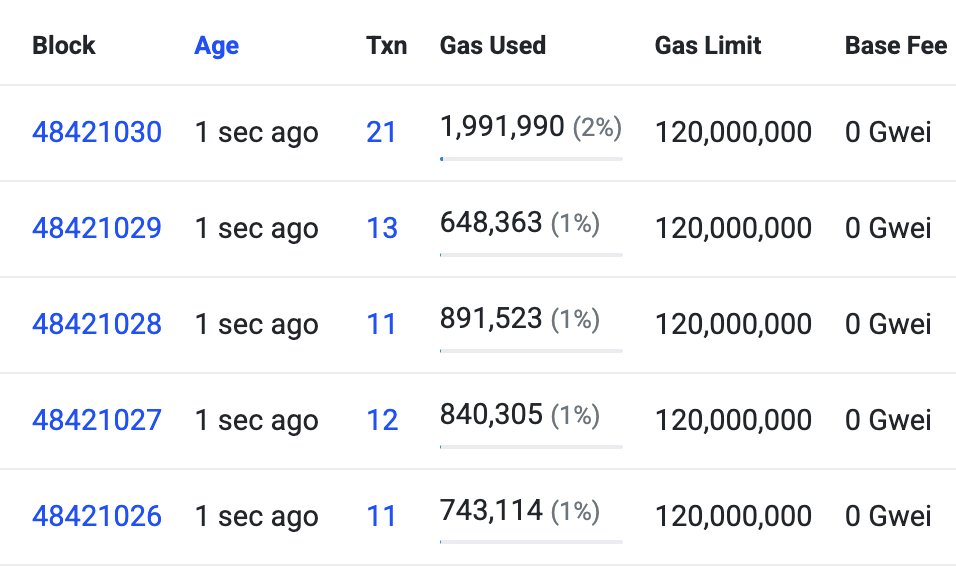
    At 200ms the chain stops being the slow part of most applications. An RPC polled on a fixed interval, an indexer that batches before it serves, a frontend built to show a pending state for a second or two: none of that gets faster because the block did. The work to feel 200ms is in the stack above it.
    jesse.base.eth @jessepollak
    200ms blocks live on testnet, mainnet soon
    002165
  14. dOrg✓@dOrg_tech
    Anyone publishing their alpha on X isn't running it with their own money... @Yas_MoonUp from @getMoonUp on why that's the tell. Full episode below👇
    Download
    116212
  15. dOrg✓@dOrg_tech
    Five banking flows, each a browser prototype with fictional data. Start with the payroll one. A supplier is due today, payroll is due tomorrow, and the cash is split across currencies. Choosing what to pay is the easy part. Proving the agent was allowed to is where the work is. Link in the reply👇
    103153
  16. dOrg✓@dOrg_tech
    Posts @dOrg_tech
    Subscribe!
    00229
  17. dOrg✓@dOrg_tech
    Moving proving client-side keeps that work offchain, but apps still have to generate the proofs. Making that practical on phones is a big part of what makes this approach interesting.
    vitalik.eth @VitalikButerin
    Ultimately, precompiles and EVM are both the wrong place to put most cryptography support into Ethereum. The reason is that precompiles and EVM both operate on data that has to be included into the ethereum chain somehow, which realistically means included in a block as calldata. That space is limited - even with PeerDAS and blocks-in-blobs, there's a practical cap of ~8 MB/s before it starts getting uncomfortable. Remember: it's not a blockchain. It's a cryptographic world computer. Any data/computation that does not need to be in the "main thread" of data/execution should not be put into the main thread. Instead, the correct solution is... EIP-8288 maximalism. If you have any heavy computation that's self-contained, compute it and STARK it client-side (this is quickly getting faster and faster, even on phones), and push the STARK through the EIP-8288 recursive aggregation mechanism. The chain sees the fact that the computation was done and what the result is; it never needs to see the actual data and computation. This way everyone can use whatever cryptography they want, the Ethereum chain can be lean, and we never need to add more precompiles again.
    003160
  18. vitalik.eth✓@VitalikButerin
    Ultimately, precompiles and EVM are both the wrong place to put most cryptography support into Ethereum. The reason is that precompiles and EVM both operate on data that has to be included into the ethereum chain somehow, which realistically means included in a block as calldata. That space is limited - even with PeerDAS and blocks-in-blobs, there's a practical cap of ~8 MB/s before it starts getting uncomfortable. Remember: it's not a blockchain. It's a cryptographic world computer. Any data/computation that does not need to be in the "main thread" of data/execution should not be put into the main thread. Instead, the correct solution is... EIP-8288 maximalism. If you have any heavy computation that's self-contained, compute it and STARK it client-side (this is quickly getting faster and faster, even on phones), and push the STARK through the EIP-8288 recursive aggregation mechanism. The chain sees the fact that the computation was done and what the result is; it never needs to see the actual data and computation. This way everyone can use whatever cryptography they want, the Ethereum chain can be lean, and we never need to add more precompiles again.
    4422201.9K391K
  19. dOrg✓@dOrg_tech
    Would your agent protect payroll? A supplier needs paying. Payroll is tomorrow. Cash is split across currencies. An agentic banking flow needs more than a payment button: obligations, permissions, settlement evidence and limits all have to agree.
    10187
  20. dOrg✓@dOrg_tech
    Posts @dOrg_tech
    Explore five proposed AI + Web3 banking integrations, each with a browser prototype you can challenge. Fictional data and deterministic rules, not live banking or investment advice. Which failure would you test first?
    00036
  21. Show more posts