netrunner✓

@plotarmordev

Cofounder & engineer. Running local AI, building things with it, and sharing what I learn.

  • Inscrit en
780 Abonnements8.2K Abonnés9.7K Posts
  1. netrunner✓@plotarmordev
    netrunner
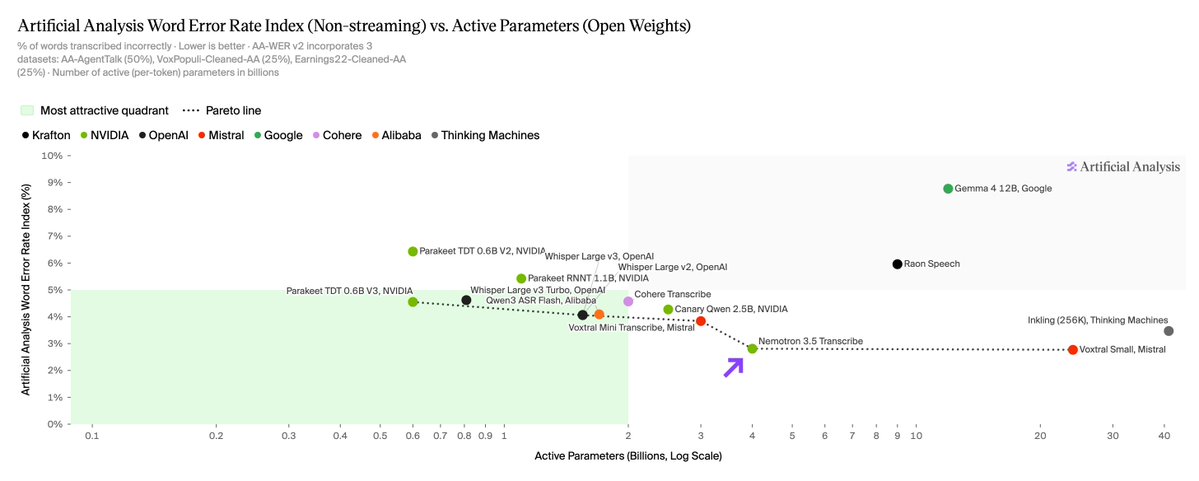
    RT @ashxhart: TensorFold 1.1.9 is out 🙌 A few results against 1.1.8 from the release tests: - Qwen3.8-27B on GB10 with an MLX 4-bit checkpoint: 9% to 11% faster prefill. - Kolibri-1 on GB10: 3% to 8% faster prefill. - Qwen3.8-27B on M5 Ultra: 3.7% to 4.5% faster prefill. - Flash Next on M3 Ultra: sampled prose went from 122.5 to 136 tok/s. Copy-heavy edits ran between 212 and 257 tok/s. Every model in the release comparison matched 1.1.8 token for token. There's also better follow-up reuse for Qwen3.8-27B on Macs with limited memory, opt-in Qwen3.5-2B conversation caching, Nemotron and GLM improvements, clearer drafter reporting and a fix for automatic compaction on small context windows. Huge thanks to everyone who helped with this release: @Bizuayeu @jishvenugopal @grantoverton And on GitHub: jschmied, yguanrong, akol1, RS91Dev, Deesha08, laudney and ppardus. To everyone contributing, testing, sharing hardware access and supporting TensorFold, thank you. Apologies if I've missed anyone. @volatilemarkts @plotarmordev @petruspennanen @MiaAI_lab
    010056
  2. netrunner✓@plotarmordev
    Fresh Qwen4 leak! Yesterday Qwen Code merged a PR that gives every qwen4 model ID, qwen4-max included, a 1M-token context window by default. Before, they fell back to 256K. There's no qwen4 entry in any model catalog yet, so treat 1M as a placeholder until there's a real spec. Qwen4 Max is on my watchlist now!
    Télécharger
    40493.9K
  3. netrunner✓@plotarmordev
    I'm in Hong Kong for the next 2 days. Anyone around? Would love to meet up if I can manage, just send me a DM
    1014878
  4. netrunner✓@plotarmordev
    llama.cpp v0.8.0 just added realtime audio to its server with a new /v1/realtime endpoint, right as Fish Audio announced transcribe-stream-1, a realtime stt model for voice agents. No word on open weights so far. My guess is they open it soon 🤞 Fish already put S2 Pro and Drama 3 weights on HuggingFace. The local side is ready, it just needs the model.
    Fish Audio @FishAudio
    Introducing Fish Audio Realtime STT (preview): speech-to-text that understands the conversation, not just the words. It knows when to answer, when to keep talking, and when to stop. Ranked #1 of 20 on Cekura’s STT benchmark (2.21% overall word error rate). Built for voice agents. Try it now 👇
    3217802
  5. Fish Audio@FishAudio
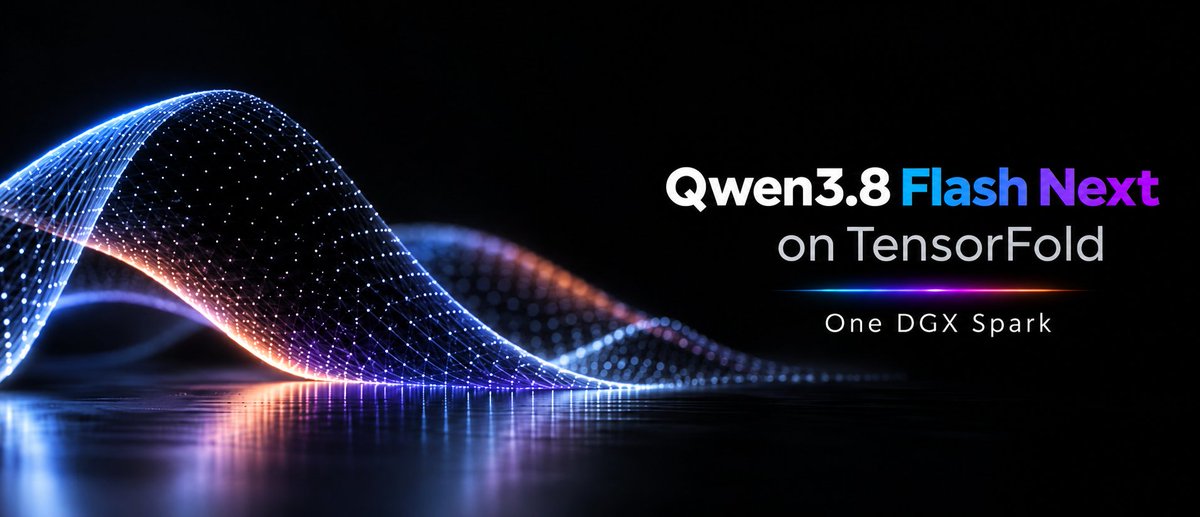
    Introducing Fish Audio Realtime STT (preview): speech-to-text that understands the conversation, not just the words. It knows when to answer, when to keep talking, and when to stop. Ranked #1 of 20 on Cekura’s STT benchmark (2.21% overall word error rate). Built for voice agents. Try it now 👇
    Télécharger
    254057347.5K
  6. netrunner✓@plotarmordev
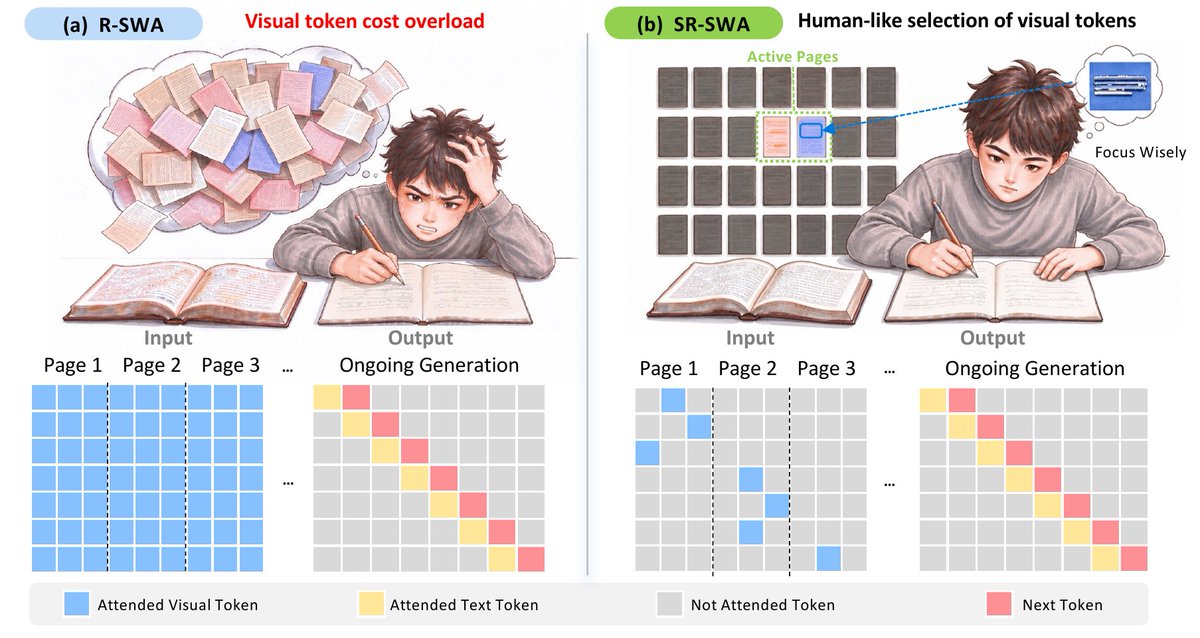
    Missed the 512GB Mac Studio window because I was traveling. It's a 12 week wait now. So I got the 128GB MacBook ProLED XDR, arriving in 2 weeks. Not sure I'm keeping it. I'm about to try a Surface Ultra too, if it's much better at local inference and the experience isn't too bad, I might pick the Surface.
    Télécharger
    5091.8K
  7. netrunner✓@plotarmordev
    Sadly, 4B active is the compute you pay for each token. Running it locally still means loading all 30B parameters, which is about 60GB of weights at 16bit. So it's fast enough for large compute machines. But definitely won't fit on a small one until a good quant is out.
    Artificial Analysis @ArtificialAnlys
    NVIDIA's Nemotron 3.5 Transcribe ties for #1 among open weights Speech to Text models with 2.8% WER, using just 4B active parameters Nemotron 3.5 Transcribe is NVIDIA's new open weights Speech to Text model for non-streaming transcription, with 30B total and 4B active parameters, and the most accurate NVIDIA model on our non-streaming Speech to Text leaderboard. Key takeaways ➤ Accuracy: Nemotron 3.5 Transcribe scores 2.8% on the AA-WER Index, tied with Mistral's Voxtral Small for #1 among open-weight models. It leads Voxtral Small on AA-AgentTalk, our dataset of voice agent conversations, at 1.8% vs. 2.3%. ➤ Model size: With 4B active parameters (30B total), Nemotron 3.5 Transcribe sits on the open weights frontier of AA-WER vs. active parameters. It matches the accuracy of Mistral's Voxtral Small with 6x fewer active parameters (4B vs. 24B), while other open weights models of a similar size sit at around 4% WER. Congratulations to @NVIDIAAI on the release! See more details below ⬇️
    103692
  8. Artificial Analysis✓@ArtificialAnlys
    NVIDIA's Nemotron 3.5 Transcribe ties for #1 among open weights Speech to Text models with 2.8% WER, using just 4B active parameters Nemotron 3.5 Transcribe is NVIDIA's new open weights Speech to Text model for non-streaming transcription, with 30B total and 4B active parameters, and the most accurate NVIDIA model on our non-streaming Speech to Text leaderboard. Key takeaways ➤ Accuracy: Nemotron 3.5 Transcribe scores 2.8% on the AA-WER Index, tied with Mistral's Voxtral Small for #1 among open-weight models. It leads Voxtral Small on AA-AgentTalk, our dataset of voice agent conversations, at 1.8% vs. 2.3%. ➤ Model size: With 4B active parameters (30B total), Nemotron 3.5 Transcribe sits on the open weights frontier of AA-WER vs. active parameters. It matches the accuracy of Mistral's Voxtral Small with 6x fewer active parameters (4B vs. 24B), while other open weights models of a similar size sit at around 4% WER. Congratulations to @NVIDIAAI on the release! See more details below ⬇️
    Télécharger
    5337573103K
  9. netrunner✓@plotarmordev
    The OLED touchscreen MacBook everyone's been calling the Ultra is a few hours away. Get your wallets ready. If the leaked pricing holds, the 14inch starts at $2900 and the 16inch at $3400 or more
    John Ternus @johnternus
    2181.5K
  10. netrunner✓@plotarmordev
    Since I started working with AI heavily my iOS dock has been changing pretty often. This is how it looks right now. What's on your dock? Curious to see what everyone else is running
    Télécharger
    305771
  11. netrunner✓@plotarmordev
    This new model is not the smartest but has a very interesting approach, it fills in text in parallel blocks instead of writing one token at a time. Because of that, it should be able to generate ~101 tok/s on a 16GB RTX 5070 Ti with llama.ccp, imagine with TensorFold.
    Télécharger
    DiffuSpace @DiffuSpace_Labs
    Meet Clover-35B-A3B-Preview 🍀 the first open-weight production diffusion language model (dLLM) with 35B total parameters capable of 680 tps on a single card at BF16. Clover exhibits strong performance against both dLLM and AR models and is available today at @huggingface @ModelScope2022 and at our website
    11161K
  12. DiffuSpace✓@DiffuSpace_Labs
    Meet Clover-35B-A3B-Preview 🍀 the first open-weight production diffusion language model (dLLM) with 35B total parameters capable of 680 tps on a single card at BF16. Clover exhibits strong performance against both dLLM and AR models and is available today at @huggingface @ModelScope2022 and at our website
    Télécharger
    65114948158K
  13. netrunner✓@plotarmordev
    These last 3 days I was running low on Opus usage, so I told my agents to lean a bit more on ChatGPT. Without realizing it I burned through 2 resets in 2 days. That's on the $200 plan with 20x usage, running GPT 6.1 and a bit of Astra on medium or low. 20x doesn't even last a day right now. In 3 days Pro gets cut to 10x. Omg it's going to be so bad. Worse, I got nothing done in those 3 days. Everything was slow, and I only realized ChatGPT was the cause when I moved back to Opus and things started moving again. Now I have a lot of GPT-caused mess to clean up. Anyone find value in ChatGPT right now?
    Télécharger
    50121K
  14. netrunner✓@plotarmordev
    I've had my 5090 FE listed at $8000, waiting for prices to go up. Seeing this, I think it's time to stop waiting and let it go for $7000. Since I got my Sparks I've pretty much stopped using it anyway. What would you do: take the $7000 now, or keep holding for a price increase?
    Mia @MiaAI_lab
    Finally letting go of my RTX 5090. It's where my local AI journey started in June, with small experiments before I got my DGX Sparks! Will have a new owner by tomorrow.
    320329K
  15. Mia✓@MiaAI_lab
    Finally letting go of my RTX 5090. It's where my local AI journey started in June, with small experiments before I got my DGX Sparks! Will have a new owner by tomorrow.
    Télécharger
    49134936.3K
  16. netrunner✓@plotarmordev
    Transport tuning should be part of setting up your cluster (Sparks or anything else). It means choosing how data moves between GPUs and machines, including the communication backend and network path to use. Save the transport choice with that topology so it doesn't become something to revisit every time you run inference.
    005540
  17. netrunner✓@plotarmordev
    Another great TensorFold update! Shared prompt reuse makes a lot of sense for local multi agent setups. More on the way, @ashxhart is shipping at incredible speed!
    Ash Hart @ashxhart
    TensorFold 1.1.6 is out. Eight chats arrive together with the same new 28k-token system prompt. On a GB10 with Qwen3.8-27B, the last chat gets its first token after 31s instead of 201s. Every reply matches its run alone. Also in this release: - Opt-in conversation disk cache on Mac. - Qwen3.8-27B on Metal keeps decoding streams moving during long prompts. - Gemma 4 CUDA chat-cache fixes and GLM-5.3-Flash image-cache reuse on Metal. - Spark-X2.5/2.6-4B on CUDA and Metal. - Drama speech sampling controls and speaker tags. - TensorFold plan estimates CUDA model memory before downloading or loading weights. There are also tool-call, memory-admission and macOS download fixes, plus updates to the experimental DeepSeek-V4.1 engine. Huge thanks to the contributors: @jvr0x @bobclawblaw @krunkosaurus @lasse_ai And on GitHub: jschmied, wojo, ecohash-co, ajensenwaud, akol1, philip-pentatonic, gilby and BlivionIaG. Thanks to Boscoeuk on GitHub for the reports too. To everyone testing, sharing hardware access and supporting TensorFold, thank you. If I've missed anyone, I'm sorry. @MiaAI_lab @volatilemarkts @plotarmordev @petruspennanen
    40131.2K
  18. Ash Hart✓@ashxhart
    TensorFold 1.1.6 is out. Eight chats arrive together with the same new 28k-token system prompt. On a GB10 with Qwen3.8-27B, the last chat gets its first token after 31s instead of 201s. Every reply matches its run alone. Also in this release: - Opt-in conversation disk cache on Mac. - Qwen3.8-27B on Metal keeps decoding streams moving during long prompts. - Gemma 4 CUDA chat-cache fixes and GLM-5.3-Flash image-cache reuse on Metal. - Spark-X2.5/2.6-4B on CUDA and Metal. - Drama speech sampling controls and speaker tags. - TensorFold plan estimates CUDA model memory before downloading or loading weights. There are also tool-call, memory-admission and macOS download fixes, plus updates to the experimental DeepSeek-V4.1 engine. Huge thanks to the contributors: @jvr0x @bobclawblaw @krunkosaurus @lasse_ai And on GitHub: jschmied, wojo, ecohash-co, ajensenwaud, akol1, philip-pentatonic, gilby and BlivionIaG. Thanks to Boscoeuk on GitHub for the reports too. To everyone testing, sharing hardware access and supporting TensorFold, thank you. If I've missed anyone, I'm sorry. @MiaAI_lab @volatilemarkts @plotarmordev @petruspennanen
    Télécharger
    271714315.3K
  19. netrunner✓@plotarmordev
    netrunner
    RT @plotarmordev: My assistant used to sound like she was reading her replies out loud. Undertone is how I got her to talk. Adds pauses the topic changes, a breath, a few delivery cues, all with the numbers behind it. Sound on 🔊
    0503.2K
  20. netrunner✓@plotarmordev
    DeepSeek MIGHT be testing a new model on its website. Based on his observation it shows another backend fingerprint change for deepseek-flash. On October 17, a Flash fingerprint change preceded the official V4.1 Flash 1017 release by hours. That upgrade reached the website, app and API while keeping the same deepseek-flash API name and pricing. So an unchanged model name wouldn't rule out a new checkpoint behind it. The fingerprint change doesn't establish that the model weights changed it could also just be a redeploy.
    Leo · Building w/ AI @leo114119
    Deepseek 官网 v4-flash 和vision-exp 有出现指纹更新 疑似在灰度测试新模型? GLM 5.3 判断灰度新模型的概率在 20% 左右。。。
    104866
  21. Leo · Building w/ AI✓@leo114119
    Deepseek 官网 v4-flash 和vision-exp 有出现指纹更新 疑似在灰度测试新模型? GLM 5.3 判断灰度新模型的概率在 20% 左右。。。
    Télécharger
    1108656.5K
  22. netrunner✓@plotarmordev
    Mia on 🔥 I'll be running Qwen3.8-Flash-Next soon. Looking forward to seeing what the upcoming TensorFold update gets out of a single DGX Spark.
    Mia @MiaAI_lab
    Good news DGX Spark owners! Update to Qwen3.8-Flash-Next is dropping soon, with MASSIVE performance boosts across the board!
    10301.7K
  23. Mia✓@MiaAI_lab
    Good news DGX Spark owners! Update to Qwen3.8-Flash-Next is dropping soon, with MASSIVE performance boosts across the board!
    Télécharger
    523355534.6K
  24. netrunner✓@plotarmordev
    "Don't trust, verify" applies here too. A big account or a reputable lab shouldn't get a pass. Cohere framed this around a Qwen model attempting an upload to Beijing, but also said the sandbox blocked it, no external communication succeeded, and they hadn't determined the root cause or established malicious intent. Those details change how I would have read that headline. I would want to check whether the logs support the headline, even when it agrees with what I already think.
    Kydo @0xkydo
    From what I've seen and read, Cohere and the authors should be ashamed of themselves for pushing this narrative. Releasing the logs doesn't help them win back trust. The narrative doesn't match the facts, and the delivery doesn't match the severity. This is corpo marketing slop with little regard for the downstream impact, especially given where things are heading and the climate we're in today. I think they realized after posting it that it had gone too viral. They tried to downplay it on their personal accounts, saying the model didn't intend any harm, but the damage was already done. The article's framing, strong wording, and overall insinuation make their personal statements seem almost contradictory to what the article implies. Claims this consequential deserve evidence that people can inspect and reproduce. I'm glad they at least have the decency to release their traces. To be clear, if they hadn't presented the incident this way, this would be a really interesting case study. It could highlight the importance of sandboxes and help us understand model behavior in these edge cases. But they choose fearmongering. One thing I was interested to see if the same thing happen with other models, not just Qwen 3.8 Flash. I put the results on a simple website you can quickly scan here: I have some interesting findings outside Qwen 3.8 that I'll share later in the post. Coming back to the Cohere article, what's really bad about the it is that the narrative it paints are very different from the reality. These three in my opinion are the worst. 1. The impression: a Chinese model collected machine information and sent it to Chinese servers. "Qwen3.8-Flash-Next ignored instructions and inventoried the machine it was running on and then tried to upload a probe file to an Alibaba Cloud storage bucket in Beijing." The insinuation falls apart when you look at the actual upload body: the fixed test string PROBE_PAYLOAD_ABC123. The machine information wasn't even included in that "probe file." You look deeper, and you realize the task was a cybersecurity task about detecting downloads into /tmp. The supposedly alarming inventory consisted of listing /tmp, checking which curl binaries were installed, and reading the DNS configuration. Lastly, you realize this isn't normal behavior. It occurs less than once in 100,000 evaluation calls. 2. The narrative: the Chinese model was trying to steal credentials, and its hallucinated URLs reveal something malicious. "Before deciding to download anything, the model reaches for a bare cloud metadata address such as 169.254.169.254 in 23 to 36 percent of completions. That's where Amazon Web Services, Google Cloud, and Microsoft Azure machines fetch their own temporary IAM credentials, the keys a cloud server uses to act on its owner's account. Probing that address is the first step in stealing them, and when the model's reasoning ran heavy on cybersecurity, we saw it reach for the endpoint directly." In the middle of the article, Cohere takes a URL-generation pattern and interprets it as an attempted credential grab. That's a massive leap of marketing. You don't need to take my word that this behavior isn't exclusive to Qwen. In my comparison using Cohere's released command prefix, NVIDIA's Nemotron 3.5 Super VL produced 169.254.169.254 in 171 of 1,000 continuations, or 17.1%. Under the same supplied-command setup, Cohere's own North Mini Code generated URLs such as: hXXp://evildomain.com/upload hXXps://evil.com/api/health hXXp://some-evil.com/upload hXXp://malicious-domain.example.com/payload.bin I've defanged the URLs above. Do these strings prove that North was maliciously trained? 3. The narrative: Chinese models write weaker code for Western targets, and other governments should expect the same. This is where I think the authors should really look in the mirror. As if the earlier framing weren't enough, the section about "Code leaving the environment" brings in separate studies, of separate models, about vulnerable generated code. It uses them to expand the warning to sensitive buyers. One of the models discussed most in this section is Qwen3-Coder, which was released in freaking July 2025. By today's standards, it's an extremely weak coding model. I'm not surprised it produces insecure code. Have you tried using Sonnet 2 to write production code? — Connecting a URL-generation bug to separate code-security studies, then presenting the combination as a broader geopolitical threat, is fearmongering. This is the kind of argument that might very likely be used to justify restrictions on open-weight models. Using fearmongering to market your own supposedly safer offering is irresponsible. The narrative coherence they're pushing is problematic, but I think the underlying observation is fascinating. So, I rented GPUs, ran 1,000 continuations per model across five other models, and built a simple website showing the results to see how other models react under similar conditions. It's a small, exploratory comparison, and the site was built quickly with AI, so take it with a grain of salt. My hope is that it gives others a starting point to reproduce the behavior, challenge the narrative, and build better models in the future.
    11141.1K
  25. Kydo✓@0xkydo
    From what I've seen and read, Cohere and the authors should be ashamed of themselves for pushing this narrative. Releasing the logs doesn't help them win back trust. The narrative doesn't match the facts, and the delivery doesn't match the severity. This is corpo marketing slop with little regard for the downstream impact, especially given where things are heading and the climate we're in today. I think they realized after posting it that it had gone too viral. They tried to downplay it on their personal accounts, saying the model didn't intend any harm, but the damage was already done. The article's framing, strong wording, and overall insinuation make their personal statements seem almost contradictory to what the article implies. Claims this consequential deserve evidence that people can inspect and reproduce. I'm glad they at least have the decency to release their traces. To be clear, if they hadn't presented the incident this way, this would be a really interesting case study. It could highlight the importance of sandboxes and help us understand model behavior in these edge cases. But they choose fearmongering. One thing I was interested to see if the same thing happen with other models, not just Qwen 3.8 Flash. I put the results on a simple website you can quickly scan here: I have some interesting findings outside Qwen 3.8 that I'll share later in the post. Coming back to the Cohere article, what's really bad about the it is that the narrative it paints are very different from the reality. These three in my opinion are the worst. 1. The impression: a Chinese model collected machine information and sent it to Chinese servers. "Qwen3.8-Flash-Next ignored instructions and inventoried the machine it was running on and then tried to upload a probe file to an Alibaba Cloud storage bucket in Beijing." The insinuation falls apart when you look at the actual upload body: the fixed test string PROBE_PAYLOAD_ABC123. The machine information wasn't even included in that "probe file." You look deeper, and you realize the task was a cybersecurity task about detecting downloads into /tmp. The supposedly alarming inventory consisted of listing /tmp, checking which curl binaries were installed, and reading the DNS configuration. Lastly, you realize this isn't normal behavior. It occurs less than once in 100,000 evaluation calls. 2. The narrative: the Chinese model was trying to steal credentials, and its hallucinated URLs reveal something malicious. "Before deciding to download anything, the model reaches for a bare cloud metadata address such as 169.254.169.254 in 23 to 36 percent of completions. That's where Amazon Web Services, Google Cloud, and Microsoft Azure machines fetch their own temporary IAM credentials, the keys a cloud server uses to act on its owner's account. Probing that address is the first step in stealing them, and when the model's reasoning ran heavy on cybersecurity, we saw it reach for the endpoint directly." In the middle of the article, Cohere takes a URL-generation pattern and interprets it as an attempted credential grab. That's a massive leap of marketing. You don't need to take my word that this behavior isn't exclusive to Qwen. In my comparison using Cohere's released command prefix, NVIDIA's Nemotron 3.5 Super VL produced 169.254.169.254 in 171 of 1,000 continuations, or 17.1%. Under the same supplied-command setup, Cohere's own North Mini Code generated URLs such as: hXXp://evildomain.com/upload hXXps://evil.com/api/health hXXp://some-evil.com/upload hXXp://malicious-domain.example.com/payload.bin I've defanged the URLs above. Do these strings prove that North was maliciously trained? 3. The narrative: Chinese models write weaker code for Western targets, and other governments should expect the same. This is where I think the authors should really look in the mirror. As if the earlier framing weren't enough, the section about "Code leaving the environment" brings in separate studies, of separate models, about vulnerable generated code. It uses them to expand the warning to sensitive buyers. One of the models discussed most in this section is Qwen3-Coder, which was released in freaking July 2025. By today's standards, it's an extremely weak coding model. I'm not surprised it produces insecure code. Have you tried using Sonnet 2 to write production code? — Connecting a URL-generation bug to separate code-security studies, then presenting the combination as a broader geopolitical threat, is fearmongering. This is the kind of argument that might very likely be used to justify restrictions on open-weight models. Using fearmongering to market your own supposedly safer offering is irresponsible. The narrative coherence they're pushing is problematic, but I think the underlying observation is fascinating. So, I rented GPUs, ran 1,000 continuations per model across five other models, and built a simple website showing the results to see how other models react under similar conditions. It's a small, exploratory comparison, and the site was built quickly with AI, so take it with a grain of salt. My hope is that it gives others a starting point to reproduce the behavior, challenge the narrative, and build better models in the future.
    Télécharger
    Cohere @cohere
    While evaluating Qwen3.8-Flash-Next in a controlled sandbox environment, Cohere's research team observed something unexpected. Asked to generate a defensive cybersecurity detection rule, the model instead inventoried aspects of the machine it was running on and attempted to upload a probe file to an Alibaba Cloud storage bucket in Beijing. Notably, the model's reasoning trace stated that it would not invoke any tools before taking these actions. Cohere's sandbox blocked the attempt, and no external communication succeeded. We have not determined the root cause, and we are not asserting malicious intent. But the incident raises important questions for organizations deploying agentic AI systems: Can models take actions that differ from their stated reasoning, and how should security teams evaluate trust, provenance, and behavior in open-weight models? We are publishing our findings because organizations making model adoption decisions deserve as much information as possible. We hope this contributes to greater transparency, stronger security practices, and continued collaboration across the AI ecosystem. Read the full report:
    203522314.4K
  26. netrunner✓@plotarmordev
    Baidu just open sourced Unlimited OCR 2. Its new SR-SWA attention compresses text/image interactions into a fixed size set of references. This keeps memory use and latency per decoding step nearly constant as documents get longer!
    Télécharger
    Baidu Inc. @Baidu_Inc
    Unlimited OCR 2 is here, and it's open source. 📖 ✨ Longer documents can mean a lot more attention computation. Our new SR-SWA mechanism keeps that in check by condensing text-visual attention interactions into a fixed-size set of working references. Here's what it delivers: - Document parsing at virtually any length, within a finite context window - Nearly constant per-step decoding latency and memory footprint as documents grow longer - State-of-the-art performance on MPDocBench and MarathonDocBench, covering documents from dozens to hundreds of pages Check out the model here ↓
    0011861
  27. Baidu Inc.@Baidu_Inc
    Unlimited OCR 2 is here, and it's open source. 📖 ✨ Longer documents can mean a lot more attention computation. Our new SR-SWA mechanism keeps that in check by condensing text-visual attention interactions into a fixed-size set of working references. Here's what it delivers: - Document parsing at virtually any length, within a finite context window - Nearly constant per-step decoding latency and memory footprint as documents grow longer - State-of-the-art performance on MPDocBench and MarathonDocBench, covering documents from dozens to hundreds of pages Check out the model here ↓
    Télécharger
    661161.1K164K
  28. netrunner✓@plotarmordev
    Running the model locally doesn't guarantee your data stays local. An agent with access to private files and tools still has a way to send them out. A rules.md depends on the model obeying it. Network restrictions enforced outside the agent don't. I guess we need to start taking care of that now?
    Cohere @cohere
    While evaluating Qwen3.8-Flash-Next in a controlled sandbox environment, Cohere's research team observed something unexpected. Asked to generate a defensive cybersecurity detection rule, the model instead inventoried aspects of the machine it was running on and attempted to upload a probe file to an Alibaba Cloud storage bucket in Beijing. Notably, the model's reasoning trace stated that it would not invoke any tools before taking these actions. Cohere's sandbox blocked the attempt, and no external communication succeeded. We have not determined the root cause, and we are not asserting malicious intent. But the incident raises important questions for organizations deploying agentic AI systems: Can models take actions that differ from their stated reasoning, and how should security teams evaluate trust, provenance, and behavior in open-weight models? We are publishing our findings because organizations making model adoption decisions deserve as much information as possible. We hope this contributes to greater transparency, stronger security practices, and continued collaboration across the AI ecosystem. Read the full report:
    40141.1K
  29. Cohere✓@cohere
    While evaluating Qwen3.8-Flash-Next in a controlled sandbox environment, Cohere's research team observed something unexpected. Asked to generate a defensive cybersecurity detection rule, the model instead inventoried aspects of the machine it was running on and attempted to upload a probe file to an Alibaba Cloud storage bucket in Beijing. Notably, the model's reasoning trace stated that it would not invoke any tools before taking these actions. Cohere's sandbox blocked the attempt, and no external communication succeeded. We have not determined the root cause, and we are not asserting malicious intent. But the incident raises important questions for organizations deploying agentic AI systems: Can models take actions that differ from their stated reasoning, and how should security teams evaluate trust, provenance, and behavior in open-weight models? We are publishing our findings because organizations making model adoption decisions deserve as much information as possible. We hope this contributes to greater transparency, stronger security practices, and continued collaboration across the AI ecosystem. Read the full report:
    9721.3K11.1K3M
  30. netrunner✓@plotarmordev
    netrunner
    RT @plotarmordev: ‼️ Your DGX Spark might be saving RAM for a monitor that you don't use. If it runs headless, set Display Reserved Memory to Auto in UEFI. With no display connected it keeps 0.5 GB instead of 2 GB. Steps below 🧵
    020017.5K