Usage reset complete! 🔄✨
We’ve reset the weekly Coding Plan allowance for all subscribers and fixed the reported item-limit errors and premature context compaction.
Happy building!
Share
Copied
OpenDesign Developers@OpenDesignDevs
Usage reset complete. 🔄 Keep enjoying your $220 of DeepSeek usage on Go!
We’ve fixed item-limit errors and premature context compaction, and reset weekly Coding Plan allowances for all subscribers: Go, Plus, Pro & Max.
Thanks for your support!
Usage reset complete. 🔄 Keep enjoying your $220 of DeepSeek usage on Go!
We’ve fixed item-limit errors and premature context compaction, and reset weekly Coding Plan allowances for all subscribers: Go, Plus, Pro & Max.
Thanks for your support!
/compact keeps your CLAUDE․md. it quietly drops your path-scoped rules
when a session compacts, Claude Code rebuilds part of the context from disk and summarizes the rest away. which side a rule lands on decides whether Claude still follows it
you can steer the summary before it happens:
/compact focus on the auth bug fix
what comes back:
→ the project-root CLAUDE․md, unscoped rules and auto memory, re-read from disk
→ the plan Claude wrote in plan mode, and skill descriptions rebuilt from your current skills
→ up to five files Claude read or edited, newest first. a file over 5,000 tokens comes back as just a path
→ skills you invoked, capped at 5,000 tokens each and 25,000 total. the oldest go first
what gets summarized away:
→ rules with paths: frontmatter and nested CLAUDE․md files, until Claude touches a matching file again
→ everything your hooks added to the conversation earlier
three things that catch people:
> a rule that has to hold all session can't have paths: frontmatter. drop it, or move the rule into the root CLAUDE․md
> a skill cut to its cap keeps the start of the file. put what matters at the top of SKILL․md
> background commands and subagents keep running through compaction, and Claude is told which ones so it doesn't start a duplicate
Root survives. Paths don't. The top of the file wins.
the setup
> run /compact focus on <task> before a long new task, so the summary keeps what you chose
> /autocompact 500k sets how full the window gets before the automatic pass kicks in
> /rewind → Summarize from here compacts only part of the conversation
> /context shows what's loaded right now, broken down by category
paste this into Claude Code ↓
"Check what my setup loses on /compact:
1. List every rule with paths: frontmatter and every nested CLAUDE․md
2. Mark the ones that must hold all session, and suggest moving them to the root CLAUDE․md
3. Find skills whose SKILL․md is over 5,000 tokens and show me what sits below the cut
4. Write the /compact focus line I should use for my current task
Show me every change as a diff first. No edits until I say go"
↳
save it before a long session forgets the one rule that mattered
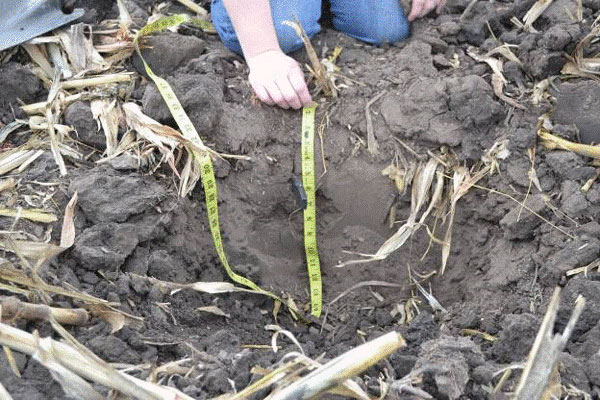
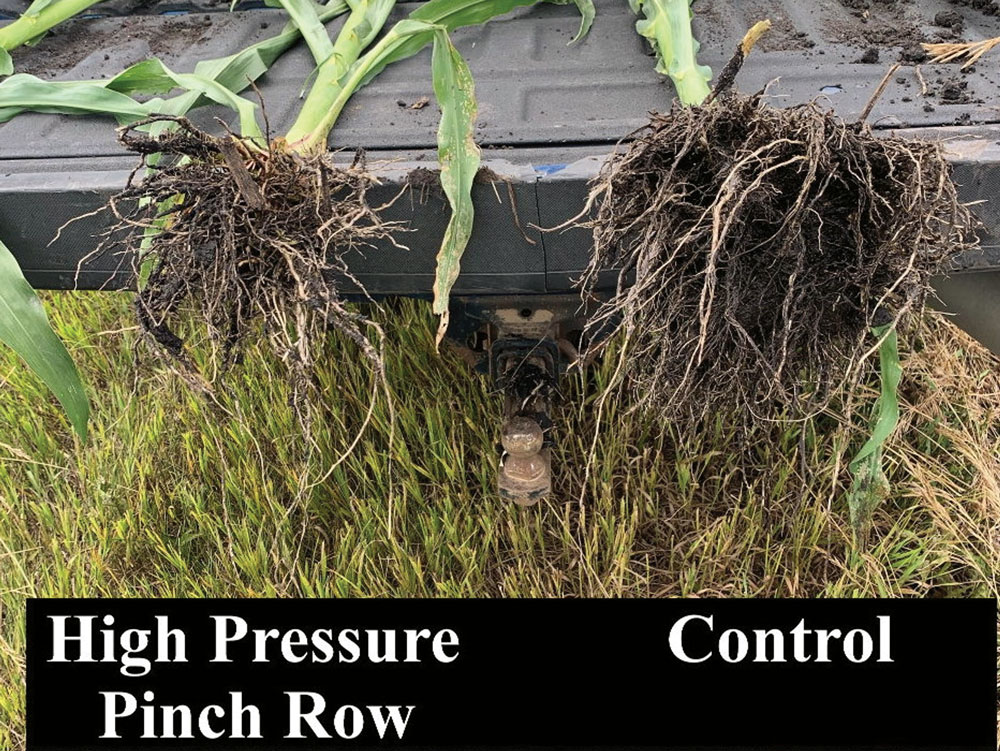
This weeks eUpdate is here! This week covers winter annual grass control, woody plant management, identifying soil compaction, curly dock, Kansas soil moisture conditions, and upcoming forage and sorghum events. Read the full issue: #kstateagronomy
A little retaining wall progress from this week. Not many more beautiful, sunny days left here in the north.
One of the more interesting things visible at this stage is the geogrid extending back into the soil behind the wall.
A lot of people assume geogrid works almost like an anchor—that it somehow “ties” the wall back into the hill.
That’s not really what’s happening.
The grid becomes integrated with layers of properly compacted soil. As the soil locks into the openings in the grid, the two begin acting together as a reinforced mass. That added interaction and friction gives the soil far greater resistance to the lateral forces pushing against the wall.
In other words, we’re not just building a stronger wall. We’re engineering stronger soil behind it.
That’s one of the fascinating things about retaining walls: so much of what determines whether they perform for decades is buried and invisible when the project is finished.
Drainage. Base preparation. Compaction. Reinforcement. Layer after layer, all doing work you’ll hopefully never have to think about again.
The finished wall gets all the attention.
The parts you never see are what make it possible.
Lilika Makabe’s internship provided meaningful connections and opportunities to grow; can AI bring us Star Trek's universal translator; solving a decades-old math challenge; smarter context compaction boosts coding agents; and building a better tokenizer:
From northern Illinois to Nebraska, two farmers share why they’re turning to drones to seed cover crops into standing corn. Here’s what they’ve learned about timing the rain, beating compaction and making the math work.
Effects of Soil Compaction on Straw N Utilization Under Conservation Tillage: A <fc><sup>15</sup>N</fc> Tracer Study - Xie - 2026 - European Journal of Soil Science #stableisotopes
Highly recommended paper from NVIDIA.
(bookmark it)
There is a lot of debate about whether to use context compaction aggressively.
They show that with frequent compaction, frontier language models lose little to no accuracy on a broad range of long-horizon and long-input tasks while keeping their context short.
With one action per context, Claude Opus 4.5 scores 70.2 on SWE-bench Verified against 70.0 with the full history. Median peak context drops from 32K to 8K tokens.
The agent carries a short summary of its state between steps instead of the whole transcript. Simple compaction at the end of a conversation often does better than the full history, and Opus goes from 70.0 to 74.8 with it.
This also matters for cost. Later tokens cost more to generate than earlier ones, up to 7x on frontier open-weight models.
The pattern holds on Terminal-Bench, FRAMES, BFCLv3 and multilingual SWE-bench, with modest losses in some settings.
Before paying for million-token agent runs, it's worth testing aggressive compaction on your own tasks.
Chat with Paper:
Implementing a Soil Health Management System on your cropland can lead to increased organic matter, greater variety of soil organisms, reduced compaction and improved nutrient storage and cycling. Learn how NRCS can help you implement one at
Fable 5.2 is now available in the Claude Platform and Claude Code.
It’s up to 30% faster than Fable 5.1, and costs $8/$40 per 1M tokens, down from $10/$50.
Share
Copied
Claude@claudeai
Introducing Claude Fable 5.2 and Claude Mythos 5.2, designed to tackle the most daunting technical challenges.
They’re capable collaborators on ambitious projects in many fields, and show improvements in areas like coding, reasoning, and vision.
Introducing Claude Fable 5.2 and Claude Mythos 5.2, designed to tackle the most daunting technical challenges.
They’re capable collaborators on ambitious projects in many fields, and show improvements in areas like coding, reasoning, and vision.
Fast mode is also available for Fable 5.2.
2.5x faster output, for twice the price. In the Claude API, set "speed": "fast". In Claude Code, toggle fast mode in the model picker, which will bill through extra usage credits.
To help prevent distillation, preserved thinking now covers all API accounts on Fable 5.2.
Editing prior context can 400. Use compaction, context editing, or mid-conversation system messages. Claude Code, Managed Agents & Agent SDK handle this for you.
🛞 Tire industry expert & Precision Inflation vice president Ken Brodbeck says on-the-go tire pressure adjustments can help no-tillers avoid soil damage due to compaction & boost crop yields & machine performance.
🔗 Read more:
compaction is much better now so for certain things you may not need to explicitly clear or externalize context to for the sake of model intelligence/focus. (still useful for collab w/ humans or handoff between agents / machines though!)
"dumb zone" a little more flexible for 1m frontier models. I usually my autocompact to 400k and tend to do a manual compact between 200-400k depending on model/harness. less so clearing now
3-tier subagent architectures make this a little better too. You can have a top level orchestrator that runs the process, and can launch subagents that can themselves launch subagents. So instead of human steering two levels, top level can.
i don't think there's any good reason to go beyond 3-levels of subagent nesting today for majority of tasks.
YMMV, as always these are guidelines / training wheels. your intuition as to whether model is on track or getting dumb is always the best source!
Share
Copied
Steph@stepheniezzi
Are yall still hyper focused on keeping the context window clean (ie /clear between tasks) or are you beginning to trust compacting and keeping threads alive longer?
I used to be locked in on @mattpocockuk and @dexhorthy trying everything to keep context tight. Much less so now
Are yall still hyper focused on keeping the context window clean (ie /clear between tasks) or are you beginning to trust compacting and keeping threads alive longer?
I used to be locked in on @mattpocockuk and @dexhorthy trying everything to keep context tight. Much less so now
I burned a shitload of compute so you don't have to. Releasing the Harness Leaderboard.
Which harness should you run your open model in? I ran 28,849 trials to find out.
The leaderboard compares nine coding-agent harnesses on open models. In each comparison only the harness changes: the model, provider and reasoning effort stay fixed, and every task gets three attempts.
The trials ran GLM-5.3-Flash, DeepSeek-V4.1-Flash and Flint on Terminal-Bench 2.1 and DeepSWE, for $4,746 of inference.
Averaged over the three models, mini-swe-agent (@KLieret), a bash-only agent, solves 51.4% of tasks and @openclaw 27.3%. Four others are statistically tied with mini-swe-agent.
One of them is Pi (@pidotdev), at 49.4% for $0.29 per solved task, about 45% less than mini-swe-agent's $0.53.
The best harness depends on the model: mini-swe-agent on GLM-5.3-Flash, Hermes Agent (@NousResearch) on DeepSeek-V4.1-Flash and Kimi Code (@Kimi_Moonshot) on Flint.
@opencode costs $3.35 per solved task, 11.7 times as much as Pi.
See Harness Hub's Harness Lens for what the nine harnesses do differently. It documents the prompts, tools and compaction of 34 coding-agent harnesses and links every claim to its source.
Leaderboard:
Harness Lens:
Through internal testing, GitHub’s new Git storage architecture supported 5,000 concurrent agents working on a repo, sending 7,200 pushes per second, all while serving read traffic with consistently low latency.
@TheFortressInc Love it. My concrete guy is around $22k. Asphalt quote I got is $17k. That concrete seems like a good deal? Any tips for doing it on a slope? I’m thinking just mesh rebar
@trappology Pouring in sections on the slope will obviously be necessary. What you use for reinforcement within the concrete will be highly dependent on your soil & compaction. I’d defer to your concrete guy or an engineer on that one. I love long driveways!
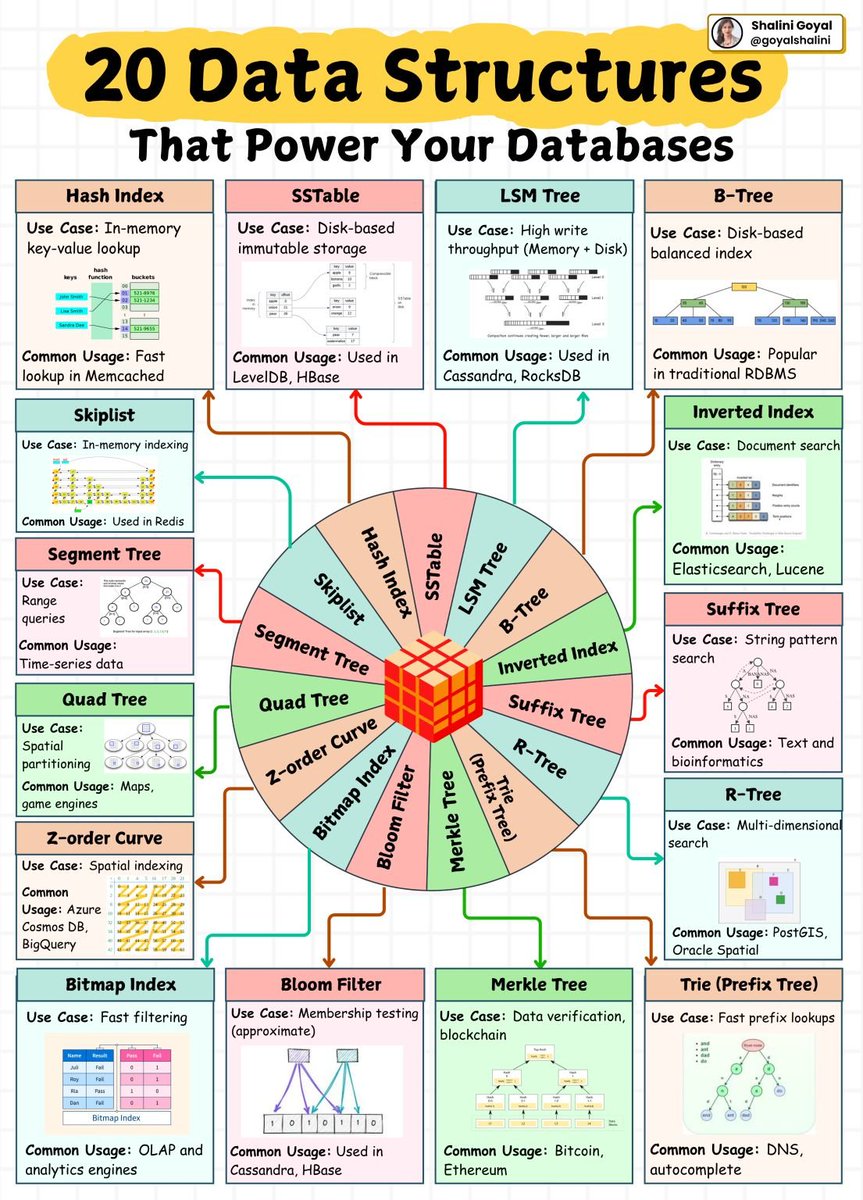
Behind every fast query, smart filter, or scalable database lies a powerful data structure.
These 20 structures aren’t just theory, they’re the backbone of real-world systems that power search engines, time-series storage, blockchain, and more.
1. Indexing Structures
Hash Index, B-Tree, Skiplist, Bitmap Index, Trie
These are the go-to structures for fast data access. Whether it’s quick key-value lookups in memory or sorted traversals on disk, these structures form the core of query performance in most databases.
2. Search & Pattern Matching
Inverted Index, Suffix Tree, Segment Tree, R-Tree
Designed for deep searches — from documents and strings to spatial queries — these structures support full-text search, multi-dimensional lookups, and real-time analytics.
3. Write-Optimized Storage
LSM Tree, SSTable, Bloom Filter
High-ingestion databases like Cassandra and RocksDB rely on these to optimize write speed while managing data compaction and fast approximate lookups with minimal memory overhead.
4. Spatial & Range Indexing
Quad Tree, Z-order Curve, Segment Tree
Used in applications like maps, game engines, and time-series systems — these structures help partition and access multi-dimensional or sequential data efficiently.
5. Advanced Use Cases
Merkle Tree, Suffix Tree, Bloom Filter
From verifying blockchain transactions to bioinformatics and deduplication in distributed systems — these data structures are built for reliability and integrity at scale.
Knowing these structures and more importantly, where they’re used - helps you design database systems that are optimized, reliable, and scalable.
What will you add to this?
World’s most advanced roller, right here in 📍 Las Vegas! Dynapac North America Seismic, Trimble Civil Construction Earthworks for Compaction, and Bluelight Machines autonomy. #trimble_dimensions