There was a time when shipping and shipbuilding were strong American industries. We’ve fallen behind and China has taken full advantage. My SHIPS for America Act rebuilds America’s maritime industry, creates good-paying jobs, and strengthens our economic and national security. It’s time we regain our leadership at sea.
USNS Hector A. Cafferata Jr. (ESB 8) has been delivered to the Navy!
The Expeditionary Sea Base will provide the Fleet critical access infrastructure and logistics capability.
#Shipbuilding#Navy
Full story ⬇️⬇️
A humanoid welder is heading to the shipyard
Shipbuilding still depends heavily on skilled welders, many working in cramped compartments and difficult positions.
Now, SPEEDBOT, a shipbuilding automation solutions provider based in Changsha, China, has introduced W1 (Weldroid-W1), a full-size bipedal humanoid designed for shipyard welding.
Standing 1.7 m tall and weighing 60 kg, W1 has 27 degrees of freedom and a 30 kg payload capacity. It can navigate uneven surfaces, squat or half-kneel, and perform flat, vertical and overhead welding.
Powered by SPEEDBOT's K-WORLD physical AI model, W1 combines LiDAR, ToF cameras and 3D vision to locate weld seams and coordinate movement and welding through its S2–S1–S0 control architecture.(classic three-layer)
For now, W1 is still a demonstration. Real-world trials at a major Chinese shipyard are planned by the end of 2026.
SPEEDBOT already serves major shipbuilding groups including China State Shipbuilding, COSCO Shipping Heavy Industry and China Merchants Industry.
If W1 proves itself in real shipyard operations, these existing customer relationships could provide a path to expand humanoid welding across more shipyards.
Today the @USNavy christened future USS William Charette (DDG 130) during a ceremony at @GDBIW in Bath, Maine.
In a time-honored tradition, ship sponsor Kathryn Charette Donovan, daughter of the namesake, christened the ship by breaking bottles of sparkling wine.
#Shipbuilding
🚢 119 lawmakers urge Congress to include SHIPS for America measures in 2027 defense bill. House proposal may require US-flag vessels for some imports. Not law yet - @gCaptain
🔗
📩 Import/export services: info@johnsjames.com
#Shipbuilding#OceanFreight
America’s undersea advantage is no guarantee. China is working to narrow it.
Randy Schriver & @michael_kuiken joined @bill_hamblet on @NavalInstitute Proceedings podcast to discuss China detecting U.S. subs, quantum sensing, & shipbuilding.
🎧 Listen:
🇨🇳🇺🇸 BREAKING: China’s Navy Surpasses 400 Warships as Beijing Adds 71 Major Warships and Submarines Since 2020, U.S. Faces a Growing Naval Challenge!
China now has roughly 35% more naval vessels than the U.S. Navy by numbers, according to U.S. figures cited by the WSJ.
Although America retains the lead in total fleet tonnage, China’s shipbuilding power is rapidly reshaping the naval balance in the Indo Pacific.
China continues to invest in maritime power, and we can’t afford to fall further behind. It’s time to pass the SHIPS Act and revive American shipbuilding.
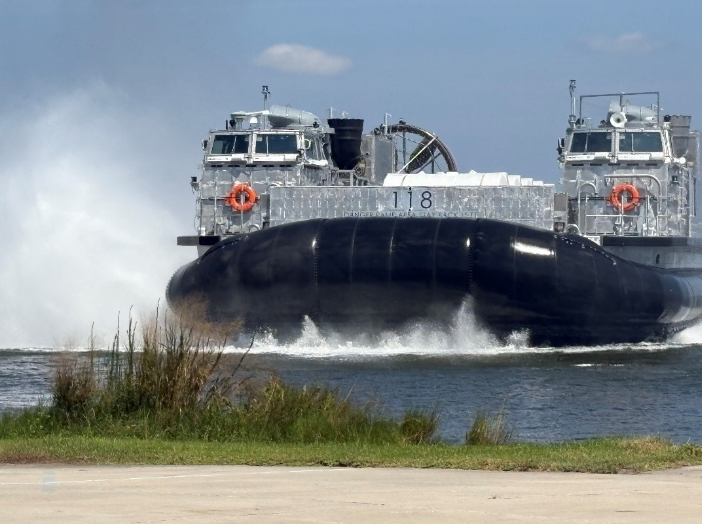
⚓️ The @USNavy accepted delivery of Ship-to-Shore Connector (SSC), LCAC 118 on Oct. 28 making it the fourth SSC delivered to the fleet this calendar year!
(Photo provided by Program Manager’s Representative, SSGC)
#Shipbuilding
Philadelphia’s shipyard plans promise jobs—but the key question is who will get them. Will local workers be prioritized as the city rebuilds its industrial base? #Philadelphia#Shipbuilding
Mediterranean Shipping Company (@MSCCargo ) habría encargado 3 nuevos #portacontenedores de 21.700 TEU de capacidad cada uno al #astillero chino Shanghai Waigaoqiao Shipbuilding (SWS), perteneciente al grupo China State Shipbuilding Corporation (#CSSC).
Hector A. Cafferata Jr. (ESB 8) recently completed acceptance trials, marking another milestone in the program that has been in service for over a decade.
ESB 8, the final ship in the class is scheduled to deliver to the Navy later this summer.
#Shipbuilding#Maritime#USNavy
🇺🇸 Arsenal of the Seas
Alternate Scenario: The U.S. Navy’s 383-Ship Fleet (2027–2045)
Premise: In 2027, Washington adopts the Hudson Institute’s proposed 383-ship general-purpose fleet as the foundation of American naval modernization. Instead of concentrating resources on increasingly expensive destroyers and aircraft carriers, the Pentagon prioritizes submarines, distributed surface forces, amphibious capabilities, and maritime logistics.
Phase I: Industrial Mobilization (2027–2032)
Congress approves a bipartisan 18-year naval expansion program, combining multiyear procurement contracts with investments in American shipyards.
Shipbuilding facilities in Virginia, Mississippi, Maine, Connecticut, and California receive major funding. Automation, workforce training, and standardized designs reduce construction delays.
The Navy accelerates submarine construction while introducing smaller, cheaper combatants capable of operating alongside unmanned systems.
Commercial shipbuilders participate in producing auxiliary vessels, tankers, and logistics ships.
Strategic objective: Establish sustainable mass production rather than temporary wartime expansion.
Phase II: Distributed Naval Power (2033–2038)
The Navy gradually transitions toward distributed maritime operations.
Aircraft carriers remain the centerpieces of major battle groups, but submarines, frigates, smaller combatants, and dispersed missile platforms assume greater responsibilities.
New logistics formations allow American fleets to remain deployed across the Pacific without depending entirely on large, vulnerable naval bases.
Amphibious forces gain additional flexibility through medium landing ships and expeditionary sea bases.
The United States strengthens naval coordination with Japan, Australia, South Korea, and NATO.
Phase III: The 383-Ship Fleet (2039–2045)
PROJECTED 2045 FORCE STRUCTURE
9
Aircraft carriers
68
Large surface combatants
34
Small combatants
69
Submarines
53
Amphibious ships
150
Logistics and support
By 2045, the United States operates a balanced fleet of 383 ships, including 56 attack/cruise-missile submarines and 13 ballistic-missile submarines.
Its 150 logistics and support vessels provide the foundation for sustained global deployments, considerably improving the Navy’s operational endurance.
Strategic Consequences
Indo-Pacific: China faces a more distributed American fleet that is harder to neutralize through concentrated missile strikes. American submarines threaten Chinese maritime operations, while allied forces strengthen regional deterrence.
Atlantic and Arctic: NATO benefits from greater American antisubmarine coverage, maritime surveillance, and reinforcement capabilities.
Middle East: Smaller combatants and logistics vessels maintain a continuous presence without requiring permanent carrier deployments.
Industrial economy: Predictable procurement stimulates shipbuilding employment, expands supplier networks, and strengthens the American maritime industrial base.
Limitations and Risks
The program requires sustained funding, significant shipyard expansion, and enough sailors and maintenance personnel to operate the additional vessels.
China could respond through accelerated submarine construction, unmanned naval systems, and expanded anti-ship missile production.
Moreover, numerical superiority alone cannot guarantee victory against sophisticated reconnaissance and precision-strike networks.
Final Assessment: 2045
The United States possesses a more resilient and logistically sustainable navy, sacrificing some concentration of high-end combat power in exchange for greater geographic coverage and operational flexibility.
The defining achievement is not simply 383 ships. It is the ability to sustain naval operations simultaneously in the Pacific, Atlantic, and Middle East without exhausting the fleet.