Today I'm announcing Canario, a new terminal for macOS.
It uses Rio under the hood 🐤
Spaces with their own colors (⌘1–9), splits, a ⌘K command bar, live tab previews, session restore, and a floating quick terminal on ⌥⌘T.
macOS only for now, Linux and Windows are coming.
We don’t have spots available anymore but will try to accommodate possible open spots through a waiting list. Thanks everyone
Share
Copied
Raphael Amorim@raphamorims
Hello all, we will be hosting a Stockholm Rust meetup at @Lovable
Thursday, Nov 26 · 5:30 PM to 8:30 PM CET
Schedule
17:30 - 17:55: Drop-in, food/drink-grabbing and mingle
17:55 - 18:00: Introductions
18:00 - 18:30: Making sandboxes go brrrrrrr - Raphael Amorim, Lovable
18:30 - 18:50: Mingle
18:50 - 19:20: Rust in the jungle - Simon Sawert
19:20 - 20:30: Mingle
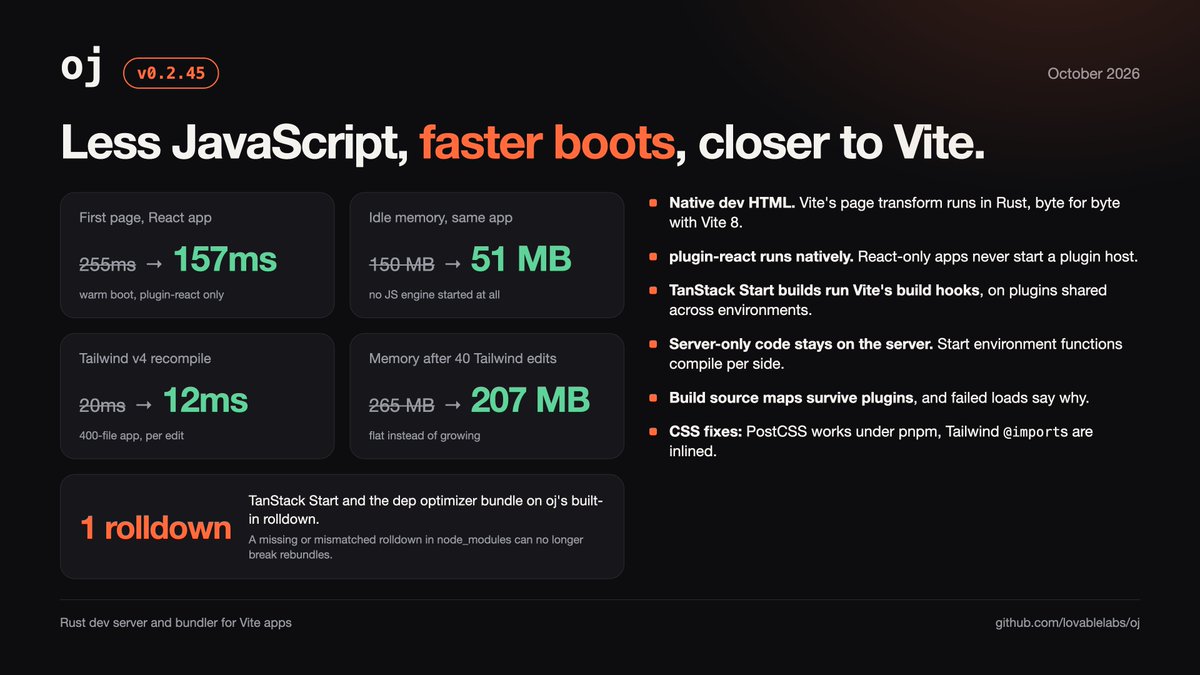
New OJ Version.
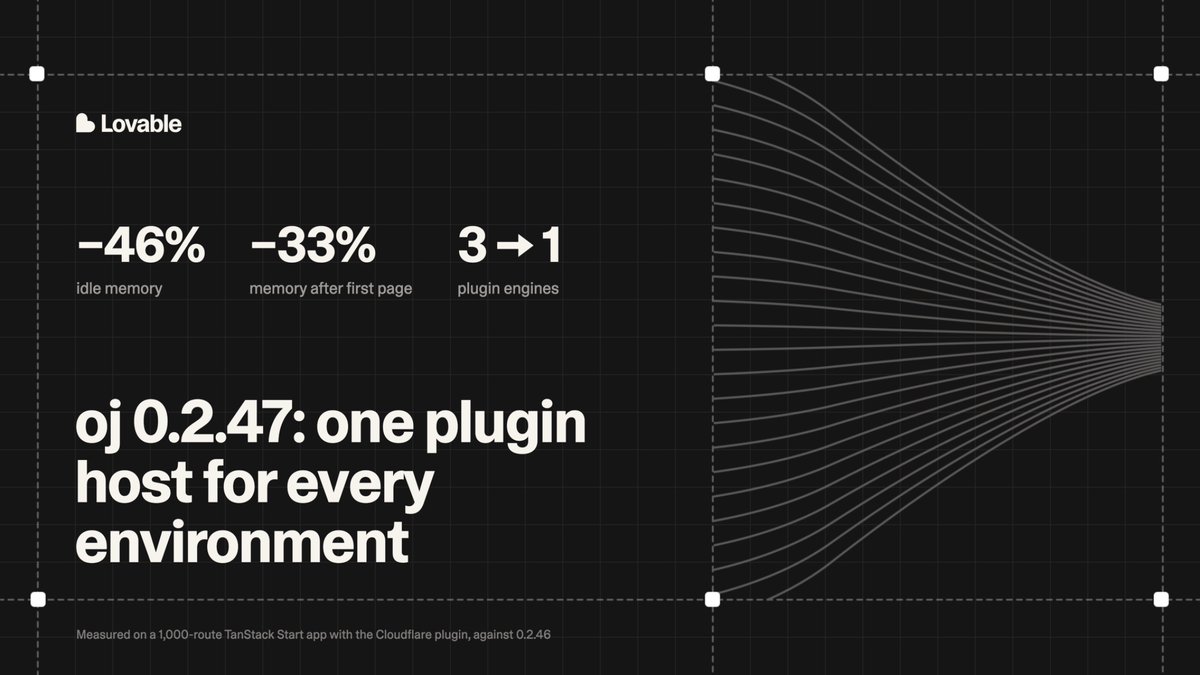
it now have only 1 instance to plugin host, this was not possible in the first versions due to the way OJ originally was designed (multi sidecars to reduce costs when not needed) so it took a while
Memory at idle 1.68gb to 910mb
RSS after first page 3.20gb to 2.13gb
Peak RSS, whole process tree 3.64gb to 2.66gb
Haven't forgot Rio terminal 🙈😂
I have been working in few features secretely for a while, getting close to announce.
Stay tunned, new Rio version dropping this week also.
I might need to remove intern from my profile.
the amount of people that reaches me out for an internship at lovable 😂
it was a good ride with the title though
This is a quick superficial demo of OJ store mode.
It makes oj keep compiled output in a shared, per-user, content-addressed store instead of a per-checkout cache: every entry is keyed by worktree-independent identity, so any other git worktree, CI job, or sandbox of the same project can look up the same key and restore the build instead of recompiling.
In this video is exactly what you will see: one worktree compiled once and wrote 1,762 entries, and the other 19 booted off that 132MB store with zero recompiles and zero store writes.
More info on the matter soon.