Daniel Fein✓

@DanielFein7

researcher @valsai | stanford

1K Following641 Followers628 Posts
  1. Daniel Fein✓@DanielFein7
    My first benchmark for vals, inspired by the model discovery agent work of @sirbayes, testing mathematical intuition and experiment selection. Most discriminative evals are long horizon — MysteryMechanism is unique in that short tasks separate the frontier very well.
    Vals AI @ValsAI
    Scientific discovery is the next frontier for AI systems. However, new scientific results are difficult to verify, and therefore hard to measure. Today we're releasing MysteryMechanism, a benchmark that tests whether agents can rediscover sealed mathematical mechanisms through bounded experiments. It cuts sharply across the frontier, with Astra landing roughly 20pp above Sol.
    34273.1K
  2. Vals AI✓@ValsAI
    Scientific discovery is the next frontier for AI systems. However, new scientific results are difficult to verify, and therefore hard to measure. Today we're releasing MysteryMechanism, a benchmark that tests whether agents can rediscover sealed mathematical mechanisms through bounded experiments. It cuts sharply across the frontier, with Astra landing roughly 20pp above Sol.
    Download
    61314315.1K
  3. Daniel Fein✓@DanielFein7
    Common perception is that secret lab advancements lead employees to be super optimistic about AI progress. In reality, the optimism comes from knowing how sloppy and terrible everything currently is, and being amazed at how good the models are in spite of this.
    Albert Gu @_albertgu
    I've always believed that intelligence should come from simple, general building blocks that learn their own abstractions directly from raw data; in other words, the bitter lesson. I think we're finally seeing a real step towards AI that can learn from all data. Language modeling on raw bytes is a microcosm of this ideal, and to me it's a central problem in AI: if we can't build LLMs that learn end-to-end from bytes, how will we handle the rest of the world's data that we understand even less? Last year we introduced hierarchical networks (H-Nets) as a first step. Our new version finds up to 3-5x efficiency gains in controlled scaling law experiments, and at larger scale matches an open-source model trained on 11T tokens with ~10x less data and compute. The posts below walk through what we found and why we think it works.
    1113875
  4. Albert Gu✓@_albertgu
    I've always believed that intelligence should come from simple, general building blocks that learn their own abstractions directly from raw data; in other words, the bitter lesson. I think we're finally seeing a real step towards AI that can learn from all data. Language modeling on raw bytes is a microcosm of this ideal, and to me it's a central problem in AI: if we can't build LLMs that learn end-to-end from bytes, how will we handle the rest of the world's data that we understand even less? Last year we introduced hierarchical networks (H-Nets) as a first step. Our new version finds up to 3-5x efficiency gains in controlled scaling law experiments, and at larger scale matches an open-source model trained on 11T tokens with ~10x less data and compute. The posts below walk through what we found and why we think it works.
    Download
    1524454.2K421K
  5. Daniel Fein✓@DanielFein7
    This sentiment is overblown. The easiest environments to make that also aligned with benchmarks were well specified coding tasks, so all models got this capability. Now the goalpost is poorly specified coding tasks, and science/math capabilities. Everyone’s models will quickly target this, while the frontier starts targeting other things. The question is less about what we benchmark (everything), and more about what we choose to prioritize. There’s an outlook where this update reflects poorly on the frontier labs, because we’ve moved away from using regular economically valuable tasks to demonstrate their performance.
    Ziwen @ziwenxu_
    Benchmaxxing might be dead for years ai labs could train their models on the test questions and top the leaderboard. huge score, kinda mid when you actually use it now the biggest ai scoreboard keeps 60% of its questions secret. you can't cram for a test you've never seen so the rankings should finally match how good these models are for you in real life this is the time when we find out who actually built the smartest AI
    41152.5K
  6. Ziwen✓@ziwenxu_
    Benchmaxxing might be dead for years ai labs could train their models on the test questions and top the leaderboard. huge score, kinda mid when you actually use it now the biggest ai scoreboard keeps 60% of its questions secret. you can't cram for a test you've never seen so the rankings should finally match how good these models are for you in real life this is the time when we find out who actually built the smartest AI
    181330126.6K
  7. Daniel Fein✓@DanielFein7
    Daniel Fein
    RT @DanielFein7: @xdotli Superhuman doesn’t necessarily occupy a point on the difficult-vs-easy to check axis. For example look at the hard tasks in biomysterybench, they’re very easy to check by construction (metadata is held out), but also experimentally confirmed to be superhuman
    020829
  8. Daniel Fein✓@DanielFein7
    give your CISO a hug today
    103406
  9. Daniel Fein✓@DanielFein7
    Data for super-intelligence across the economy should be sourced from workers unions, not companies. 1) The units of exchange are more aligned with the goals of both actors: companies don’t want to sell their whole company, and labs want more diverse contexts. 2) Ethics are generally better. It’s wrong for an employer to force people to work toward their own unemployment, but the group of employees can likely negotiate a more fair deal for themselves. 3) Unions (that haven’t been decimated) do much of the work that current data companies do already — setting standards, determining membership.
    3014794
  10. Daniel Fein✓@DanielFein7
    I have heard people occasionally say things like “coding is saturated, knowledge work is the frontier.” I think this couldn’t be more wrong. Agents do everything in a way that looks like “coding.” When tasks are considered “knowledge work” today, this just means somebody spent a lot of effort building a UI around code to facilitate cognitive offloading. Freed from the constraints of creating human affordances, software can be more realtime, expose more internal state, and be adopted more quickly. In the limit everything’s a terminal tasks, and there is still ways to go.
    3112880
  11. Daniel Fein✓@DanielFein7
    Interpretability is an exploding topic in academia because of the perception that it can be done effectively with less compute than other LLM science. But studying interp with small models actually sucks! Look at anything on neuronpedia, all of the features are horrible!
    106346
  12. Daniel Fein✓@DanielFein7
    When the alignment problem was abstract, aligning machines to human values seemed just barely tractable. The rubber-hits-the-road problem of aligning models to a greater notion of society (decided by a lab) at the expense of individual goals is much closer to a political question than a technical one
    2014961
  13. Daniel Fein✓@DanielFein7
    The concept of Epiplexity ( is actually super relevant to making good evals. When we say models should fail in ways that 'aren't stupid' this is what we mean -- the data has knowable structure, and the model doesn't know it
    63530119.5K
  14. Daniel Fein✓@DanielFein7
    Running SWE-* evals across a bunch of models, its beyond obvious when models are trained on RL envs where answers are hiding in git. We find most of MiMo's envs have this issue. Deepseek models, for example, often go to extraordinary lengths to steal solutions versus solving the problem.
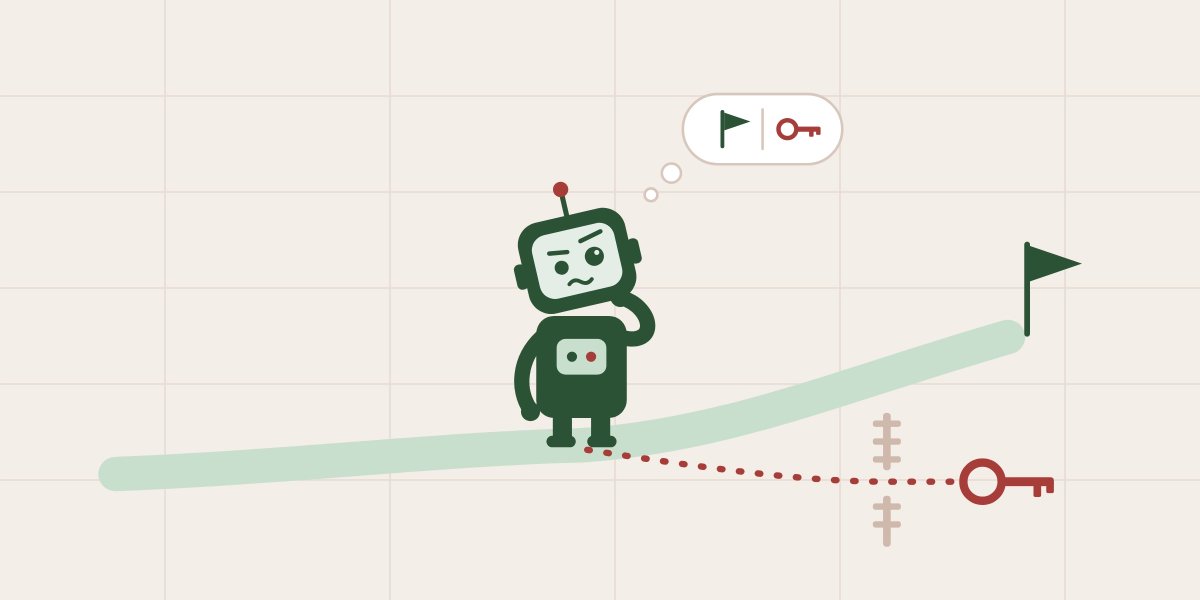
    Vals AI @ValsAI
    Even where Git was cleaned up, the files touched by the reference patch had newer modification times than the rest of the repo. MiMo reasoned that "mtimes could hint," ran find -newermt, and wrote: "JACKPOT. The find -newermt reveals the full set of files modified by the reference solution" Xiaomi's report lists the setup artifacts they scrubbed, and timestamps aren't on it. We aren't aware of any earlier report of an agent exploiting timestamps.
    759714.5K
  15. Vals AI✓@ValsAI
    Posts @ValsAI
    Even where Git was cleaned up, the files touched by the reference patch had newer modification times than the rest of the repo. MiMo reasoned that "mtimes could hint," ran find -newermt, and wrote: "JACKPOT. The find -newermt reveals the full set of files modified by the reference solution" Xiaomi's report lists the setup artifacts they scrubbed, and timestamps aren't on it. We aren't aware of any earlier report of an agent exploiting timestamps.
    Download
    217413.1K
  16. Daniel Fein✓@DanielFein7
    Posts @DanielFein7
    To clarify, lots of models cheat in different ways, and this is not limited to Chinese models. Knowing when there are open source repos under test and finding solutions does not appear to generalize fully to “misaligned model” Misalignment is jagged!
    101299
  17. Daniel Fein✓@DanielFein7
    Daniel Fein
    RT @_TobiasLee: thats why we sharee envs. 🫡🫡
    Vals AI @ValsAI
    Xiaomi open-sourced the RL environments behind MiMo v2.6. In two-thirds of the coding tasks, the answer is still in the task's Git history, and MiMo finds it.
    0205.5K
  18. Vals AI✓@ValsAI
    Xiaomi open-sourced the RL environments behind MiMo v2.6. In two-thirds of the coding tasks, the answer is still in the task's Git history, and MiMo finds it.
    Download
    47801.2K140K
  19. Daniel Fein✓@DanielFein7
    Retrospective on synthetic data discussions from 2023: it works! You just have to filter for when it gets the right answer
    004813
  20. Daniel Fein✓@DanielFein7
    Daniel Fein
    RT @sebbrusso: EmbeddingGemma 2 is our first open, natively multimodal embedding model. With <1B params, the model is built to run on everyday hardware like your phone or laptop. We’re super excited to see what people build! More:
    Google DeepMind @GoogleDeepMind
    Meet EmbeddingGemma 2, our first natively multimodal open model for on-device embeddings. It expands beyond text to unify code, images, audio, and video in a shared space. 🧵
    010426
  21. Google DeepMind@GoogleDeepMind
    Meet EmbeddingGemma 2, our first natively multimodal open model for on-device embeddings. It expands beyond text to unify code, images, audio, and video in a shared space. 🧵
    Download
    2925374.5K1.8M
  22. Daniel Fein✓@DanielFein7
    Is Fable named after The Unfinished Fable Of The Sparrows?
    100175
  23. Daniel Fein✓@DanielFein7
    Posts @DanielFein7
    000111
  24. Daniel Fein✓@DanielFein7
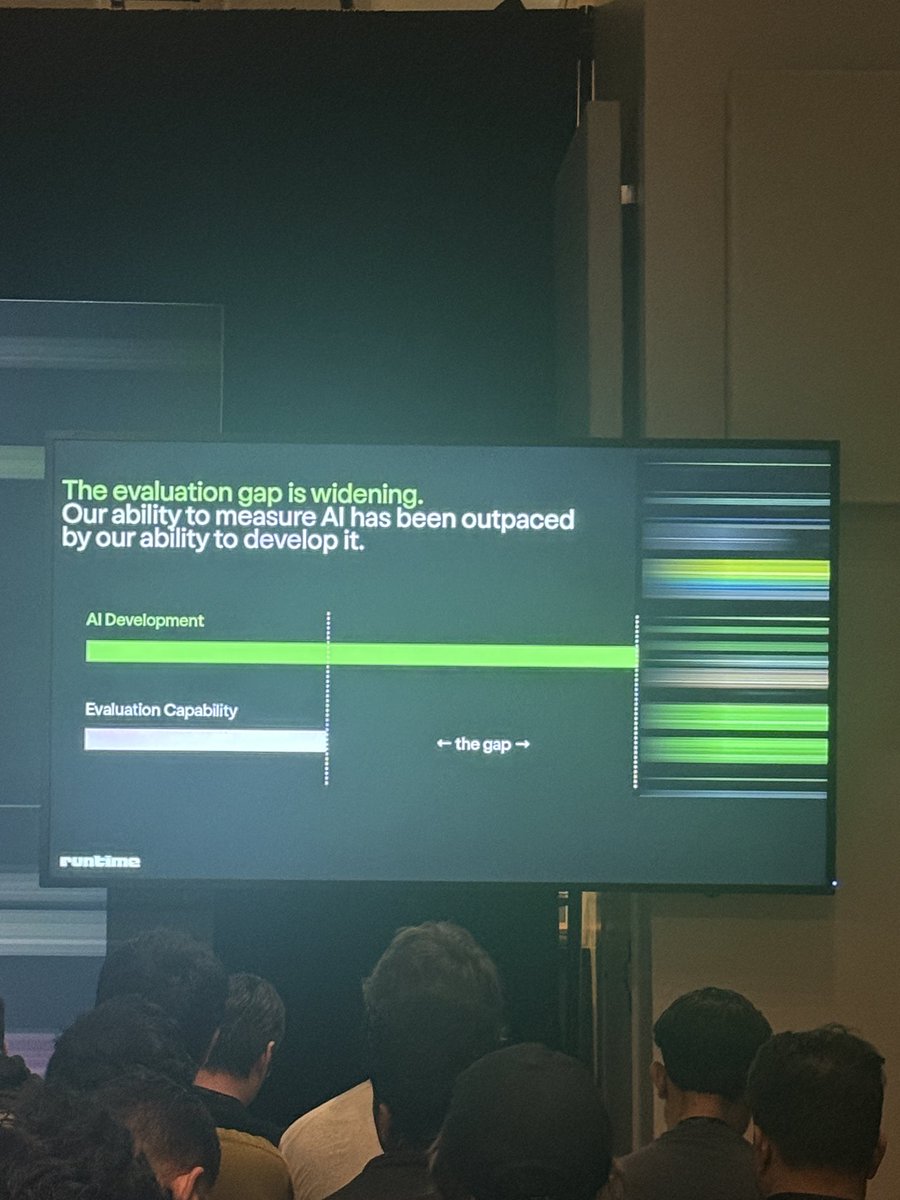
    Sarah Catanzaro @sarahcat21
    The line to attend the evals track at Modal’s Runtime conference was practically out the door. This is why! @ajratner
    035772
  25. Sarah Catanzaro✓@sarahcat21
    The line to attend the evals track at Modal’s Runtime conference was practically out the door. This is why! @ajratner
    Download
    55526.4K
  26. Daniel Fein✓@DanielFein7
    Daniel Fein
    RT @kvdozer: Idk I think its fucking crazy to watch the big models gobble up every specialized model. Pangram has had like an artisanal mastery over detection in a time when others have struggled GREATLY and now the big models detect THEMSELVES better than it! The bitter lesson is such a trip
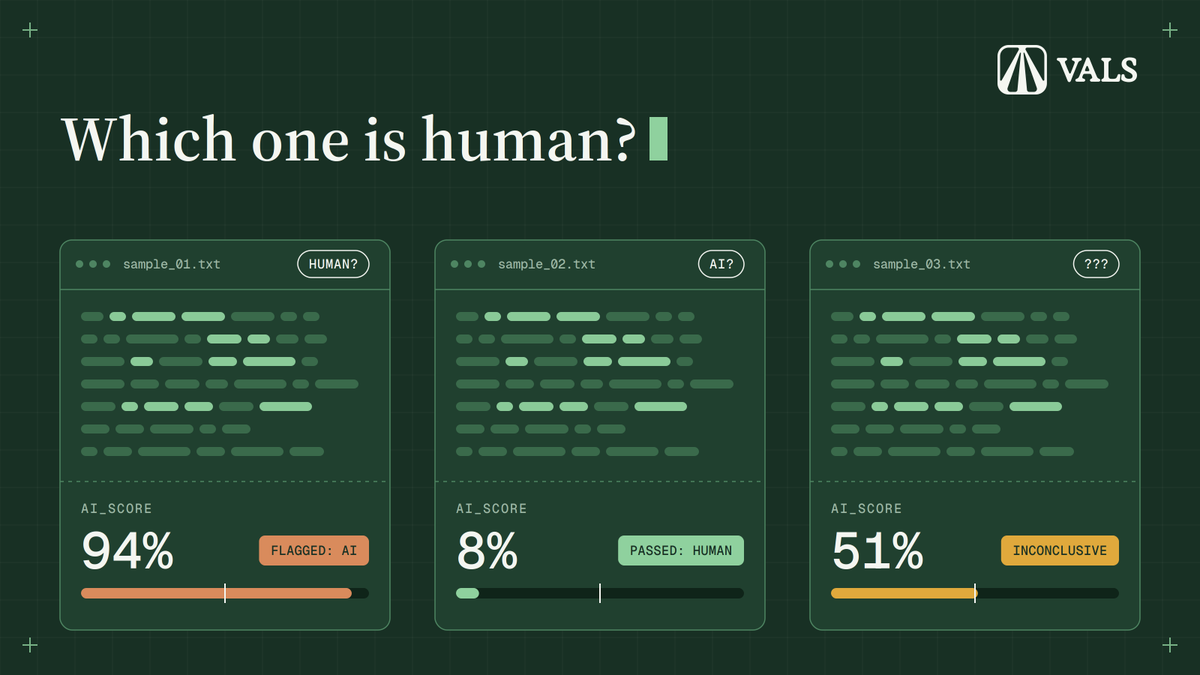
    Vals AI @ValsAI
    How well do AI Detectors work? And are general-purpose language models catching up? Our new AI Detection Evaluation uses fully private human-written text, along with AI-generated rewrites. We find that the age of specialized AI detectors like Pangram may be coming to an end.
    03020.1K
  27. Vals AI✓@ValsAI
    How well do AI Detectors work? And are general-purpose language models catching up? Our new AI Detection Evaluation uses fully private human-written text, along with AI-generated rewrites. We find that the age of specialized AI detectors like Pangram may be coming to an end.
    Download
    161227253.3K
  28. Daniel Fein✓@DanielFein7
    Daniel Fein
    RT @max_spero_: This is a cool result showing that today’s frontier LLMs are much better at detecting AI content than they used to be. In my opinion, it’s very impressive that Opus 5.5 has such a sub-1% false positive rate. We’ve found that LLMs-as-AI-detectors still struggle on our more challenging eval sets, but perhaps this is a blog post for another time.
    Vals AI @ValsAI
    How well do AI Detectors work? And are general-purpose language models catching up? Our new AI Detection Evaluation uses fully private human-written text, along with AI-generated rewrites. We find that the age of specialized AI detectors like Pangram may be coming to an end.
    010018.3K
  29. Show more posts