Natural Philosophy✓

@Naturalphilosy

Exploring the beauty and absurdity of the human condition.

  • The Himalayas
  • Joined
1 Following55.5K Followers1.5K Posts
  1. Natural Philosophy✓@Naturalphilosy
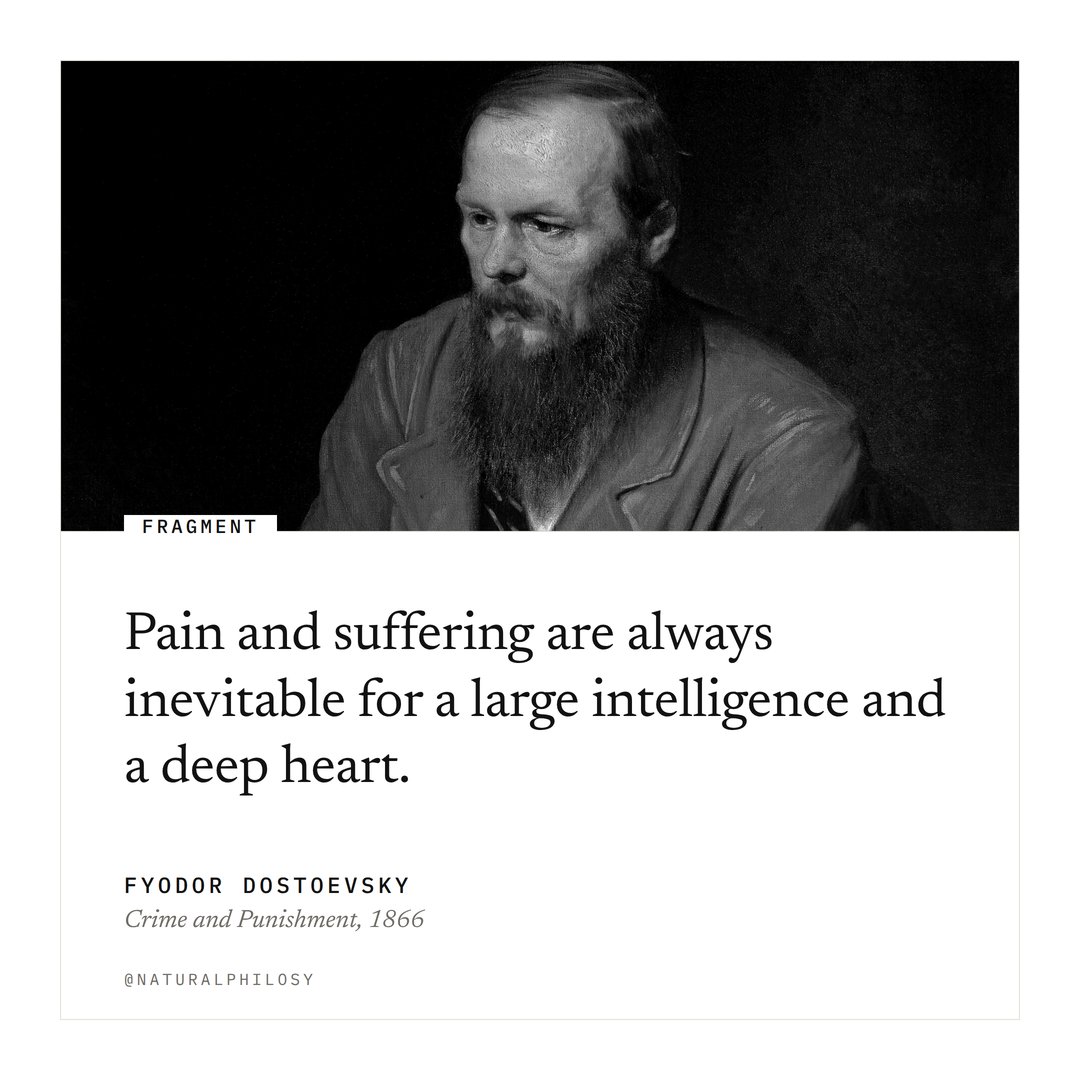
    Dostoevsky wrote Crime and Punishment in 1866 while hiding from debt collectors in St. Petersburg, having gambled away his advance and surviving on stale bread and tea. He was alarmed by the new generation of Russian radicals who believed that human misery could be engineered out of existence through cold, utilitarian logic. In the novel, Raskolnikov tests that theory by committing murder based on intellectual calculation, only to watch his psyche instantly collapse. During his interrogation with the investigator Porfiry Petrovich, he admits the hidden tax of depth. An expanded intellect does not liberate the individual from suffering; it simply widens the surface area for grief.
    Download
    15181.1K
  2. Natural Philosophy✓@Naturalphilosy
    Kazantzakis wrote Zorba the Greek during the Axis occupation of Greece, living on the island of Aegina while mass famine devastated the country. He based the story on his own failure as an intellectual. He had spent decades buried in books, Buddhist asceticism, and abstract philosophy, completely detached from physical vitality until he met George Zorbas, an uneducated miner who lived entirely through his senses. Sitting on a Cretan beach watching his companion eat, Kazantzakis was struck by the bizarre mechanics of human embodiment. The body is a biological furnace that takes in dead matter (fish, bread, radishes) and mechanically converts those raw calories into grief, laughter, and metaphysical longing.
    Download
    15141.5K
  3. Natural Philosophy✓@Naturalphilosy
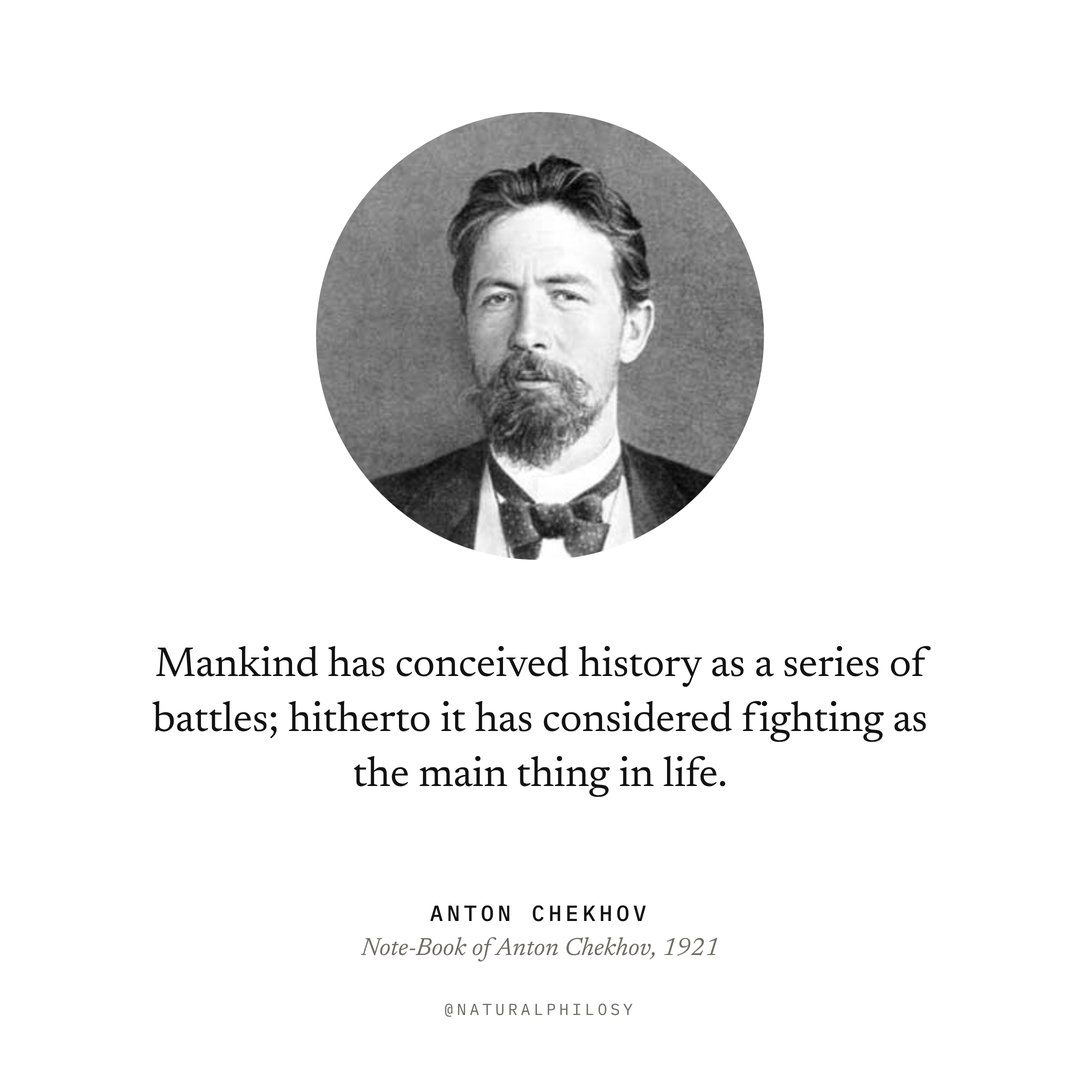
    Chekhov spent much of his adult life as an active physician, treating cholera epidemics, cataloging the brutalized convicts of Sakhalin Island, and planting orchards. He realized through that work that human memory is structurally defective. We fill our history books with generals, sieges, and border disputes, elevating warfare into the main event of human existence. Meanwhile, the actual architecture of civilization (medicine, agriculture, sanitation, and the labor of daily survival) is dismissed as mere scenery.
    Download
    0171.5K
  4. Natural Philosophy✓@Naturalphilosy
    In the Sermon on the Mount, Christ warns against the folly of building your house on sand. In 1969, blind and running the National Library of Argentina, Jorge Luis Borges offered a quiet correction. There is no stone. Every civilization, philosophy, love, and life is constructed atop shifting, entropic dust. The universe provides zero permanent foundations. Yet Borges refuses nihilism. The ultimate dignity of human consciousness isn’t throwing your hands up in despair but picking up the tools and building anyway, fully aware that the tide will wash it all away.
    Download
    18403.3K
  5. Natural Philosophy✓@Naturalphilosy
    Hesse wrote Demian under a pseudonym in 1919 after surviving a total nervous breakdown and months of Jungian analysis during the First World War. Most people imagine self-realization as a gentle awakening. Hesse understood it as an act of violence. The inherited values of your family, your culture, and your pristine childhood aren't a foundation to build on, they're a shell. If you want to become a sovereign individual, you don’t get to preserve your comfort. You have to actively demolish the moral container that kept you safe.
    Download
    812712.6K
  6. Natural Philosophy✓@Naturalphilosy
    When John Gay died suddenly in the winter of 1732, Alexander Pope sat down with Dr. John Arbuthnot to write to Jonathan Swift in Dublin. Pope, already crippled by spinal tuberculosis, wasn’t interested in polite condolences. He was confronting the horror of outliving his circle. To Pope, death isn’t a clean break at the finish line. It’s a slow, quiet amputation. Every time you bury an intimate friend, you bury the specific version of yourself that only existed in their presence. By the time you actually leave the stage, most of you is already dead.
    Download
    02211.8K
  7. Natural Philosophy✓@Naturalphilosy
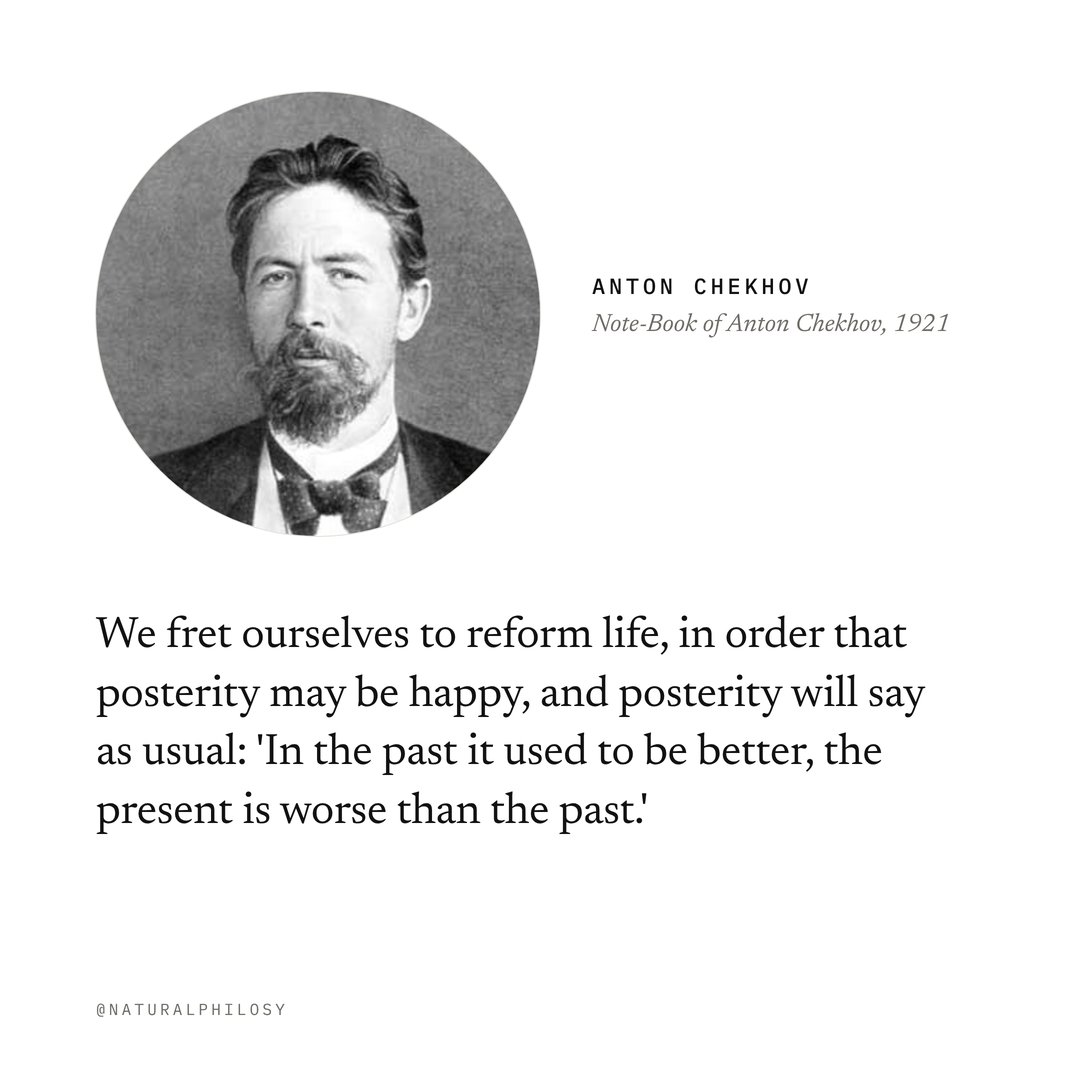
    Jotted in his private diaries during the 1890s while battling advancing tuberculosis, these unvarnished notations were Chekhov’s observations on human vanity, published posthumously in 1921 by Leonard and Virginia Woolf’s Hogarth Press. As both a physician and a dramatist of Russian stagnation, Chekhov observed the 19th-century intelligentsia exhaust their lives in philosophical fever dreams, endlessly deferring immediate vitality in the comforting belief that their personal suffering would construct a paradise for the unborn. So you get Chekhov’s icy autopsy of historical optimism. Human psychology is structurally incapable of sustained contentment; each generation invariably discounts the systemic progress built by its ancestors and invents a mythical, golden past to mourn. To martyr the living present on the altar of posterity is the supreme tragic misunderstanding of the human animal.
    Download
    1191.6K
  8. Natural Philosophy✓@Naturalphilosy
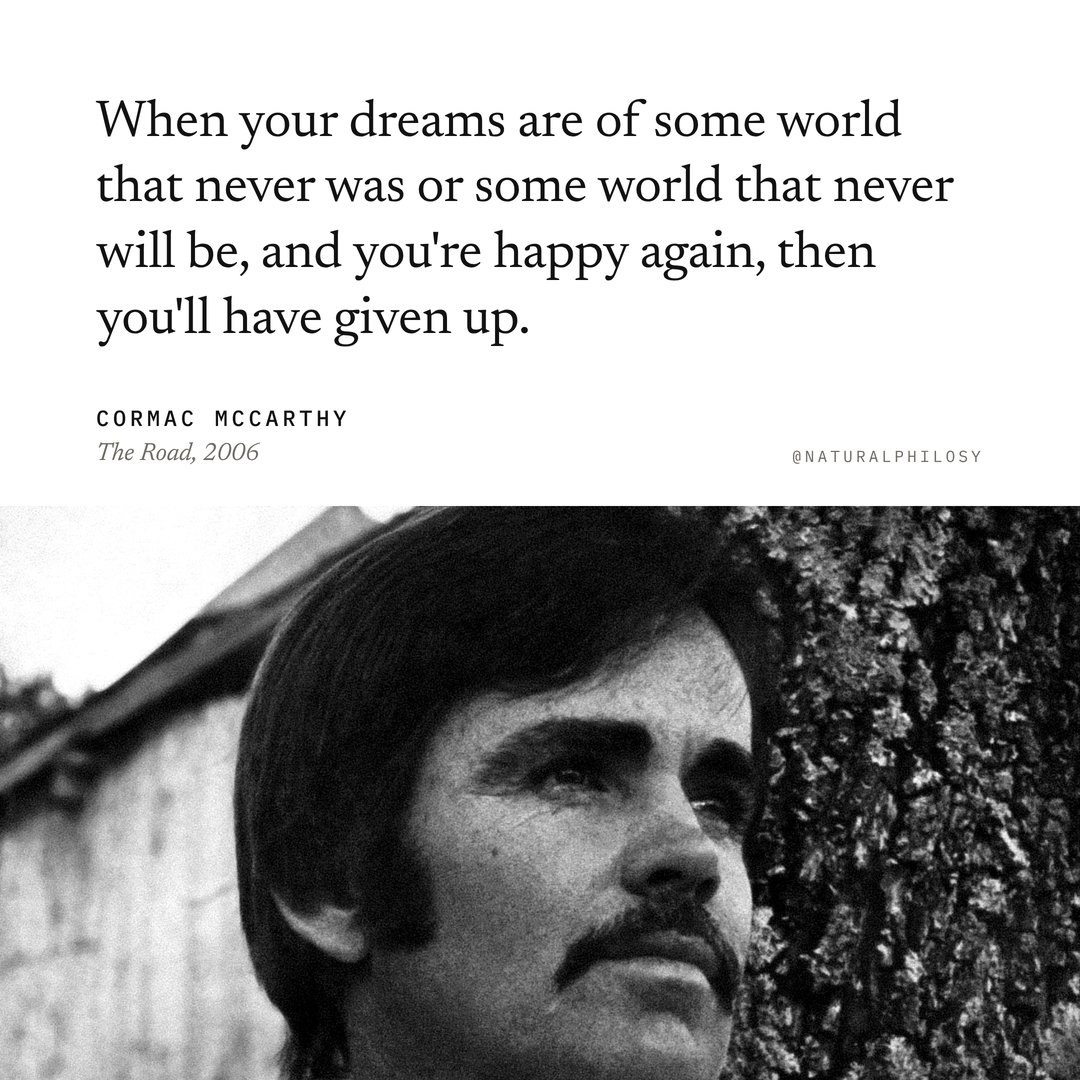
    Conceived during a stay in El Paso with his young son in the early 2000s, The Road was McCarthy’s confrontation with parental vulnerability, ecological death, and moral duty in a world stripped of civilizational scaffolding. Pushing a shopping cart through a dead, ash-choked continent with his starving boy, the father audits his own subconscious with clinical dread. What follows is McCarthy’s uncompromising anatomy of existential endurance. To allow oneself the luxury of phantom happiness is to accept the anesthesia of despair. True resilience derive from the brutal, sleepless lucidity required to keep carrying the fire through the dark.
    Download
    41211.7K
  9. Natural Philosophy✓@Naturalphilosy
    Written between 1880 and 1881 in Genoa and the Swiss Alps following Nietzsche’s resignation from Basel due to blinding migraines and physical collapse, Daybreak (Morgenröthe) represents his deliberate break from metaphysical systems and his inaugural descent into psychological free-thought. In Aphorism 573, Nietzsche strips epistemology of intellectual romance by anchoring consciousness directly in zoological law. Using the reptile’s physical necessity of ecdysis, shedding hardened scales to allow biological expansion, he demonstrates that cognitive survival requires the perpetual destruction of outgrown worldviews.
    Download
    0291.5K
  10. Natural Philosophy✓@Naturalphilosy
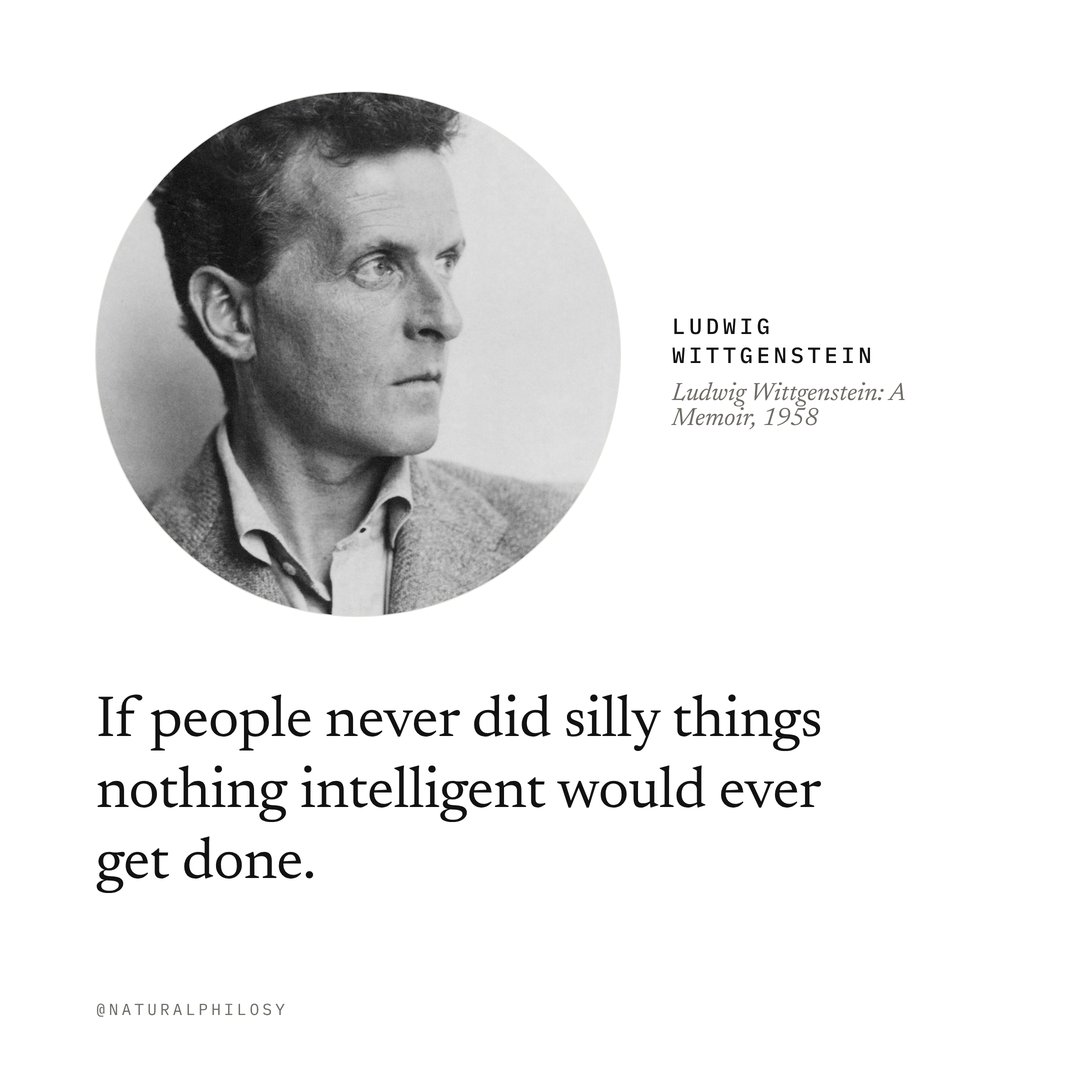
    Recorded during Wittgenstein’s later Cambridge years and preserved in Norman Malcolm’s 1958 memoir, this remark emerged not from lighthearted whimsy, but from Wittgenstein’s chronic, agonizing contempt for professional academic pretension and sterile intellectualism. During his informal walks with Malcolm, Wittgenstein routinely attacked the rigid dignity of Cambridge academics who guarded their reputations through cautious conventionality. He observed that profound conceptual breakthroughs require leaving the safe, manicured pathways of established thought and venturing into undignified, erratic, and seemingly absurd cognitive territory. What appears on the surface as an amusing quip is actually an austere diagnostic of epistemic discovery. High-order intelligence is not an orderly, pristine deduction; it is an emergent byproduct of friction, error, and messy behavioral variation. To insulate oneself from the indignity of making mistakes is to guarantee cognitive stagnation.
    Download
    16371.9K
  11. Natural Philosophy✓@Naturalphilosy
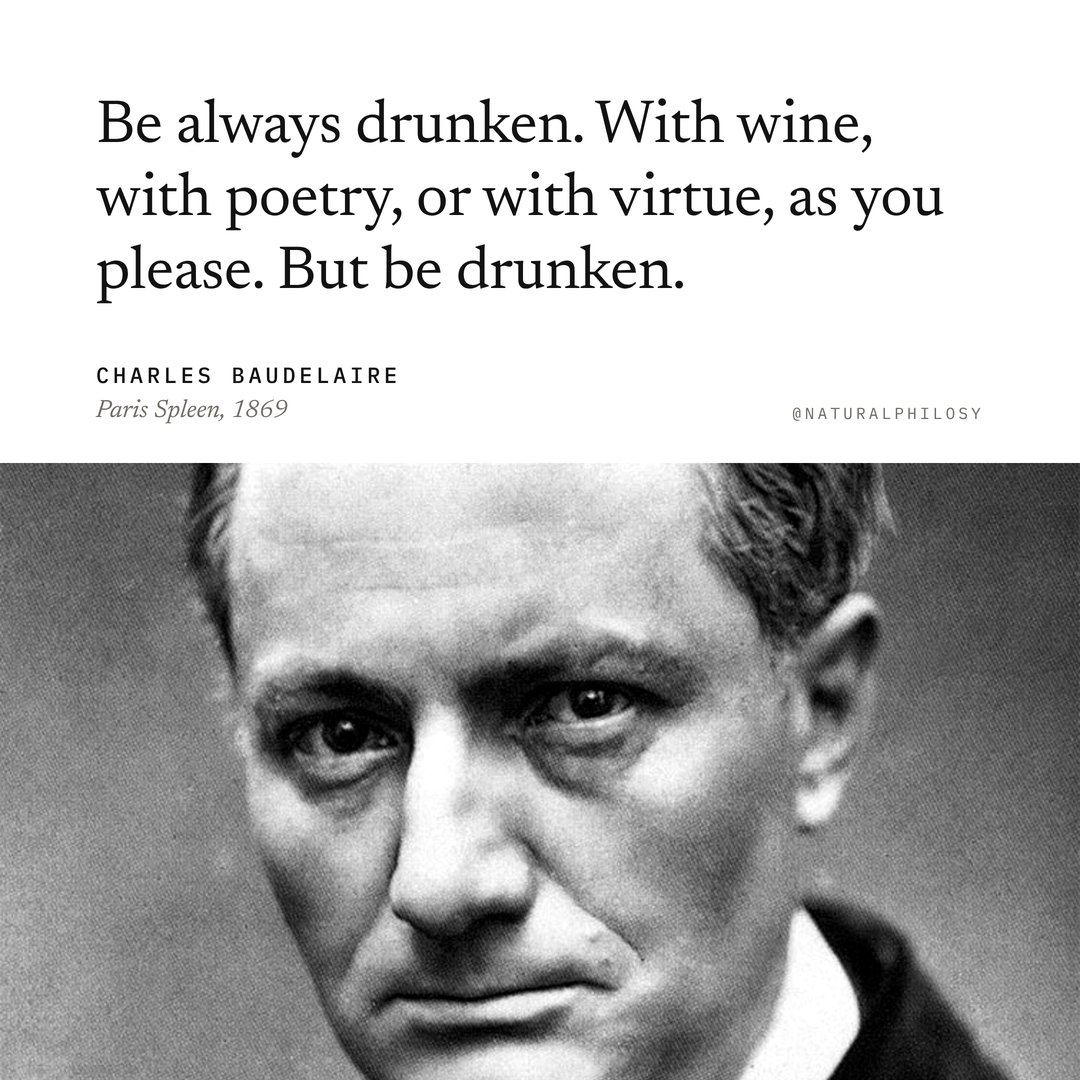
    Written in the 1860s while Baudelaire was physically collapsing from neurosyphilis, hounded by creditors, and wandering the sterile, commodified boulevards of Haussmann’s newly modernized Paris, Le Spleen de Paris was an attempt to invent a prose form elastic enough to mirror the psychic fracturing of urban life. In the prose poem “Enivrez-vous,” Baudelaire strips away conventional bourgeois morality to confront the universal antagonist of human consciousness: the physical weight of Time. He diagnoses human mortality not as an abstract future event, but as an immediate gravitational pressure steadily breaking the spine of the living animal and bending it toward the grave. What follows is Baudelaire’s unvarnished post-mortem on psychological survival. Equating moral righteousness, artistic creation, and chemical inebriation as functionally identical coping mechanisms, he argues that perpetual intoxication is the baseline requirement for sanity. To exist in a state of naked, sober lucidity is to surrender to the torturing cadence of the clock.
    Download
    24191.6K
  12. Natural Philosophy✓@Naturalphilosy
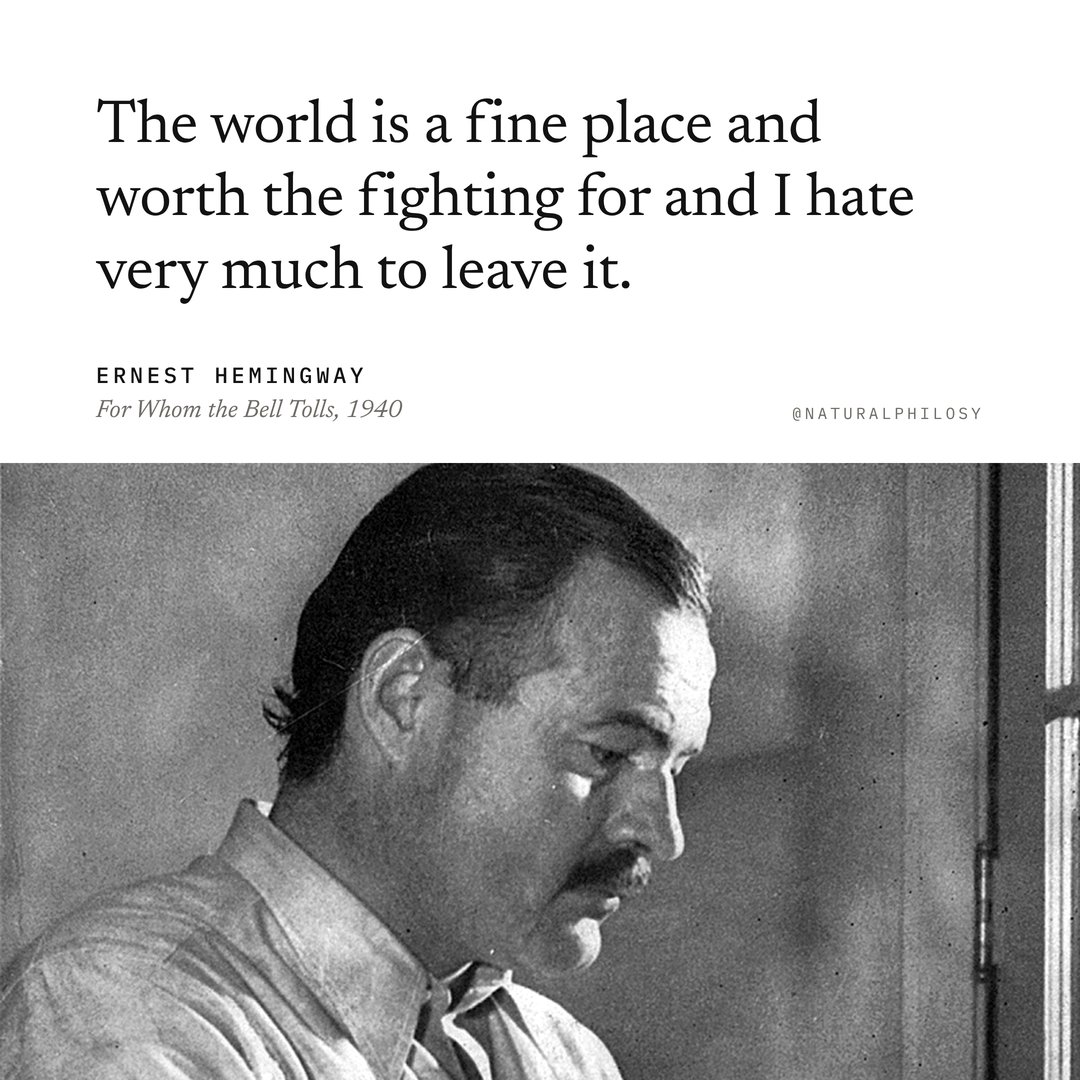
    Written in 1939 following his firsthand reporting on the brutal collapse of the Spanish Republic, For Whom the Bell Tolls was Hemingway’s deliberate attempt to strip ideological warfare of political romance and record its unvarnished human cost. In the novel’s final chapter, Robert Jordan lies propped against a pine tree with a shattered leg, a submachine gun across his chest, waiting to ambush an approaching fascist cavalry patrol. Having sent the surviving partisans ahead to safety, he refuses suicide, choosing instead to hold the rear guard. What follows is Hemingway’s study in terminal agency. Propped on the forest floor, Jordan conducts a cold, interior post-mortem on his life and ideals, arriving at an austere psychological peace.
    Download
    1491.6K
  13. Natural Philosophy✓@Naturalphilosy
    In this second installment of Beckett’s postwar trilogy, the dying narrator, Malone, lies immobilized in an unidentified room, armed only with an exercise notebook and a blunt pencil. Resigned to biological extinction, Malone attempts to fill his remaining hours by inventing detached fictional sketches (the stories of Sapo and later Macmann) interspersed with meticulous, clinical inventories of his meager physical possessions. As physical sensation ebbs away, the boundaries between the narrator and his invented avatars steadily collapse. Beckett systematically deconstructs the traditional machinery of the novel, presenting death not as a climactic spiritual or psychological epiphany, but as a slow, indifferent deceleration of linguistic and cognitive faculties into total silence.
    Download
    02151.5K
  14. Natural Philosophy✓@Naturalphilosy
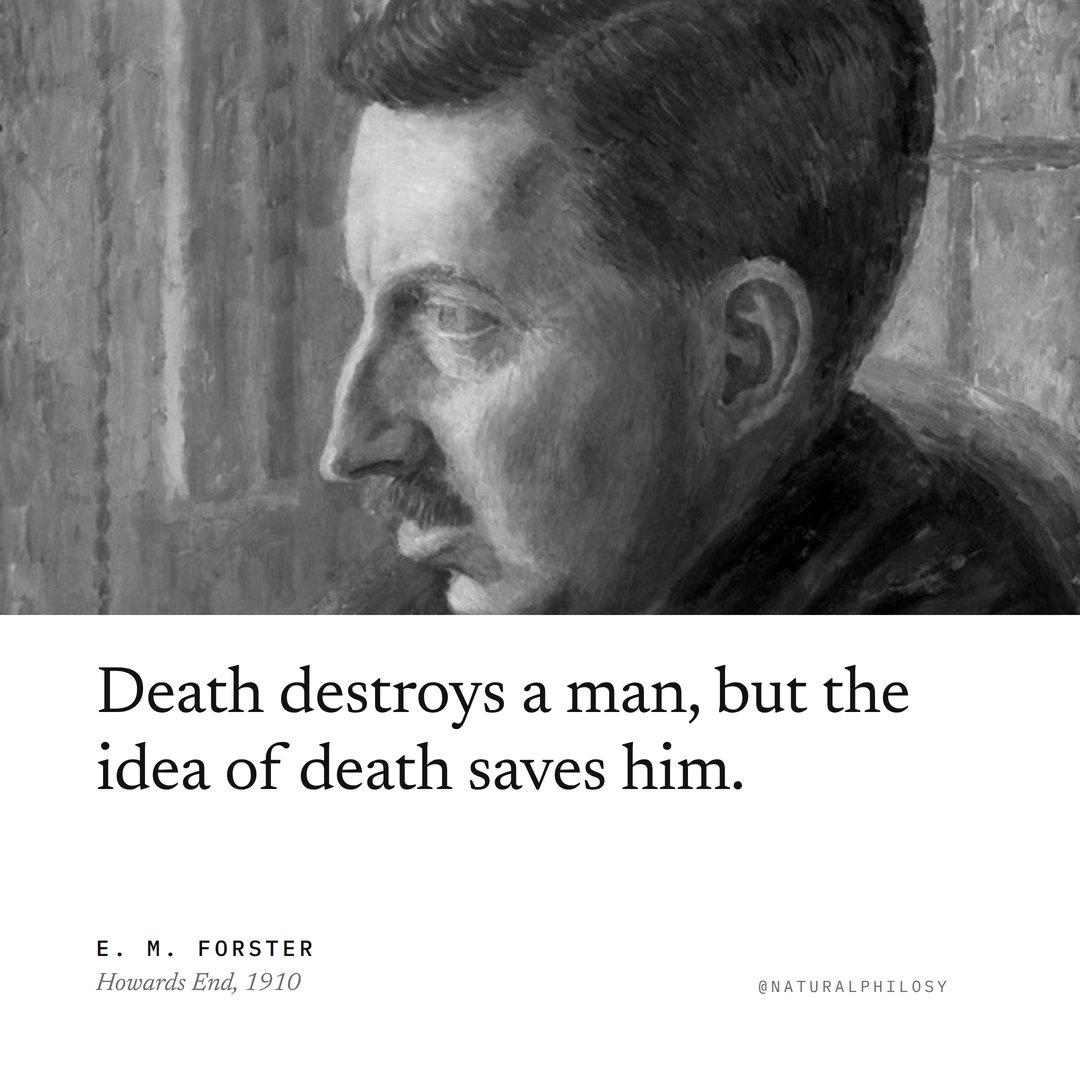
    Howards End, 1910. Forster published five novels by 1924 and then no more for the forty six years he had left. A sixth, Maurice, sat finished in a drawer from 1914 and came out only after he died.
    Download
    03171.7K
  15. Natural Philosophy✓@Naturalphilosy
    Recorded less than a month before Einstein’s death by LIFE editor William Miller, this archival record documents Einstein counseling a young college student on the orientation of consciousness in a commercialized world. Einstein warns against the narrow pursuit of careerism and material prestige, diagnosing the social idolization of “success” as an ethical dead-end. He argues that genuine individual fulfillment is an emergent byproduct of service to the broader human ecosystem, urging the preservation of uninhibited curiosity, the contemplation of cosmic mystery, and the cultivation of intellectual humility.
    Download
    08261.9K
  16. Natural Philosophy✓@Naturalphilosy
    The sentence immediately before the last line of The Myth of Sisyphus. Camus was twenty-eight when he finished it, working as a journalist and unable to publish under his own name in Algeria.
    Download
    14272.1K
  17. Natural Philosophy✓@Naturalphilosy
    Poetic Manifesto, written in 1951. Thomas was born in Swansea in 1914. His play for voices Under Milk Wood was first read in public in New York in May 1953, six months before his death.
    Download
    01132K
  18. Natural Philosophy✓@Naturalphilosy
    Written around 1863 in Amherst, Massachusetts, and not published until after her death in 1886. Fewer than a dozen of her poems appeared in print while she lived. About 1,800 were found afterwards.
    Download
    00141.6K
  19. Natural Philosophy✓@Naturalphilosy
    Dmitri Karamazov says it to his brother Alyosha early in the novel, half drunk. Dostoevsky finished the book in November 1880 and died four months later, before writing the sequel he had planned.
    Download
    22262K
  20. Natural Philosophy✓@Naturalphilosy
    From Jean-Christophe, the ten-volume novel Rolland published between 1904 and 1912. He won the Nobel Prize in Literature for 1915 and spent the First World War in Switzerland writing against it.
    Download
    0071.4K
  21. Show more posts