Ross Haber✓

@RossHaber

Mentored by the founder of CANSLIM. Co-authored one of the 'Model Books of Greatest Stock Market Winners' at WON + Co. Co-founder @TraderLion & @Deepvue

625 Following46.3K Followers947 Posts
  1. Ross Haber✓@RossHaber
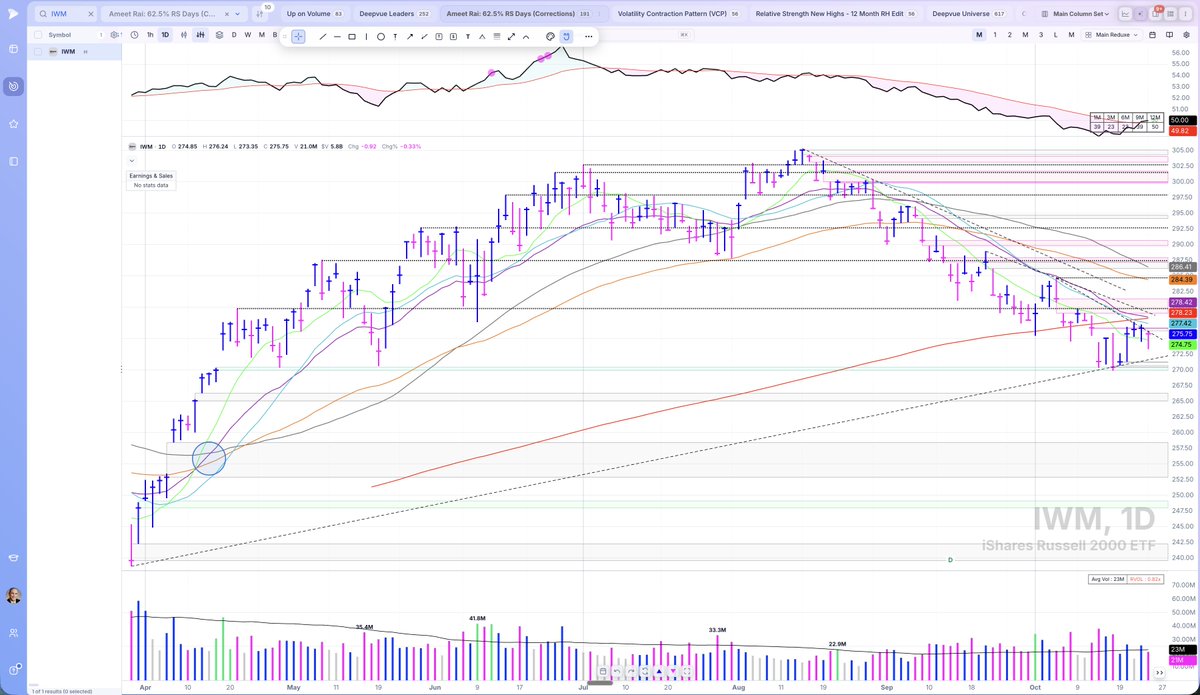
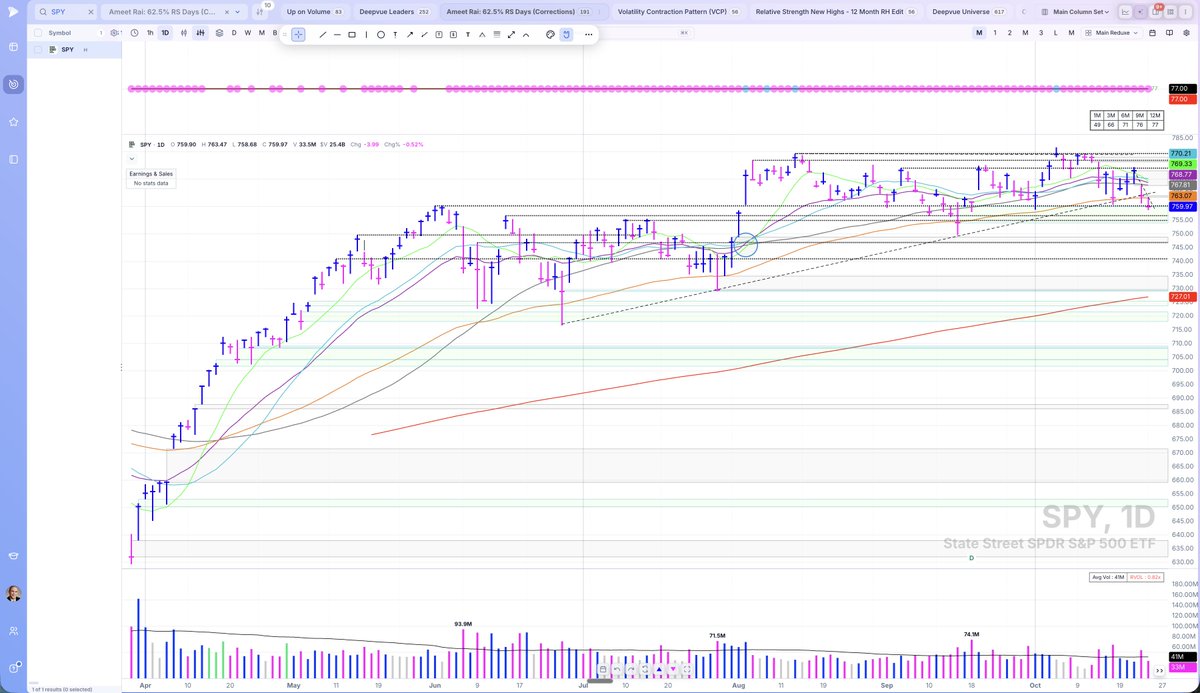
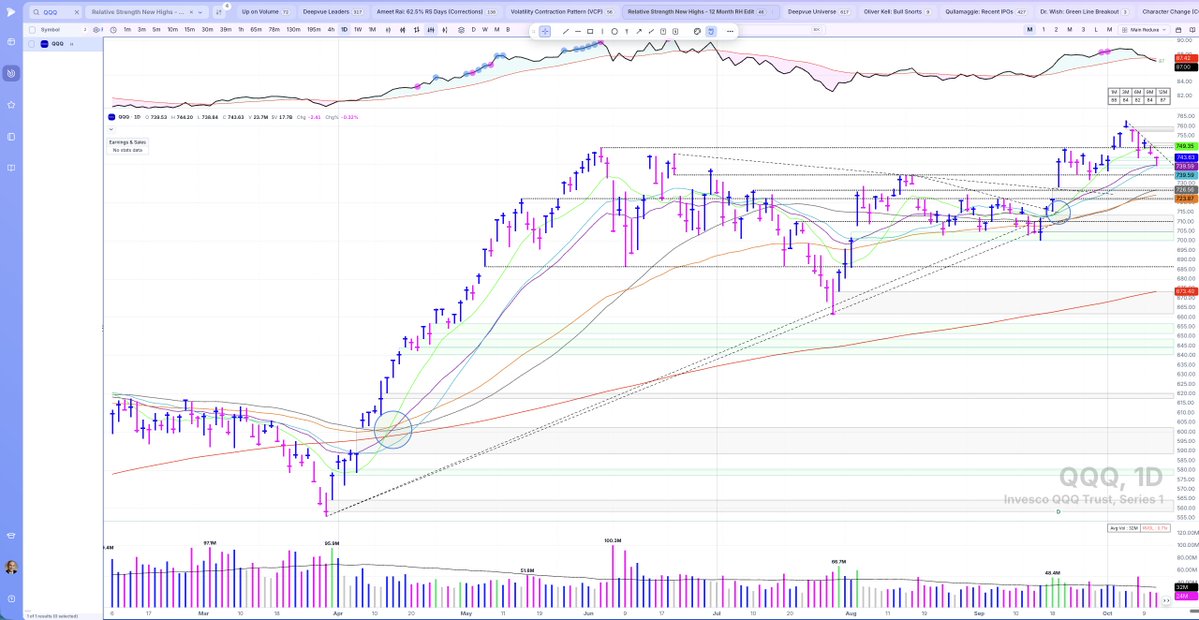
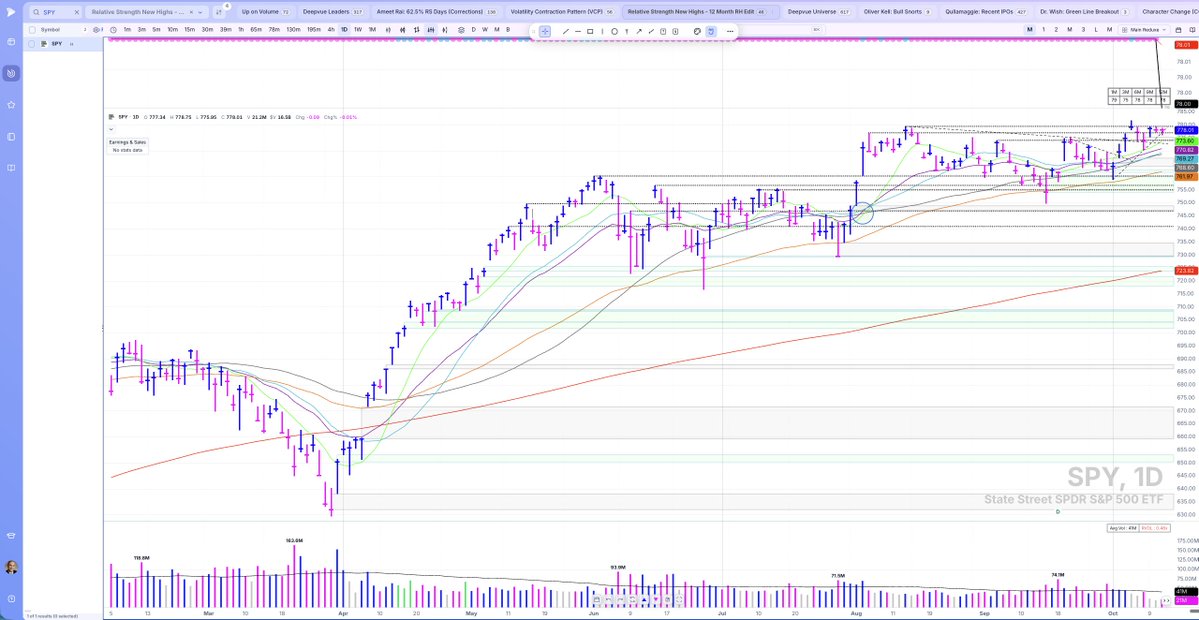
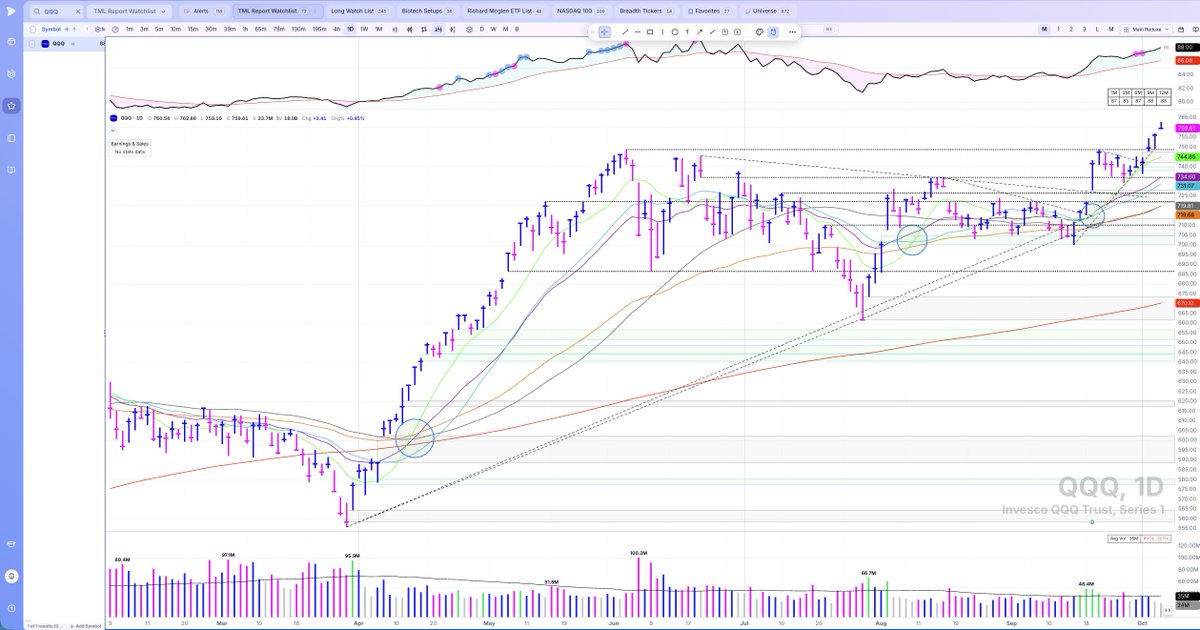
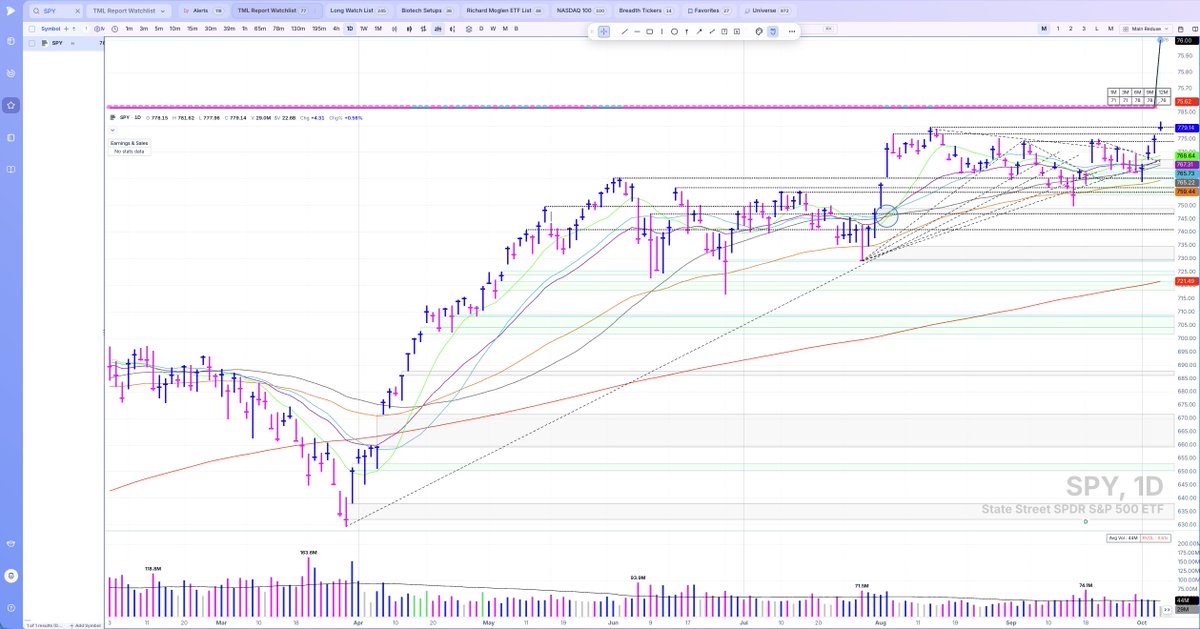
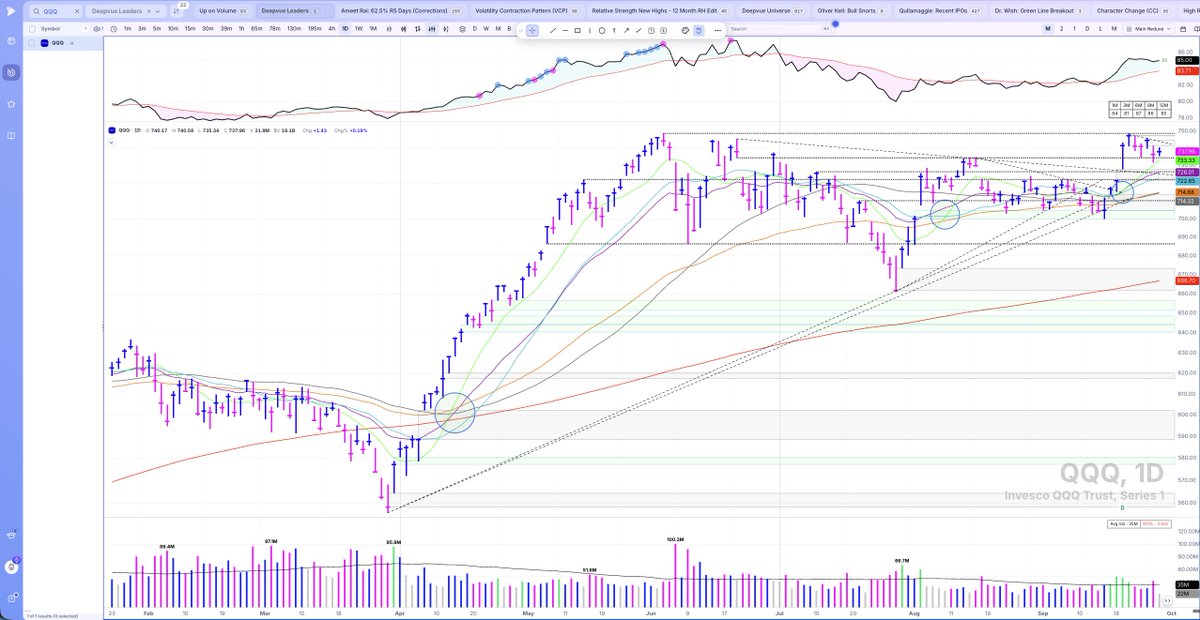
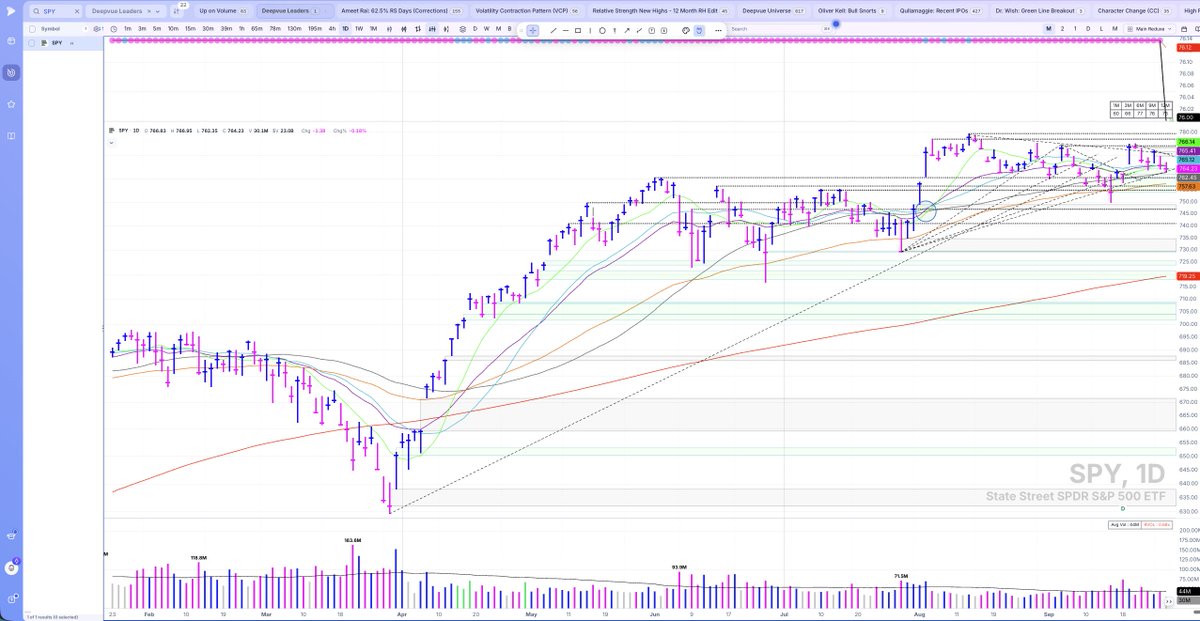
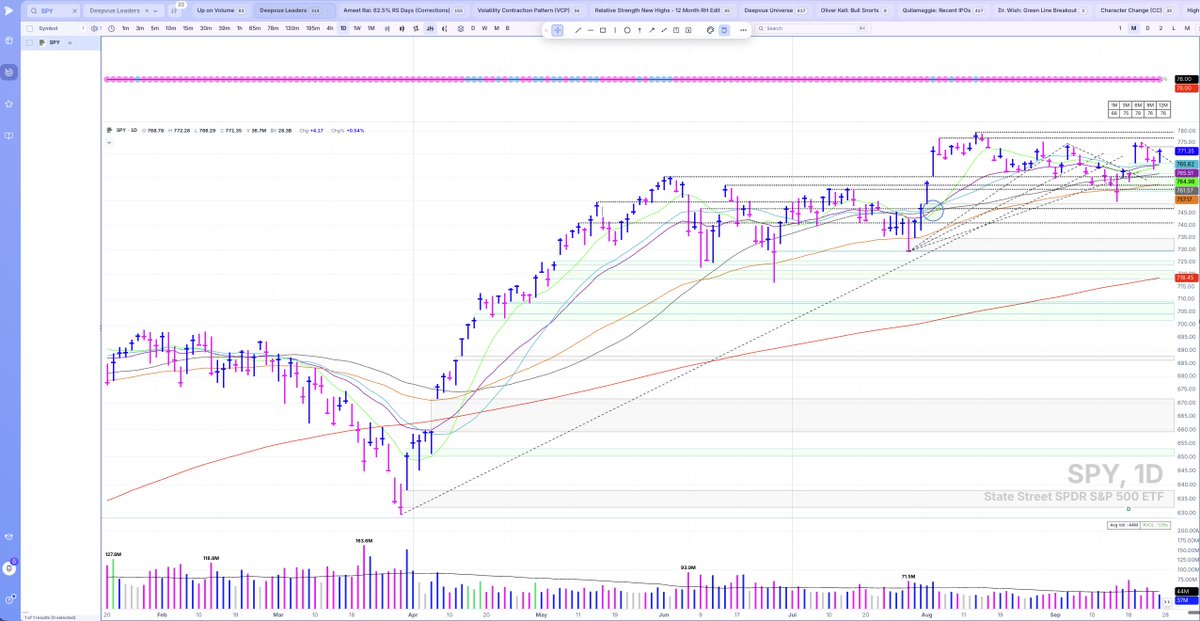
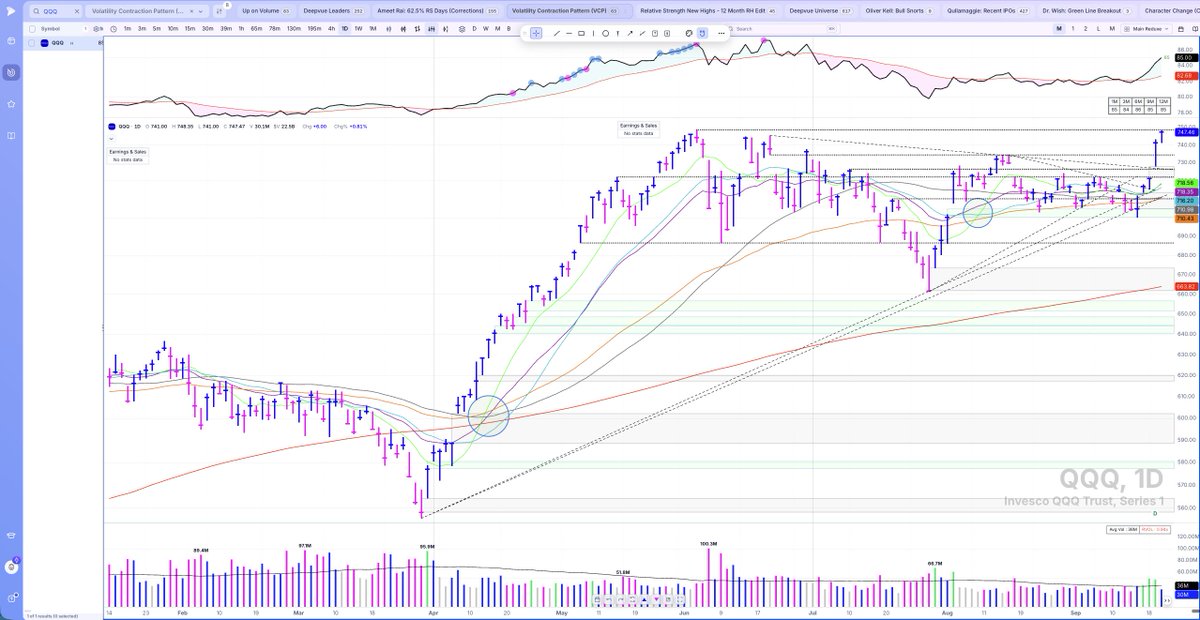
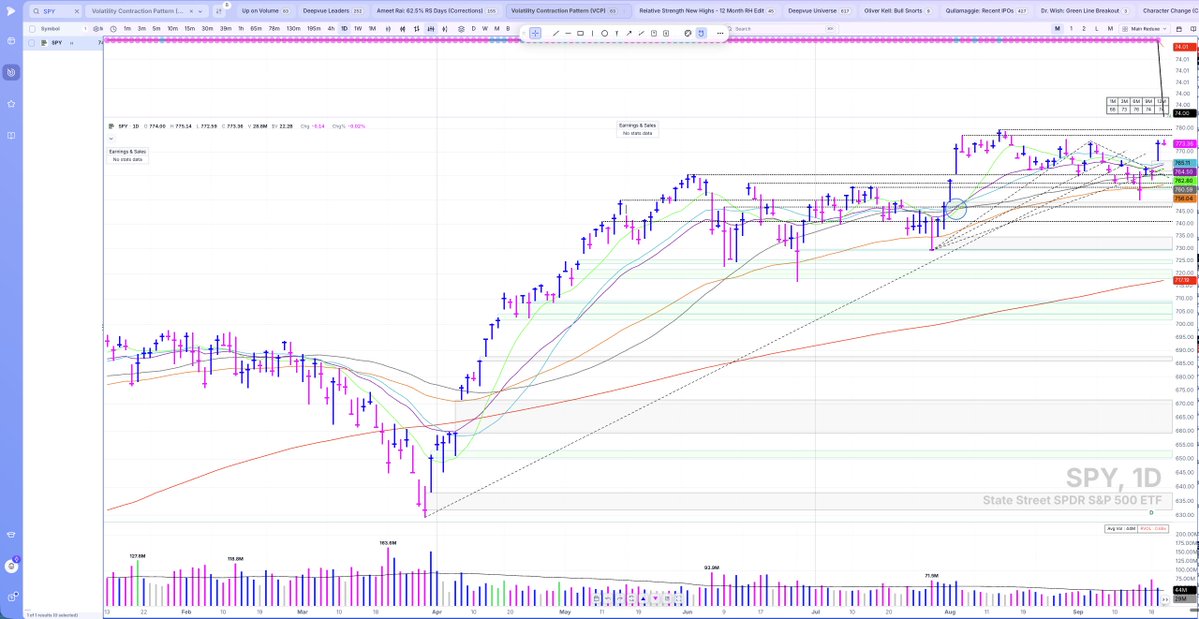
    The Nasdaq and S&P 500 rallied over the past two sessions, with the S&P 500 reclaiming all its key moving averages. The Nasdaq, however, remains below its 50-day SMA. The Russell 2000 reclaimed its 200-day SMA and declining tops trendline but continues to trade below its declining 50-day SMA and 65-day EMA. The Dow, while less relevant to my overall market assessment, continues to consolidate tightly on light volume above its declining tops line and key moving averages, which are converging just beneath price and could provide a launchpad for a move higher. Breadth remains weak. Today’s session ended with 128 new highs versus 314 new lows. Deepvue’s stage analysis dashboard paints a similar picture: 55% of stocks are in Stage 4 declines, compared with just 29% in Stage 2 uptrends. Another 15% are forming Stage 3 tops, while only 1% are building Stage 1 bottoms. The recent index rebound has yet to translate into broader market improvement. Even so, I still see a surprising number of sound setups among leading growth stocks. Software remains strong, particularly cybersecurity, although some names are becoming extended in the short term. Biotech and genomics stocks are beginning to show potential as possible sources of renewed leadership. Specialty retail and select technology groups are also producing constructive setups, including strength in some leading semiconductor names. Tonight’s Focus List highlights several of these opportunities. With the FOMC decision due tomorrow at 2 p.m. ET, earnings season in full swing, and midterm elections approaching, several catalysts could influence the market’s next move. I remain in cash but am willing to initiate two or three pilot positions, sizing each at approximately 3%–5% of portfolio equity. The combined value of all positions will remain at or below 15% of portfolio equity. For example, three positions sized at 5% each would use the entire allowance, leaving no room for additional positions without reducing existing exposure. I’ll start small and let the results dictate what comes next.
    Download
    7918110.4K
  2. Ross Haber✓@RossHaber
    As expected, the Nasdaq and S&P 500 rolled over Friday afternoon, setting new swing lows. The Russell 2000 held up better than the two large-cap indexes but remains below its key long-term 200-day SMA. The Dow continues to show the most relative strength among the four major indexes, although it carries less weight in my overall market assessment. Breadth remains troubling. Friday’s session ended with just 170 new highs versus 498 new lows. I’ve also included a screenshot from the stage analysis section of my Deepvue breadth dashboard in the index section below. It shows that 56% of stocks are in Stage 4 declines, underscoring the significant deterioration beneath the surface. Despite the broader weakness, I’m encouraged by the number of constructive setups still emerging among leading traditional growth stocks, particularly in medical/healthcare and software. This weekend’s Focus List highlights several of these opportunities. Still, this is far from a hot deck. As a trend follower and position trader, I’m willing to test the waters with a handful of carefully selected leaders, but I’m not ready to make a meaningful commitment. More active traders may find opportunities in areas showing relative strength, provided their trades continue to make progress. For now, I’ll size individual positions at about 3%–5% of portfolio equity, with total exposure capped at 15%. That is a hard ceiling, not a target; I’ll operate below it unless market conditions and my results justify adding exposure. Any increase will depend on leading stocks following through and the broader market showing tangible improvement. There’s no need to predict the market’s next move. My job is to identify strong leaders, take selective opportunities when they arise, and let the results determine whether I do more.
    Download
    91124320.4K
  3. Ross Haber✓@RossHaber
    Check out my latest blog on how I review my trades here:
    2108112.5K
  4. Ross Haber✓@RossHaber
    The major indexes have rallied over the past couple of sessions but remain below key resistance, with the S&P 500 the lone exception. It holds just above its 50-day SMA, but that narrow margin offers little reassurance given the broader market’s weakness. The Russell 2000 posted the strongest gain today but remains below its 200-day SMA. Meanwhile, the Nasdaq has spent three consecutive sessions below its 50-day SMA and rising bottoms line. Breadth continued to deteriorate, with only 148 new highs versus 376 new lows. The landscape among leading growth stocks has changed little, as reflected in today’s Focus List. Medical and healthcare stocks—particularly biotech and genomics—currently show the most promise. Specialty retail, financial, and insurance stocks continue to perform well. Software names appear to be stabilizing, while many semiconductor stocks remain weak. Given my position-trading and trend-following approach, I prioritize capital preservation. More active traders may find opportunities by following the rotation into areas showing relative strength, but only while making consistent progress and keeping risk under control. I’ll remain on the sidelines until the major indexes show renewed strength and market leadership's health and breadth improve. There’s no need to anticipate a recovery before the price action confirms it. Keep refining your watch lists and tracking the strongest names. When the market turns, be ready to act—but let price action, not anticipation, dictate when you put capital to work.
    Download
    71619110.7K
  5. Ross Haber✓@RossHaber
    The Nasdaq broke decisively below key support at its 50-day SMA and 65-day EMA on heavy volume Friday afternoon. The S&P 500 held up somewhat better, closing below its 50-day SMA but above its 65-day EMA. Small caps continued to lead the market lower, with the Russell 2000 closing at yet another lower low to end the week. The Dow held up best among the four major indexes, but its relative strength matters less given the broader deterioration. Breadth continued to weaken, with 143 new highs versus 460 new lows on Friday. Not only did the major indexes finally break down, but many leaders across traditional growth sectors also succumbed to selling pressure late last week. Defensive groups—including oil and gas, miners, and utilities—led the market Friday. A smaller group of leaders in biotech, restaurants, insurance, and specialty retail continues to show relative strength. However, if selling pressure persists across traditional growth leadership, the major indexes will likely face further downside pressure next week. I was finally forced back to cash and will remain there until the market provides sufficient evidence that taking long exposure is warranted again. No one knows how long that will take, so there’s no reason to rush. For now, cash is king. Keep running your screens, maintain your watch lists, and stay prepared. When the market begins to improve, you want to be ready—not scrambling to catch up.
    Download
    132028419.1K
  6. Ross Haber✓@RossHaber
    Check out my latest blog on Relative Strength here:
    216878.4K
  7. Ross Haber✓@RossHaber
    The Nasdaq pulled back to its 21-day SMA, while the S&P 500 held up in a tight range above its 10-day SMA. The Russell 2000 rolled over and is once again trading below key long-term support at its 200-day SMA. Meanwhile, the Dow’s gap-up open quickly faded, turning early strength into a distribution day. Market breadth continued to deteriorate, with only 140 new highs versus 557 new lows. Weakness among leading semiconductor names weighed on the Nasdaq. On a positive note, many of these stocks bounced late in the session, but it remains to be seen whether they can regain their footing and move higher. Leading fiber-optic and photonics names that had been showing promise also broke down over the past few days, including LITE, VIAV, and CIEN. Unfortunately, oil and gas, materials, and utilities led the market today. Most leading software names continue to hold up well despite the recent weakness, while mega-cap technology stocks show relative strength. Beyond these areas, however, little in traditional growth is performing well. The major indexes remain bifurcated, breadth continues to deteriorate, and leadership has weakened overall this week. I haven’t been stopped out of any positions, but the current market action has given me no reason to increase exposure. For now, capital preservation takes priority over pressing for new opportunities. I’ll continue to monitor how leading growth stocks respond at key support levels and wait for the market to demonstrate renewed strength before taking on additional risk. Stay patient, respect your stops.
    Download
    13520117.7K
  8. Ross Haber✓@RossHaber
    The Nasdaq ended the week slightly above its prior all-time high, while the S&P 500 finished just below. The Russell 2000 briefly broke below the confluence of its rising bottoms line, 200-day SMA, and prior swing low on Thursday, but reclaimed that support area before the close in a show of strength. The small-cap index held above support on Friday and rallied. The Dow, meanwhile, found support at its 40-week SMA the week before last and continued higher last week. The industrials are showing slightly better relative strength than small caps, but the difference remains modest. Breadth remains a concern. On Friday, new lows nearly tripled new highs, highlighting the deterioration beneath the surface. Despite this, I continue to see plenty of constructive setups among institutional-quality leaders in semiconductors, software, biotech/pharma, communications equipment, and fiber optics. A surprising number of these leaders continue to hold up well despite the broader market’s weakening breadth. The key question now is whether the Russell 2000 and Dow can sustain their rallies and eventually turn major overhead resistance into support. Their progress will help determine whether the broader market can confirm strength in the Nasdaq and S&P 500. I remain approximately 30% invested and plan to add exposure as conditions warrant. If the Russell 2000 and Dow make meaningful upside progress, I’ll consider increasing my maximum exposure to 70%–80%. I’m unlikely to move to 100% or more until the small caps confirm the new highs in the other major indexes. It would be encouraging to see the Dow confirm as well, but that isn’t a requirement as long as it continues to act constructively. For now, I’ll let the price action guide my next move. Stay selective, manage risk, and increase exposure only as the broader market confirms the strength already evident in leading growth stocks.
    Download
    61221414.3K
  9. Ross Haber✓@RossHaber
    Check out my latest blog on "When Not to Trade" here:
    5158610.5K
  10. Ross Haber✓@RossHaber
    The S&P 500 broke out to a new all-time high this afternoon, confirming the Nasdaq’s strength. The Nasdaq has now posted new all-time highs in each of the last three sessions since breaking out last Friday. The Russell 2000 and Dow have also rallied over the past few sessions, but both remain just below significant overhead resistance. New highs versus new lows remain a concern, but my universe of traditional growth stocks continues to look healthy and broad on a relative basis. Aside from the memory stocks—which are late-stage and therefore more failure-prone at current levels—leading growth stocks continue to act well. Biotech and genomics stocks were hit hard across the board today, although the pullback isn’t surprising given how far many of these names have moved in a short period. More importantly, there is no shortage of institutional-quality leaders in semiconductors and software that continue to build sound bases and make constructive progress. So, while it’s difficult to consider the deck hot with the Russell 2000 still below major resistance and diverging sharply from the Nasdaq and S&P 500, plenty of high-quality leaders are setting up in early-stage bases with the potential to move significantly higher. I still haven’t added exposure, but I plan to do so as conditions warrant. Until I see evidence that the Russell 2000 is making meaningful upside progress and confirming the strength in the other major indexes, I’ll keep my maximum exposure capped at 70%. For now, there’s no need to force the issue. Stay patient, let the market prove itself, and put capital to work as the evidence improves.
    Download
    151416218.9K
  11. Ross Haber✓@RossHaber
    The Nasdaq broke out to new all-time highs on heavy volume Friday, while the S&P 500 appears poised to follow. The Russell 2000 found support at its 200-day SMA on Thursday, bounced and closed higher, then extended the move on Friday. The Dow did the same, though it found support and bounced slightly above its 200-day SMA. So far, larger-cap strength is helping pull the small-cap indexes higher, but both the Russell 2000 and Dow remain below significant overhead resistance. As a result, next week’s price action across the major indexes will be important. Breadth remains a concern. On Friday, there were 131 new highs versus 342 new lows—not what you want to see during a market rally. On the positive side, the market’s traditional high-growth leadership continues to improve in health and breadth, supported by healthy rotation. Last week’s strength was encouraging. If the major indexes keep acting well and leadership maintains momentum, I plan to increase exposure. If the market fails to follow through, I’m comfortable remaining lightly invested or in cash. There’s no need to force the issue—let the market prove itself, and let your progress determine how much risk you take.
    Download
    121623314.6K
  12. Ross Haber✓@RossHaber
    Check out my latest blog on why I print model books here:
    688517.6K
  13. Ross Haber✓@RossHaber
    The major indexes remain divergent. Only the Nasdaq closed higher today, continuing to consolidate constructively just below its prior all-time highs. The S&P 500 slipped slightly and closed below its key short-term moving averages, but found support at the confluence of its 50-day SMA and rising bottoms line just below. The Russell 2000 made a lower low, while the Dow held just above its prior swing low. As discussed in the last report, this type of divergence between large- and small-cap indexes has occurred many times before. Sometimes small caps eventually catch up and confirm strength in the larger-cap indexes; other times, weakness in small caps eventually pulls the larger-cap indexes lower. The divergence itself doesn’t tell us which outcome is coming, so the price action from here remains important. Breadth also continued to deteriorate, with 426 new lows versus just 84 new highs this afternoon. This has been an issue for roughly a month and helps explain why the Nasdaq has held up better than the small caps. The index’s largest-weighted names—including NVDA, AAPL, MSFT, MU, and AMD—have also been among its strongest performers, providing significant support. On the positive side, the health and breadth of the market’s traditional high-growth leadership continued to improve, supported by a healthy rotational process. That remains encouraging, even as the broader market continues to show signs of weakness beneath the surface. I’m still carrying modest exposure at 25%, with tight, logical sell stops. If the market ultimately rolls over, I should be able to walk away with little to no damage. However, with the continued bifurcation between large- and small-cap indexes and several weeks of new lows outnumbering new highs, it’s difficult to consider the deck hot. For now, I’ll keep my maximum exposure at 30% until these issues resolve. If the major indexes resolve higher, leadership continues to broaden, and I continue making progress, I’ll add exposure. If not, I’m comfortable remaining lightly invested or in cash. Stay patient, let the market earn your exposure, and wait for the setups worth taking.
    Download
    81418910.9K
  14. Ross Haber✓@RossHaber
    I'm going live for TML Report members this Sunday at 11:00 AM. Drop me a marked-up chart of your favorite stock that you are watching. Five of you will receive the link in your DMs, and we will discuss them live.
    52388.2K
  15. Ross Haber✓@RossHaber
    Posts @RossHaber
    A big thank you to everyone who participated! We will DM you a link tomorrow morning.
    0053.1K
  16. Ross Haber✓@RossHaber
    The Nasdaq looks healthy and strong, trading just a hair below new all-time highs and appearing poised to break out. The S&P 500 is set up similarly, although it remains farther from its prior all-time highs. Conversely, the Russell 2000 and Dow continue to diverge, trading below their longer-term uptrend lines with significant overhead resistance. This bifurcation creates some uncertainty. This type of divergence between large- and small-cap indexes has occurred many times before, and historically it has resolved in two ways: sometimes small caps eventually catch up and confirm the strength in the larger-cap indexes, while other times the larger-cap indexes eventually follow the small caps lower. The divergence itself doesn’t tell us which outcome is coming, so the price action from here matters. A narrow-leadership market can still provide tradable long opportunities, but it pays to concentrate on the actual leaders rather than broad small-cap growth. It also makes sense to watch how the major indexes behave as they approach their breakout levels before aggressively adding exposure. Before assuming everything is hunky-dory with the indexes, another development is worth watching closely: new lows have outnumbered new highs for the past three to four weeks. On Friday alone, there were 330 new lows versus just 95 new highs. That kind of breadth deterioration should not be ignored. On the brighter side, leading growth stocks across the same industry groups we’ve discussed in recent reports continue to look healthy and constructive. I increased my exposure last week from approximately 10% to 25%. Assuming market health and breadth continue to improve—and I keep making progress—I will increase exposure accordingly. For now, I’m still carrying modest exposure with tight, logical sell stops, so if the market ultimately rolls over, I should be able to walk away with little to no damage. However, given the bifurcation between the large- and small-cap indexes and several weeks of new lows outnumbering new highs, it’s difficult to consider the deck hot. I’ll keep my maximum exposure at 30% until these issues resolve. If the major indexes resolve higher, leadership broadens, and I continue making progress, I’ll add exposure. If not, I’m comfortable staying lightly invested or in cash. Let the market earn your exposure. Don’t chase stocks; be selective and wait for your ideal setup.
    Download
    202941464.1K
  17. Ross Haber✓@RossHaber
    Check out my latest blog on how I use the declining tops trendline here:
    6127912K
  18. Ross Haber✓@RossHaber
    We just released the replay of the first webinar of the CANSLIM Workshop with me, @RossHaber where I cover my full screening process and CANSLIM Foundations, Premiering now! 👇
    32114315.5K
  19. Ross Haber✓@RossHaber
    So far, the Nasdaq and S&P 500 have followed through powerfully on last week’s post-FOMC action following the Fed’s 25-basis-point rate hike. Both indexes closed higher Thursday and Friday, although they remained below key resistance. On Monday, however, the Nasdaq and S&P 500 surged and closed near their highs as volume rose well above average, turning key resistance levels into new support. More importantly, market leadership continued to broaden, supported by healthy rotation over the past several sessions as the market pushed higher. This is exactly what we want to see as the major indexes advance. Memory names such as SNDK and MU continued to show strength after breaking powerfully higher from tight, sideways areas above key support within their current late-stage bases. Many leading semiconductor stocks also continued to advance, helping propel the Nasdaq higher. Leading stocks across software, hardware, biotech/pharma/genomics, and other medical and healthcare-related groups also continued to act constructively and move higher. The same is true for many crypto- and AI-related names. As long as the health and breadth of market leadership continue to improve, the market’s ability to move higher should improve as well. It's okay to continue adding exposure, but go slowly, use your progress—or lack thereof—as feedback, and never add exposure if you aren’t already making progress in the stocks you own. The key is to remain patient and disciplined. Don’t chase stocks. Be selective, wait for your ideal setup, and let the market come to you.
    Download
    62019511.2K
  20. Ross Haber✓@RossHaber
    Powerful follow-through today on last week's post-FOMC action!
    Download
    251348.8K
  21. Show more posts