Science for Success✓

@SoybeanScience1

Best management practices backed by top-tier soybean research from across the country. Funded by the Soy Checkoff.

472 Following1.6K Followers1.2K Posts
  1. Science for Success✓@SoybeanScience1
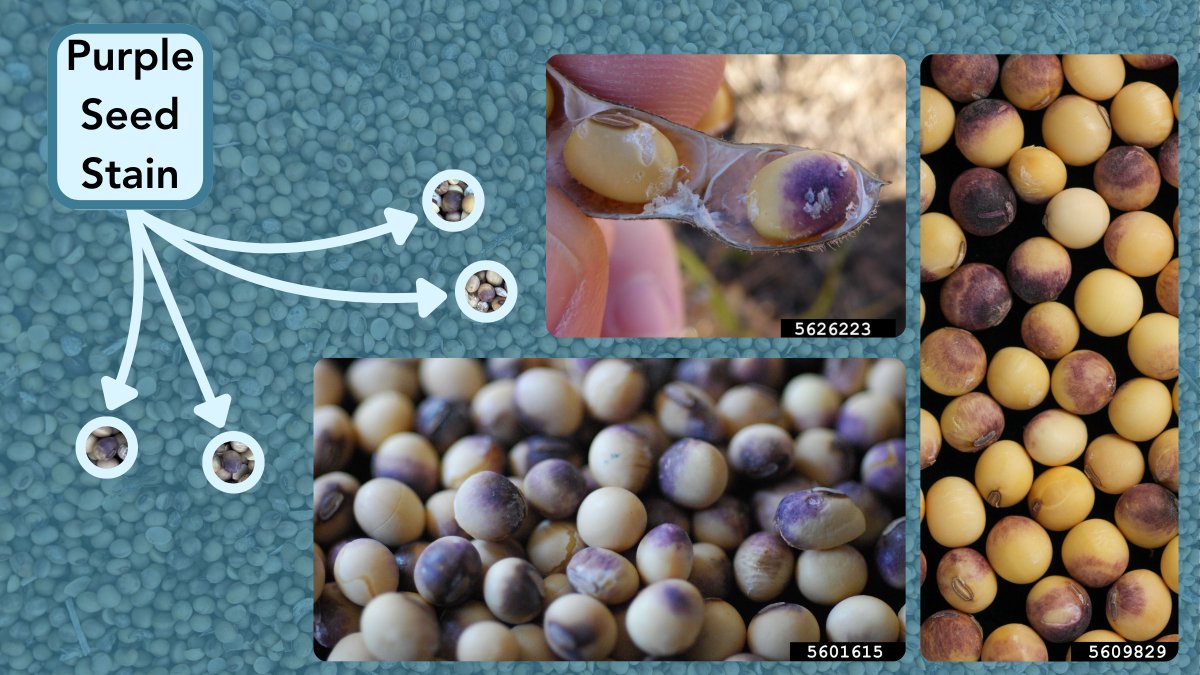
    Purple soybeans? Purple seed stain was more common across the Midwest in 2026 due to warm and wet weather during seed development. While it likely has little impact on yield, it can affect grain quality and potentially lead to lower prices. Read the article to learn more: #SoyCheckoff #ScienceForSuccess
    Download
    087278
  2. Science for Success✓@SoybeanScience1
    Soybean can tolerate some leaf loss, but defoliation during reproductive stages can have a big impact. Learn more about the causes, impacts, and management of soybean defoliation to reduce yield loss next year: #SoyCheckoff #ScienceForSuccess
    Download
    013268
  3. Science for Success✓@SoybeanScience1
    Science for Success
    RT @CropNetwork: “Seeding rates above the [agronomic optimum seeding rate] resulted in no benefit under favorable conditions, since higher plant populations mostly benefit from environments exposed to weather events that reduce population (e.g., hail).” From the @ASA_CSSA_SSSA article "Seeding rate effects on soybean seed yield components and economic return" by Fernando M. Marcos, Caio L. dos Santos, Natan A. Seraglio, and Mark A. Licht @badgerbean @PurdueSoybean @SoybeanScience1 @ISUExtension #soybean #USSoy
    03011
  4. Science for Success✓@SoybeanScience1
    We can't control the weather, but we can prepare for whatever mother nature decides to throw our way. Excess rain towards the end of the season can cause seed quality and harvest efficiency issues. Hear from @carrijo_crops and @TheDirtDude for a sneak peak of some of our new content! #SoyCheckoff
    Download
    037296
  5. Science for Success✓@SoybeanScience1
    We work around tractors all the time, but do we know what sounds they make? We put our graduate students to the test, how did they do? #SoyCheckoff
    023479
  6. Science for Success✓@SoybeanScience1
    When it comes to soybean desiccation, a small difference in timing can have a big impact! Dr. Mike Mulvaney shares what researchers at Mississippi State University are seeing when they compare applications at R6.5 and R7, including differences in yield and grain quality. Learn more about their research here: #SoyCheckoff #ScienceForSuccess
    022484
  7. Science for Success✓@SoybeanScience1
    We hear that it's #WorldStatisticsDay! Farmers are bombarded by data from ads, publications, social media, and more. It can be hard to decipher which information is accurate and impactful. Check out our factsheet on the basics of interpreting agronomic data for more info:
    Download
    034417
  8. Science for Success✓@SoybeanScience1
    Science for Success
    RT @jhchandl: @Adrianinag is a fine farmer, and innovates to enhance his farm’s productivity and profitability. Cover crops are one of the tools he uses
    Science for Success @SoybeanScience1
    Adrian Locklear has used cover crops in North Carolina since 2013 to help suppress weeds and improve his soil. He advises starting small and trying different species and blends to find what works best for your farm. Watch here: #SoyCheckoff #ScienceForSuccess #CoverCrops
    0208
  9. Science for Success✓@SoybeanScience1
    We’ve received many questions regarding soybean quality as harvest progresses. Check out our latest blog to see what we’re hearing and what it might mean for you at the elevator: #SoyCheckoff #Harvest26
    01014757
  10. Science for Success✓@SoybeanScience1
    Soybean lodging can make harvest more difficult, with historical studies reporting harvest losses of around 3% to 10% in lodged fields. Prioritizing lodged fields and adjusting combine and header settings can help minimize the losses. Learn more about the causes and how to manage it here: #SoyCheckoff #ScienceForSuccess
    Download
    145468
  11. Science for Success✓@SoybeanScience1
    Science for Success
    RT @PrezaFontes: Drone view of our on-farm wheat/double-crop soybean trial: early-season soybean is mature, while full-season soybean is still dropping leaves. Final year of the study. Stay tuned for a project report this winter 🌱📊 📷@bowmannd 📍Piatt County 
@SoybeanScience1 @ILextension
    01010
  12. Science for Success✓@SoybeanScience1
    Harvest timing matters when dealing with split pods and sprouting soybean seeds. While these issues can be difficult to prevent, timely harvest can help reduce damage and combine setting adjustments can help reduce losses. Read more here: #SoyCheckoff #ScienceForSuccess
    Download
    147380
  13. Science for Success✓@SoybeanScience1
    Minnesota farmer Peter Anthony has used cover crops for over two decades and has seen great improvements in water management. He has noticed better water infiltration and retention, so his fields can better manage both wet and dry conditions throughout the growing season. Learn more about his operation here: #SoyCheckoff #ScienceForSuccess #CoverCrops
    Download
    000168
  14. Science for Success✓@SoybeanScience1
    Science for Success
    RT @cropforageturf: 🌱 Narrow vs. wide rows in soybean A new management guide reports that narrow rows outyield wide rows by an average of 7%, with a yield advantage in 76% of comparisons. Benefits are greatest with late planting, early-maturing varieties, and weed pressure.
    07010
  15. Science for Success✓@SoybeanScience1
    Science for Success
    RT @FieldAdvisor: 🟣 Have you noticed more purple seed stain showing up in soybeans this fall? Purple seed stain is showing up more frequently across the Midwest in 2026 due to warm, wet conditions during seed development. While yield impacts are generally minimal, it can affect seed appearance and marketability. Learn what’s causing it and what it means for your crop in this article from Soybean Science for Success:
    0609
  16. Show more posts