Yale Cancer Center✓

@YaleCancer

Yale Cancer Center is a collaboration between renowned cancer researchers and physicians @Yale and @SmilowCancer.

1.8K Following17.3K Followers10.2K Posts
  1. Yale Cancer Center✓@YaleCancer
    Why are #NOTCH1 mutations common in normal esophageal tissue, but less frequent in esophageal cancer? New research from @JeffTownsend reveals that cancer-associated mutations can have different effects depending on when they arise and which other mutations are present. These stage-specific evolutionary dynamics could help identify when targeted interventions may be most effective. @SmilowCancer @GenomeMedicine @OncoAlert @YaleSPH
    037616
  2. Yale Cancer Center✓@YaleCancer
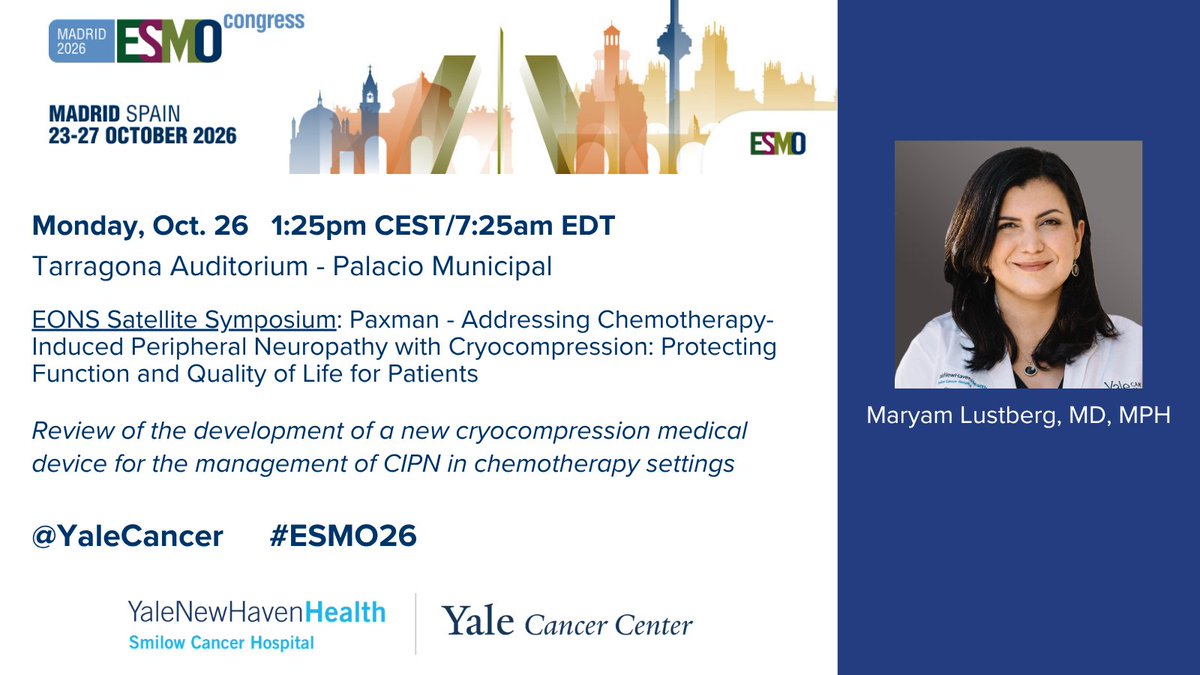
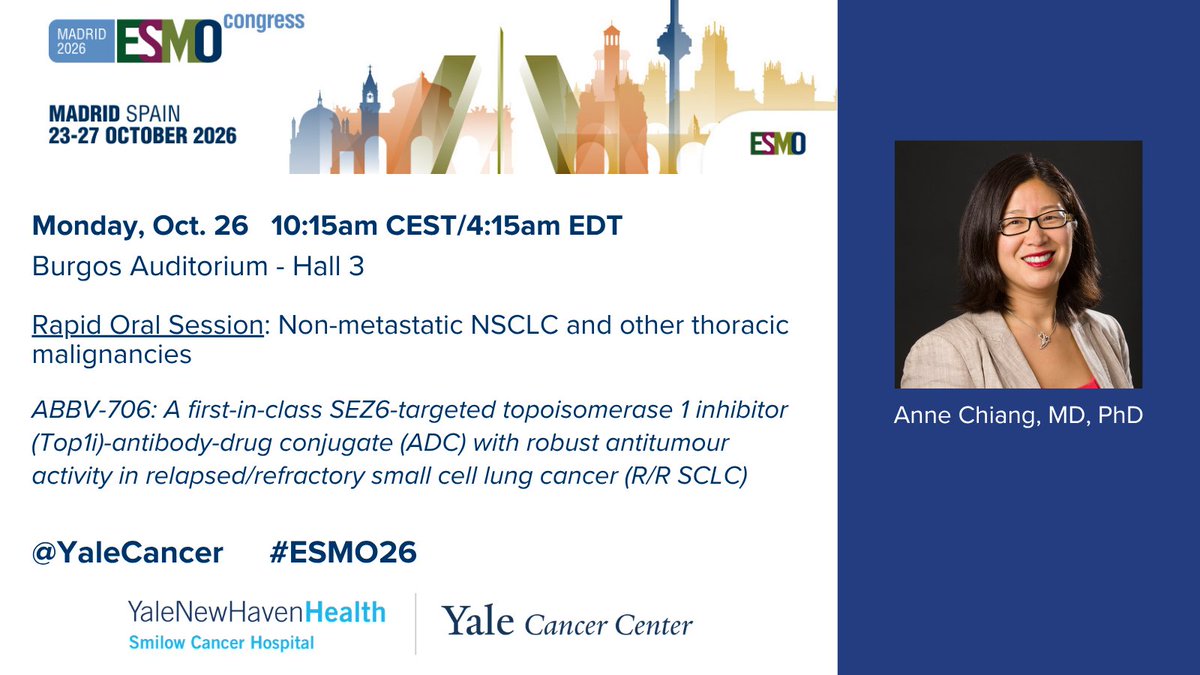
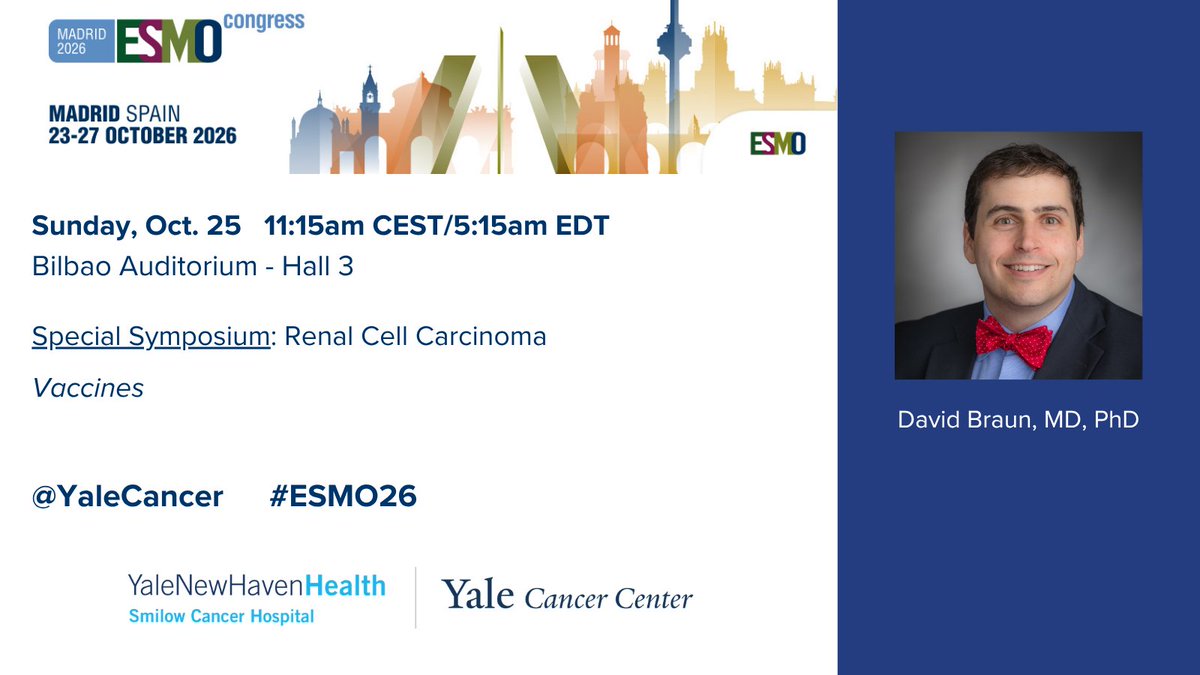
    We’re excited to join oncology colleagues from around the world at #ESMO26 to share knowledge, exchange ideas, and explore the future of cancer care. We’re proud of our faculty presenting their research and look forward to engaging with the latest advances in #cancerresearch, treatment, and care. @myESMO @SmilowCancer @YNHH
    Download
    016414
  3. Yale Cancer Center✓@YaleCancer
    We are pleased to co-host the "Future of Oncology Summit" alongside @BioCT_org November 9–10 at 101 College Street, New Haven. The summit will gather leaders in oncology and healthcare from across #Connecticut and the US to explore innovative approaches to improving patient outcomes. Yale participation includes: Co-Chair & presenter @DrEricWiner; @SanjayAnejaMD; @ranjitbindra; Sarah Goldberg; Ian Krop; Patricia LoRusso; @WilliamOhMD; @DanielPetrylak; and Katerina Politi. ➡️ @SmilowCancer
    Download
    012589
  4. Yale Cancer Center✓@YaleCancer
    The #FDA approval of Veppanu marks a milestone for “protein degraders”—a promising new class of drugs designed to eliminate disease-driving proteins that have long been difficult to target. Yale scientist @CraigMCrews says the approval “will change how the industry views what is potentially druggable.” @SmilowCancer @MCDB_Yale
    004437
  5. Yale Cancer Center✓@YaleCancer
    CAR-T cell therapy, approved to treat some #bloodcancers, is now being studied for lupus, multiple sclerosis, and scleroderma. @MichaelEHurwitz: “CAR-T therapy is what we call a living drug. When it works well, those cells don’t just attack their target once, they expand, persist, and continue functioning in the body.” ➡️Learn more about how it works, its risks, and who can benefit: @SmilowCancer @YaleHematology @OncoAlert
    048655
  6. Show more posts