Alex Heath✓

@alexeheath

Host @ Sources podcast Partner @ Sound Ventures

6.3K Following516K Followers46.6K Posts
  1. Alex Heath✓@alexeheath
    Sundar Pichai on Gemini 4 and the AI compute crunch Even Google can’t get enough compute. I sit down with Google and Alphabet CEO @sundarpichai shortly after the wider release of Gemini 4 Argon to discuss its early reception, where he still wants the model to improve, and what it takes to keep Google at the frontier of AI. Pichai explains the recent leadership shakeup at Google DeepMind and why building frontier models has become an “all-consuming” job. We also get into Google’s answer to the personal agent race, how he predicts Gemini will do more work on your behalf, and whether agents will finally bring Search, Gmail, and Gemini together. I ask him about Google turning free cash flow negative, the risks in the AI infrastructure buildout, and how he plans for demand years before knowing what the models will be capable of. He explains the signals giving him confidence to keep spending and how he uses AI agents to follow model development and compute usage inside Google. Timestamps: 00:00 Gemini Argon launch reception 01:49 Model access and safety 06:20 The AI model race 08:35 Agentic breakthroughs and 2027 11:34 Recursive self-improvement 15:41 DeepMind leadership changes 19:52 Google's AI compute investments 25:20 Is AI spending sustainable? 33:18 How Sundar uses AI agents 35:35 Gemini's personal agent plans 38:37 How AI agents change the web 43:52 Google's space data centers 47:38 Waymo's expansion strategy 50:26 Wing's drone delivery plans 51:36 AI safety and regulation 55:58 Google's quantum computing bet YouTube: Spotify: Substack: Apple Podcasts: This episode's presenting sponsor is @hyperagentapp. Thanks to the show’s premiere sponsors: @Atlassian, @meetgranola, and @mercury.
    Download
    2228265427K
  2. Alex Heath✓@alexeheath
    Sundar Pichai on the future of Waymo and the possibility of ever selling Waymo cars directly to people: "We are so far from a zero-sum construct. It's so early, and the opportunity space seems so vast to me, with so many applications for autonomous driver technology. I expect Waymo to work in a myriad of ways, including with other partners, and I expect those partners to do very well as companies on their own too. I'm very, very bullish on all of that. The Waymo team is very, very focused on scaling up what they are doing. We just crossed half a million paid rides per week, and the team is razor-focused on scaling that up. The Toronto launch is coming, along with 10 new cities this year. The next 12 months are going to be more of it in international markets, in other weather conditions, on highways, and everywhere. We are scaling up with this high safety bar we already have, driving with 95% fewer serious crashes compared to regular driving. The underlying technology we are building is so general that it has all the option values you're talking about built on top of it... If you've looked at us as a company, you've seen us build Android and mobile, even in the AI ecosystem, where we partner with a wide variety of companies. I think we will always work with the ecosystem, and I think there'll be plenty of growth for everyone."
    Download
    Alex Heath @alexeheath
    Sundar Pichai on Gemini 4 and the AI compute crunch Even Google can’t get enough compute. I sit down with Google and Alphabet CEO @sundarpichai shortly after the wider release of Gemini 4 Argon to discuss its early reception, where he still wants the model to improve, and what it takes to keep Google at the frontier of AI. Pichai explains the recent leadership shakeup at Google DeepMind and why building frontier models has become an “all-consuming” job. We also get into Google’s answer to the personal agent race, how he predicts Gemini will do more work on your behalf, and whether agents will finally bring Search, Gmail, and Gemini together. I ask him about Google turning free cash flow negative, the risks in the AI infrastructure buildout, and how he plans for demand years before knowing what the models will be capable of. He explains the signals giving him confidence to keep spending and how he uses AI agents to follow model development and compute usage inside Google. Timestamps: 00:00 Gemini Argon launch reception 01:49 Model access and safety 06:20 The AI model race 08:35 Agentic breakthroughs and 2027 11:34 Recursive self-improvement 15:41 DeepMind leadership changes 19:52 Google's AI compute investments 25:20 Is AI spending sustainable? 33:18 How Sundar uses AI agents 35:35 Gemini's personal agent plans 38:37 How AI agents change the web 43:52 Google's space data centers 47:38 Waymo's expansion strategy 50:26 Wing's drone delivery plans 51:36 AI safety and regulation 55:58 Google's quantum computing bet YouTube: Spotify: Substack: Apple Podcasts: This episode's presenting sponsor is @hyperagentapp. Thanks to the show’s premiere sponsors: @Atlassian, @meetgranola, and @mercury.
    618115.6K
  3. Alex Heath✓@alexeheath
    Alex Heath
    RT @GrewBatiko: @vladtenev sat down with @alexeheath on Sources two weeks before @RobinhoodApp reports tonight. 3 lines that stuck with me: 1. on stock tokens with no voting rights: "the cat's out of the bag. this is not reversible." 2. stock tokens are live in 120+ countries. his pitch to issuers: it "creates net new buying of their stock from a global market." 3. 100,000+ customers already onboarded to robinhood's ai agent trading. what i'm watching on tonight's call: - does robinhood chain get its own line, or stay a footnote - stock token count and volume, vs ~200 tokens he cited last month - a real usage number for agent trading what would you ask vlad?
    020362
  4. Alex Heath✓@alexeheath
    Robinhood’s CEO on letting AI trade your money @vladtenev on Robinhood’s new agent bet and the AI ownership inequality problem. Robinhood wants to put an AI hedge fund in your pocket. CEO Vlad Tenev tells me how Robinhood Agents brings AI trading into the app, and why he expects agents to generate a growing share of individual investors’ trading activity. We discuss how much control to give an AI that can trade your money, why Robinhood keeps agents in separate accounts, and where investors will find an edge when everyone has access to powerful models. He also explains his push for every Robinhood employee to have agents working while they sleep. Tenev argues that the AI backlash is partly an ownership problem: most people can’t invest in the companies driving it. We get into Robinhood’s push to open private markets to everyday investors, the coming AI IPOs, and his response to criticism of tokenized stocks. We also discuss prediction markets and why he objects to AI labs keeping their most powerful tools to themselves. Timestamps: 03:06 Making AI trading accessible 06:10 Trading safeguards and approvals 09:02 The future of AI trading 14:52 Finding an edge with AI 23:15 How Vlad uses agents 27:13 AI inequality and retail access 35:40 Robinhood's IPO ambitions 38:23 Markets, inflation and AI 41:28 Ownership and Trump accounts 44:42 Why tokenize stocks? 52:17 The future of prediction markets 55:40 Who should control AI? Spotify: YouTube: Substack: Apple Podcasts: Thanks to the show’s premiere sponsors: @Atlassian, @meetgranola, and @mercury.
    Download
    1445124.7K
  5. Alex Heath✓@alexeheath
    Peter is not only a good human and product builder but also an above average shitposter Amazing news for this app!
    Peter Sellis @petersellis
    I’m joining the team at @X to lead Product. I am a huge believer in @SpaceX's mission to extend human consciousness to the stars, so it’s time to make shitposting multiplanetary. X is the best way to find out what’s happening in the world right now and talk about it. The team has been working tirelessly to make X a better place and product for the people who love it, and many have noticed the recent momentum. My goal is to help accelerate that momentum for our community, new users, and businesses globally by continuing to make this product beautiful and useful. We are twenty years in, but it truly feels like X’s next chapter will be our greatest. I look forward to your ideas and feedback; I’m sure the replies will be measured and magnanimous.
    5314615.1K
  6. Peter Sellis✓@petersellis
    I’m joining the team at @X to lead Product. I am a huge believer in @SpaceX's mission to extend human consciousness to the stars, so it’s time to make shitposting multiplanetary. X is the best way to find out what’s happening in the world right now and talk about it. The team has been working tirelessly to make X a better place and product for the people who love it, and many have noticed the recent momentum. My goal is to help accelerate that momentum for our community, new users, and businesses globally by continuing to make this product beautiful and useful. We are twenty years in, but it truly feels like X’s next chapter will be our greatest. I look forward to your ideas and feedback; I’m sure the replies will be measured and magnanimous.
    2.7K1.4K22.5K2.6M
  7. Alex Heath✓@alexeheath
    Alex Heath
    RT @cristianoamon: We’re in the early days of AI and there’s still a lot to be built. Great conversation with @alexeheath on Sources, live at @Snapdragon Summit. We covered AI smartphones, wearables, data enter and 6G.
    070397
  8. Alex Heath✓@alexeheath
    How Sundar Pichai uses AI to run Google: "I have agents running internally for me... There are all these chat groups: pre-training, mid-training, post-training data, etc. It could easily take me an hour a day to catch up on what's happened in the last 24 hours, but now I have agents running that summarize and bring that information to me. I can still go deeper, and I do so often. Similarly, there are agents with telemetry into our compute usage, product areas, efficiency, and utilization, and they are giving me inputs and insights."
    Download
    Alex Heath @alexeheath
    Sundar Pichai on Gemini 4 and the AI compute crunch Even Google can’t get enough compute. I sit down with Google and Alphabet CEO @sundarpichai shortly after the wider release of Gemini 4 Argon to discuss its early reception, where he still wants the model to improve, and what it takes to keep Google at the frontier of AI. Pichai explains the recent leadership shakeup at Google DeepMind and why building frontier models has become an “all-consuming” job. We also get into Google’s answer to the personal agent race, how he predicts Gemini will do more work on your behalf, and whether agents will finally bring Search, Gmail, and Gemini together. I ask him about Google turning free cash flow negative, the risks in the AI infrastructure buildout, and how he plans for demand years before knowing what the models will be capable of. He explains the signals giving him confidence to keep spending and how he uses AI agents to follow model development and compute usage inside Google. Timestamps: 00:00 Gemini Argon launch reception 01:49 Model access and safety 06:20 The AI model race 08:35 Agentic breakthroughs and 2027 11:34 Recursive self-improvement 15:41 DeepMind leadership changes 19:52 Google's AI compute investments 25:20 Is AI spending sustainable? 33:18 How Sundar uses AI agents 35:35 Gemini's personal agent plans 38:37 How AI agents change the web 43:52 Google's space data centers 47:38 Waymo's expansion strategy 50:26 Wing's drone delivery plans 51:36 AI safety and regulation 55:58 Google's quantum computing bet YouTube: Spotify: Substack: Apple Podcasts: This episode's presenting sponsor is @hyperagentapp. Thanks to the show’s premiere sponsors: @Atlassian, @meetgranola, and @mercury.
    12610922.3K
  9. Alex Heath✓@alexeheath
    🎯
    mark @kramnotmark
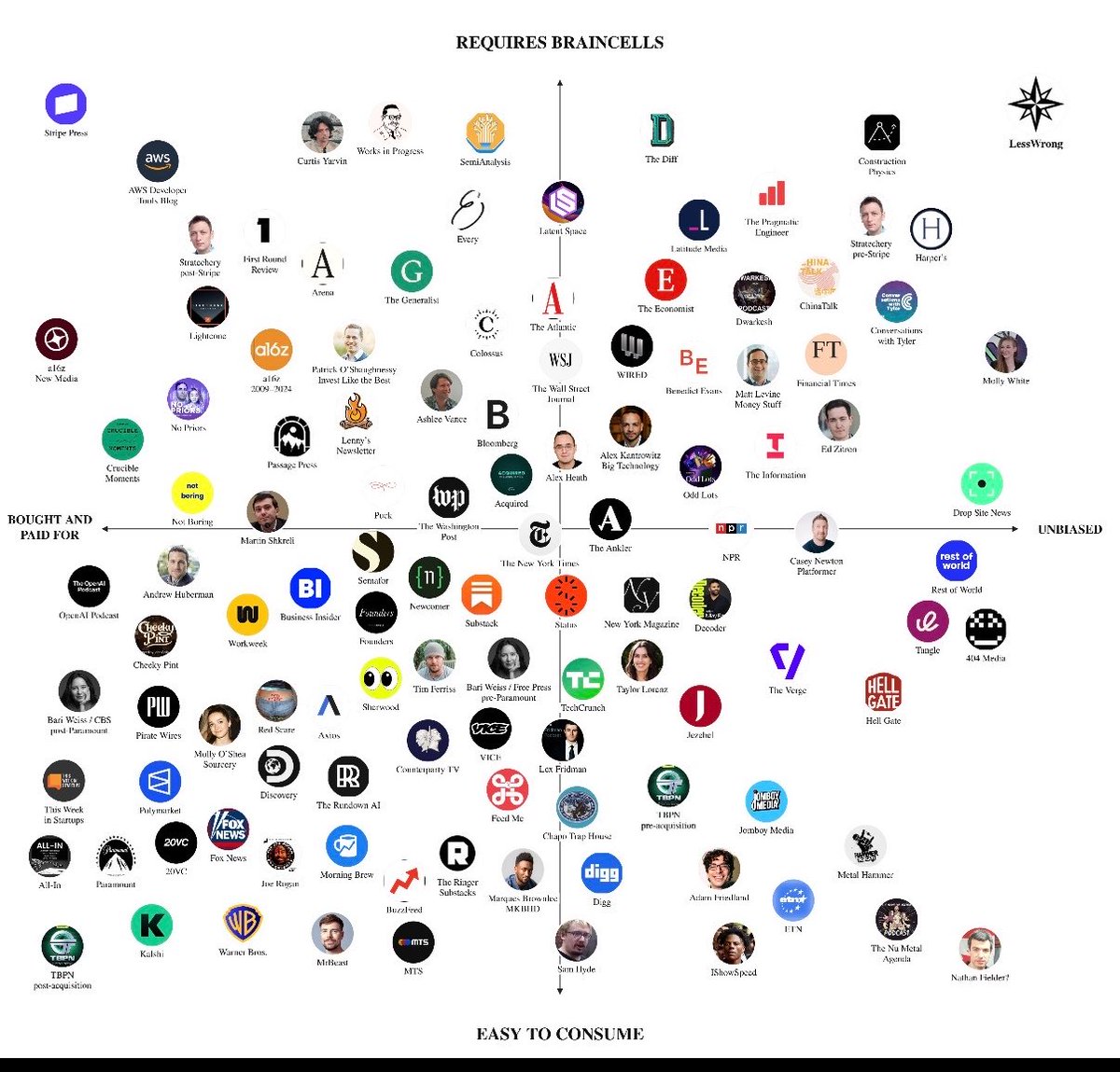
    the current state of new media
    514213.8K
  10. mark✓@kramnotmark
    the current state of new media
    Download
    3441954.8K1.9M
  11. Alex Heath✓@alexeheath
    Sundar Pichai's explanation for Demis Hassabis stepping back from running DeepMind and Jeff Dean leaving Google: "You're seeing natural evolutions as people spend their time doing things for a while... I feel proud to have worked together with Jeff for a long time. Obviously, he was seminal in his contributions here, and we're excited to see what he does with Discovery Loop. I would say you're going through a moment in the industry where frontier model development is an all-consuming thing. We've had broad AI research, AGI research, and so on, but frontier model development is all-consuming. It's moving, picking up pace, and it's a very scaled operation, all the way from data and compute to the algorithmic work you do, to managing the teams and your model agents. I think it's become an important job in its entirety. Demis has obviously been thinking about this moment for a long time. He's particularly interested in both how you go through this frontier moment safely and how you apply it to solve other problems. The work he did with AlphaFold and what we are doing now with Isomorphic are examples of how you can apply AGI to solve other problems... I think he wants to spend more of his time on those things"
    Download
    Alex Heath @alexeheath
    Sundar Pichai on Gemini 4 and the AI compute crunch Even Google can’t get enough compute. I sit down with Google and Alphabet CEO @sundarpichai shortly after the wider release of Gemini 4 Argon to discuss its early reception, where he still wants the model to improve, and what it takes to keep Google at the frontier of AI. Pichai explains the recent leadership shakeup at Google DeepMind and why building frontier models has become an “all-consuming” job. We also get into Google’s answer to the personal agent race, how he predicts Gemini will do more work on your behalf, and whether agents will finally bring Search, Gmail, and Gemini together. I ask him about Google turning free cash flow negative, the risks in the AI infrastructure buildout, and how he plans for demand years before knowing what the models will be capable of. He explains the signals giving him confidence to keep spending and how he uses AI agents to follow model development and compute usage inside Google. Timestamps: 00:00 Gemini Argon launch reception 01:49 Model access and safety 06:20 The AI model race 08:35 Agentic breakthroughs and 2027 11:34 Recursive self-improvement 15:41 DeepMind leadership changes 19:52 Google's AI compute investments 25:20 Is AI spending sustainable? 33:18 How Sundar uses AI agents 35:35 Gemini's personal agent plans 38:37 How AI agents change the web 43:52 Google's space data centers 47:38 Waymo's expansion strategy 50:26 Wing's drone delivery plans 51:36 AI safety and regulation 55:58 Google's quantum computing bet YouTube: Spotify: Substack: Apple Podcasts: This episode's presenting sponsor is @hyperagentapp. Thanks to the show’s premiere sponsors: @Atlassian, @meetgranola, and @mercury.
    61221541.9K
  12. Alex Heath✓@alexeheath
    Alex Heath
    RT @IlyaStrebulaev: We just published our ranking of the best AI investors in venture capital. Some top firms are all-in on AI; others are not. Menlo Ventures and Dragoneer earn 93% of their total score from AI. Sequoia earns 39%. All three sit in the top ten of the 2026 Strebulaev-Jackson AI Venture Ranking. For each VC firm in the ranking, we compute the share of its total score, across all sectors and at the same cutoff, that comes from AI. This shows how much a firm’s success depends on AI. Nine firms earn more than 90% of their total score from AI. Besides Menlo and Dragoneer, they include Factorial Funds (98%), Pegasus Tech Ventures (98%), Maven Ventures (98%) and Future Ventures (95%). Sequoia has the lowest AI share in the top ten. Founders Fund is next at 42%. Both are leading AI investors and still earn most of their score elsewhere. Further down, AI is a small share of the total for several large firms: 8% for Accel (41st), 2% for ICONIQ Growth, 9% for Redpoint, 4% for Meritech and 7% for Union Square Ventures. So far, AI is a small part of the value they have created. Across the top 100, the median firm earns 44% of its total score from AI. For 41 firms, AI accounts for more than half.
    050435
  13. Alex Heath✓@alexeheath
    Alex Heath
    RT @Marie_Haynes: Sundar Pichai talks about the "agentic layer" which will unify Google's products, including Search. Personal Intelligence will carry your context across all of Google's surfaces so you can start in some place and pick it up again in another.
    070434
  14. Alex Heath✓@alexeheath
    I've worked with @davidheuff and his talented team at Hooked Creators on my podcast for over a year, including the recent relaunch of the feed into Sources. Here he walks through how we approach packaging the show for video in a super thoughtful way. There is no one-size-fits-all here, but when we relaunched the show with Sam Altman as our first guest in early September, I instinctively knew that I wanted to keep it simple: no montages, no crazy eye-popping thumbnails, and no clickbait titles with ALL CAPS and shock-and-awe verbiage. It may not get as many explosive views, but I'd rather respect the viewer's intellect, attention, and the focus they choose to give me. It's also just a reflection of my sensibility, which I'm trying to lean into more as I think about season 2 of the show in the new year. Here’s to keeping it simple.
    70366K
  15. Alex Heath✓@alexeheath
    I asked Google CEO Pichai what happened to the missing Gemini 3.5 Pro model that never shipped. He gave me an interesting window into the hard decisions big labs have to make in model development: "While training the 3.5 series, we had Flash and Pro, which we were working on. An area we internalized through the middle of this year was that there were gaps in agentic capabilities, particularly around coding... We wanted to definitely hill climb there, and the team felt the fastest way to do so was using Flash. It's a smaller model and more efficient, so you can really get a lot more iterative loops there. That's what led to 3.5, 3.6, 3.7, and 3.8 Flash. By the time we got that done, we had a chance to apply it to Pro, but Argon pre-training was done."
    Download
    Alex Heath @alexeheath
    Sundar Pichai on Gemini 4 and the AI compute crunch Even Google can’t get enough compute. I sit down with Google and Alphabet CEO @sundarpichai shortly after the wider release of Gemini 4 Argon to discuss its early reception, where he still wants the model to improve, and what it takes to keep Google at the frontier of AI. Pichai explains the recent leadership shakeup at Google DeepMind and why building frontier models has become an “all-consuming” job. We also get into Google’s answer to the personal agent race, how he predicts Gemini will do more work on your behalf, and whether agents will finally bring Search, Gmail, and Gemini together. I ask him about Google turning free cash flow negative, the risks in the AI infrastructure buildout, and how he plans for demand years before knowing what the models will be capable of. He explains the signals giving him confidence to keep spending and how he uses AI agents to follow model development and compute usage inside Google. Timestamps: 00:00 Gemini Argon launch reception 01:49 Model access and safety 06:20 The AI model race 08:35 Agentic breakthroughs and 2027 11:34 Recursive self-improvement 15:41 DeepMind leadership changes 19:52 Google's AI compute investments 25:20 Is AI spending sustainable? 33:18 How Sundar uses AI agents 35:35 Gemini's personal agent plans 38:37 How AI agents change the web 43:52 Google's space data centers 47:38 Waymo's expansion strategy 50:26 Wing's drone delivery plans 51:36 AI safety and regulation 55:58 Google's quantum computing bet YouTube: Spotify: Substack: Apple Podcasts: This episode's presenting sponsor is @hyperagentapp. Thanks to the show’s premiere sponsors: @Atlassian, @meetgranola, and @mercury.
    38481K205K
  16. Alex Heath✓@alexeheath
    Alex Heath
    RT @annatonger: New on Elizabeth Holmes' partner Billy Evans’ blood testing startup: its former CTO and a key inventor on its patents, has left. Somebody who spoke with Billy says he refers to the company as “Theranos 2.0”, a label the company has rejected.
    0380400
  17. Alex Heath✓@alexeheath
    Alex Heath
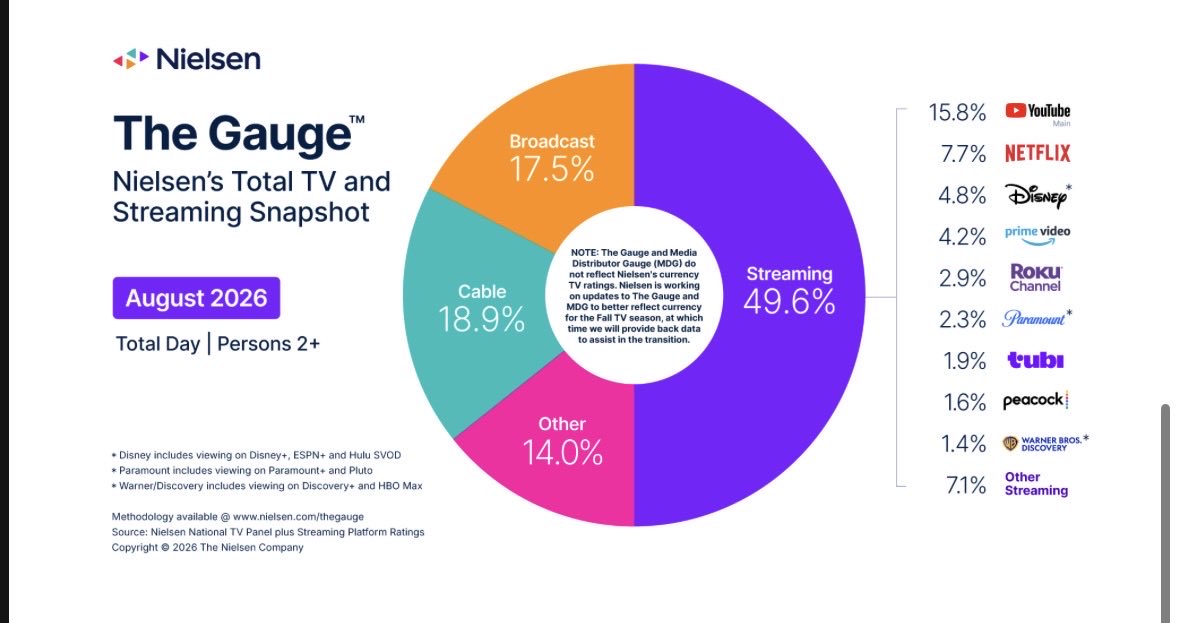
    RT @Lucas_Shaw: YouTube now accounts for twice as much TV viewing in the US as Netflix.
    Download
    01020385
  18. Alex Heath✓@alexeheath
    Alex Heath
    RT @eastdakota: Two classes extremely bad cyber vulnerabilities disclosed in the last 24 hours. The first potentially impacts everyone online. The second impacts nearly everyone running a server. tl;dr: Everyone should upgrade their OS and Browser as soon as possible. If you run a server you should upgrade PHP (or ensure it’s removed if you’re not using it) as soon as possible. The first class of vulnerabilities is a set of root TLS certificates that were discovered to have a trivial private key. Literally the number 4. These roots were controlled by #eMudhra. The problem is that with that an attacker could create a certificate and, if they could get in the traffic flow, intercept traffic to any site or service. The solution is to stop trusting certificates issued by these vulnerable roots. Upgrading your browser and OS is the fastest way for most Internet users to do this. The second class of vulnerabilities doesn’t apply to most consumers directly, but does apply to most anyone running a server. These vulnerabilities have been dubbed #php2shell. PHP is one of the most widely used web programming languages. It’s estimated 70% of websites run on PHP. These vulnerabilities allow an attacker to send a crafted set of queries to a server running PHP and potentially take over the server. From there they could potentially read, modify, delete, or repurpose anything on the server. The solution is to upgrade PHP to the latest version ASAP. Even if you’re not using PHP for your web development, it’s often included by default. So make sure it is either upgraded or fully removed. @Cloudflare received advanced warning of both of these classes of vulnerabilities. We’ve ensured that where we act as a proxy we are no longer trusting the vulnerable roots. We are also reviewing certificate transparency (CT) logs for any sign the vulnerability was exploited before its disclosure. We have not found any evidence but CT logs are not perfect and a sophisticated attacker who knew about the weakness could have exploited it without a new certificate being logged. For the PHP vulnerabilities, we have deployed mitigations available for all customers for free. Because of the complexity of the vulnerabilities and number of ways it can be exploited, we also released new WAF capabilities that are unique in the industry to catch the exploit based on the response. These too are available for every Cloudflare customer for free. Even if you are taking advantage of Cloudflare’s protection, it is important to upgrade your OS, browsers, and PHP installations as soon as possible. We can provide a strong bandaid, but the best protection is to fix the underlying problem. If you’re interested in learning more, you can read our blogs: Vulnerable roots: PHP vulnerabilities:
    07640418
  19. Alex Heath✓@alexeheath
    Sundar Pichai on Google's new space data center effort, Project Suncatcher: "We will have a nice 'hello world' moment coming up... We'll get a chance to say hello to the TPUs, which I'm really excited about. I think we are taking the early steps, but we are deeply committed to the journey. The team is world-class, and in a 10-to-20-year time frame, they're going to have amazing milestones. That's what I'm excited about. If you think through it from a first-principles standpoint, with energy availability and sun-synchronous orbits, getting access to 24/7 energy is a pretty good reason. There'll be more reasons, I think. We have so many opportunities to use the physical space, the constrained physical space on planet Earth. The data centers today look big to us, but they are not... It is tough for us to exponentially extrapolate our compute needs 20 years out, so I don't think Earth would look nice if that's how you plan to do it."
    Download
    Alex Heath @alexeheath
    Sundar Pichai on Gemini 4 and the AI compute crunch Even Google can’t get enough compute. I sit down with Google and Alphabet CEO @sundarpichai shortly after the wider release of Gemini 4 Argon to discuss its early reception, where he still wants the model to improve, and what it takes to keep Google at the frontier of AI. Pichai explains the recent leadership shakeup at Google DeepMind and why building frontier models has become an “all-consuming” job. We also get into Google’s answer to the personal agent race, how he predicts Gemini will do more work on your behalf, and whether agents will finally bring Search, Gmail, and Gemini together. I ask him about Google turning free cash flow negative, the risks in the AI infrastructure buildout, and how he plans for demand years before knowing what the models will be capable of. He explains the signals giving him confidence to keep spending and how he uses AI agents to follow model development and compute usage inside Google. Timestamps: 00:00 Gemini Argon launch reception 01:49 Model access and safety 06:20 The AI model race 08:35 Agentic breakthroughs and 2027 11:34 Recursive self-improvement 15:41 DeepMind leadership changes 19:52 Google's AI compute investments 25:20 Is AI spending sustainable? 33:18 How Sundar uses AI agents 35:35 Gemini's personal agent plans 38:37 How AI agents change the web 43:52 Google's space data centers 47:38 Waymo's expansion strategy 50:26 Wing's drone delivery plans 51:36 AI safety and regulation 55:58 Google's quantum computing bet YouTube: Spotify: Substack: Apple Podcasts: This episode's presenting sponsor is @hyperagentapp. Thanks to the show’s premiere sponsors: @Atlassian, @meetgranola, and @mercury.
    447513.9K
  20. Alex Heath✓@alexeheath
    United 1k and happy
    Fireside Alpha @firesidealpha
    United Airlines CEO says it has more Starlink flights than the rest of the US airline industry combined, with about half of its departures already on Starlink and the whole fleet done by the end of 2027 Starlink is now a “motivating factor” in which airline people fly, so United launched a new tracker to show which flights have it. “You’ve heard me say in the past that hope is not a strategy. Instead, we’re focused on things we can control, and those are the big investments we’ve made over the past several years in products, service, and technology." "And one of those things is Starlink, a new and truly differentiating RASM tailwind in 2027." "Today, about half of United departures are on Starlink-equipped aircraft, and we offer more Starlink flights than the entire U.S. airline industry combined." "We currently expect to reach 61% of departures by the end of 2026, 87% by June 1st, and available fleet-wide by the end of 2027." "Importantly, we’re also seeing evidence that Starlink is a motivating factor for customers to choose which airline they fly. That’s why we launched a new tracker so people can check if their flight has it and can follow along as we outfit our fleet.”
    20214.5K
  21. Fireside Alpha✓@firesidealpha
    United Airlines CEO says it has more Starlink flights than the rest of the US airline industry combined, with about half of its departures already on Starlink and the whole fleet done by the end of 2027 Starlink is now a “motivating factor” in which airline people fly, so United launched a new tracker to show which flights have it. “You’ve heard me say in the past that hope is not a strategy. Instead, we’re focused on things we can control, and those are the big investments we’ve made over the past several years in products, service, and technology." "And one of those things is Starlink, a new and truly differentiating RASM tailwind in 2027." "Today, about half of United departures are on Starlink-equipped aircraft, and we offer more Starlink flights than the entire U.S. airline industry combined." "We currently expect to reach 61% of departures by the end of 2026, 87% by June 1st, and available fleet-wide by the end of 2027." "Importantly, we’re also seeing evidence that Starlink is a motivating factor for customers to choose which airline they fly. That’s why we launched a new tracker so people can check if their flight has it and can follow along as we outfit our fleet.”
    Download
    14297.9K
  22. Alex Heath✓@alexeheath
    Alex Heath
    RT @wallstengine: Google CEO Sundar Pichai expects practical commercial uses for quantum computing within five years. h/t @alexeheath
    070352