Baseball In Pics✓

@baseballinpix

Sharing photos of America's pastime.

  • Earth
  • Joined
2.5K Following111K Followers36K Posts
  1. Baseball In Pics✓@baseballinpix
    Charlie Neal ducks away from a pitch at the Los Angeles Memorial Coliseum in Game 4 of the 1959 World Series, on Monday, October 5, 1959 — White Sox catcher Sherm Lollar is behind him, plate umpire Frank Secory looks on, and 92,650 fans fill the seats for one of three Series games played in Los Angeles. The Dodgers knocked out Early Wynn with four runs in the third inning: Wally Moon scored on Norm Larker's single, Larker scored on Gil Hodges's single, Hodges came home on a passed ball and John Roseboro singled in the last run. Roger Craig carried the 4-0 lead into the seventh, when Ted Kluszewski's run-scoring single and Lollar's three-run home run tied the game. Hodges led off the eighth with a home run off Gerry Staley, and Larry Sherry threw a scoreless ninth to finish the 5-4 win and put Los Angeles up three games to one. Neal was the hitting star of the Series. The Dodgers' second baseman — a .287 hitter with 19 home runs, a Gold Glove and an All-Star selection in 1959 — had won Game 2 in Chicago almost by himself, homering off Bob Shaw in the fifth inning and again with the game-winner in the seventh, and he finished the Series 10-for-27, a .370 average. The games were played in a converted football stadium where left field ran only 251 feet down the line behind a 42-foot screen, and the three Los Angeles crowds — 92,394, 92,650 and 92,706 — were the three largest in World Series history; Game 5's 92,706 still stands as the record. The Dodgers closed out the Go-Go White Sox in six games for the franchise's first championship in Los Angeles, and Sherry, who won two games and saved two more, was named the Series MVP. ⚾ Neal hit .370 with 10 hits and won Game 2 almost single-handedly, yet the MVP award went to Larry Sherry and Neal is barely remembered — is he the most forgotten hero of any World Series? 👇️
    Download
    1141.4K
  2. Baseball In Pics✓@baseballinpix
    Willie Stargell heads back to the dugout at Three Rivers Stadium as Manny Sanguillén heads to the plate — two fixtures of the 1970s Pittsburgh Pirates passing in the middle of the batting order. Stargell batted cleanup and Sanguillén right behind him on September 1, 1971, the night Danny Murtaugh's Pirates fielded the first all-minority starting lineup in major-league history and beat Philadelphia 10-7 at Three Rivers — Stargell in left field, Sanguillén behind the plate. Six weeks later they were World Series champions, beating Baltimore in seven games. Sanguillén, the Panamanian bad-ball hitter who topped .300 four times and struck out only 331 times in more than 5,000 career at-bats, batted .379 in the Series, his 11 hits second only to Roberto Clemente's 12. Stargell's bat went quiet — .208 with no home runs, on the heels of an NLCS in which he went hitless — but this was the season he led the National League with 48 home runs, and in the eighth inning of Game 7 he singled and scored the winning run on José Pagán's double in the 2-1 clincher. Stargell, the only man ever to hit two balls completely out of Dodger Stadium, hit 475 home runs in 21 seasons, all with Pittsburgh — more home runs in the 1970s than any other player. At 39 he was "Pops," captain of the "We Are Family" Pirates, sharing the 1979 National League MVP award with Keith Hernandez and adding the NLCS and World Series MVP awards — and Sanguillén was there again, winning Game 2 with a two-out pinch single off Don Stanhouse in the ninth inning. Eight years apart, the same two men in the middle of it: Pittsburgh champions. ⚾ Stargell hit more home runs than any player of the 1970s, then at 39 won the MVP, NLCS MVP and World Series MVP in a single season — is he the most underrated slugger of his era? 👇️
    Download
    0261.4K
  3. Baseball In Pics✓@baseballinpix
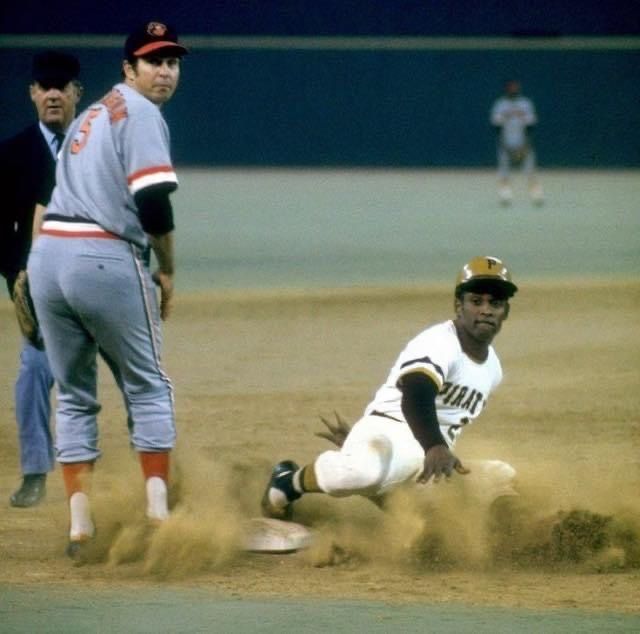
    Roberto Clemente slides into third base at Three Rivers Stadium as Baltimore third baseman Brooks Robinson turns, looking for the ball, in Game 4 of the 1971 World Series, on Wednesday night, October 13, 1971 — the first night game in World Series history. Clemente reached third twice that night, each time on a play with a throw coming to the bag: he went first to third on Al Oliver's game-tying single in the third inning, and first to third again on Willie Stargell's single in the fifth. The defending champion Orioles, armed with four 20-game winners, had won the first two games in Baltimore, 5-3 and 11-3, and they jumped ahead 3-0 in the first inning of Game 4. Pittsburgh came back behind Bruce Kison's 6⅓ scoreless innings of relief: Stargell and Oliver hit consecutive doubles in the first, Oliver's single tied it in the third, and Milt May's pinch-hit single in the seventh won it, 4-3, before 51,378. The Pirates had taken Game 3 behind Steve Blass's complete game, and Nelson Briles pitched a two-hit shutout in Game 5 to put Pittsburgh one win from the title. Clemente, 37 years old, was the engine of the upset: he batted .414 with two home runs, hit safely in all seven games — as he had in every one of the 14 World Series games he played — and in Game 6 he added a triple, a home run and a one-hop throw to the plate that held the potential winning run at third. In Game 7, his fourth-inning home run off Mike Cuellar opened the scoring and Blass pitched another complete game, Pittsburgh winning 2-1 to finish the upset, and Clemente was named the Series MVP. Robinson, the Series MVP of Baltimore's championship a year earlier, hit .318 with five RBIs in the losing effort. ⚾ Clemente batted .414, homered to open the scoring in Game 7 and hit safely in all 14 World Series games he ever played — at 37, is his 1971 the greatest World Series a player has ever had? 👇️
    Download
    01172.1K
  4. Baseball In Pics✓@baseballinpix
    Jesse Orosco drops to his knees on the Shea Stadium mound, arms raised to the sky, moments after striking out Marty Barrett for the final out of Game 7 of the 1986 World Series on October 27, 1986 — having flung his glove into the air, the left-hander celebrates the New York Mets' 8-5 win over the Boston Red Sox and their second world championship. (Photo by Audrey Tiernan — Newsday via Getty Images) The game had waited an extra day, washed out by rain on Sunday, and for five innings it was Boston's. Dwight Evans and Rich Gedman hit back-to-back home runs off Ron Darling in the second inning, Wade Boggs singled home Dave Henderson, and it was 3-0. Bruce Hurst — voted the Series MVP in the press-box ballot during Game 6, before that 5-3 lead vanished — took a one-hitter into the sixth. The Mets finally broke through: Lee Mazzilli and Mookie Wilson singled, Tim Teufel walked to load the bases, Keith Hernandez's two-run single made it 3-2 and Gary Carter knocked in the tying run. Ray Knight led off the seventh with a home run off Calvin Schiraldi, and RBI singles by Rafael Santana and Hernandez stretched the lead to 6-3. Evans's two-run double cut it to 6-5 in the eighth, but Orosco entered with the tying run on second and nobody out and stopped the rally cold. Darryl Strawberry homered to open the bottom of the eighth, and Orosco himself — showing bunt, then pulling the bat back on the butcher-boy play — singled home Knight for the 8-5 margin, then retired the Red Sox in order in the ninth, with Roger McDowell the winning pitcher. Knight, who had scored Game 6's winning run, took home the MVP award that had nearly been Hurst's after batting .391. Orosco's October: a record three relief wins in the League Championship Series, two World Series saves and not one run allowed — and he was still pitching in 2003, retiring at 46 with a major-league-record 1,252 appearances, the last of the 1986 Mets still active. ⚾ Orosco got the last out of the NLCS and the last out of the World Series in the same October — has any reliever ever owned a postseason the way he did in 1986? 👇️
    Download
    22262.6K
  5. Baseball In Pics✓@baseballinpix
    Baltimore shortstop Mark Belanger waits on the throw at second base as Cincinnati's Pete Rose slides in headfirst during the 1970 World Series at Memorial Stadium in October 1970. Rose is in ahead of the play — one more close moment in a Series the Baltimore Orioles ground down to a science. The Orioles had waited a year for this. Upset by the Mets in 1969, Earl Weaver's club won 108 games in 1970, swept Minnesota in the playoffs and beat Sparky Anderson's young Reds in five games. Brooks Robinson owned the week: he homered in the seventh inning to win Game 1 at Cincinnati, 4-3, ranged into foul ground to take a hit away from Lee May with a backhand stop in the same game, turned Lee May's Game 2 liner into an inning-ending double play, dove to rob Johnny Bench in Game 3 and went 4-for-4 in Game 4. He batted .429 with two home runs and was named the Series MVP. In Game 3 at Baltimore, Dave McNally hit a sixth-inning grand slam off Wayne Granger — still the only grand slam by a pitcher in World Series history — in a 9-3 win, and when Cincinnati won Game 4 on Lee May's three-run homer, the Orioles finished it the next day behind Mike Cuellar's complete game, 9-3, before 45,341. Rose, who hit .250 with one homer for the Series, and Bench, the National League's MVP at 22 with 45 home runs and 148 RBIs, were the first sparks of a Big Red Machine that would be back. Belanger, an eight-time Gold Glove winner on a club built on pitching and defense, was the anchor of an infield that helped Baltimore win three straight pennants from 1969 through 1971 — and this was the only one of the three that ended in a title. ⚾ Brooks Robinson won the Series MVP and turned third base into a nightly highlight reel — is 1970 the greatest all-around World Series a third baseman has ever played? 👇️
    Download
    02232.6K
  6. Baseball In Pics✓@baseballinpix
    Willie Mays completes a swing at Yankee Stadium, photographed from high above home plate, during Game 5 of the 1962 World Series on Wednesday, October 10, 1962, with Yankees catcher Elston Howard behind the plate. The Yankees won the game 5-3 on Tom Tresh's three-run homer off Jack Sanford in the eighth inning and carried a three-games-to-two lead back to San Francisco. Mays had driven the Giants there: he led the National League with 49 home runs and drove in 141 runs in 1962, and after San Francisco tied the Dodgers at 102 wins, he homered twice in the opener of the three-game pennant playoff and caught the final out of the clincher. Rain in both cities then stretched the Series across 13 days — Game 5 was postponed a day in New York, and three days of rain in the Bay Area pushed Game 6 to October 15, when Billy Pierce's three-hitter beat the Yankees 5-2 and forced a deciding game. Mays batted only .250 for the Series, with two doubles and one RBI, but his last hit nearly changed everything. In Game 7, on October 16, Ralph Terry took a four-hit shutout and a 1-0 lead into the bottom of the ninth; the game's only run had scored in the fifth, when Tony Kubek grounded into a double play with the bases loaded. Pinch-hitter Matty Alou led off the ninth with a drag bunt single, but Terry struck out Felipe Alou and Chuck Hiller, and Mays doubled down the right-field line. Roger Maris cut the ball off in the corner and fired to cutoff man Bobby Richardson, and third-base coach Whitey Lockman held Alou at third rather than gamble on Maris's arm. Willie McCovey then lined Terry's 1-1 pitch directly into Richardson's glove — Yankees 1, Giants 0, before 43,948 at Candlestick Park. Charles Schulz later gave the Giants' winter its epitaph in Peanuts: "Why couldn't McCovey have hit the ball just three feet higher?" ⚾ Two outs in the bottom of the ninth in Game 7, the tying run ninety feet away — should Whitey Lockman have sent Matty Alou home on Mays's double and made the Yankees execute the relay? 👇️
    Download
    01112.3K
  7. Baseball In Pics✓@baseballinpix
    Pedro Martinez throws Don Zimmer to the ground at Fenway Park. In the fourth inning of Game 3 of the 2003 American League Championship Series, on Saturday, October 11, 2003, a brawl between the Boston Red Sox and the New York Yankees turned surreal: Zimmer, the Yankees' 72-year-old bench coach, charged Martinez and swung at him, and the Red Sox ace sidestepped, grabbed him by the head and threw him to the grass. The fuse was lit one half-inning earlier. Martinez hit Karim Garcia high in the back in the top of the fourth, loading the bases — Matsui's ground-rule double had scored Posada, Soriano's double play brought home Johnson to make it 4-2, and Derek Jeter's third-inning homer had tied it 2-2. Garcia's hard takeout slide on that double play drew words, and Martinez pointed at his own head and then at Yankees catcher Jorge Posada, a gesture the Yankees read as a threat. In the bottom of the inning, Clemens threw a fastball high to Ramirez — at eye level, but over the plate on the replays — and Ramirez walked toward the mound bat in hand, emptying both benches. Clemens struck him out after a 13-minute delay. Nobody was ejected; MLB fined Martinez $50,000, Ramirez $25,000, Garcia $10,000 and Zimmer $5,000. Zimmer was taken to a hospital, released that night with a small cut, and apologized the next day, saying he was embarrassed. The Yankees won 4-3 behind Clemens before 34,209, Rivera closing, and took the Series in seven — Grady Little left Martinez in during Game 7's eighth inning, the Yankees tied it, and Aaron Boone won it in the 11th. The game even had a second, separate fight: in the ninth, reliever Jeff Nelson and Garcia scuffled in the bullpen with Fenway groundskeeper Paul Williams, who went to a hospital with cleat marks on his back. Martinez later called throwing Zimmer down the only regret of his career. Zimmer died on June 4, 2014, and Martinez entered the Hall of Fame the next year. ⚾ A 72-year-old coach charging a pitcher, a fastball that never touched anyone starting a brawl, and a second fight in the bullpen — is Game 3 of the 2003 ALCS the ugliest game in Yankees-Red Sox rivalry history? 👇️
    Download
    21243.1K
  8. Baseball In Pics✓@baseballinpix
    Lou Gehrig crosses home plate at the Polo Grounds after the final World Series home run of his career. In the ninth inning of Game 4 of the 1937 World Series, on Saturday, October 9, 1937, Gehrig drove a Carl Hubbell pitch to right field with one out, and the Yankees bat boy is there to shake his hand as Giants catcher Harry Danning looks on. (Photo by International News Photos) The home run was Gehrig's only one of the Series and the tenth of his World Series career — and it came in a losing cause. Hubbell went the distance on a six-hitter in the last World Series game he ever pitched, the Giants' six-run second inning carried them to a 7-3 win before 44,293, and it was the only game New York's National Leaguers took all Series. The Yankees had romped through the first three — 8-1 behind Lefty Gomez, 8-1 behind Red Ruffing, 5-1 behind Monte Pearson — and they closed it out the next afternoon, 4-2, Gomez winning again and Gehrig doubling home the final run. The Yankees did not commit an error in the entire Series, the first team ever to get through a World Series without one, and the championship was the franchise's sixth and Gehrig's fifth as a player. Gehrig had batted .351 with 37 home runs and 159 RBIs in 1937, his last great season, and hit .294 in the Series. Less than two years later his streak was over, ended on May 2, 1939, at 2,130 consecutive games, and on June 2, 1941, he died of the disease that now bears his name. ⚾ The Yankees won four straight World Series from 1936 through 1939, with Gehrig a champion for the fifth time in 1937 and a sixth title still to come — is that the greatest dynasty baseball has ever seen? 👇️
    Download
    12593.2K
  9. Baseball In Pics✓@baseballinpix
    Game 4 of the World Series is Tuesday night in Tampa — Brewers at Rays, 8pm ET at Tropicana Field. Milwaukee leads 3-0 after Monday's 10-1 rout — an eight-run fifth inning, Jackson Chourio's four hits, and Robert Gasser facing the minimum through six. One more win gives the Brewers their first World Series title; no team has ever lost a Series after leading 3-0. Griffin Jax starts for Tampa Bay, trying to keep the Rays alive. Dustin May starts for Milwaukee, fronting a rested bullpen. ⚾ Who takes Game 4 — Brewers or Rays? 👇️
    Download
    0022.1K
  10. Baseball In Pics✓@baseballinpix
    Fifteen years ago today, on October 27, 2011, David Freese led off the bottom of the 11th inning at Busch Stadium and drove Mark Lowe's full-count sixth pitch over the center-field wall, a walk-off solo home run that beat Texas 10-9 in Game 6 of the World Series and forced a Game 7. (Photo by Rob Carr — Getty Images) Texas was twice one strike from its first championship. The Rangers led 7-4 after back-to-back seventh-inning home runs by Adrián Beltré and Nelson Cruz off Lance Lynn and an RBI single by Ian Kinsler, and Allen Craig's eighth-inning homer trimmed it to 7-5. In the ninth, with one out, Albert Pujols doubled off closer Neftalí Feliz and Lance Berkman walked; Feliz struck out Craig, then got Freese down to his final strike — only for Freese to line the 1-2 pitch over Cruz's head in right and off the wall for a two-run triple that tied it 7-7. In the 10th, Josh Hamilton hit Jason Motte's first pitch for a two-run homer and a 9-7 Texas lead, and St. Louis tied it again: Descalso and Jon Jay singled off Darren Oliver, a sacrifice bunt moved them up, Ryan Theriot's groundout off Scott Feldman scored one run, Pujols was intentionally walked, and Berkman, down to his final strike at 2-2, singled to center to score Jay. Freese had dropped a fifth-inning popup for an error that let Texas score a run, but after Jake Westbrook's scoreless top of the 11th he ended the 4-hour, 33-minute game before 47,325. The next night the wild-card Cardinals — who had trailed by 10½ games in late August and clinched on the season's final day — won Game 7, 6-2, behind Chris Carpenter on three days' rest, with Freese's two-run double tying it in the first. Freese, raised in the St. Louis suburb of Wildwood, batted .348 with seven RBIs in the Series and, having also won the NLCS MVP award, became the sixth player named MVP of both a League Championship Series and the World Series in one postseason, with a record 21 RBIs that October. ⚾ Twice down to their final strike, the Cardinals tied Game 6 in the ninth and again in the 10th before Freese won it in the 11th — is it the greatest game in World Series history? 👇️
    Download
    115973.6K
  11. Baseball In Pics✓@baseballinpix
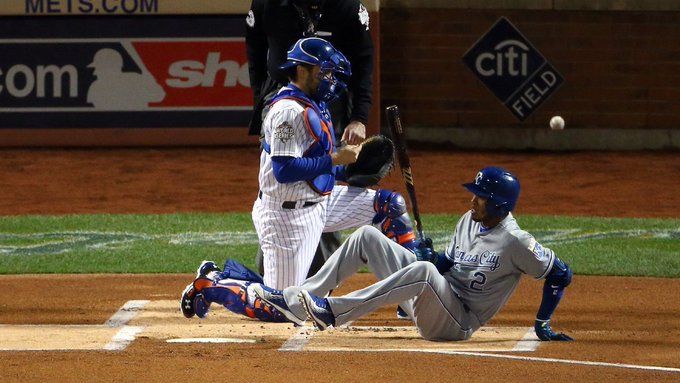
    Noah Syndergaard opened Game 3 of the 2015 World Series with a message. The first pitch he threw on Friday, October 30, 2015, at Citi Field was a 98 mph fastball that sailed high and inside, over the head of Kansas City leadoff hitter Alcides Escobar, who went down in the batter's box and sat there catching his breath as Mets catcher Travis d'Arnaud stood over him. Down two games to none, the Mets were not going quietly — and a record Citi Field crowd of 44,781 had heard the 23-year-old rookie loud and clear. Escobar had spent the postseason ambushing first pitches. The ALCS MVP had hit safely in 12 straight postseason games, and he had opened the Series by driving Matt Harvey's first pitch of Game 1 for an inside-the-park home run. Syndergaard had promised "a few tricks up my sleeve" the day before, and he told d'Arnaud when he arrived at the park that the first pitch would go high and tight. Escobar struck out in the at-bat, then singled in the second inning anyway, stretching his streak to 13 games — while the Royals shouted at Syndergaard from their dugout for innings, Mike Moustakas loudest of all. Kansas City led 3-2 after two innings, but Syndergaard settled in — 12 straight retired in the middle innings, a bases-loaded jam escaped in the sixth — and finished with three runs allowed and six strikeouts over six innings. David Wright hit a two-run homer in the first and drove in four runs, Curtis Granderson's two-run homer in the third put the Mets ahead for good, and a four-run sixth wrapped up a 9-3 win, New York's only victory of the Series as Kansas City took Games 4 and 5 at Citi Field to close it out in five. Syndergaard made no apologies: "I certainly wasn't trying to hit the guy, that's for sure. I just didn't want him getting too comfortable. If they have a problem with me throwing inside, then they can meet me 60 feet, 6 inches away. I've got no problem with that." ⚾ Down two games to none with the season on the line, Syndergaard opened Game 3 by throwing over the leadoff man's head — the right message to send, or a line no pitcher should cross? 👇️
    Download
    46404.6K
  12. Baseball In Pics✓@baseballinpix
    Lou Brock as a Chicago Cub, in the years before the trade that made him famous. The Cubs signed Brock out of Southern University in 1960 on the recommendation of scout Buck O'Neil, and he debuted in September 1961. He was Chicago's regular center fielder in 1962, in the days of the rotating College of Coaches, and its right fielder in 1963. The talent was obvious and the results were ordinary. Brock hit .263, .258 and .251 in his Chicago seasons — a .257 average with 20 home runs and 50 stolen bases as a Cub — while the club tried to make him a power hitter and he fought the sun in right field at Wrigley Field. On June 15, 1964, with Brock hitting .251, Chicago traded him with pitchers Jack Spring and Paul Toth to St. Louis for Ernie Broglio, Bobby Shantz and Doug Clemens. Broglio had gone 18-8 in 1963, and the Chicago Daily News thanked the Cardinals, inviting them to call again anytime. Brock then hit .348 with 33 stolen bases the rest of the season, St. Louis won the pennant on the final day, and Brock hit .300 as the Cardinals beat the Yankees in a seven-game World Series — champions four months after the trade. Broglio, pitching on a bad elbow he had kept quiet, won seven games in all for Chicago and was finished by 1966. Brock played 16 seasons in St. Louis: 3,023 career hits, 938 stolen bases — the all-time record when he retired in 1979, after he passed Ty Cobb with his 893rd steal on August 29, 1977 — a single-season record 118 steals in 1974, eight National League stolen-base titles, a .414 average with seven steals in the 1967 World Series, .464 in 1968, and a first-ballot Hall of Fame election in 1985. ⚾ Brock for Broglio is still called the most lopsided trade in baseball history — more than 60 years on, has any deal come close to it? 👇️
    Download
    167784.3K
  13. Baseball In Pics✓@baseballinpix
    For the 1971 World Series, the ride in from the bullpen came topped with a giant cap. The Pittsburgh Pirates and the Baltimore Orioles each had a bullpen cart for the Series — a golf cart dressed as the club's cap, Pittsburgh's with the gold P, Baltimore's with the orange brim and the cartoon bird — and both carts traveled with the Series, working Memorial Stadium and Three Rivers Stadium. The Series returned to Baltimore for Game 6 on Saturday, October 16, 1971, and Baltimore was where relievers actually rode them; in Pittsburgh, they had walked right past the carts. The cap carts were the high-water mark of a craze the White Sox started at Comiskey Park in 1951; the rides vanished after Milwaukee's Harley-Davidson and sidecar in 1995, until Arizona brought the bullpen cart back in 2018. ⚾ Arizona revived the bullpen cart in 2018, but it never spread the way the cap carts did in their day — should every club bring them back for good? 👇️
    Download
    12442.5K
  14. Baseball In Pics✓@baseballinpix
    Thirty-five years ago today, on October 27, 1991, Jack Morris pitched all 10 innings of Game 7 of the World Series, shutting out the Atlanta Braves 1-0 at the Metrodome before 55,118 fans. The St. Paul native allowed seven hits, struck out eight and walked two on 126 pitches, and he was still out there in the 10th only because he talked his manager out of removing him. Both clubs had finished last in 1990, Minnesota at 74-88 and Atlanta at 65-97, and Kirby Puckett's 11th-inning homer off Charlie Leibrandt the night before had forced this game. Morris, signed as a free agent after 14 seasons in Detroit, had already won Game 1, and now he matched zeroes with 24-year-old John Smoltz, who allowed six hits over 7⅓ scoreless innings before Mike Stanton and Alejandro Peña relieved him. Atlanta's chance came in the eighth: Lonnie Smith singled and Terry Pendleton doubled off the left-center wall, but Smith, deked by Chuck Knoblauch and Greg Gagne faking a play at second, stopped at third. Ron Gant grounded out, David Justice was walked intentionally, and Sid Bream grounded into a 3-2-3 double play, Hrbek to catcher Brian Harper and back to Hrbek. Minnesota's mirror-image chance died the same way in the bottom of the eighth, Hrbek lining into a bases-loaded double play turned by Mark Lemke, and the Twins left the winning run at third in the ninth. After nine innings and 118 pitches, manager Tom Kelly told Morris he was done. “TK, I'm fine. I'm REALLY fine,” Morris said — and he stayed in. Morris retired Atlanta in order in the 10th on eight pitches. Then Dan Gladden broke his bat on a double to left, Knoblauch bunted him to third, Puckett and Hrbek were walked intentionally, and Gene Larkin, pinch-hitting for Jarvis Brown, drove Peña's first pitch to deep left-center for the game's only run. Series MVP Morris — 2-0, a 1.17 ERA in 23 innings — won 254 career games, took a second straight title with Toronto in 1992, and entered the Hall of Fame via the Modern Era Committee in December 2017. ⚾ A 10-inning shutout on 126 pitches in a 1-0 Game 7 — is Morris's gem the greatest pitching performance in World Series history? 👇️
    Download
    13332736.3K
  15. Baseball In Pics✓@baseballinpix
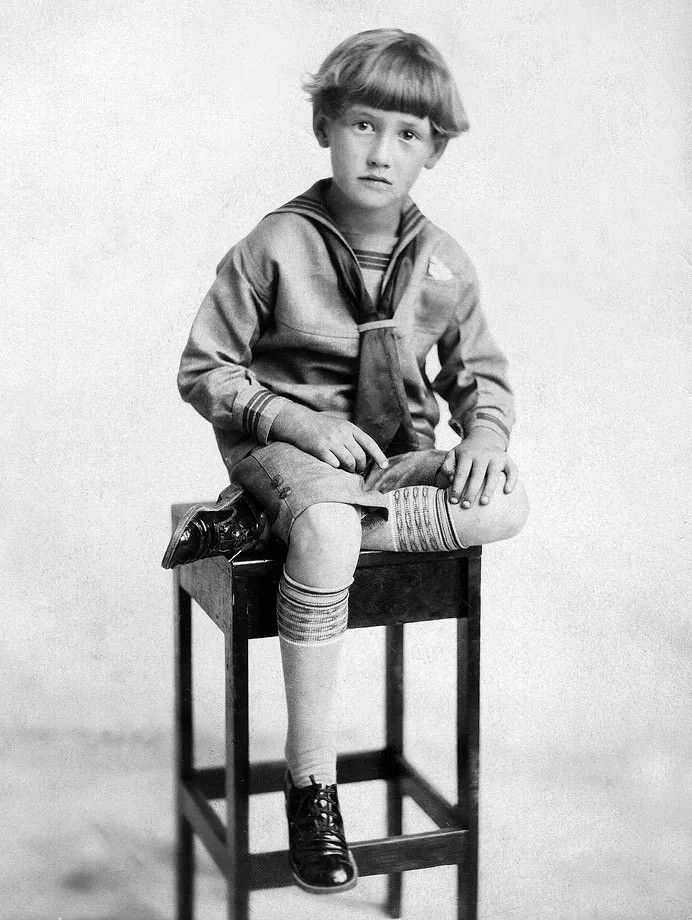
    Six-year-old Ted Williams poses for a portrait in San Diego in 1924. Born there on August 30, 1918, his birth certificate read "Teddy Samuel Williams," named for Theodore Roosevelt and his father — and he disliked "Teddy" so much that he later had the certificate changed to Theodore. His mother, May Venzor, was a Mexican-American born in El Paso, Texas — "Salvation May," a Salvation Army evangelist gone from morning until late at night. His father, Sam, a former cavalryman who ran a passport-photo shop, was gone nearly as much, and Ted and his younger brother, Danny, raised themselves. He kept his mother's heritage quiet for most of his life; had he carried her name, he said, he would have run into problems in that day's Southern California. The boy lived at the North Park Playground, where director Rod Luscomb took him under his wing. At Herbert Hoover High School he pitched and hit for coach Wofford "Wos" Caldwell, and while still a student signed with the hometown San Diego Padres of the Pacific Coast League. At 18, in 1937, he hit .291 with 23 home runs for the Padres, and Boston general manager Eddie Collins, in town scouting other Padres, took an option on him and brought him east the next spring. ⚾ Williams wanted to be remembered as the greatest hitter who ever lived — did the kid in this portrait pull it off, or does Babe Ruth still own that title? 👇️
    Download
    23514.3K
  16. Baseball In Pics✓@baseballinpix
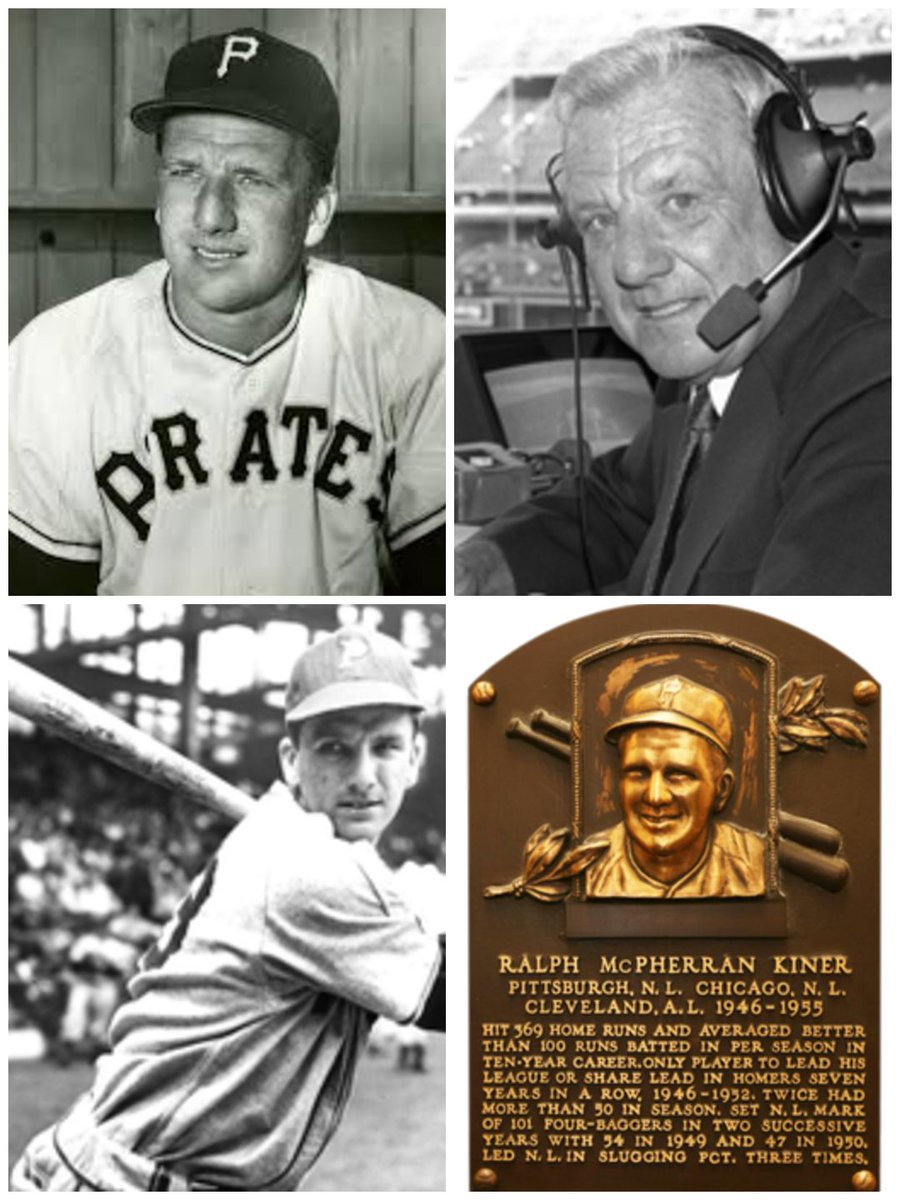
    Ralph Kiner, the Pittsburgh slugger who became the voice of the New York Mets, was born on this day in 1922 in Santa Rita, New Mexico — a copper-mining town that has since vanished, its site swallowed by an open-pit copper mine. Raised in Alhambra, California, he is still the only New Mexico native in the Baseball Hall of Fame. After flying for the Navy in World War II, Kiner reached Pittsburgh in 1946 and did what no hitter has ever matched: he led or shared the National League home run lead in each of his first seven seasons, through 1952. He hit 51 home runs in 1947 and a career-high 54 in 1949, when he also drove in a league-leading 127 runs and batted .310. His 54th came on the season's next-to-last day, two short of Hack Wilson's league record of 56 — and he had lost another homer to a rainout. Kiner drove in 100 runs five straight years and piled up 369 home runs and 1,015 RBIs in just 10 seasons. Then it unraveled: after the last-place 1952 season, general manager Branch Rickey cut his pay and told him, “We finished last with you, we can finish last without you.” Traded to the Chicago Cubs in a 10-player deal in June 1953, he finished in Cleveland in 1955, where a bad back forced him to retire at 32, sixth on the all-time home run list. His second career lasted five times as long. Kiner joined the expansion Mets in their first season, 1962, alongside Lindsey Nelson and Bob Murphy — a trio that stayed together 17 seasons, a record for a broadcast team. His postgame show, Kiner's Korner, took its name from the Forbes Field corner his drives once reached, and fans treasured his malapropisms — “On Father's Day, we again wish you all happy birthday.” He was still broadcasting part-time in 2013, past his 91st birthday. Cooperstown nearly passed him by: elected in January 1975, in his final year on the writers' ballot, with 273 votes — one more than the 272 required. Kiner died on February 6, 2014, at his home in Rancho Mirage, California, at 91. ⚾ Seven straight home run titles and 369 homers in 10 seasons, and Cooperstown still came down to a single vote — is Ralph Kiner the most underrated slugger in the Hall of Fame? 👇️
    Download
    611783.3K
  17. Baseball In Pics✓@baseballinpix
    Reggie Jackson drives the ball for the Oakland Athletics against the New York Mets during the 1973 World Series at Shea Stadium in October 1973 — an October that made up for the one he missed. A year earlier, Jackson had torn his hamstring in the 1972 ALCS against Detroit and had to be carried off the field. He watched the World Series from the dugout on crutches as Oakland beat Cincinnati in seven games without him. He answered with the finest season of his career: a .293 average, an American League-leading 32 home runs, 117 RBIs and 99 runs, and the unanimous vote for AL MVP. In this Series he hit .310 with six RBIs and was named its MVP — but Shea was his quiet stop. He managed one hit in the three games in New York, going hitless in five at-bats in Game 3 as Tom Seaver struck out 12 in eight innings and Oakland won 3-2 in 11 innings on Bert Campaneris's RBI single. The Mets, an 82-79 team that had upset Cincinnati's Big Red Machine for the pennant, won Games 4 and 5 at Shea — Game 5 by 2-0 behind Jerry Koosman, Tug McGraw and Don Hahn's run-scoring triple — to take a 3-2 Series lead. The Series had one more scandal. After Oakland second baseman Mike Andrews made two errors in the 12th inning of Game 2, owner Charlie Finley tried to force him onto the disabled list with a phony injury claim so he could be replaced. Commissioner Bowie Kuhn ordered Andrews reinstated, and when Andrews pinch-hit in Game 4, the Shea crowd gave him a standing ovation. Back in Oakland, Jackson finished the job: his two run-scoring doubles off Seaver gave Catfish Hunter a 2-0 lead in Game 6 and he singled and scored the final run in Oakland's 3-1 win, and in Game 7, Campaneris and Jackson hit two-run homers in the same third inning off Jon Matlack — the only home runs Oakland hit in the entire Series. The A's won 5-2, taking the second of their three straight championships. ⚾ Oakland won three straight championships from 1972 through 1974 and barely gets mentioned among the great dynasties — the most underappreciated dynasty in baseball history? 👇️
    Download
    312893.4K
  18. Baseball In Pics✓@baseballinpix
    Twenty-nine years ago tonight, on October 26, 1997, Edgar Rentería lined Charles Nagy's 0-1 pitch up the middle — off the pitcher's glove and into center field — for a two-out single in the bottom of the 11th inning of Game 7 at Pro Player Stadium, scoring Craig Counsell from third base to give the Florida Marlins a 3-2 win over the Cleveland Indians and the first World Series championship in franchise history. Cleveland was chasing its first title since 1948 and led 2-0 on Tony Fernández's two-out, two-run single in the third inning off Al Leiter, while 21-year-old rookie Jaret Wright, starting on three days' rest, held Florida to one hit through six innings. Bobby Bonilla's leadoff home run in the seventh cut it to 2-1, and the Indians still led when closer José Mesa came on for the ninth. Moisés Alou led off with a single, Charles Johnson singled him to third, and Counsell's sacrifice fly to deep right field tied the game 2-2. Nagy, the Game 3 starter who had been slated to start this game before manager Mike Hargrove chose Wright, entered in the 10th with the Cleveland bullpen spent and took the 11th. Bonilla led off with a single, Gregg Zaun popped up a bunt try, and Counsell reached when Fernández let his grounder roll under his glove, sending Bonilla to third. An intentional walk to Jim Eisenreich loaded the bases, and Devon White's grounder forced Bonilla at home for the second out — leaving it to Rentería, who had already produced the winning hit in the ninth inning or later five times that season. The Marlins, in just their fifth season, became the first wild-card team ever to win the World Series, and Liván Hernández was named the Series MVP. The celebration barely outlasted the winter: owner Wayne Huizenga dismantled the roster, trading away Alou, Kevin Brown, Robb Nen and Jeff Conine, and the defending champions lost 108 games in 1998. ⚾ Rentería delivered the Series-winning hit in 1997 and was the World Series MVP for San Francisco 13 years later — is he the most underrated October player of his generation? 👇️
    Download
    44233.7K
  19. Baseball In Pics✓@baseballinpix
    Ozzie Smith leaps over a sliding Kent Hrbek at second base and fires to first to complete the double play for the St. Louis Cardinals during the 1987 World Series at the Hubert H. Humphrey Metrodome in Minneapolis. The Series, played October 17-25, 1987, was the first in which the home team won every game — and the first played under a roof, where crowds of more than 55,000 Twins fans waving Homer Hankies produced some of the loudest noise the game has ever known. Minnesota needed every decibel: the Twins had won only 85 games in the regular season, the fewest by a World Series champion at that time, and had been outscored over 162 games. Their hometown slugger delivered the Series' biggest swing — in Game 6, facing elimination, Hrbek hit Ken Dayley's first pitch for a sixth-inning grand slam off a reliever who had not allowed a home run to a left-handed hitter in two years, turning a 6-5 game into a 10-5 rout in an 11-5 win that forced Game 7. St. Louis played the entire Series without its best hitter: Jack Clark, who hit 35 home runs and led the National League in on-base percentage and slugging, was left off the roster with a sprained ankle, and Terry Pendleton, nursing a ribcage injury, could only swing left-handed and serve as the designated hitter. The Cardinals still came within one game — they led Frank Viola 2-0 in Game 7 before Viola shut them out the rest of the way in a 4-2 Twins win that made him the Series MVP. Smith was at his peak that fall: he had hit a career-high .303 in 1987, won the Silver Slugger, collected his eighth straight Gold Glove on the way to 13 in a row, and finished second to Andre Dawson in the National League MVP voting. ⚾ Ozzie turned defense into art for 19 seasons — is he the greatest defensive player the game has ever seen, or does another glove take that title? 👇️
    Download
    32393.3K
  20. Baseball In Pics✓@baseballinpix
    Thirty years ago tonight, Wade Boggs — a man famously afraid of horses — climbed onto an NYPD police horse and rode a lap of Yankee Stadium minutes after the Yankees beat Atlanta 3-2 in Game 6 of the 1996 World Series on October 26, 1996. Boggs still says he does not know how he got up there. (Photo by Timothy A. Clary — AFP via Getty Images) Jimmy Key outpitched Greg Maddux, who had shut the Yankees out in Game 2. New York scored all three of its runs in the third: Paul O'Neill doubled, Joe Girardi tripled him home, Derek Jeter singled Girardi in, stole second, and scored on Bernie Williams's single. Key allowed one run in 5⅓ innings, Mariano Rivera threw scoreless seventh and eighth innings, and Series MVP John Wetteland — who saved all four Yankees wins — survived a run in the ninth. With the tying run on second, Mark Lemke popped up foul to third baseman Charlie Hayes to end it before 56,375 fans — the Yankees' first title in 18 years. For Boggs, the ride closed a decade of waiting. With Boston in 1986, he hit .290 in the World Series and doubled and scored in the 10th inning of Game 6 to put the Red Sox ahead 5-3 — then watched from third base as the Mets came back through Bill Buckner. Boston let him go after he slumped to .259 in 1992, and he signed with the Yankees. At 38 in 1996 he batted .311, but by October he was sharing third base with Hayes, acquired in late August to face left-handed pitching. Benched for Games 3 and 4 in Atlanta, Boggs got his moment in Game 4 anyway: pinch-hitting with the bases loaded and two outs in the 10th inning of a game the Yankees had trailed 6-0, he worked a full-count walk off Steve Avery that forced in Tim Raines with the go-ahead run in an 8-6 win. The ring was his first. Three years later, with Tampa Bay, he became the first player ever to reach 3,000 hits with a home run, connecting off Cleveland's Chris Haney on August 7, 1999.
    Download
    14643.5K
  21. Show more posts