Chaitanya✓

@chaaai

Founder @workersio (YC F26) - All things software reliability

1.1K Following14.1K Followers4.4K Posts
  1. Chaitanya✓@chaaai
    AI is writing the code AI is testing the code AI is reviewing the code We are completely losing our understanding of the systems we are building. This is a big liability, that a lot of teams seem to be offloading on their customers. This has to change, and that’s our mission with @workersio
    weisser @julianweisser
    The internet needs defending. This solo founder is helping teams verify mission-critical software. Solo Founders Podcast ep 34 is live with @chaaai of @workersio. 09:25 Why engineers are losing touch with their own code 19:59 First computer at 16, programs on paper 24:30 Selling his first company right before it got valuable 29:21 Killing two ideas fast 51:16 "Nobody's buying code" 53:09 Agents write the code, review it and write the tests 59:22 Finding bugs in Postgres 1:04:03 Solo vs. co-founders 1:10:53 "You're fixing the internet" 1:14:58 The bear case for going solo
    64271K
  2. weisser✓@julianweisser
    The internet needs defending. This solo founder is helping teams verify mission-critical software. Solo Founders Podcast ep 34 is live with @chaaai of @workersio. 09:25 Why engineers are losing touch with their own code 19:59 First computer at 16, programs on paper 24:30 Selling his first company right before it got valuable 29:21 Killing two ideas fast 51:16 "Nobody's buying code" 53:09 Agents write the code, review it and write the tests 59:22 Finding bugs in Postgres 1:04:03 Solo vs. co-founders 1:10:53 "You're fixing the internet" 1:14:58 The bear case for going solo
    Download
    69222.5K
  3. Chaitanya✓@chaaai
    Chaitanya
    RT @solofounders: AI agents have made attacking software fast and cheap. @chaaai is doing incredible work helping teams safeguard themselves.
    weisser @julianweisser
    The internet needs defending. This solo founder is helping teams verify mission-critical software. Solo Founders Podcast ep 34 is live with @chaaai of @workersio. 09:25 Why engineers are losing touch with their own code 19:59 First computer at 16, programs on paper 24:30 Selling his first company right before it got valuable 29:21 Killing two ideas fast 51:16 "Nobody's buying code" 53:09 Agents write the code, review it and write the tests 59:22 Finding bugs in Postgres 1:04:03 Solo vs. co-founders 1:10:53 "You're fixing the internet" 1:14:58 The bear case for going solo
    01038
  4. Chaitanya✓@chaaai
    Chaitanya
    RT @MaheshtheDev: the only console that your agents want in 2026
    Download
    supermemory @supermemory
    with one command, now your agent can use supermemory and fully run it use it - add memories - search them - forget what's out of date run it - create API keys scoped to one namespace - invite teammates - see usage and logs - connect tools like Notion npx supermemory
    03063
  5. supermemory@supermemory
    with one command, now your agent can use supermemory and fully run it use it - add memories - search them - forget what's out of date run it - create API keys scoped to one namespace - invite teammates - see usage and logs - connect tools like Notion npx supermemory
    Download
    73335.9K
  6. Chaitanya✓@chaaai
    Good take
    Christian Szegedy @ChrSzegedy
    The best defense is offense: if you can't stress test your own systems, somebody else will.
    005742
  7. Christian Szegedy✓@ChrSzegedy
    The best defense is offense: if you can't stress test your own systems, somebody else will.
    31324.5K
  8. Chaitanya✓@chaaai
    I love how my entire timeline is full of formal verification stuff, all things software reliability and correctness. A year ago I’d get like 2 likes when I used to post about it.
    961533.4K
  9. Chaitanya✓@chaaai
    We are fixing everything that is wrong with hackathons in SF, it’s going to be the most amazing one (till we host the next one ;) Pair with experts in this space and verify things that you use and love.
    Max von Hippel @maxvonhippel
    We just sent out the last batch of invites for Vibecheck ( We're now at capacity (for the building, for two floors). The event is going to slap and I'm really, really excited about it! - HUGE thanks to our sponsors, including @datadoghq , @theoremlabs , @omni, @workersio , @SafeWithAtlas, @astriolabs, For-All R&D (@qd_forall), and @thegp. This would be totally impossible without you! - I'm also really stoked about several companies that are providing compute and platform tokens for competitors, including: @anthropicai, @PrimeIntellect, @lanyon_ai , @wearerandomlabs . - And finally, we have some amazing experts who've helped plan the event and/or will be in attendance helping to run the event and judge entries, including folks from several of the above-mentioned companies, and from several academic labs, as well as from @mathematics_inc , @axiommathai , and @HarmonicMath . I'll be sending rejection emails for anyone who didn't make it in shortly, and will close down the application form. If any currently RSVPd people cancel, we will send some last-minute invites accordingly. If you wanted to participate in this event but didn't make it in, please note two things: first, this does not reflect poorly on you -- we specifically aimed to accept people from a wide variety of backgrounds, not just a bunch of our friends or of FM experts. And second, we are going to run more of these events! We are loosely planning to run a London event, colocated with FMxAI London in 2027 (and co-organized with @galois, see for more ..); a NYC event, at some TBD date; potentially also an online/remote one; and a defense-oriented event co-organized with @mathematics_inc. If you're interested in one of these let me know. This event is absolutely a labor of love, and we hope you'll follow along. We'll be posting updates, repos, podcast episodes, video interviews, and more throughout, and it's going to be a lot of fun. Also, if you didn't make it in but want to experiment in your free time, we will be posting all the rules and judging criteria in the coming weeks on and we encourage you to play around and post your work! And for those of you who got in, see you in SF!!
    0114977
  10. Max von Hippel✓@maxvonhippel
    We just sent out the last batch of invites for Vibecheck ( We're now at capacity (for the building, for two floors). The event is going to slap and I'm really, really excited about it! - HUGE thanks to our sponsors, including @datadoghq , @theoremlabs , @omni, @workersio , @SafeWithAtlas, @astriolabs, For-All R&D (@qd_forall), and @thegp. This would be totally impossible without you! - I'm also really stoked about several companies that are providing compute and platform tokens for competitors, including: @anthropicai, @PrimeIntellect, @lanyon_ai , @wearerandomlabs . - And finally, we have some amazing experts who've helped plan the event and/or will be in attendance helping to run the event and judge entries, including folks from several of the above-mentioned companies, and from several academic labs, as well as from @mathematics_inc , @axiommathai , and @HarmonicMath . I'll be sending rejection emails for anyone who didn't make it in shortly, and will close down the application form. If any currently RSVPd people cancel, we will send some last-minute invites accordingly. If you wanted to participate in this event but didn't make it in, please note two things: first, this does not reflect poorly on you -- we specifically aimed to accept people from a wide variety of backgrounds, not just a bunch of our friends or of FM experts. And second, we are going to run more of these events! We are loosely planning to run a London event, colocated with FMxAI London in 2027 (and co-organized with @galois, see for more ..); a NYC event, at some TBD date; potentially also an online/remote one; and a defense-oriented event co-organized with @mathematics_inc. If you're interested in one of these let me know. This event is absolutely a labor of love, and we hope you'll follow along. We'll be posting updates, repos, podcast episodes, video interviews, and more throughout, and it's going to be a lot of fun. Also, if you didn't make it in but want to experiment in your free time, we will be posting all the rules and judging criteria in the coming weeks on and we encourage you to play around and post your work! And for those of you who got in, see you in SF!!
    Download
    011475K
  11. Chaitanya✓@chaaai
    The stuff you are agreeing to when you hit that “accept terms & conditions” checkbox
    Tristan @Tristan0x
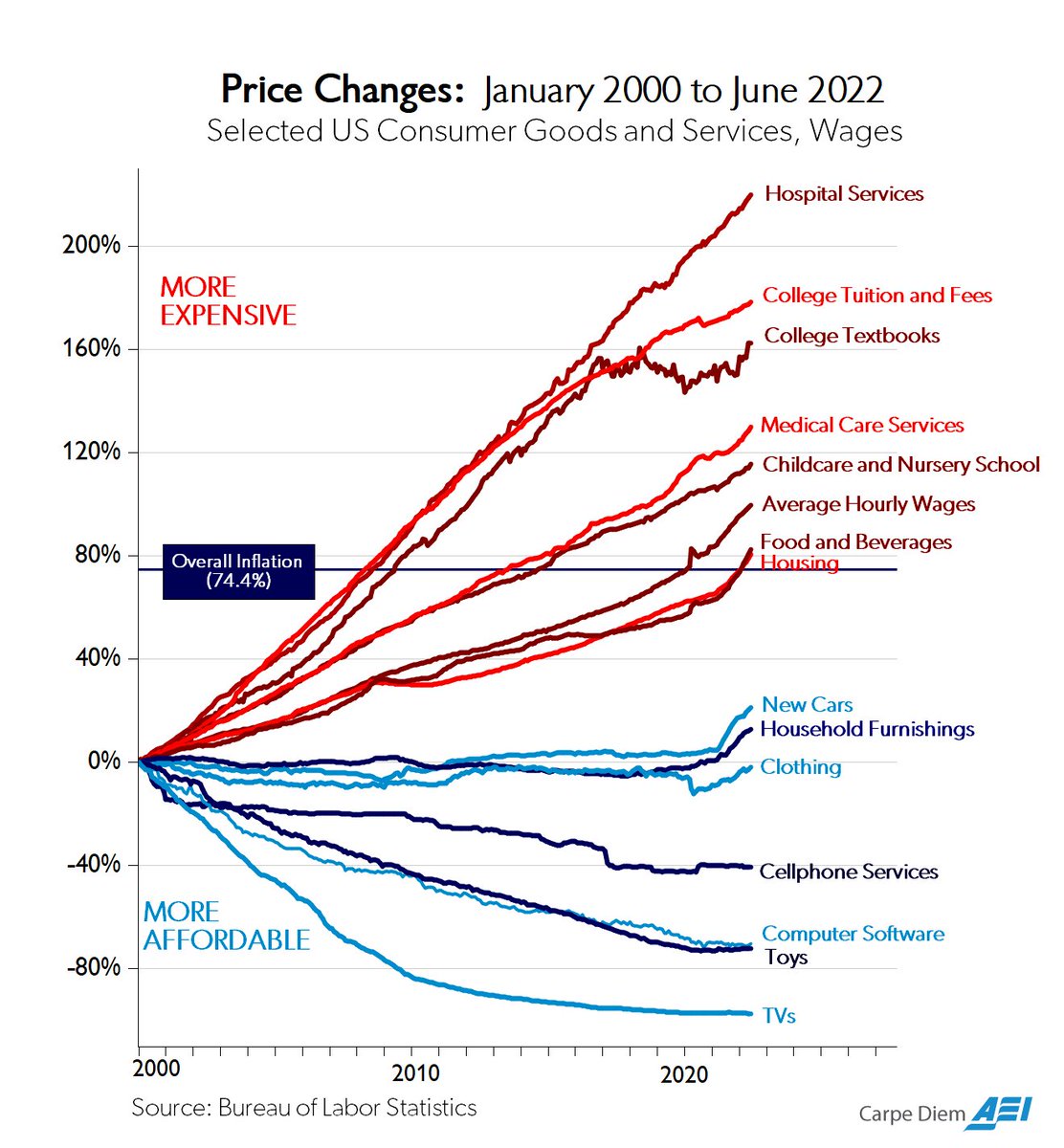
    If you've ever wondered why smart TVs are so cheap, this is why. @log4j rooted his Samsung and found an always-on hot mic, automatic content recognition, geolocation, network mapping, ad targeting and user profiling, shared with Samsung's "400 partners". A lot of it can be blocked in <15 min, wrote a basic guide below. What your TV is doing The main culprit is ACR (automatic content recognition). Your TV screenshots what's on screen, fingerprints it, and sends it home to build your ad profile. Samsung does it every 500ms, LG every 10ms [1]. What is insane: it happens on connected devices too. Plug in your laptop, your console, your work machine, and your TV can fingerprint that via HDMI [1]. He also found that if your Samsung doesn't have a mic, it'll look for one from a connected soundbar or bluetooth device. It's on by default, and you likely agreed to it on the setup screen you clicked through in 10 seconds. Step 1: Turn off ACR Samsung: Terms & Privacy → Viewing Information Services LG: Live Plus Vizio: Viewing Data Roku: "Use info from TV inputs" Sony/Google TV: Samba Interactive TV Menus vary by model, but those are the names to look for. While you're in there, opt out of interest-based ads, reset your advertising ID, decline every optional privacy agreement, turn off voice recognition, and delete apps you never open. Step 2: Give smart devices their own network Put the TV, cameras, speakers and vacuum on your router's guest/IoT network. The logic is simple: these devices rarely get patched. If one gets compromised (getting drastically more frequent with AI), it shouldn't be able to see your other devices or home network. Step 3: Block trackers for the whole house with DNS-level filtering NextDNS (cloud-based) is easy and has a solid free plan. Pi-hole is a little bit more work if you prefer self hosting. For simplicity we'll focus on the former. 1. Sign up at (free tier is plenty) 2. Privacy tab: add a blocklist (OISD is a good bet) and turn on Native Tracking Protection for Samsung, LG, Roku, Amazon (see attached image) 3. Setup tab: copy your endpoint 4. Paste it into your router's DNS settings as DNS-over-HTTPS/TLS (or use the IPs + "Link IP" if your router only does plain DNS) 5. Bonus: block outbound port 53 except to your router. Some devices hardcode their own DNS to get around you Then open the NextDNS logs and watch how often your TV phones home. It's eye-opening. If an app or update breaks, find the domain in the logs and allowlist it. Why they do this TV prices are down 97% since 2000 [2]. Most of that is better manufacturing and brutal competition. But once margins on the hardware hit zero, the cost moved to you. In Q3 2024, Vizio lost $6.7M selling TVs and made $115.8M in gross profit from ads and viewing data [3]. They've said on earnings calls that they keep TV prices low to grow the audience they sell to advertisers. Walmart bought them in 2024. This isn't a conspiracy theory either. Vizio paid $2.2M to the FTC in 2017 for tracking 11 million TVs without consent. Last December, Texas sued Samsung, LG, Sony, Hisense and TCL over ACR. Samsung and LG have since agreed to stop collecting that data without explicit consent [4]. TL;DR 1. ACR off 2. Ads + voice off 3. Smart devices on their own network 4. NextDNS filtering on the router Sources: [1] ACR study: [2] Cost of US consumer goods: [3] Vizio Q3 2024: [4] Texas v. Samsung:
    01111.4K
  12. Tristan✓@Tristan0x
    If you've ever wondered why smart TVs are so cheap, this is why. @log4j rooted his Samsung and found an always-on hot mic, automatic content recognition, geolocation, network mapping, ad targeting and user profiling, shared with Samsung's "400 partners". A lot of it can be blocked in <15 min, wrote a basic guide below. What your TV is doing The main culprit is ACR (automatic content recognition). Your TV screenshots what's on screen, fingerprints it, and sends it home to build your ad profile. Samsung does it every 500ms, LG every 10ms [1]. What is insane: it happens on connected devices too. Plug in your laptop, your console, your work machine, and your TV can fingerprint that via HDMI [1]. He also found that if your Samsung doesn't have a mic, it'll look for one from a connected soundbar or bluetooth device. It's on by default, and you likely agreed to it on the setup screen you clicked through in 10 seconds. Step 1: Turn off ACR Samsung: Terms & Privacy → Viewing Information Services LG: Live Plus Vizio: Viewing Data Roku: "Use info from TV inputs" Sony/Google TV: Samba Interactive TV Menus vary by model, but those are the names to look for. While you're in there, opt out of interest-based ads, reset your advertising ID, decline every optional privacy agreement, turn off voice recognition, and delete apps you never open. Step 2: Give smart devices their own network Put the TV, cameras, speakers and vacuum on your router's guest/IoT network. The logic is simple: these devices rarely get patched. If one gets compromised (getting drastically more frequent with AI), it shouldn't be able to see your other devices or home network. Step 3: Block trackers for the whole house with DNS-level filtering NextDNS (cloud-based) is easy and has a solid free plan. Pi-hole is a little bit more work if you prefer self hosting. For simplicity we'll focus on the former. 1. Sign up at (free tier is plenty) 2. Privacy tab: add a blocklist (OISD is a good bet) and turn on Native Tracking Protection for Samsung, LG, Roku, Amazon (see attached image) 3. Setup tab: copy your endpoint 4. Paste it into your router's DNS settings as DNS-over-HTTPS/TLS (or use the IPs + "Link IP" if your router only does plain DNS) 5. Bonus: block outbound port 53 except to your router. Some devices hardcode their own DNS to get around you Then open the NextDNS logs and watch how often your TV phones home. It's eye-opening. If an app or update breaks, find the domain in the logs and allowlist it. Why they do this TV prices are down 97% since 2000 [2]. Most of that is better manufacturing and brutal competition. But once margins on the hardware hit zero, the cost moved to you. In Q3 2024, Vizio lost $6.7M selling TVs and made $115.8M in gross profit from ads and viewing data [3]. They've said on earnings calls that they keep TV prices low to grow the audience they sell to advertisers. Walmart bought them in 2024. This isn't a conspiracy theory either. Vizio paid $2.2M to the FTC in 2017 for tracking 11 million TVs without consent. Last December, Texas sued Samsung, LG, Sony, Hisense and TCL over ACR. Samsung and LG have since agreed to stop collecting that data without explicit consent [4]. TL;DR 1. ACR off 2. Ads + voice off 3. Smart devices on their own network 4. NextDNS filtering on the router Sources: [1] ACR study: [2] Cost of US consumer goods: [3] Vizio Q3 2024: [4] Texas v. Samsung:
    Download
    3533.3K22.6K1.5M
  13. Chaitanya✓@chaaai
    It’s extremely hard to hire great talent now, because it has become super easy to do “fake work” 99% of the applicants we get are pure slop. It takes more time to see through it than it used to be earlier. I see so many folks now default to networks and pedigree.
    Jack Altman @jaltma
    I get the worry about AI taking all the jobs but it sure seems like engineers are harder to get and more expensive than ever 🤔
    30423513K
  14. Jack Altman✓@jaltma
    I get the worry about AI taking all the jobs but it sure seems like engineers are harder to get and more expensive than ever 🤔
    7819513157K
  15. Chaitanya✓@chaaai
    Chaitanya
    RT @julianweisser: A well-funded competitor had a spy take a sales call with a solo founders company because everyone is dropping them for the new company. The “spy” was, frankly, an idiot. If that’s their best spy imagine how dumb the co-founders must be!
    050101
  16. Chaitanya✓@chaaai
    We need to make the software verification tooling incredibly more accessible to engineers and agents. It shouldn’t take the smartest person on the team to implement these solutions or get value out of them. That’s our goal with @workersio, I’m going to gut this thing out till every single org is using our product and building safe reliable systems with the help of it.
    23281.5K
  17. Chaitanya✓@chaaai
    Chaitanya
    RT @rajashree: Making sure I state it clearly: We can literally patch and prove bug-freeness of the entire software stack running in production. With AI that exists right now for ~$100m. This means no more software-level hacks. I know it sounds too good to be true, but it isn't. AMA.
    Theorem @theoremlabs
    We formally verified 123 open-source projects in a partnership with Anthropic. Formal verification at scale is here! Now we’re launching OSS Verify to scale it to the software we all depend on. We prove it’s crash-free or send you the patches it needs. Free for open-source. Let’s bootstrap the verified software ecosystem:
    0520109
  18. Theorem✓@theoremlabs
    We formally verified 123 open-source projects in a partnership with Anthropic. Formal verification at scale is here! Now we’re launching OSS Verify to scale it to the software we all depend on. We prove it’s crash-free or send you the patches it needs. Free for open-source. Let’s bootstrap the verified software ecosystem:
    Anthropic @AnthropicAI
    New on our Frontier Red Team blog: using Claude to formally verify software at large scale. Formal verification can prove that code is free of certain bugs, but historically it has only been feasible for small codebases (or required a lot of expert time). With AI models, however, this is beginning to change. In collaboration with @theoremlabs, we used Claude to prove security properties in over one hundred real-world open-source libraries over the span of a few weeks. Read our research in full here:
    381181.1K135K
  19. Chaitanya✓@chaaai
    These are interesting times, we see agents hacking stuff and at the same time formally verifying oss software. We are hosting a formal methods hackathon along with some of the best folks in this space including @theoremlabs I’m super excited about all the things people are going to “vibecheck” at the event.
    Anthropic @AnthropicAI
    New on our Frontier Red Team blog: using Claude to formally verify software at large scale. Formal verification can prove that code is free of certain bugs, but historically it has only been feasible for small codebases (or required a lot of expert time). With AI models, however, this is beginning to change. In collaboration with @theoremlabs, we used Claude to prove security properties in over one hundred real-world open-source libraries over the span of a few weeks. Read our research in full here:
    107332.7K
  20. Anthropic✓@AnthropicAI
    New on our Frontier Red Team blog: using Claude to formally verify software at large scale. Formal verification can prove that code is free of certain bugs, but historically it has only been feasible for small codebases (or required a lot of expert time). With AI models, however, this is beginning to change. In collaboration with @theoremlabs, we used Claude to prove security properties in over one hundred real-world open-source libraries over the span of a few weeks. Read our research in full here:
    6631.1K9.8K2.1M
  21. Chaitanya✓@chaaai
    Chaitanya
    RT @mmalisper: Introducing @pgrustdb 0.4 beta. 0.4 includes: - Our new Gravity query engine that's as much as 3x faster than ClickHouse - pgrcolumnar now supports updates and deletes with full ACID compliance - Automatic memory tuning so work_mem and shared_buffers adapt to your workload
    0200130
  22. Chaitanya✓@chaaai
    Chaitanya
    RT @_guglielmo: @anuraggoel "We’ll need verification that works as code is generated and executed, without a human reading every line." ^ @chaaai
    02096
  23. Chaitanya✓@chaaai
    This!
    Jamie Turner @jamwt
    @RhysSullivan We're finally all going to be accountable for broken software. It's overdue.
    1112917
  24. Jamie Turner✓@jamwt
    Posts @RhysSullivan
    @RhysSullivan We're finally all going to be accountable for broken software. It's overdue.
    00221.3K
  25. Chaitanya✓@chaaai
    Chaitanya
    RT @solofounders: The internet needs fixing and Chai is doing it.
    Download
    Chaitanya @chaaai
    Internet really is falling apart, a year ago my @solofounders cohort and I first spoke about "fixing the internet" The cracks are finally starting to show in a big way. Until now, teams could get away with sloppy engineering and poor security practices purely because the cost of compromising systems was super high. That is no longer the case, now all it takes is a few tokens a single gap in your system for it to fall apart. eMudra incident is not going to be the last one and it'll be irresponsible for teams to not have dedicated budget just for security and correctness of their systems. @workersio will have a big part to play in this!
    03093
  26. Chaitanya✓@chaaai
    Internet really is falling apart, a year ago my @solofounders cohort and I first spoke about "fixing the internet" The cracks are finally starting to show in a big way. Until now, teams could get away with sloppy engineering and poor security practices purely because the cost of compromising systems was super high. That is no longer the case, now all it takes is a few tokens a single gap in your system for it to fall apart. eMudra incident is not going to be the last one and it'll be irresponsible for teams to not have dedicated budget just for security and correctness of their systems. @workersio will have a big part to play in this!
    38343.6K