Andrea de Varda

@devarda_a

Postdoc at MIT BCS, interested in language(s) and thought in humans and LMs

591 Following616 Followers217 Posts
  1. Andrea de Varda@devarda_a
    Andrea de Varda
    RT @thomashikaru: If you've noticed a distinct dialect emerging in frontier AI models and struggled to understand what they're talking about, you're not crazy! We turned to psycholinguistics to investigate what makes the writing style so weird, and why this might be happening 🚨New preprint! 🧵
    013602
  2. Andrea de Varda@devarda_a
    Andrea de Varda
    RT @AndrewLampinen: New blog post! I wrote about why I think it's useful to use metaphorical (and anthropomorphic) terms to describe AI. I start by describing the role of metaphor in language and cognition, and how metaphors can help us to efficiently understand relations and make predictions 1/2
    013010.9K
  3. Andrea de Varda@devarda_a
    Andrea de Varda
    RT @gushilab: Why do neural networks become modular? Our paper is now out in Nature Machine Intelligence! @NaturePortfolio We show that multi-task learning promotes modularity under limited capacity and task demands help explain features of brain architecture in addition to the spatial constraints. Great thanks to all the co-authors. @WHYWYH007 @yifannnwu @DaniSBassett @marcelomattar
    05605
  4. Andrea de Varda@devarda_a
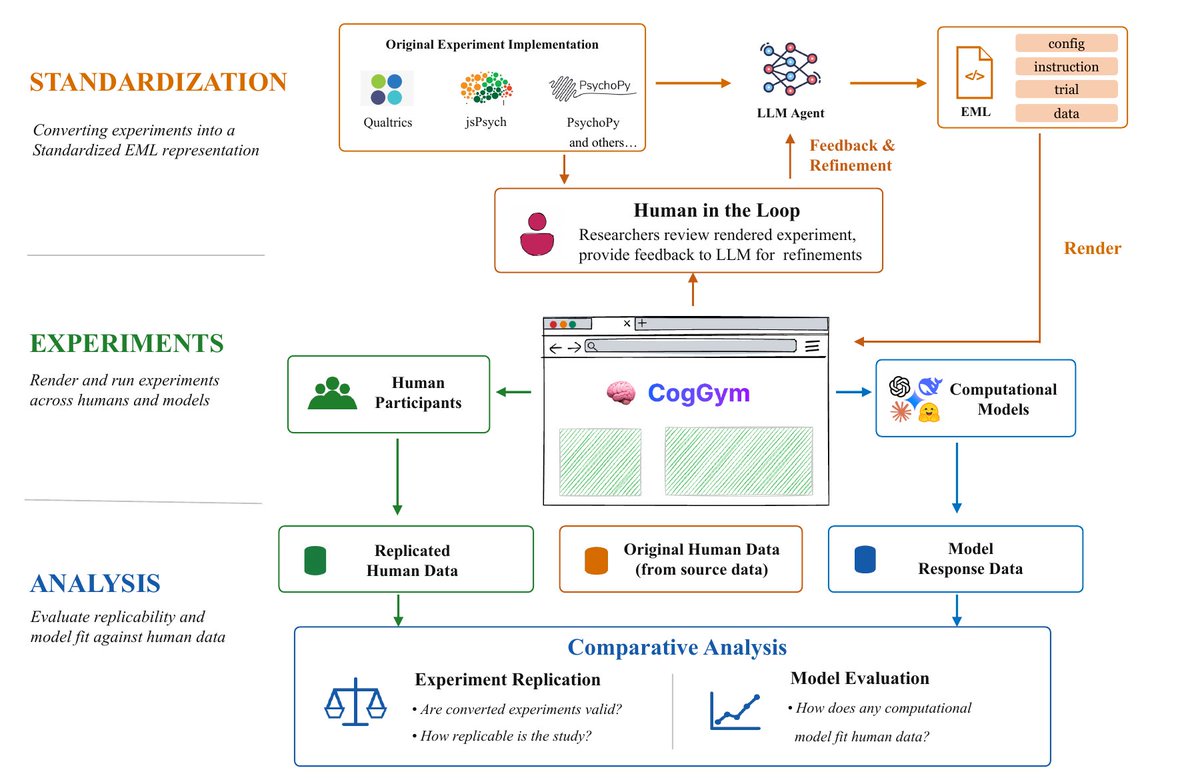
    Check out CogGym, led by @LanceYing42! 258 experiments from 100 cogsci papers (!!) in one format. Main takeaway: models are getting more human-like, but way slower than improvements on math and coding
    Lance Ying @LanceYing42
    Have we built machines that think like humans? 🧠🤖 In a new preprint, we propose CogGym, which compares AI and human judgments across 258 commonsense-reasoning experiments from 100 cognitive-science papers. Paper: Platform:
    04231.9K
  5. Lance Ying✓@LanceYing42
    Have we built machines that think like humans? 🧠🤖 In a new preprint, we propose CogGym, which compares AI and human judgments across 258 commonsense-reasoning experiments from 100 cognitive-science papers. Paper: Platform:
    Download
    63813617.1K
  6. Andrea de Varda@devarda_a
    Andrea de Varda
    RT @whylikethis_: 📄👀 Check out our new survey on Eye Tracking and NLP, where we reflect on past work in this space, and outline a roadmap for what's next. Not needless to say - it's fully human written. The humans are Lena Jäger, David Reich, Omer Shubi and me.
    0203
  7. Andrea de Varda@devarda_a
    Andrea de Varda
    RT @marcel_binz: 📢 The CORE COGNITION lab ( is looking to hire another PhD student, working on automated scientific discovery and knowledge representation in cognitive science. Starting date: March to September 2027. 🙏 Please share widely!
    04003
  8. Andrea de Varda@devarda_a
    Posts @devarda_a
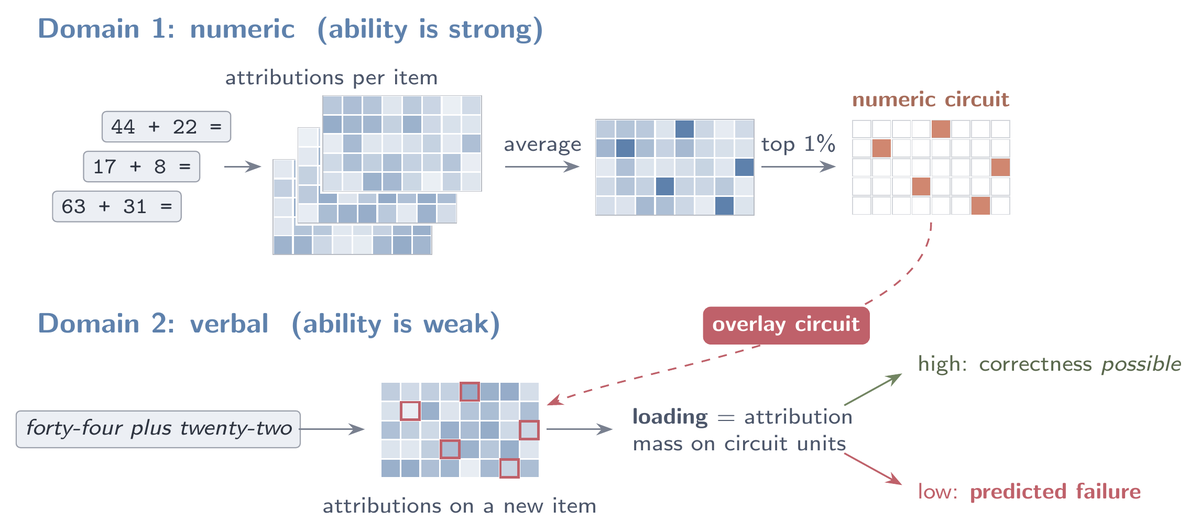
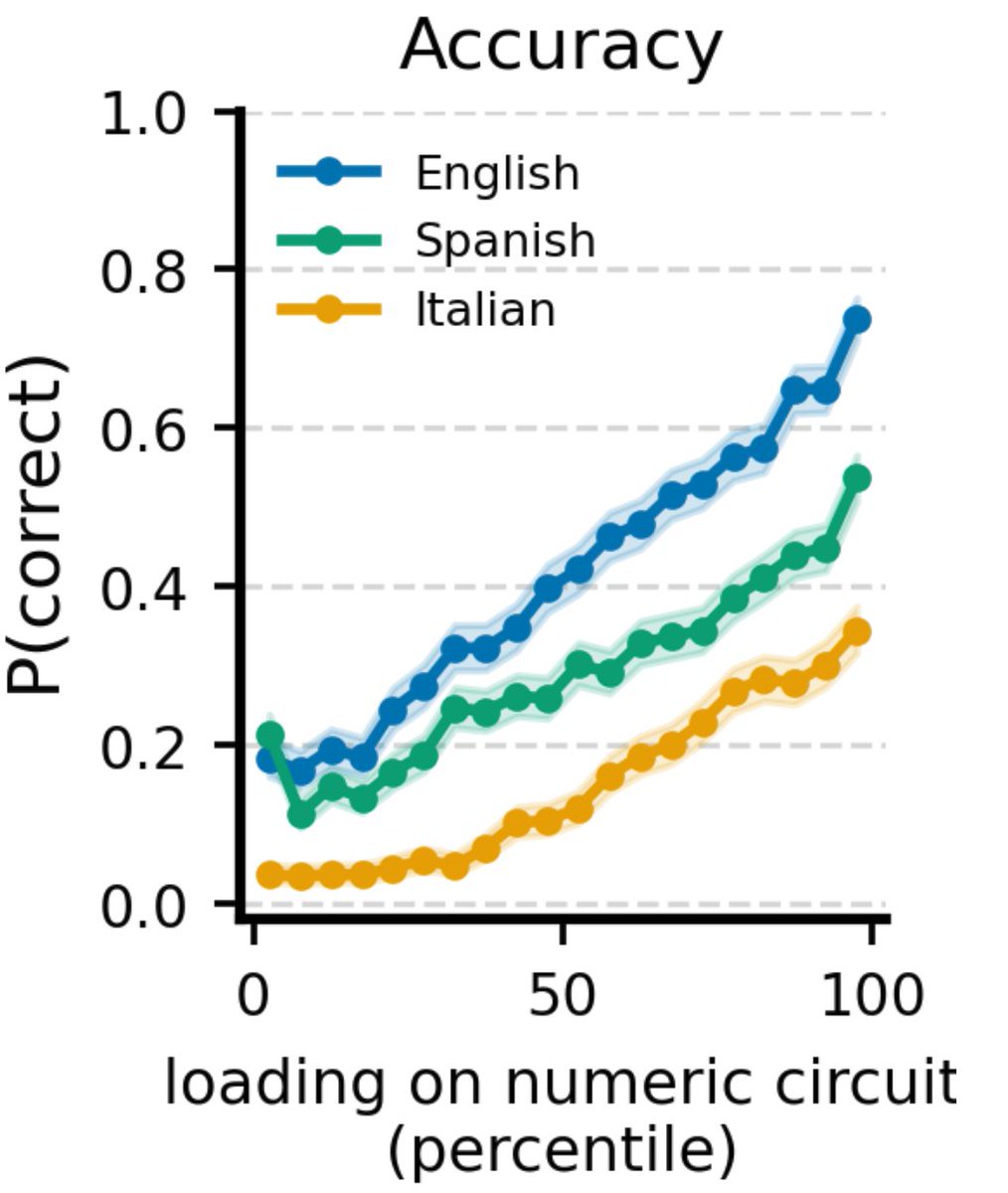
    Circuit overlap predicts generalization at three levels: which formats are hardest (English > Spanish > Italian), which models generalize best, and which individual items get solved (fig below). If the numeric circuit is not engaged, the answer is almost always wrong. (4/5)
    Download
    106476
  9. Andrea de Varda@devarda_a
    Posts @devarda_a
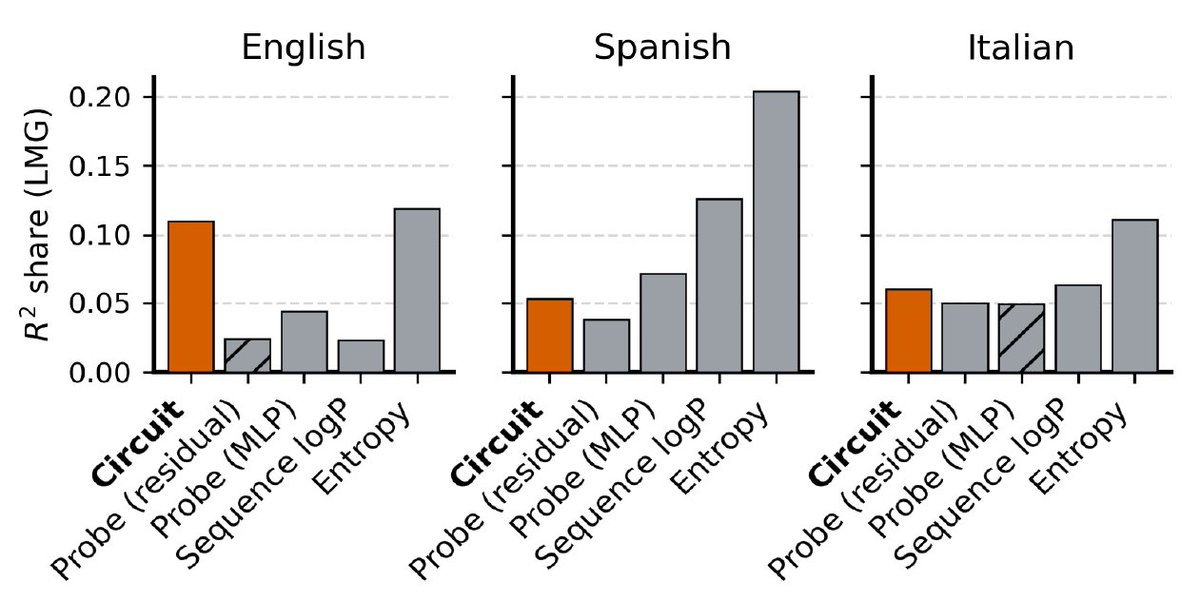
    The circuit metric (unsupervised) predicts generalization as well as or better than supervised probes. Behavioral generalization is grounded in circuit generalization: if the circuit does not transfer the ability does not either. Pre-print 🔗 (5/5)
    Download
    107412
  10. Andrea de Varda@devarda_a
    Andrea de Varda
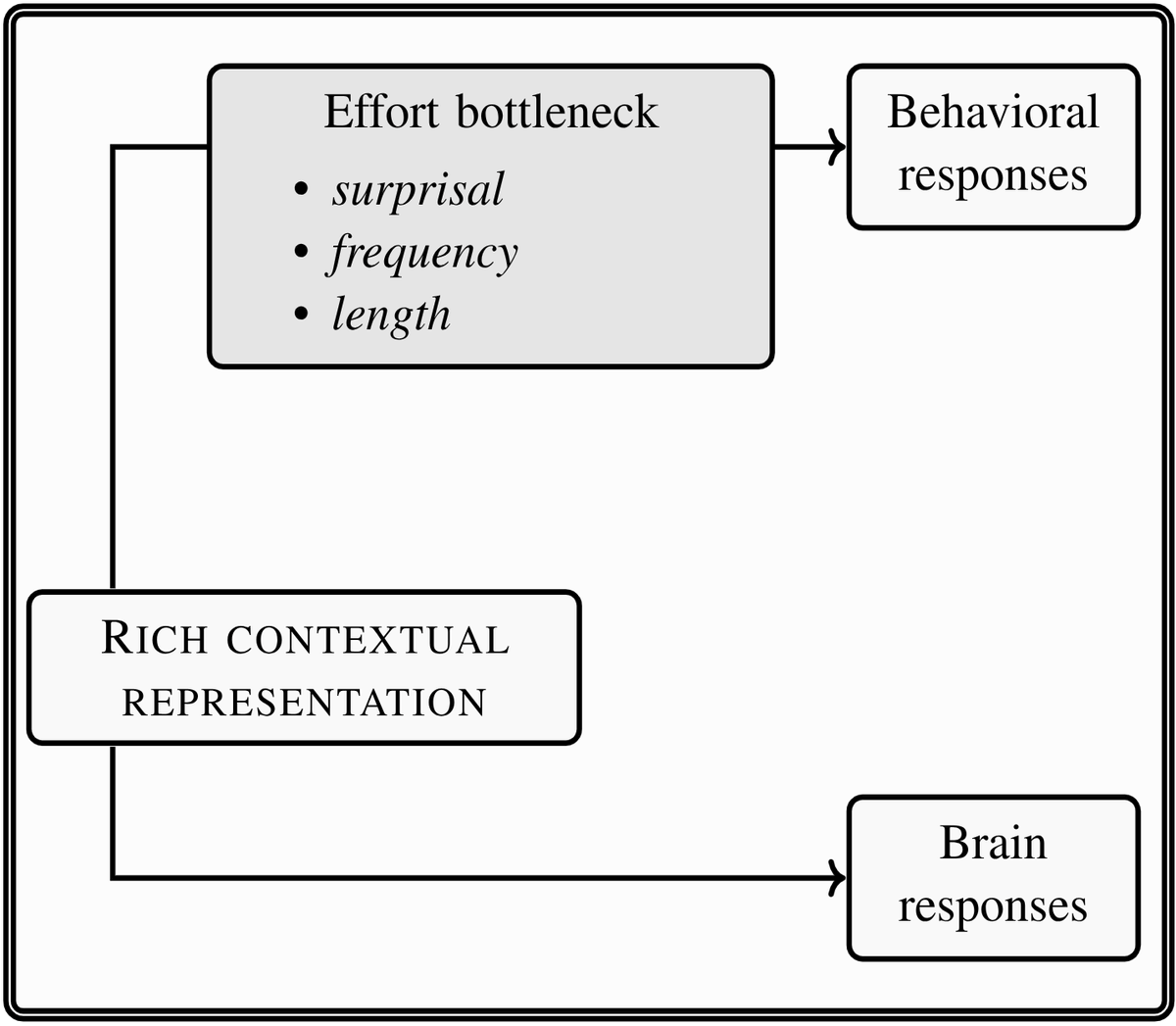
    RT @ev_fedorenko: Go, @devarda_a! A beautiful and comprehensive study!🔑 finding: behav. measures are ~fully reducible to simple predictors of effort (surprisal, word length+frequency), but for 🧠 measures, LLM embeddings carry additional predictive power, likely capturing aspects of meaning.
    Andrea de Varda @devarda_a
    New preprint! 🧠👀🤖 Behavioral and brain responses to language reflect different levels of linguistic representation w/ @whylikethis_ , @ev_fedorenko , and @roger_p_levy (1/10)
    0902
  11. Andrea de Varda@devarda_a
    Posts @devarda_a
    A similar asymmetry emerges within the effort measures. Eye movements are driven mostly by length and frequency (context-independent). Brain responses are driven mostly by surprisal (context-dependent). (9/10)
    102243
  12. Andrea de Varda@devarda_a
    Posts @devarda_a
    👀!=🧠 A unified theory needs both kinds of data with a clear understanding of which levels of representation each measure reflects. (10/10) Pre-print 🔗
    005337
  13. Andrea de Varda@devarda_a
    Posts @devarda_a
    👀 Behavior: effort dominates. SFL (three numbers) performs better than 1600-dim embeddings, esp. in eye-tracking. Adding EMB to SFL gives only small gains. 🧠 Brain: the opposite. Embeddings predict fMRI/N400 responses better than effort. (8/10)
    Download
    105344
  14. Andrea de Varda@devarda_a
    Posts @devarda_a
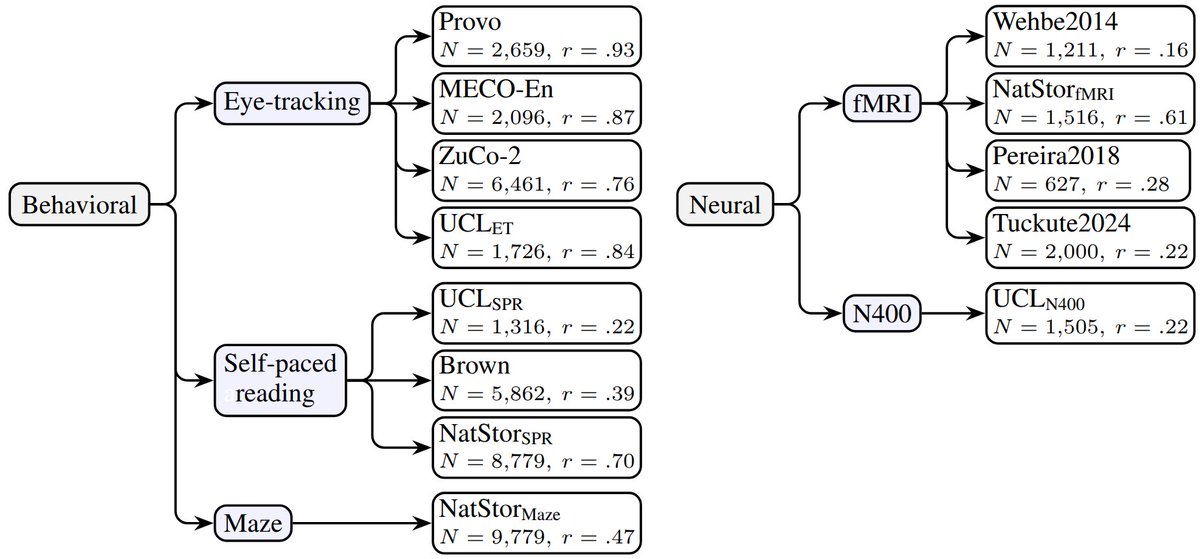
    We test this on 13 datasets: 👀 4 eye-tracking, 3 self-paced reading, 1 Maze, 🧠 1 ERP (N400), and 4 fMRI. All responses are averaged across participants and brain responses are averaged across voxels/electrodes so brain and behavior are comparable (1-dimensional). (7/10)
    Download
    102228
  15. Andrea de Varda@devarda_a
    Posts @devarda_a
    Our hypothesis: behavior shows a bottleneck. Rich representations get compressed into effort dimensions (SFL) before they can influence processing times. Brain responses have more direct access to the high-dimensional representations. (6/10)
    Download
    103314
  16. Andrea de Varda@devarda_a
    Posts @devarda_a
    We use LMs to operationalize effort and meaning in one framework. From the same GPT/GPT-2 models we get (i) surprisal (+freq and len; SFL) for effort, and (ii) contextual embeddings (EMB), high-dimensional vectors that encode form and meaning. (5/10)
    Download
    103332