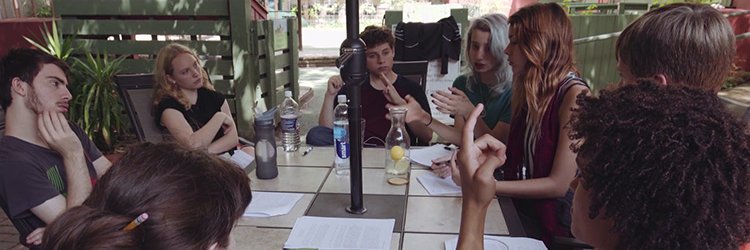
If your child isn’t thriving in school, check out @socraticexp Open House, every Tuesday at 7 pm Central, register here,
102010K
@flowidealism
Founder @Socraticexp. 35 years turning school from your family's biggest stress into its greatest relief. K-12, Socratic seminars, 1:1 mentorship, worldwide.
Vegard Skirbekk @VSkirbekkAmerican teenage boys now spend far less time outdoors: from over 60 minutes a day around 2010 to under 40 in 2023. The gender gap has closed, not because girls go out more, but because boys go out less. New study of 14,235 US adolescents, 2003–2023

Greg Lukianoff @glukianoffOne professor punished for speech? An anecdote. A hundred? Cherry-picked. A thousand? Selection bias. Surveys? Bad questions. Better surveys? Methodological concerns! I've spent 25 years watching defenders of the higher ed status quo turn every new piece of evidence into yet another demand for proof, creating a never-ending cycle of increasingly impossible standards for demonstrating problems that were already obvious 50 years ago!

Zena Hitz @zenahitzHatred can be enormously useful in the life of the mind

Stuart Buck @stuartbuck1Overheard in NY just now: Man at the next table: "Wait, you don't know what Sesame Street is?" Woman: hems and haws Man: "you actually thought it was like Jane Street?!" Woman: "well I thought it was an imitation."

Director Michael Kratsios @mkratsios47.@NSF is hiring the inaugural Head of its Office of Metascience to apply the scientific method to how we fund, organize, and evaluate research. Continuous improvement will accelerate discovery. If you care about the science of science, apply:

Wendy @teachthemx3A similar situation happens when you send your 5 year old who reads chapter books to kindergarten. They're told to sit quietly and read while the teacher works with students who don't know what an "A" is. I'm surprised the coach in this video didn't ask the child to be a peer tutor.

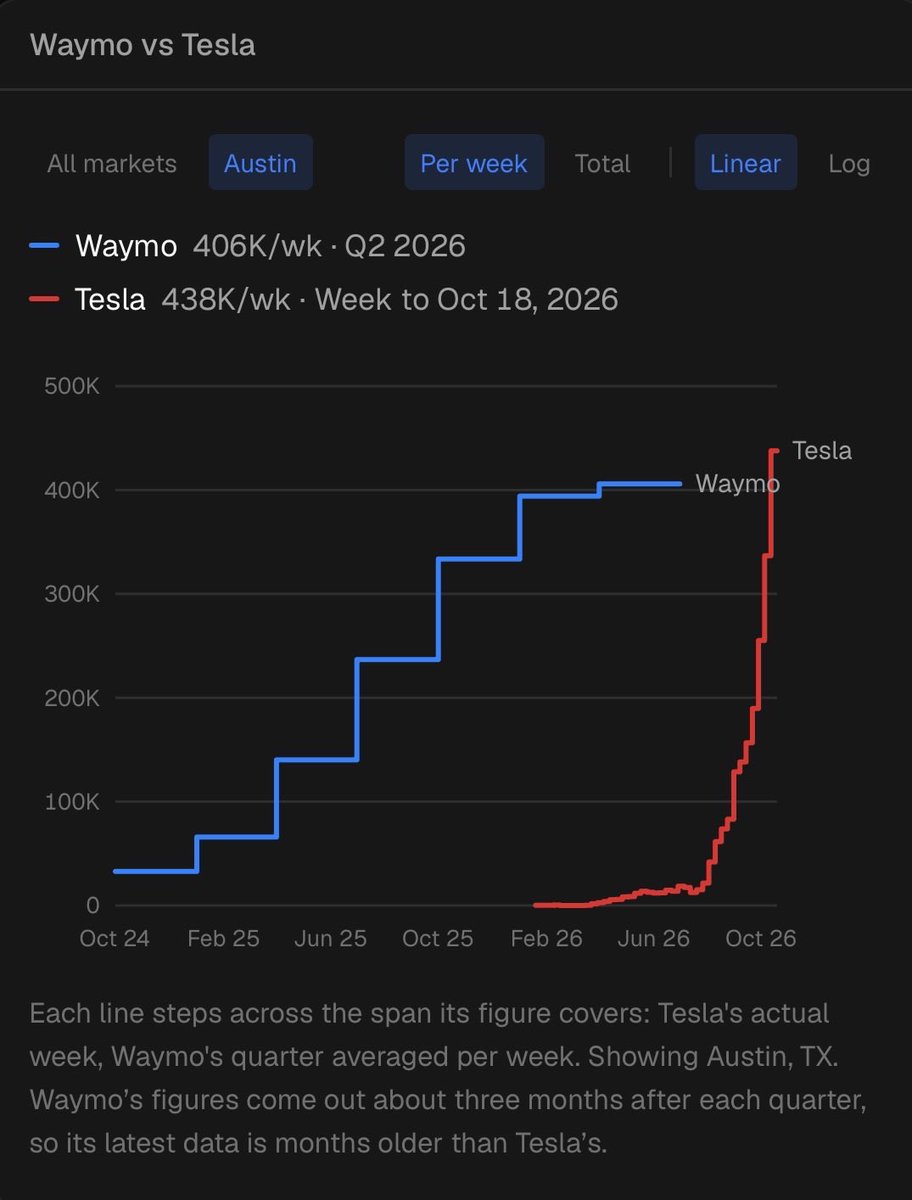
Jason Scharf @Jason_A_ScharfI think the battle for Autonomous Austin might already be over. Source: @RtaxiTracker

Joshua D Phillips @JoshPhillipsPhDOnce more unto the breach, dear friends, once more; Or close the wall up with our English dead. In peace there's nothing so becomes a man As modest stillness and humility: But when the blast of war blows in our ears, Then imitate the action of the tiger; Stiffen the sinews, summon up the blood, Disguise fair nature with hard-favour'd rage Henry V

WindTalker @nmlinguaphileThe Nicoleño (nee-koh-LAY-nyoh) were the Indigenous people of San Nicolas Island, the most remote of California’s Channel Islands. Archaeological evidence shows people lived there for thousands of years. They were Uto-Aztecan speakers closely related to the Tongva (Gabrielino) of the mainland. By the early 1800s their numbers had fallen sharply from disease, a deadly 1814 clash with Russian-American Company otter hunters, and other colonial pressures. In 1835 the remaining small group left for the mainland on the Mexican schooner Peor es Nada. The removal was arranged for their safety after years of decline. A sudden storm forced the ship to sail, and one woman stayed behind with her son. She lived with him for years until a shark or orca took his life while he was fishing. After that she was alone. Captain George Nidever’s party found her in 1853, about 50 years old, living in a whale-bone hut and a nearby cave, wearing a dress of cormorant feathers sewn with sinew, and surviving on shellfish, fish, seals, and seabirds. She greeted the men warmly and spoke a language no one on the mainland understood. Taken to Santa Barbara, she stayed with the Nidever family, was noted for her cheerful manner, was baptized Juana María on her deathbed, and died of illness on October 19, 1853, just seven weeks after leaving the island. Her story inspired Island of the Blue Dolphins. No photograph of her survives. The painting by Holli Harmon shows her on a coastal bluff at Corral Harbor, wearing a dark feather dress, holding a woven basket, and looking out to sea, with a dog, seabirds, and yellow wildflowers around her.


Elizabeth Yin 💛 @dunkhippo33A friend recently told me she's really worried about AI. In fact, a lot of my friends ask me how bad it's going to be and how they should be raising their kids. I wish I had a crystal ball, but here's how I think about it with my own children. Read on >>

scott 🌞 @scottdomesextremely bullish on shadow work in the age of AI, because if you have access to infinite intelligence that can construct a reasonable-sounding argument for any perspective, the limiting factor is in the discernment of the human being - and that discernment gets better or worse depending on their ability to pay attention to their own blindspots & complexes

Liza Libes @pensandpoisonImagine studying music and being taught that Beethoven's greatest achievement was revealing the class structures of nineteenth-century Europe. That's essentially what happens in far too many English departments.

Michael A. Arouet @MichaelAArouetThere is an important implication of the AI revolution that will profoundly impact Europe’s future, one most people don’t grasp yet. Europe’s high labor costs, driven by astronomical taxes and social contributions funding extensive welfare systems and overblown state spending, create a far stronger incentive to automate than in the US. With labor taxes accounting for over half of EU tax revenue, replacing workers with AI and robotics will directly shrink the tax base sustaining pensions, healthcare, and public spending. The US faces automation pressures as well but holds a structural advantage, its dominant AI companies (holding roughly three-quarters of global AI computing capacity versus Europe’s roughly 5%) generate taxable profits and capital gains at home. Higher taxes on tech firms or shareholders can offset lost labor based tax revenue. Europe has no such option. Attempts to tax US providers more heavily would risk restricted access, higher prices, or delayed releases for European users. Without competitive AI, European goods and services will lose competitiveness against those made with superior tools, further eroding corporate and labor tax bases in a reinforcing cycle. Europe would lose both income and corporate tax revenues to sustain its welfare, pensions, and big state systems, while facing a wave of displaced workers expecting benefits. High energy costs (often roughly double US industrial prices) and data rules constraining training make large-scale European domestic AI development basically impossible. This stems from bad left policy choices that raised labor and energy costs while limiting flexibility and data needed for tech innovation with excessive regulations. Bad left policies have always had serious consequences, in the current AI-turbocharged world, they will shake the foundations of European economies and societies. The unrest and riots now seen in many European cities will feel like a walk in the park compared to what is coming.

Marc Porter Magee 🎓 @marcportermageeNYT: “This, like so many laments about what things cost in America, is a housing story. Student housing — even in university-owned residences — can cost more than tuition and related fees.”


John Tasioulas @JTasioulas"He wiped the floor with me" How is philosophical excellence - even greatness - incubated? In a culture of searching questioning and criticism, not the faux politeness of softball questions and cosy "fireside" chats that is all too prevalent today. Key to this culture is recognizing that others taking your ideas seriously enough to subject them to rigorous criticism is itself a mark of respect. Here is Elizabeth Anscombe on when the young Wittgenstein met Frege


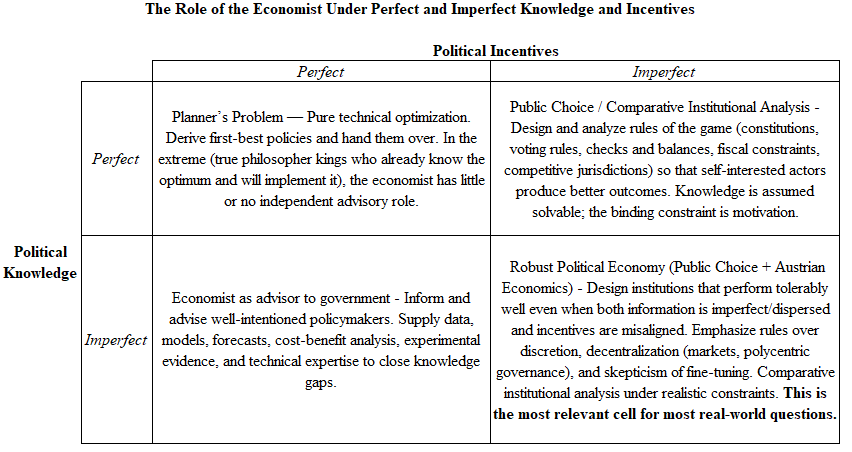
Daniel J. Smith @SmithdanjWhat is the role of the economist? It depends on their assumptions about politicians' knowledge and incentives (and whether they care about doing relevant work).

Adrien | L’Analyste Curieux @analystecurieuxIdée de génie. C’est ça qu’on veut voir sur X. Du partage, des découvertes, de la bienveillance.