Gigi Gronvall

@ggronvall

Professor, @JohnsHopkinsEHE, @JohnsHopkinsSPH, @JohnsHopkins; https://t.co/6Eoxy53kiP

4.3K Following8.6K Followers5.8K Posts
  1. Gigi Gronvall@ggronvall
    Thoughts on the defunding of disease cure research, origin of COVID, the executive order on so-called gain of function research, China’s advances in biotech, the spread of avian flu, and why the US needs to shed this fictional worldview ASAP for health and national security.
    Download
    63228.4K
  2. Gigi Gronvall@ggronvall
    A reminder that the Trump administration canceled a contract for an mRNA H5N1 vaccine in favor of pursuing an older technology that is not likely to work. Explanatory articles from the late, missed Helen Branswell: and
    Marc Johnson @SolidEvidence
    There is something really concerning (and disappointing) going on in the US right now. A dangerous and preventable situation. Let me explain. 1/
    14612219.4K
  3. Marc Johnson✓@SolidEvidence
    There is something really concerning (and disappointing) going on in the US right now. A dangerous and preventable situation. Let me explain. 1/
    Download
    526461.9K333K
  4. Gigi Gronvall@ggronvall
    Gigi Gronvall
    RT @MarionKoopmans: Thread summarising what happened with avian influenza in the US. I had expected a full fledged attempt at stopping the spread in cattle. That did not happen. Same for mpox. That makes me conclude we are in for more and not fully prepared
    Marc Johnson @SolidEvidence
    There is something really concerning (and disappointing) going on in the US right now. A dangerous and preventable situation. Let me explain. 1/
    072030
  5. Gigi Gronvall@ggronvall
    Gigi Gronvall
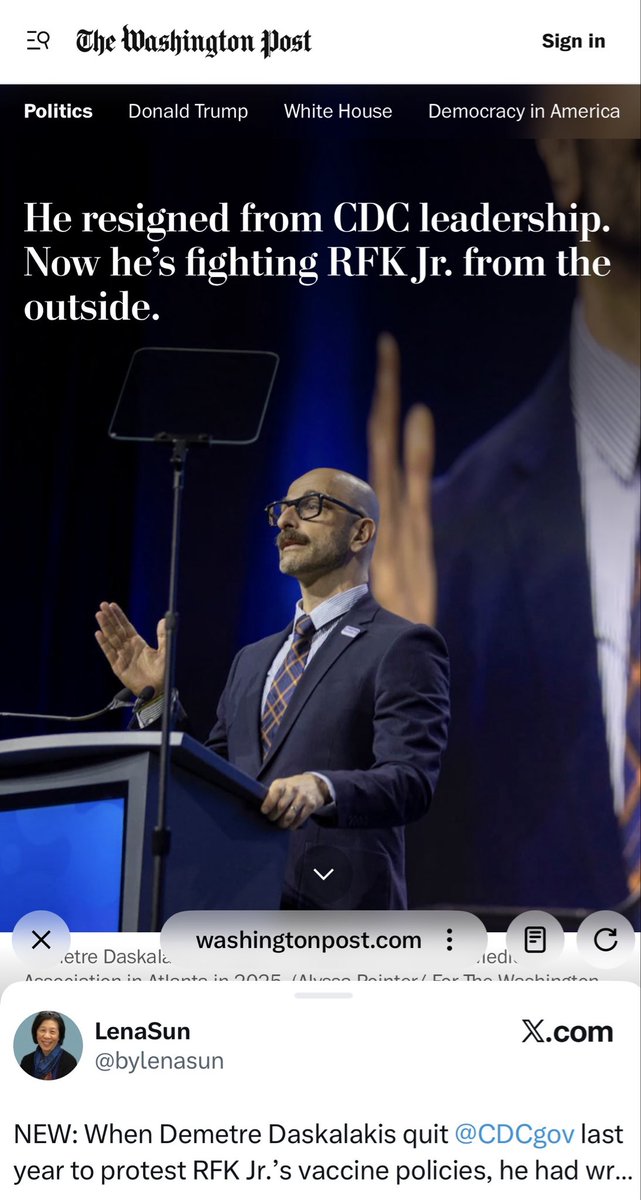
    RT @dr_demetre: I guess you forgot my X handle. Well here it is… remember the time you offered me thoughts and prayers for the CDC shooting? I rejected them because YOUR disinformation was likely partially responsible. How about the time you wrote terms of reference for ACIP that silenced CDC scientists claiming they were biased? Let the people know… do you think HPV causes cancer? Share your scientific process while you were on ACIP. Which domains of evidence did you consider before your committee acted. Did you grade the papers, consider bias and methods. Oh that’s right….You didn’t. Thoughts and prayers, Retsef. Thoughts and prayers back to you. Tag me next time. ❤️
    Retsef Levi @RetsefL
    Unlike what @washingtonpost & @bylenasun attempt to promote Demetre Daskalakis is NOT a ‘warrior’ of public health & science but part of the cult that tarnished any trust in public health! The truth is that he actively tried to sabotage the scientific work of ACIP & the COVID Immunization Workgroup! He worked hard to block discussions on any safety & efficacy issue related to potential contaminants in the COVID vaccines, their prolonged immunological effects (IgG4 class switch), the impact of documented frame shifting (production of unintended antigens) and prolonged vaccine injuries. We should all be thankful that is not anymore in position of power!
    019030
  6. Retsef Levi✓@RetsefL
    Unlike what @washingtonpost & @bylenasun attempt to promote Demetre Daskalakis is NOT a ‘warrior’ of public health & science but part of the cult that tarnished any trust in public health! The truth is that he actively tried to sabotage the scientific work of ACIP & the COVID Immunization Workgroup! He worked hard to block discussions on any safety & efficacy issue related to potential contaminants in the COVID vaccines, their prolonged immunological effects (IgG4 class switch), the impact of documented frame shifting (production of unintended antigens) and prolonged vaccine injuries. We should all be thankful that is not anymore in position of power!
    Download
    2912335430.2K
  7. Gigi Gronvall@ggronvall
    Gigi Gronvall
    RT @p_maverick_b: This is the correct take and I wish I could filter my feed to only get takes from people who have (1) used a frontier model in the last six months and (2) have ever done a biological experiment
    Citrini @citrini
    There’s a really pronounced divide between people who are on the AI side of things and people who are on the biology side of things. Even among people working in AI, the divide persists based on where they’re focused. The AI side, adherents of scaling laws and the bitter lesson, believe that AI getting better means AI being more capable of novel discoveries in medicine (that go beyond discovering new drugs in well understood targets or speeding up dry lab work etc). The biology people think the idea of a bitter lesson in biology is kind of ridiculous and that regardless of AI’s capabilities it’s going to be at least 5-10 years until you could hope to reliably simulate human toxicology in silico (right now AI/ML can’t even reliably simulate in vivo studies like binding affinities or functional assays). Even the most AI pilled of them, who will list all the areas that AI can reduce the time spent on various areas, don’t think the concept of AI discovering novel targets or generating new understanding of causal biology is realistic in the near term. Most, in fact, will readily characterize the assumption that even an “ASI” level model could find cures hidden in our current understanding (without expanding that understanding with significantly more biological data) as patently false. This was a big part of why we wanted to experience it ourselves by using AI for a (very) small portion of what it can do in biology. It was both mind blowing and revealed some poignant insights into how different the problem of making AI better at something like coding is to the problems of biology. Even if it unlocked the ability to generate new molecules at a stunning pace, its simulation (in silico) of binding only had 49% accuracy. And if we wanted to improve that, we’d need to feed it back the data from the lab - data that took about 30x as long to get as it took to generate the molecules. And these were tests in a test tube (turn of phrase), imagine how long it would take if we wanted to improve the model with data that required recruiting humans and monitoring their reactions. Human biology is very complex, and adding a drug - especially a novel drug and doubly so for a novel drug acting on a novel mechanism - means mapping interactions that have nth-order-effects that we don’t have the data to predict. Virtual cells have made advancements enabled by AI, but the perturbations equate to a small fraction of the possible. This is before you even get into curing disease, especially uniquely human diseases. Brain function involves cellular identities that are unique to humans, meaning animal studies are of little use. How long does it take to understand what the side effects of chronic administration of a drug in humans are? AI can speed up analyzing the data, or designing the trial or even getting it approved…but it can’t make a 6 month trial complete in 3 months. I think its important to point out that significant advancements can be made in AI that contribute to biology, while also being realistic about how much it speeds up something as complex as curing a specific cancer or diseases of the brain.

    010035
  8. Citrini✓@citrini
    There’s a really pronounced divide between people who are on the AI side of things and people who are on the biology side of things. Even among people working in AI, the divide persists based on where they’re focused. The AI side, adherents of scaling laws and the bitter lesson, believe that AI getting better means AI being more capable of novel discoveries in medicine (that go beyond discovering new drugs in well understood targets or speeding up dry lab work etc). The biology people think the idea of a bitter lesson in biology is kind of ridiculous and that regardless of AI’s capabilities it’s going to be at least 5-10 years until you could hope to reliably simulate human toxicology in silico (right now AI/ML can’t even reliably simulate in vivo studies like binding affinities or functional assays). Even the most AI pilled of them, who will list all the areas that AI can reduce the time spent on various areas, don’t think the concept of AI discovering novel targets or generating new understanding of causal biology is realistic in the near term. Most, in fact, will readily characterize the assumption that even an “ASI” level model could find cures hidden in our current understanding (without expanding that understanding with significantly more biological data) as patently false. This was a big part of why we wanted to experience it ourselves by using AI for a (very) small portion of what it can do in biology. It was both mind blowing and revealed some poignant insights into how different the problem of making AI better at something like coding is to the problems of biology. Even if it unlocked the ability to generate new molecules at a stunning pace, its simulation (in silico) of binding only had 49% accuracy. And if we wanted to improve that, we’d need to feed it back the data from the lab - data that took about 30x as long to get as it took to generate the molecules. And these were tests in a test tube (turn of phrase), imagine how long it would take if we wanted to improve the model with data that required recruiting humans and monitoring their reactions. Human biology is very complex, and adding a drug - especially a novel drug and doubly so for a novel drug acting on a novel mechanism - means mapping interactions that have nth-order-effects that we don’t have the data to predict. Virtual cells have made advancements enabled by AI, but the perturbations equate to a small fraction of the possible. This is before you even get into curing disease, especially uniquely human diseases. Brain function involves cellular identities that are unique to humans, meaning animal studies are of little use. How long does it take to understand what the side effects of chronic administration of a drug in humans are? AI can speed up analyzing the data, or designing the trial or even getting it approved…but it can’t make a 6 month trial complete in 3 months. I think its important to point out that significant advancements can be made in AI that contribute to biology, while also being realistic about how much it speeds up something as complex as curing a specific cancer or diseases of the brain.
    1161782K347K
  9. Gigi Gronvall@ggronvall
    Gigi Gronvall
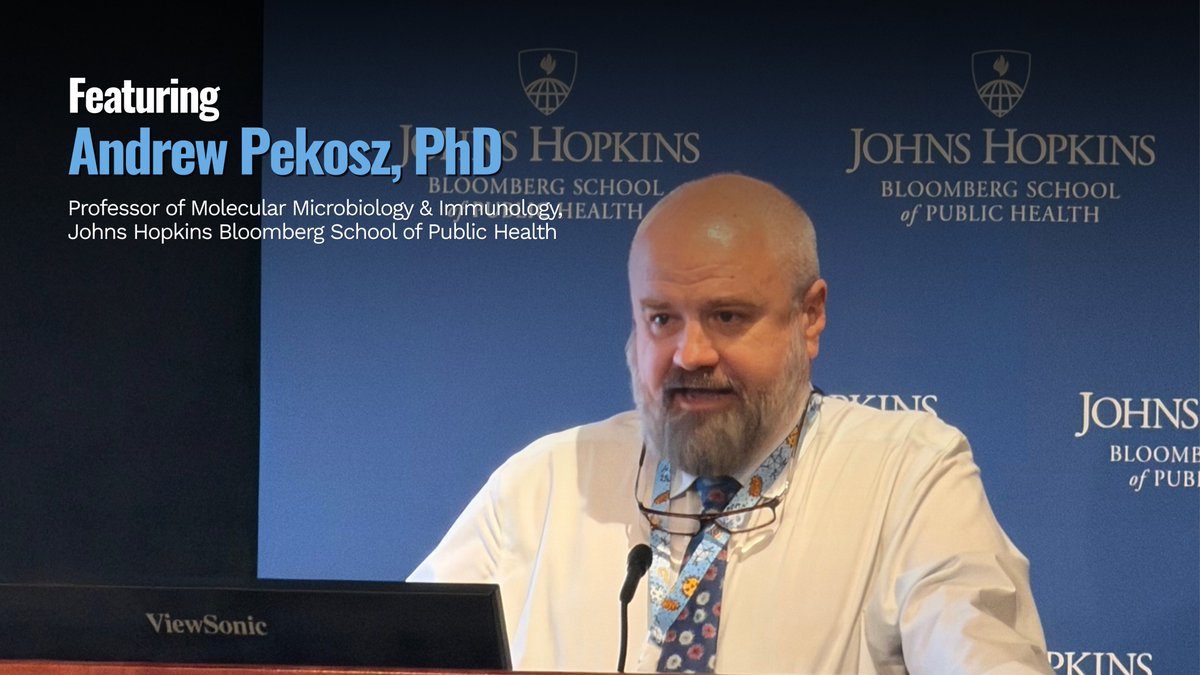
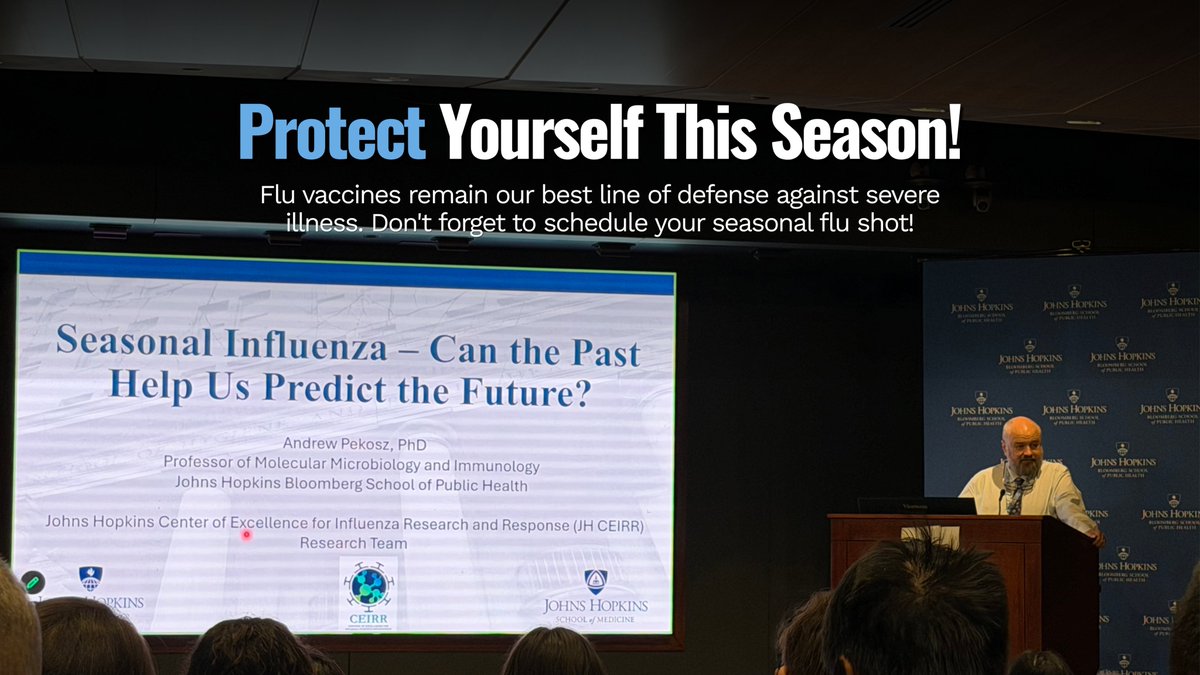
    RT @andrewpekosz: Got a chance to talk to my department about Influenza and the seasonal influenza vaccine. Despite challenges with egg grown vaccine, it still protects people every year. Now is the time to go get your vaccine.
    Molecular Microbiology and Immunology @JohnsHopkinsMMI
    Comment "DONE" if you’ve had your flu shot this season! 💉 Flu vaccines help protect against severe illness. Stay ahead of flu season and protect your community. 📍 Insights from Andrew Pekosz, PhD
    02034
  10. Molecular Microbiology and Immunology@JohnsHopkinsMMI
    Comment "DONE" if you’ve had your flu shot this season! 💉 Flu vaccines help protect against severe illness. Stay ahead of flu season and protect your community. 📍 Insights from Andrew Pekosz, PhD
    Download
    202576
  11. Gigi Gronvall@ggronvall
    This is just ridiculous. Our future is-- obviously? Please go outside once in a while? and hold on to your wallet? -- biological.
    Dr. Émile P. Torres (they/them) @xriskology
    This is TESCREAL pro-extinctionism. I have been screaming about it for YEARS. The “good” outcome is one in which humanity dies out. I’m fucking serious about this, and people—the media—need to WAKE UP.
    1041K
  12. Dr. Émile P. Torres (they/them)@xriskology
    This is TESCREAL pro-extinctionism. I have been screaming about it for YEARS. The “good” outcome is one in which humanity dies out. I’m fucking serious about this, and people—the media—need to WAKE UP.
    483261.1K33K
  13. Gigi Gronvall@ggronvall
    My latest op-ed in The Moscow Times: Labs that study plague deserve scrutiny, but their existence alone is not cause for suspicion. We should expect transparency, safety, and protection for the people doing the work. The US should lead on biosafety.
    The Moscow Times @MoscowTimes
    Opinion: The death of a laboratory worker in Irkutsk has turned the spotlight on how Russian laboratories can ensure workers' safety and improve their transparency, writes @ggronvall.
    13172.4K
  14. The Moscow Times✓@MoscowTimes
    Opinion: The death of a laboratory worker in Irkutsk has turned the spotlight on how Russian laboratories can ensure workers' safety and improve their transparency, writes @ggronvall.
    2244.3K
  15. Gigi Gronvall@ggronvall
    With this reporting that antivax views hampered H5N1 avian influenza preparedness, I wanted to recirculate our article that describes why a "let it rip" strategy for chickens and H5N1 is a very, very, very bad idea.
    POLITICO @politico
    ‘It's time to get a vaccine in place’: RFK Jr.’s views helped stall bird flu plan
    14201.4K
  16. POLITICO✓@politico
    ‘It's time to get a vaccine in place’: RFK Jr.’s views helped stall bird flu plan
    351125.2K
  17. Gigi Gronvall@ggronvall
    Gigi Gronvall
    RT @broadcastben_: Plague in Russia? The headlines are alarming. But what should actually concern us here at home? Johns Hopkins professor and immunologist Gigi Gronvall joins me on Byline to cut through the noise, talk lessons from COVID and whether we’re ready for what comes next.
    01033
  18. Gigi Gronvall@ggronvall
    What worries me about the Russian potential plague incident is that the US is unprepared for disease emergencies — gift link for my piece in the NY Times.
    88218230.3K
  19. Gigi Gronvall@ggronvall
    I’m glad that a forum that security professionals trust hear some well deserved skepticism about the scenario in Jacobsen’s book.
    Yong-Bee Lim, PhD @FuturistYB
    @FilippaLentzos and I just published a @BulletinAtomic (thanks, @MatthewField2!) article about @AnnieJacobsen’s recent book: “Biological War: a Scenario”. You can read the article here:
    35173.4K
  20. Avi Norowitz@AviN102
    Posts @ArmsControlWonk
    @ArmsControlWonk Seems wrong to call a person a monster because (I presume) you believe their communications on nuclear war have been bad.
    20210K
  21. Gigi Gronvall@ggronvall
    What could go wrong? 🫠
    Dr. Jeffrey Lewis @ArmsControlWonk
    Watching this monster torture another field of study is incredibly amusing. She’s your problem now bioengineers!
    20152.7K
  22. Dr. Jeffrey Lewis✓@ArmsControlWonk
    Watching this monster torture another field of study is incredibly amusing. She’s your problem now bioengineers!
    373961681.4K
  23. Gigi Gronvall@ggronvall
    Saskia Popescu is an expert in hospital infection prevention and preparedness for infectious disease outbreaks.
    Dr. Saskia Popescu @SaskiaPopescu
    Reminder folks - we have a lot of unknowns in this situation. Including if it’s plague (which is manageable btw). Hospital exposures reflect someone seeking medical care when they don’t know what they have. Quarantine is often used haphazardly as a term for general response (contact tracing, prophy, etc.). Lab biosafety failures are concerning and require thorough review. (1/2)
    3108310.5K
  24. Dr. Saskia Popescu✓@SaskiaPopescu
    Reminder folks - we have a lot of unknowns in this situation. Including if it’s plague (which is manageable btw). Hospital exposures reflect someone seeking medical care when they don’t know what they have. Quarantine is often used haphazardly as a term for general response (contact tracing, prophy, etc.). Lab biosafety failures are concerning and require thorough review. (1/2)
    1987512174K
  25. Gigi Gronvall@ggronvall
    It’s true, we have been here before! But I think what it reveals is even more interesting. In Sverdlovsk, declassified docs demonstrate the US knew pretty much what happened immediately when USSR had a huge accident in an illegal anthrax production facility. US diplomats happily
    Ashish K. Jha @ashishkjha
    We've been here before. In 1979, anthrax spores escaped a Soviet military facility in Sverdlovsk. At least 66 people died. It took years become public This was all in the old era -- before AI and biological engineering capabilities became widespread
    8130711252K
  26. Ashish K. Jha✓@ashishkjha
    Posts @ashishkjha
    We've been here before. In 1979, anthrax spores escaped a Soviet military facility in Sverdlovsk. At least 66 people died. It took years become public This was all in the old era -- before AI and biological engineering capabilities became widespread
    122572.7K482K
  27. Gigi Gronvall@ggronvall
    Posts @ggronvall
    In a situation where we don’t have a lot of information it is important to try to learn more and offer to help. But while I personally think people should be more alarmed by an outbreak of H5N1 in a US mink farm than this situation, I know that there will come a time when
    2920817.2K
  28. Gigi Gronvall@ggronvall
    Posts @ggronvall
    We will wish we didn’t have a zombified CDC. We will wish we had the infrastructure to save lives and deliver care. Not just detect disease but respond to disease. And we will wish we had the best science that makes disease understandable and hopefully, preventable.
    63539615.9K
  29. Show more posts