The intellectual debate between Lokmanya Bal Gangadhar
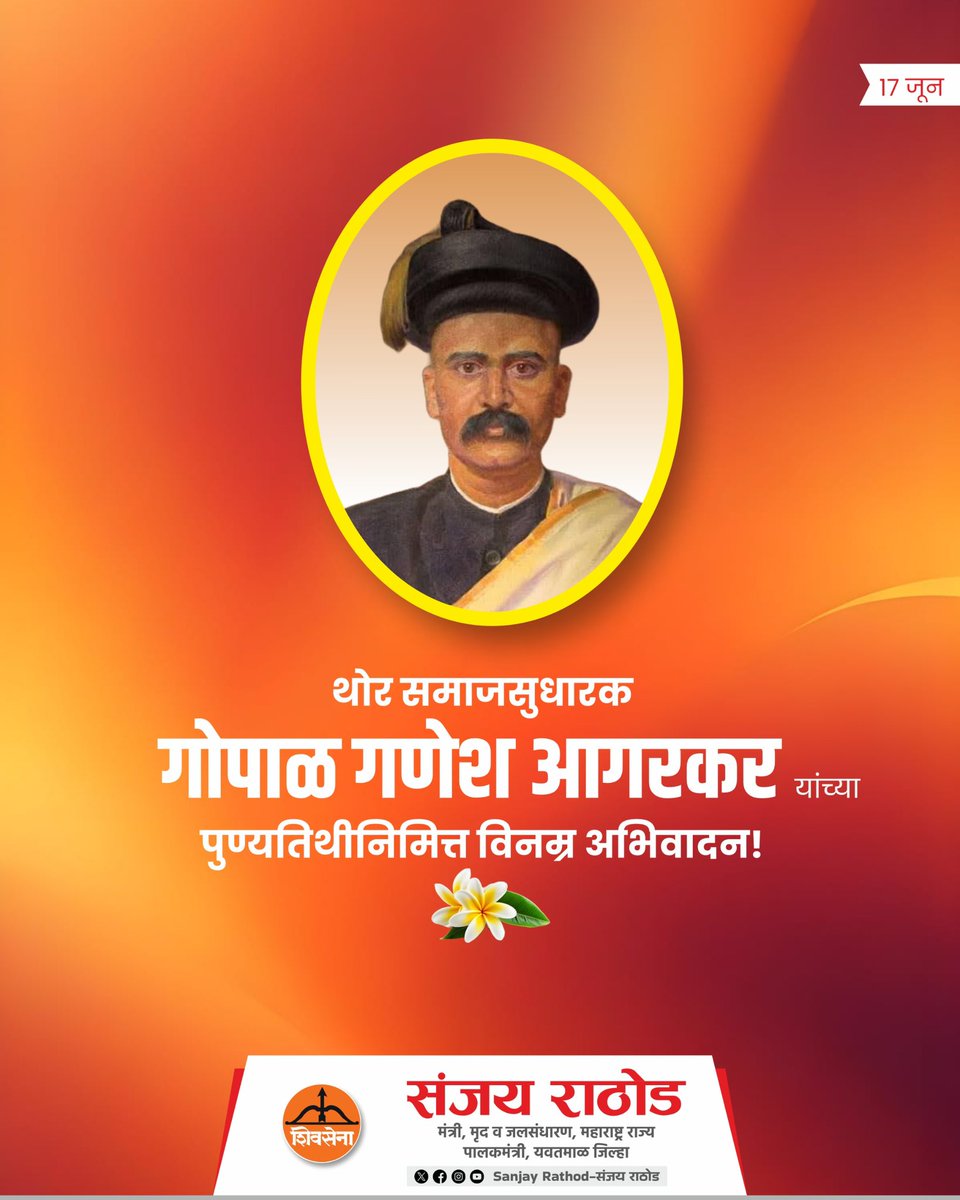
#Tilak and Gopal Ganesh
#Agarkar represents a crucial moment in
#Maharashtra’s history, reflecting a deeper conflict between Western Knowledge Systems (
#WKS) and Indian Knowledge Systems (
#IKS).
Both Tilak and Agarkar were pioneering
#thinkers, co-founding institutions like the New English School, Arya Bhushan Press, Deccan Education Society, and Fergusson College, shaping the future of education and public discourse in India. However, their ideological paths diverged sharply over fundamental questions concerning
#dharma,
#reform, and the role of
#tradition in
#modern society.
Agarkar, heavily influenced by Western
#rationalism and
#materialist #philosophy, viewed dharma as a product of ignorance and fear, advocating for radical social reforms based on European
#Enlightenment thought. Tilak, on the other hand, resisted the uncritical acceptance of Western frameworks, seeking to
#revitalize and
#reinterpret IKS in a way that accommodated modernity while preserving the spiritual and philosophical core of Bharatiya traditions.
Their debate, particularly on topics like idol worship, the nature of dharma, and education, encapsulates the broader struggle between colonial modernity and indigenous knowledge traditions.
Young
#Scholar Adwait Athawale
@athawale_adwait , through his research, re-examines this historic debate by analyzing the epistemological roots of Tilak and Agarkar’s positions.
His work, presented as a paper at the INDICA Conference on "IKS Studies through
#Colonial Encounter" challenges existing historiographies that have largely focused on socio-political aspects, instead bringing IKS into the center of the discussion. By highlighting the Western materialist underpinnings of Agarkar’s arguments and Tilak’s comparative approach to Indian and Western philosophies, Athawale provides a fresh lens to understand their intellectual legacy.
This study, therefore, seeks to analyze the Tilak-Agarkar debate through the framework of knowledge systems, exploring its implications for contemporary discussions on modernity, reform, and the role of IKS in shaping India’s intellectual future.
It was presented at the recently concluded INDICA conference on "IKS Studies through Colonial Encounter".
Read the complete conversation on our website through the link in the next tweet.
#IKSChangemakers #IndianKnowledgeSystems
+