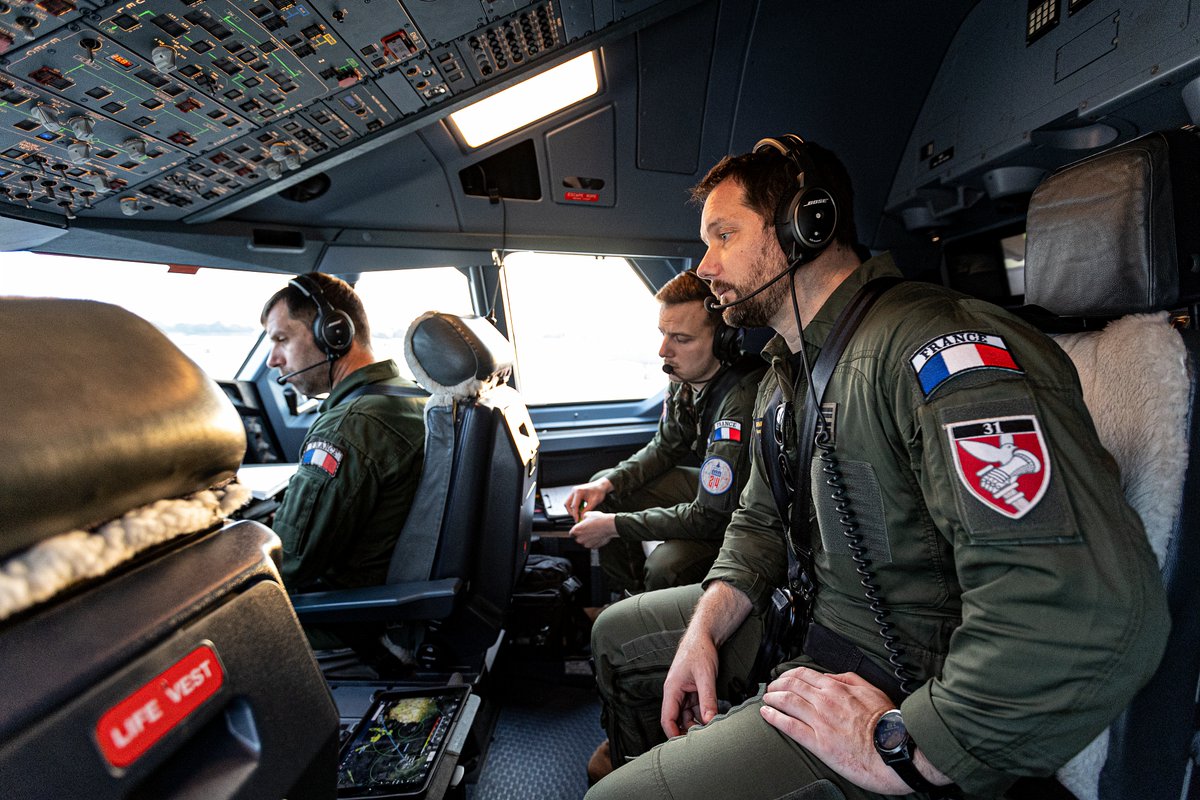
AWACS emerged as an anchor for multi-domain operations during Marka e Haq and even back then.
When the US Air Force invaded Iraq, the outcome of the air war was largely determined before Iraqi forces could mount any meaningful resistance. Iraq lacked an effective AWACS capability, airborne surveillance aircraft and a properly integrated air defence network. USAF achieved air superiority so rapidly that the Iraqi Air Force had very little opportunity to demonstrate its capabilities or effectively challenge American air operations.
We witnessed a similar dynamic during the 2019 India-Pakistan aerial confrontation. Pakistan reportedly shot down 2 Indian Air Force aircraft (MiG-21 Bison and Su-30MK), while 9 Indian aircraft were reportedly tracked or locked by Pakistani F-16 and JF-17 fighters. An important factor was the Pakistan Air Force's Saab 2000 Erieye AWACS, which provided airborne surveillance, situational awareness and data-sharing capabilities, allowing Pakistani fighters to receive information beyond the detection range of their own onboard systems and missile seekers.
A similar, but much larger, role was attributed to airborne early-warning and control aircraft during the 2025 Indo-Pak military skirmishes. Pakistan claimed 8 aerial kills, and the reported outcome was not attributed solely to the PL-15 BVR missiles or the J-10C fighters. The Saab 2000 Erieye AWACS reportedly played an important supporting role by providing a broader operational picture.
China is also advancing its airborne early-warning capabilities, with its emerging KJ-3000 programme, based on the Y-20 transport aircraft, representing an important development. It is expected to provide China with significantly enhanced long-range airborne surveillance, command-and-control and battlespace management capabilities. If its anticipated capabilities are realised, it could become one of the most advanced AWACS platforms in the world.
China's next-generation airborne early warning and control aircraft, the KJ-3000, is based on the upgraded Y-20B strategic transport platform. Powered by four indigenous WS-20 high-bypass turbofan engines, it offers improved efficiency, longer range and higher payload.
KJ-3000 introduces the first digital radar architecture with advanced data links, passive target identification, and sophisticated anti-jamming features. Its rotating AESA dome on the Y-20B airframe delivers true 360° coverage and high-energy detection of stealth targets beyond 360 km.