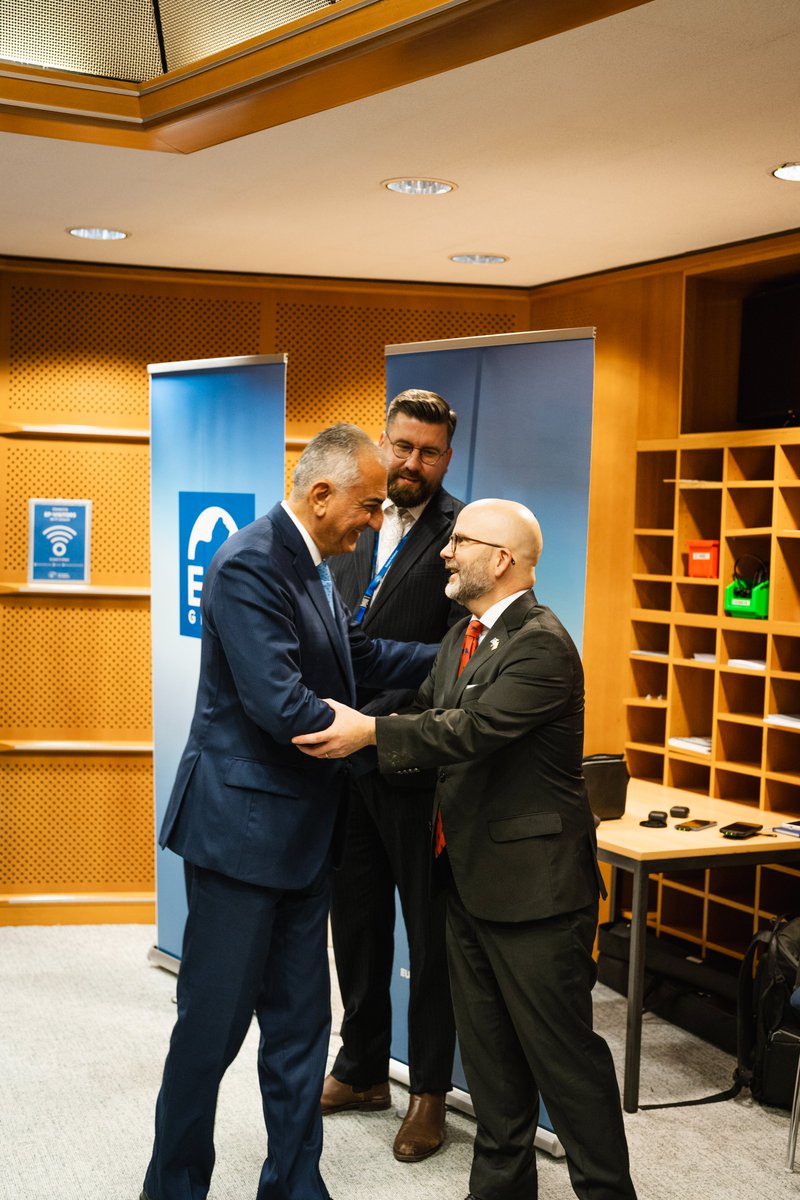
President Trump today advanced an important discussion with several European leaders about the need for a broader European security architecture that can help establish the conditions for lasting peace.
Building on his leadership and the substantive work undertaken this week in Brussels with Ukraine, NATO, and our European partners,
@SEPeaceMissions and I wanted to share some of the objectives guiding our ongoing discussions.
For more than 30 years, Europe and Russia have struggled to establish a sustainable security framework. Decades of mistrust, competing security concerns, and the devastating consequences of this war make this an extraordinarily difficult challenge, but one that is essential to lasting peace.
Our objective is to develop practical arrangements that address the security concerns of all sides, reduce the risk of future conflict, and create a more stable and predictable security environment.
We are exploring five principal goals: permanent security consultations, reliable crisis communications, greater military transparency, reciprocal measures to reduce escalation risks, and an enduring framework for long-term European security and stability.
Any arrangements must fully respect the sovereignty, territorial integrity, and independent decision-making of every nation. Each country will retain authority over its own security and alliances, and no country would have a veto over another’s sovereign choices. NATO will remain central to European collective defense, and this initiative would build upon existing institutions and commitments.
We will continue consultations through the Shell Bay format with Ukraine, NATO, the EU, and our European partners, expanding engagement to ensure that all relevant perspectives and ideas are considered. We will also engage Russia as part of the peace negotiations.
Next week in Abu Dhabi, the United States will convene the first trilateral peace discussions with Ukraine and Russia since February. All parties remain intensely engaged in preparing for substantive and productive negotiations. We will consult closely with our European partners on the sidelines and, if progress is made, aim to move toward a broader multilateral format with their direct participation.
These ideas continue to evolve, and we welcome thoughtful input. Creating the right structure will be critical to ending this war and transitioning from conflict toward conditions that make possible a durable peace.
This is difficult, detailed work. There are no easy solutions. But the opportunity to help end this devastating war and build a foundation for a more peaceful, secure, and prosperous Europe for generations to come makes it a challenge well worth undertaking.
We will see how these discussions develop and continue working intensively with all parties toward President Trump’s objective of a comprehensive and lasting peace.