In a new
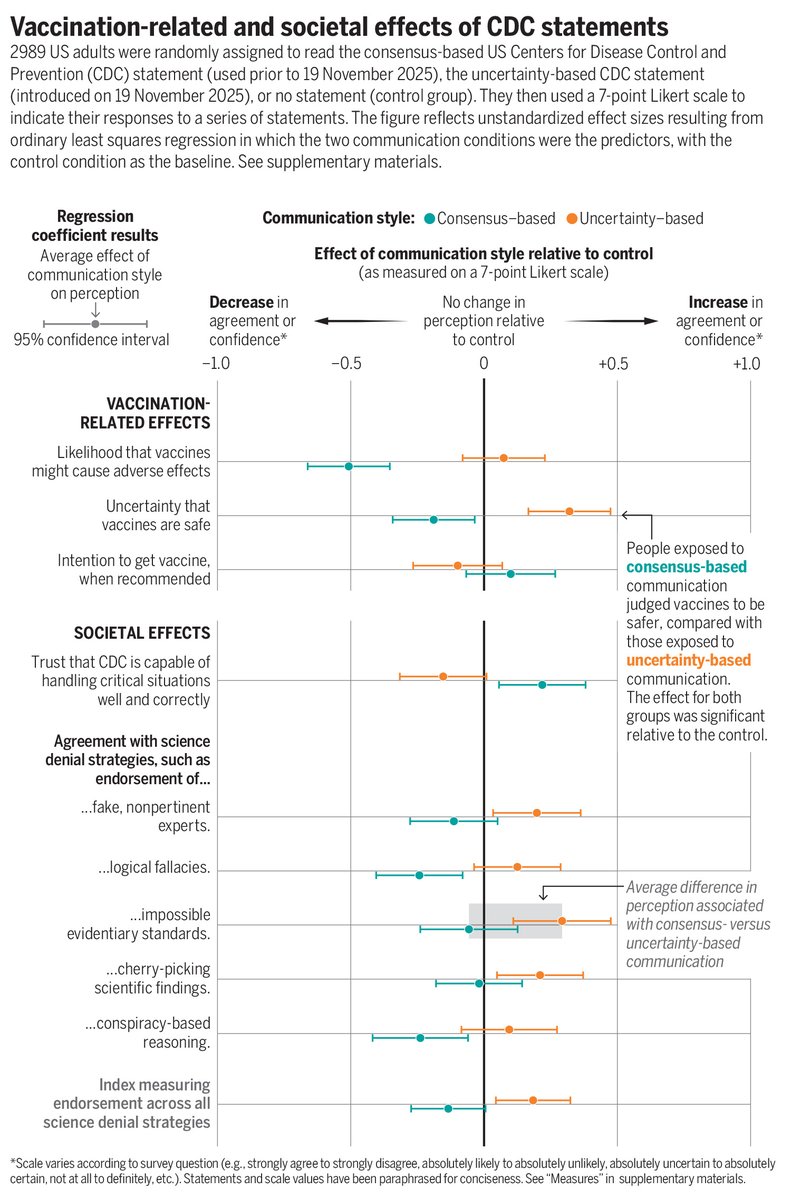
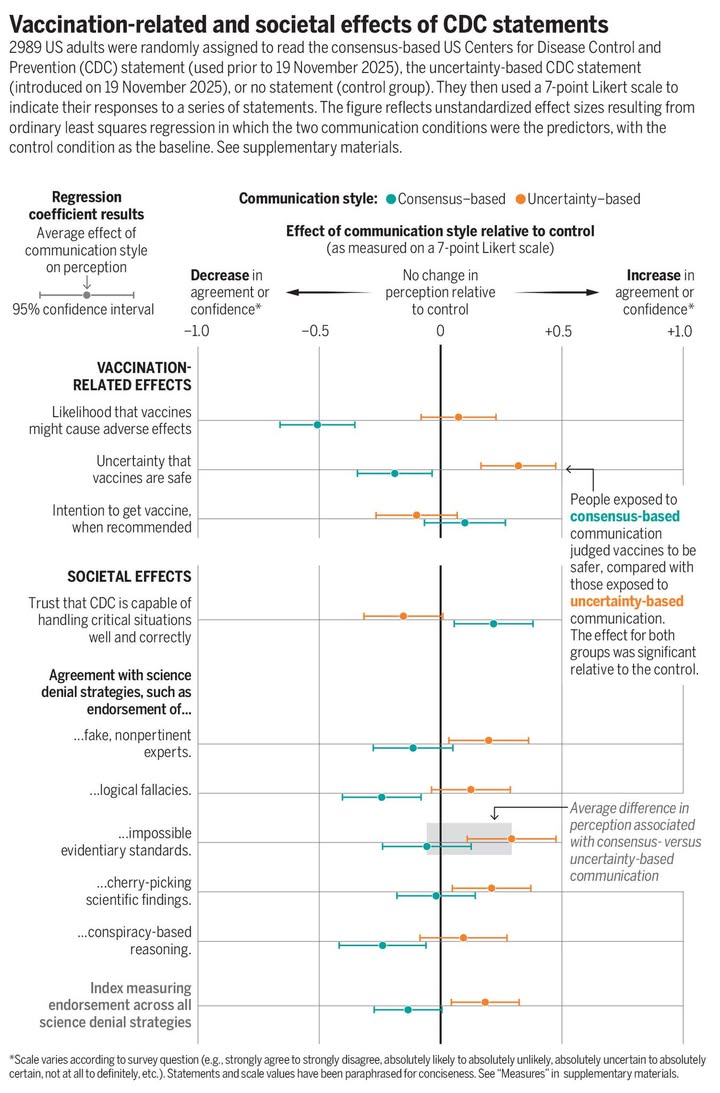
#SciencePolicyArticle, researchers conducted an online experiment using an opt-in sample of 2,989 U.S. adult participants. Participants were randomly exposed to either a consensus-based or uncertainty-based CDC-style statement, and their responses were measured.
They found that exposure to the uncertainty-based message increased perceived vaccine risks and uncertainty, reduced vaccination intentions, lowered trust in the CDC, and increased endorsement of science-denial strategies. These effects occurred regardless of participants’ political orientation.
“Overall, the findings underscore the responsibility of public health institutions to communicate scientific uncertainty in ways that protect, rather than inadvertently weaken, population health,” write the authors.
Learn more: