#SecurityAlert
Al-Shabaab’s Engagement with Somali Clans: A Coercive Strategy of Political Influence and Territorial Control
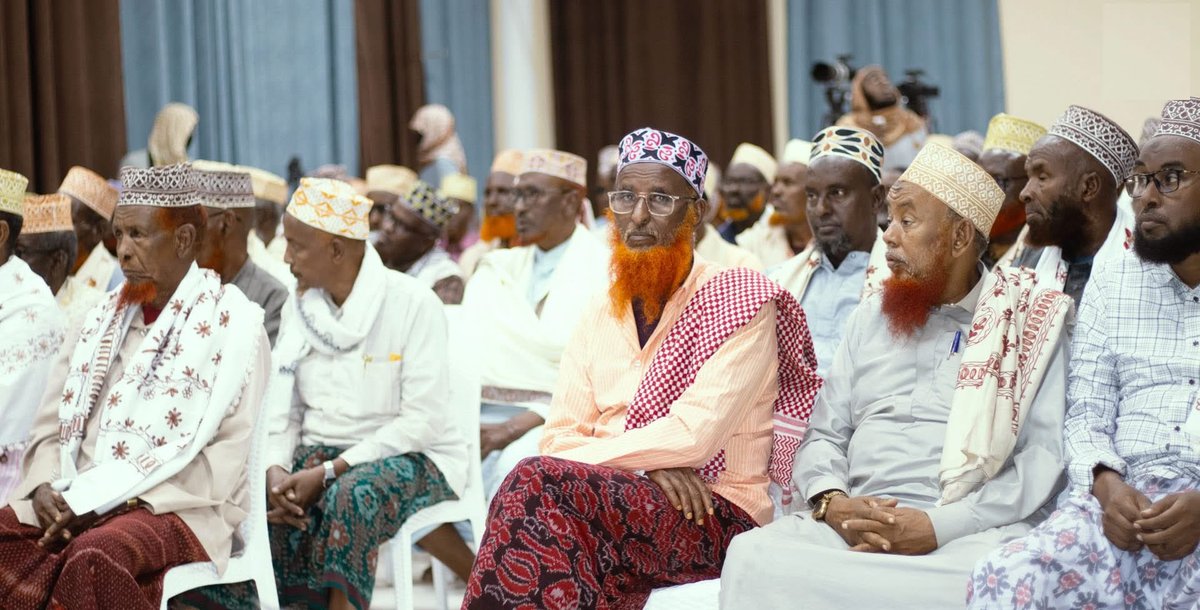
Al-Shabaab’s engagement with Somali clans is by no means a new strategy. The group has maintained longstanding interactions with clan structures through handpicked, compromised, and self-appointed elders, deliberately positioning them as alternatives to legitimate and established traditional clan authorities. Those familiar with Al-Shabaab’s internal structures, or directly involved in counterterrorism efforts in Somalia and the wider Horn of Africa, understand that clan elders constitute one of the group’s critical financial and operational pillars.
Al-Shabaab’s preferred elders are not necessarily those who command genuine respect within their communities, but those willing to serve the group’s interests at the expense of their own people. These individuals facilitate systematic extortion, forcibly collect funds, recruit young people into Al-Shabaab’s ranks, pressure and persuade businesspeople to finance or cooperate with the group, and ultimately provide a veneer of traditional legitimacy for Al-Shabaab’s presence and authority within clan territories. Through these coercive and manipulative networks, the group exploits traditional clan structures to consolidate its influence, extract resources, and undermine legitimate governance.
Al-Shabaab’s recent engagement with clans in Hiiraan and Galgaduud should therefore not be interpreted as a routine reconciliation initiative or a spontaneous expression of clan interests. It is better understood as a deliberate political manoeuvre designed to weaken clan cooperation with the Federal Government of Somalia (FGS), undermine state authority, and reinforce the group’s claim to coexist as an alternative power within territories where the government also exercises influence. The reported memoranda of understanding (MOUs) between the parties warrant particular scrutiny, as their terms may indicate an attempt to formalise parallel arrangements in which clan authorities and Al-Shabaab operate within the same territory, potentially at the expense of government authority and security arrangements.
This engagement also appears to signal a revival of Al-Shabaab’s clan outreach following nearly four years of intensified government pressure and tighter restrictions on the group’s ability to cultivate relationships with clan structures aligned with the government. The timing is politically significant. As the FGS approaches the end of its term, competing actors and vested interests may increasingly seek alternative instruments of pressure, political leverage, and retaliation in response to the government’s strategic decisions. Al-Shabaab’s renewed engagement with clan constituencies could therefore serve not only its long-term objectives of financial extraction, recruitment, and territorial influence, but also broader efforts to exploit political uncertainty and weaken the government’s remaining alliances.
The central issue is not simply that Al-Shabaab is engaging with Somali clans, but that it is seeking to weaponise clan structures as instruments of coercion, financial extraction, political obstruction, and territorial legitimisation. Any assessment that overlooks this established pattern risks misreading the group’s intentions and underestimating the strategic implications of its renewed outreach in Hiiraan and Galgaduud.
Please stay tuned and follow
@wargelinn for more updates and analysis
#FGS
#AlShabaab
#Clanelders
#Security
#Counterterrorism
#HOA
#EA