Update: @Talus_Labs | @TalusFoundation
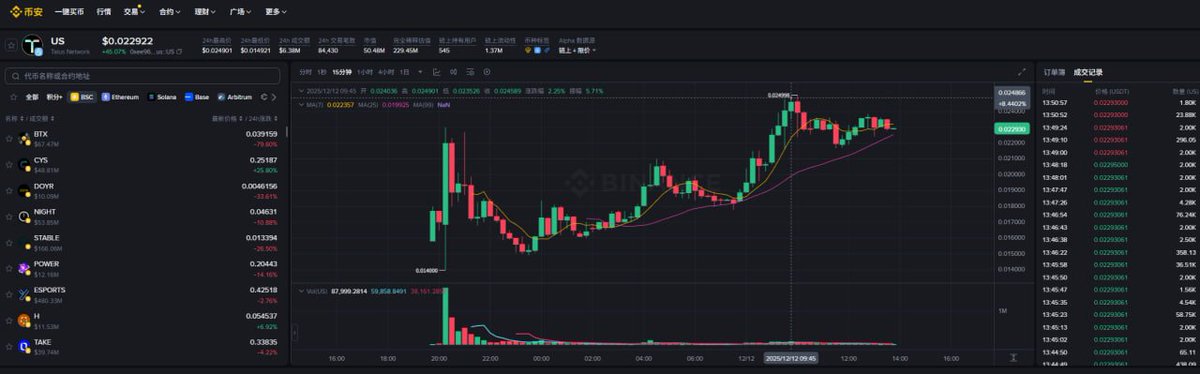
$US is set for listings on 4 top CEXs: @binance, @krakenfx, @MEXC_Official & @BitMartExchange at 12/11
As a crypto enthusiast, this is a game-changer for AI agents
boosting liquidity & adoption.
Volatility ahead
DYOR, don't miss out!
#Talus

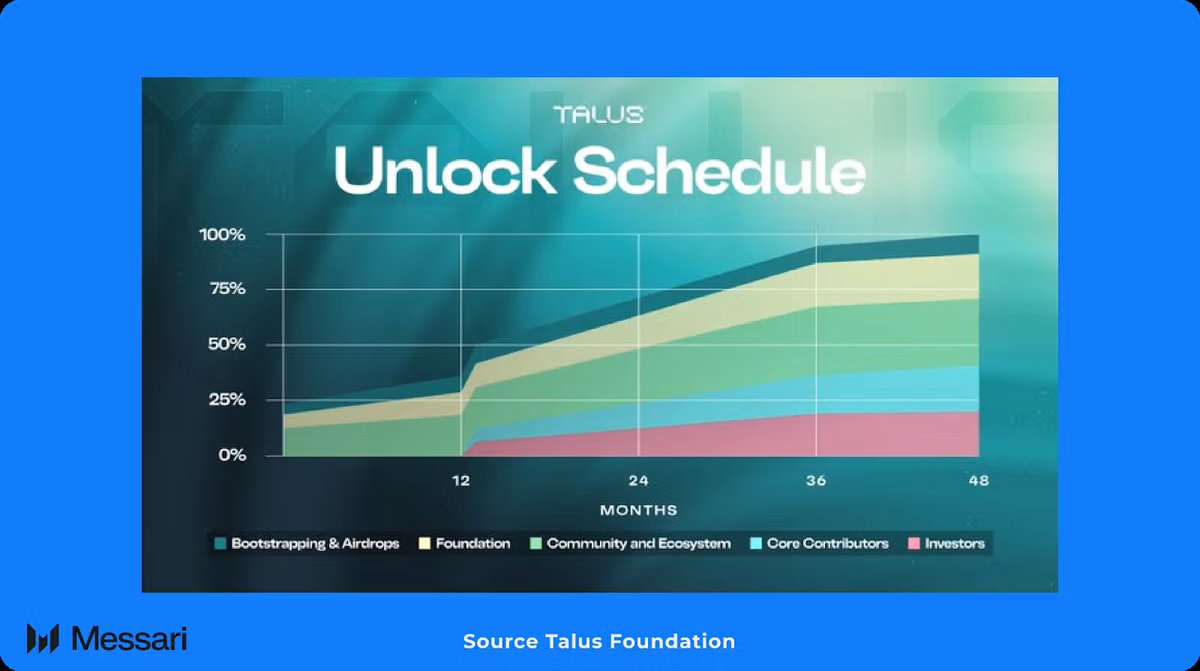
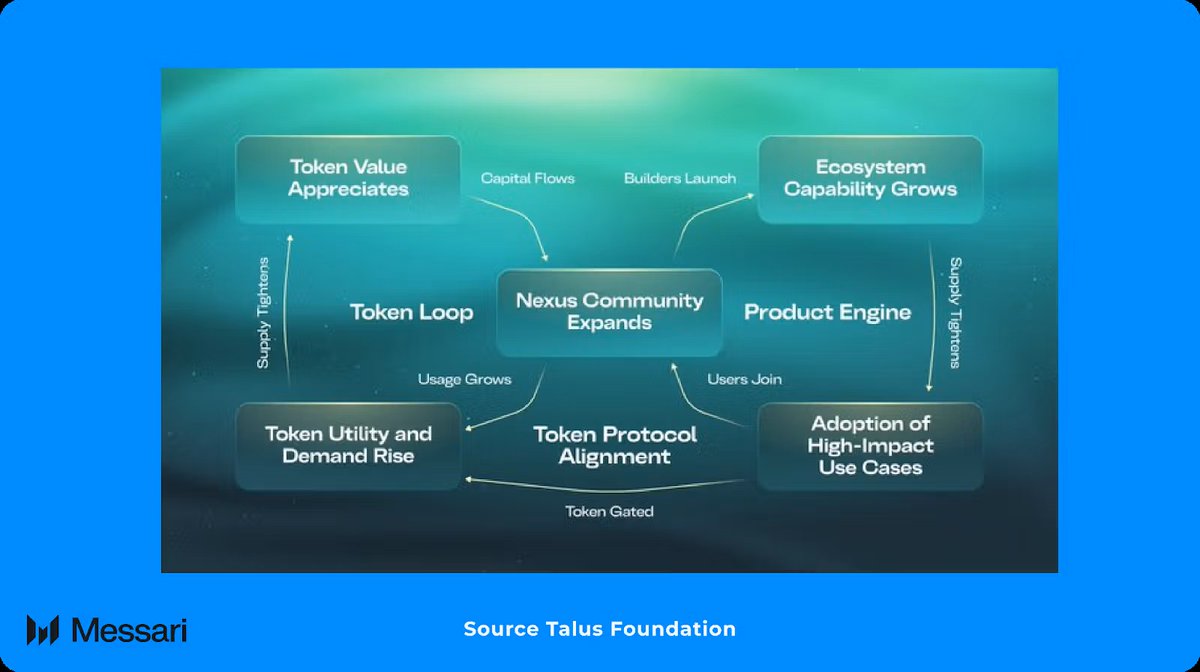
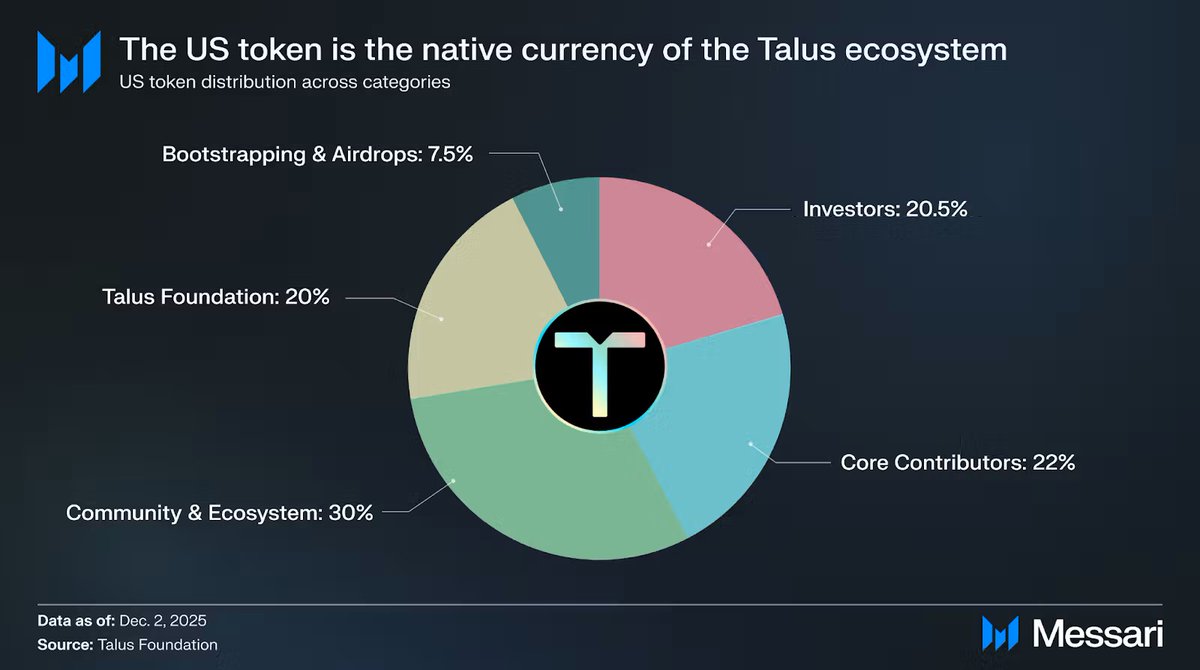
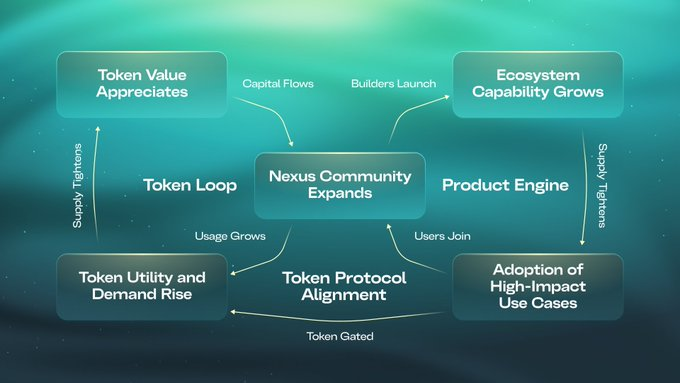
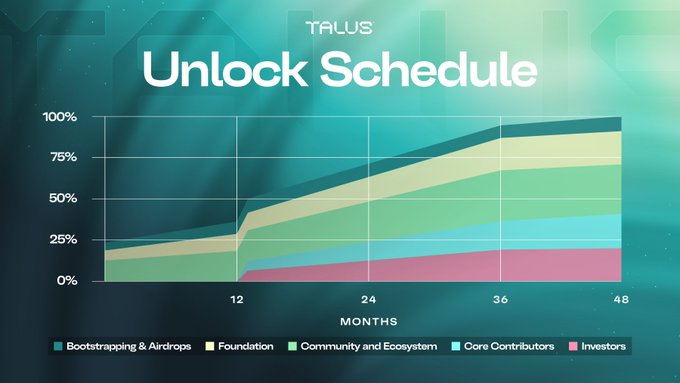
dirtyraspberry.base.eth 🥷🏻 @JodienX_The @Talus_Labs ecosystem is built around a single economic anchor: the $US token. It is not positioned as a speculative extra, but as the primary coordination asset that aligns users, developers, and node operators as the network matures. ➤ $US has a fixed supply of 10 billion and 0% inflation. Instead of inflating the supply to reward participation, @TalusFoundation uses a dual-track revenue system: • When protocol income is below a defined threshold, priority fees are burned, reducing circulating supply. • When income exceeds the threshold, fees are distributed to Nexus Leaders who schedule and verify workflows. A predictable, rule-based system. ➤ In practice, $US functions as the fee token and payment layer of the network. Anyone deploying agents, executing workflows, or requesting higher-tier compute pays in $US to secure priority execution. Every meaningful activity in @TalusNetwork settles through $US. ➤ While Talus runs on @SuiNetwork [ meaning base gas fees are paid in $SUI ] the design ensures external value flows inward. A portion of those gas fees is automatically converted into $US on the open market. This creates structural, ongoing demand for $US without relying on artificial incentives. ➤ $US utility extends beyond fees: • Developers receive $US when their tools or agents are used • Nexus Leaders post $US as collateral to secure the network and are rewarded or slashed based on performance • $US can be locked in the LRP prior to staking • Governance rights are tied to $US holders Utility is embedded at every layer of the stack. ➤ Rather than relying on inflation, Talus builds a demand flywheel: More applications → more workflows → higher $US usage → more value captured in the token → stronger incentives for further development. Network growth directly increases token relevance. ➤ Early adoption is supported through targeted, time-bounded programs. The first is the Nexus Subsidy Program. Users who execute workflows during the early phase can receive a portion of their gas costs back in $US. This lowers initial friction and supports early experimentation. Subsidies gradually reduce as natural usage grows. ➤ The second is the Loyalty Reward Program (LRP). Participants who lock $US early —before full decentralization is achieved— receive temporary rewards. This encourages early security provision and helps transition the network to a broader, more resilient operator set. ➤ Token distribution is structured for long-term alignment: • 30% Community & Ecosystem: subsidies, grants, tool incentives, community initiatives, public goods, audits, liquidity • 20% Talus Foundation: global expansion, decentralization incentives; linearly vested over 36 months • 20.5% Investors: 12-month cliff, 24-month linear vesting • 22% Core Contributors: 12-month cliff, 36-month linear vesting • 7.5% Airdrop & Bootstrapping: TGE airdrop, LRP, and future campaigns ➤ The overarching philosophy is clear: $US is designed to earn demand through real usage, not through inflation or artificial scarcity. Burns tighten supply when activity is low. Rewards flow to network operators when activity grows. Participation programs widen ownership without destabilizing emissions. ➤ As Talus attracts more developers, tools, workflows, and AI agents, the $US token becomes the economic engine that scales with —and because of— ecosystem activity. The key takeaway: $US is engineered as a sustainable, usage-driven token model built for the long-term evolution of decentralized AI infrastructure. #TalusNetwork #SuiEcosystem #TokenomicsExplained
640541.9K