Posts with #asynchronousprogramming
#asynchronousprogramming
Public posts on X that use #asynchronousprogramming.
Related hashtags

Anshuman Sharma@_anshyyy@_anshyyyAnd that's it! Promise.race() allows us to handle multiple Promises concurrently and respond to the first one that settles, be it a resolution or rejection. It's a powerful tool in your asynchronous programming toolbox. 🧰102164
Anshuman Sharma@_anshyyy@_anshyyyI hope this thread has shed some light on Promise.race() in JavaScript. Feel free to experiment with it in your projects. Happy coding! 💻🎉 #javascript #Promises #AsynchronousProgramming005168
#AsynchronousProgramming: Asynchronous programming is a technique that enables non-blocking execution of code, by allowing other code to run while waiting for slow I/O or network operations. It's often used in web development to improve performance and user experience.004264
📣Deal of the Day📣 Aug 2 SAVE 45% TODAY ONLY! Grokking Concurrency & selected titles: @luminousmen This easy-to-read, hands-on guide demystifies #concurrency concepts like #threading, #asynchronousprogramming & #parallelprocessing in any language.019814
Adeola 💙🦋@adeolaajiboso_NEW ARTICLE ALERT✍ ✍ ✍ As part of @hackmamba bi-weekly writing challenge. I wrote an article that helps you understand Asynchronous JavaScript. Do check it out , and feedback is appreciated.: #JavaScript #asynchronousprogramming #writing004211
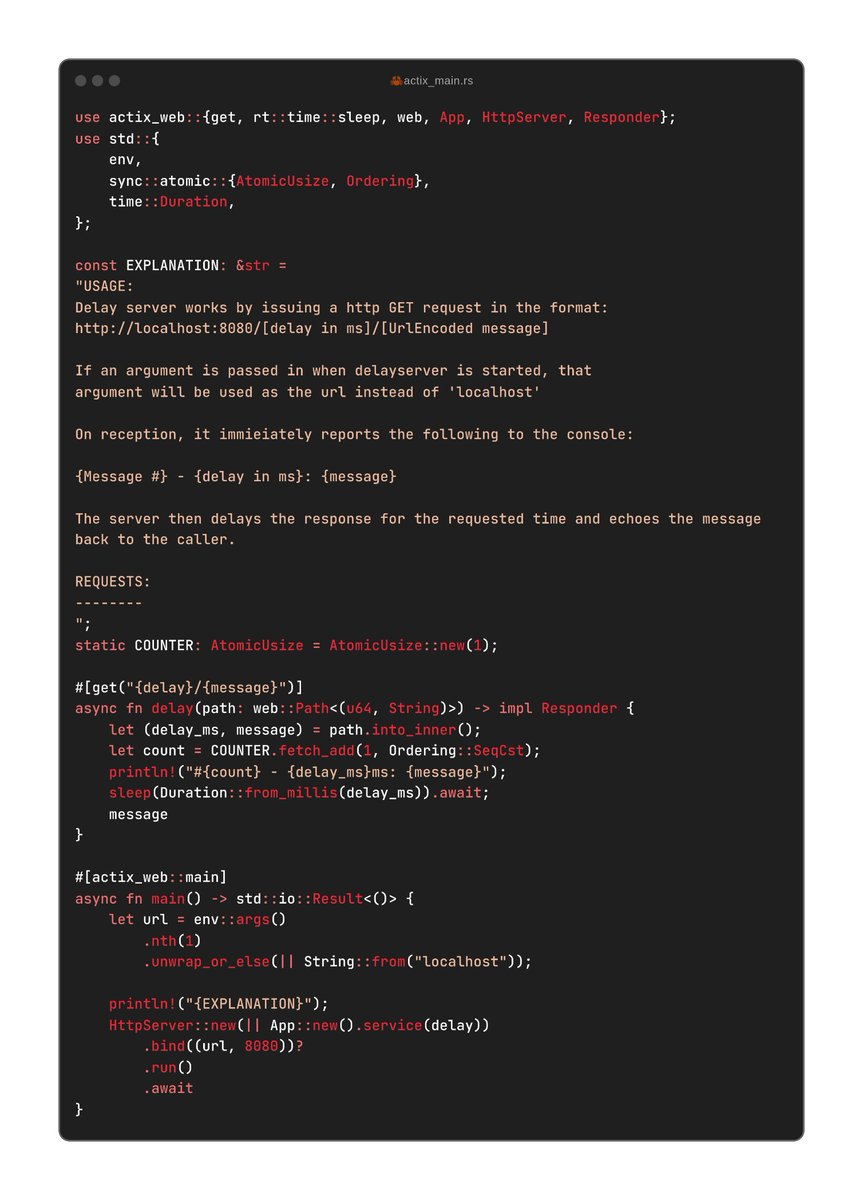
Rafael del Nero@RafaDelNeroBoost your performance with the powerful Completable Future feature for asynchronous methods. Test your skills with the Asynchronous CompletableFuture San Francisco Adventure #JavaChallenge. #AsynchronousProgramming #JavaSkills #SoftwareDevelopment010528.8K
jmojeda@jmojedaAsync Code Execution in XAF Actions #XAF, #asynchronousProgramming, #asyncActions, #SemanticKernel, #backgroundWorker, #UIthreading, #Blazor, #dotnet, #taskManagement, #DevExpress, #CSharp @jjcolumbie @DevExpress_XAF013102
01328
Day 9 of #100DaysOfCode! Today, we dived into the world of asynchronous JavaScript, exploring concepts like callbacks, callback hell, promise, and promise chaining. Excited to master these fundamentals! #JavaScript #AsynchronousProgramming10149
📣Deal of the Day📣 Jul 20 SAVE 45% TODAY ONLY! Grokking Concurrency & selected titles: This easy-to-read, hands-on guide demystifies #concurrency concepts like #threading, #asynchronousprogramming & #parallelprocessing in any language. #python1210883
Blog Tapri@blogtapriMastering Asynchronous Programming in JavaScript: Tips and Best Practices #javascript #asynchronous #Asynchronousprogramming #callback #blogtapri0025
Turbocharge your enterprise code for blazing speed! Here’s a blueprint to get you started. 🧵👇1043.7K
@AnandButani5/ Efficient Database Queries Optimize your database queries. Avoid fetching unnecessary data. Use indexing, query optimization, and denormalization for read-heavy apps. Efficiency is key. #DatabaseOptimization #SQL10311
@AnandButani6/ Asynchronous Programming Don’t let your app twiddle its thumbs. Use asynchronous programming for I/O-bound tasks. It lets your app keep working while waiting for I/O operations. async/await is your new mantra. #AsynchronousProgramming #ConcurrencyCodedash @CodeAtDash🚀 New Blog Alert! 🚀 We just published an article on Asynchronous Programming in JavaScript by Ishita. Don't miss out on this valuable read! #JavaScript #AsynchronousProgramming #Callbacks #Promises #AsyncAwait #EventLoop #Codedash10318
Codedash@CodeAtDash🚀 New Blog Alert! 🚀 We just published an article on Asynchronous Programming in JavaScript by Ishita. Don't miss out on this valuable read! #JavaScript #AsynchronousProgramming #Callbacks #Promises #AsyncAwait #EventLoop #Codedash00334
Velotio@velotiotechLearn how asynchronous programming works well in Python with this highly informative article written by our Engineer, @PrashantShivam5 → #AsynchronousProgramming #Python002
ITNEXT@ITNEXT_ioIntroduction to Software Architecture with Actors: Part 3 — On Simple Systems by Denys Poltorak at #ITNEXT. #systemarchitecture #asynchronousprogramming #distributedsystemdesign #softwarearchitecture #distributedsystems012148
Abeeujah@abeeujahJust finished chapter 4 on asynchronous programming in Rust. Learned a ton about mio, epoll, syscalls, and Event queues, more on these here . Feeling more confident in my understanding of low-level I/O! #rustlang #asynchronousprogramming #networking1211312
ITNEXT@ITNEXT_ioIntroduction to Software Architecture with Actors: Part 2 — On Handling Messages by Denys Poltorak at #ITNEXT. #asynchronousprogramming #distributedsystems #softwarearchitecture012102
Yasir@YasirGajiHello there, I published #AsynchronousProgramming in #Javascript, where I demonstrated how to get internal data using XHR object, to the best of my knowledge. kindly read, criticize, ask questions, indicate errors, like, applaud, and follow. Thank you.005
ITNEXT@ITNEXT_ioIntroduction to Software Architecture with Actors: Part 4 — On Systems with Models by Denys Poltorak at #ITNEXT. #designpatterns #asynchronousprogramming #softwarearchitecture #systemarchitecture #distributedsystems (t)002111
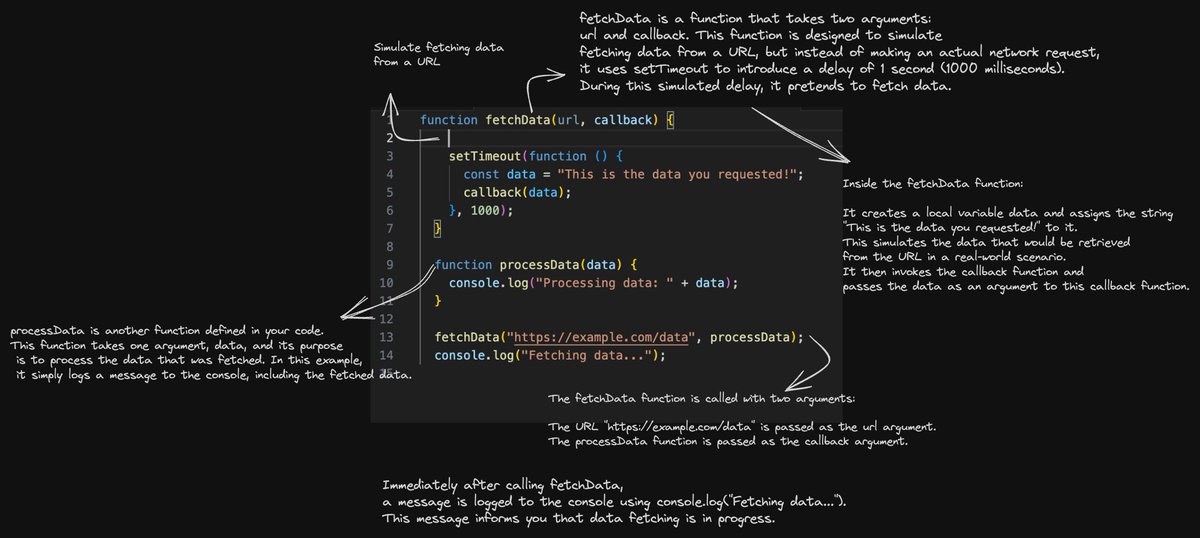
Solution Architect@Tech_Code_LearnSanjana Sanghi @sanjhsanghiDay 18 of JS30Xplore: 1. What is Asynchronous Programming: JavaScript is a single-threaded language, meaning it can execute one operation at a time in a sequential manner. However, many operations in web development are inherently asynchronous. These operations include fetching data from a server, reading/writing to a file, waiting for user input, and more. If JavaScript were to execute these operations synchronously, it would block the entire program until each operation is completed. This would result in a poor user experience, as the application would become unresponsive during lengthy tasks. Asynchronous programming allows JavaScript to execute non-blocking operations, ensuring that the program remains responsive while it waits for these tasks to complete. Asynchronous code can be written in various ways, but the most common approaches include: a. Callbacks b. Promises c. Async/Await 2. Callbacks: A callback is a function that is passed as an argument to another function and is executed after the completion of a specific task or operation. Callbacks are the foundation of asynchronous programming in JavaScript. In the example, fetchData simulates an asynchronous operation by using setTimeout. It takes a URL and a callback function as arguments. After a 1-second delay, it calls the processData function and passes the retrieved data to it. The order of execution in the code is as follows: - fetchData is called with the URL and the processData callback function. - The message "Fetching data..." is logged immediately. - After 1 second, the callback function processData is invoked with the fetched data, and the message "Processing data: This is the data you requested!" is logged. Callbacks are essential for handling asynchronous tasks, but they can lead to callback hell or "Pyramid of Doom" when dealing with multiple asynchronous operations. To address this issue, Promises and Async/Await were introduced in JavaScript to make asynchronous code more readable and maintainable. In summary, asynchronous programming in JavaScript is a way to handle non-blocking tasks using techniques like callbacks, Promises, and Async/Await. Callbacks are a fundamental concept where you pass a function to be executed when an operation completes, ensuring that your program remains responsive and efficient.00214
Sanjana Sanghi@sanjhsanghiDay 18 of JS30Xplore: 1. What is Asynchronous Programming: JavaScript is a single-threaded language, meaning it can execute one operation at a time in a sequential manner. However, many operations in web development are inherently asynchronous. These operations include fetching data from a server, reading/writing to a file, waiting for user input, and more. If JavaScript were to execute these operations synchronously, it would block the entire program until each operation is completed. This would result in a poor user experience, as the application would become unresponsive during lengthy tasks. Asynchronous programming allows JavaScript to execute non-blocking operations, ensuring that the program remains responsive while it waits for these tasks to complete. Asynchronous code can be written in various ways, but the most common approaches include: a. Callbacks b. Promises c. Async/Await 2. Callbacks: A callback is a function that is passed as an argument to another function and is executed after the completion of a specific task or operation. Callbacks are the foundation of asynchronous programming in JavaScript. In the example, fetchData simulates an asynchronous operation by using setTimeout. It takes a URL and a callback function as arguments. After a 1-second delay, it calls the processData function and passes the retrieved data to it. The order of execution in the code is as follows: - fetchData is called with the URL and the processData callback function. - The message "Fetching data..." is logged immediately. - After 1 second, the callback function processData is invoked with the fetched data, and the message "Processing data: This is the data you requested!" is logged. Callbacks are essential for handling asynchronous tasks, but they can lead to callback hell or "Pyramid of Doom" when dealing with multiple asynchronous operations. To address this issue, Promises and Async/Await were introduced in JavaScript to make asynchronous code more readable and maintainable. In summary, asynchronous programming in JavaScript is a way to handle non-blocking tasks using techniques like callbacks, Promises, and Async/Await. Callbacks are a fundamental concept where you pass a function to be executed when an operation completes, ensuring that your program remains responsive and efficient.77238153.5K- Show more posts