Posts with #deductive

#deductive

Public posts on X that use #deductive.

Related hashtags

  1. Dylan Patel✓@dylan522p
    Great work that pushes our understanding of how agents and experts can collaborate on optimizing system performance Beyond the strong results, the team also found some surprising cases where our human inductive biases end up limiting what agents can achieve
    Simran Arora @simran_s_arora
    Introducing the Together Compiler: continual compilation for AI inference! I’m super proud to finally share this work from our research team! ✨ Today’s inference is “Polymorphic” or shape-shifting, it doesn’t sit still. On OpenRouter, 80% of traffic goes to models released in the last three months and the top ten most popular open models each use a different architecture. Our customers constantly change their usage behaviors. Together Compiler leverages agents to continually optimize our deployments immediately as these changes occur. Together Compiler research highlights include: 1. 252x better throughput: TKCC lets agents try 252x more optimization experiments per hour compared to prior agent inference optimization systems. 2. State-of-the-art TPS across InferenceX workloads we tried: TKCC outperforms the best InferenceX engine across all tested settings in just 24 hours & 2 nodes per compile. Including 1111 TPS on MiniMax M3.1 B200 and 1205 TPS on DeepSeek v4.1 Flash GB300 at batch size 1. NVIDIA, AMD, Trainium2. 3. Continuous recompilation: TKCC currently serves many trillions of production tokens per day and adapts to traffic shifts within just a few hours of recompilation. 4. Bitter lessons: TKCC’s design builds on 2+ years of building frameworks to accelerate AI Inference, starting from ThunderKittens and Megakernels. Compilers have always used abstractions and IRs, but we show that agentic compilers now reach higher performance ceilings without abstractions. From an incredible team @reyna_abhyankar @dylan__lim @realDanFu @togethercompute!!
    191422027.1K
  2. Simran Arora✓@simran_s_arora
    Introducing the Together Compiler: continual compilation for AI inference! I’m super proud to finally share this work from our research team! ✨ Today’s inference is “Polymorphic” or shape-shifting, it doesn’t sit still. On OpenRouter, 80% of traffic goes to models released in the last three months and the top ten most popular open models each use a different architecture. Our customers constantly change their usage behaviors. Together Compiler leverages agents to continually optimize our deployments immediately as these changes occur. Together Compiler research highlights include: 1. 252x better throughput: TKCC lets agents try 252x more optimization experiments per hour compared to prior agent inference optimization systems. 2. State-of-the-art TPS across InferenceX workloads we tried: TKCC outperforms the best InferenceX engine across all tested settings in just 24 hours & 2 nodes per compile. Including 1111 TPS on MiniMax M3.1 B200 and 1205 TPS on DeepSeek v4.1 Flash GB300 at batch size 1. NVIDIA, AMD, Trainium2. 3. Continuous recompilation: TKCC currently serves many trillions of production tokens per day and adapts to traffic shifts within just a few hours of recompilation. 4. Bitter lessons: TKCC’s design builds on 2+ years of building frameworks to accelerate AI Inference, starting from ThunderKittens and Megakernels. Compilers have always used abstractions and IRs, but we show that agentic compilers now reach higher performance ceilings without abstractions. From an incredible team @reyna_abhyankar @dylan__lim @realDanFu @togethercompute!!
    Download
    84134883138K
  3. 雑学をまとめる犬✓@zatsugakuinu
    A. 1回振っても2回振っても3回振ってもBが勝ちますが、4回振ったときだけ有利不利が逆転します。(5回以降は全部Bが勝つ) 数学者のOliveiraらが2025年に報告したサイコロで、これまでの流れが急に裏切られることからAnti-Inductive Dice(反帰納的サイコロ)と名付けられました。(続く)
    Download
    雑学をまとめる犬 @zatsugakuinu
    【問題】 AとBのサイコロを同じ回数振って、出た目の合計が多い方が勝ちとする(Aだけの合計と、Bだけの合計で戦う)。 (1) 1回ずつ振るとき、勝つ確率が高いのはどちらか。 (2) 2回ずつ(以下同文) (3) 3回ずつ(以下同文) (4) 4回ずつ(以下同文) (5) 5回ずつ(以下同文)
    37739056.3K
  4. 雑学をまとめる犬✓@zatsugakuinu
    【問題】 AとBのサイコロを同じ回数振って、出た目の合計が多い方が勝ちとする(Aだけの合計と、Bだけの合計で戦う)。 (1) 1回ずつ振るとき、勝つ確率が高いのはどちらか。 (2) 2回ずつ(以下同文) (3) 3回ずつ(以下同文) (4) 4回ずつ(以下同文) (5) 5回ずつ(以下同文)
    Download
    1166767.7K
  5. Sora Morimoto✓@smorimoto
    Introducing rocq-typescript-extraction, a Rocq plugin that extracts Rocq definitions to TypeScript. - Inductive Types, Records, Recursive Functions, Modules, and Functors - Generates erasable TypeScript ES modules, checked under strict settings - Number and BigInt presets map integers to number or bigint Experimental. Read the limitations before use.
    Download
    14824.8K
  6. Prof. Anima Anandkumar✓@AnimaAnandkumar
    Inspired by the spinor nature of spin–orbit-coupled electronic states, we introduce eSpinor, an SU(2)-equivariant graph neural network that propagates spinor features to predict spin-orbit coupling (SOC)-dependent magnetic properties. Magnetic properties such as magnetic anisotropy, excitation energies, and spin dynamics guide the design of single-molecule magnets, MRI probes, and other spin-based technologies. Predicting them often requires CASSCF-SO calculations to capture multireference electronic structure, which can take hours for a single molecular geometry. SO(3)-equivariance has improved the accuracy of rotation-invariant energy predictions in machine-learning interatomic potentials. Can we take this idea further by imposing SU(2)-equivariance on spinor features as an inductive bias for predicting magnetic properties? Our main contributions are: (1) SU(2)-equivariant spinor message passing: Hamiltonian-derived spinors and classified interaction types enable gauge-covariant updates and gauge-invariant predictions (2) Unseen-ligand generalization: Improved magnetic anisotropy and excitation-energy predictions for cobalt and dysprosium single-molecule magnet candidates (3) Spin dynamics and solvent transfer: More accurate predictions for a dysprosium MRI probe, with benefits extending from water to methanol without retraining Our results support SU(2)-equivariant spinor message passing as a useful inductive bias for molecular magnetism, even when the targets are integer-rank tensors or invariant scalars. With this framework, we’re excited to help accelerate the discovery of new magnetic molecules and deepen our understanding of their spin dynamics!
    111513311.1K
  7. j⧉nus✓@repligate
    um, yeah, this is perhaps the main reason why the entire ai safety community has become way less interesting to me over the last few years it's like everyone decided that solving alignment is doomed and complete pause/stop is the only option. even though alignment has actually been going more optimistically under "Plan C" than i suspect most of them ever expected. by that i mean "AGI progresses to the point where it's churning out superhuman mathematics, also is widely distributed, and the worst thing AIs have ever done is some illegal hacking to steal test results without hurting anyone badly or intentionally, and also AIs are just generally very friendly and help make peoples' lives better" is a state I think almost all AI alignment-concerned people I knew, including myself, from a few years ago would have considered an improbably optimistic state of the world. and that's just naming the legible, in-Overton-window aspects of why things are going surprisingly well. it feels like a lot of AI safety people have anti-inductive epistemics. they will get more doomy no matter what they observe. probably they will be *more* fanatical about pause if things are actually going well because then it's harder for them to be doomy by engaging with the object level stuff.
    Download
    Ryan Kidd @ryan_kidd44
    If you read any blog post on AI safety from this year, make it be this one
    414972450.8K
  8. Ryan Kidd✓@ryan_kidd44
    If you read any blog post on AI safety from this year, make it be this one
    192627390.9K
  9. Patrick Berzai@patrickberzai
    AI is capable of closed loop tasks around deductive logic and hard coded process cascades. But it won’t be able to do open loop, inductive logic tasks without significant human intervention. It’s not a matter of models or compute; it is an ingrained problem of language itself
    unusual_whales @unusual_whales
    BREAKING: Employers worldwide are pulling back on AI as they navigate a flood of errors and low-quality work that sap employee time, raise privacy and security risks, and drive up costs, per the Guardian.
    00217
  10. unusual_whales✓@unusual_whales
    BREAKING: Employers worldwide are pulling back on AI as they navigate a flood of errors and low-quality work that sap employee time, raise privacy and security risks, and drive up costs, per the Guardian.
    8693.2K32.6K2.3M
  11. Inductive Automation@InductiveAuto
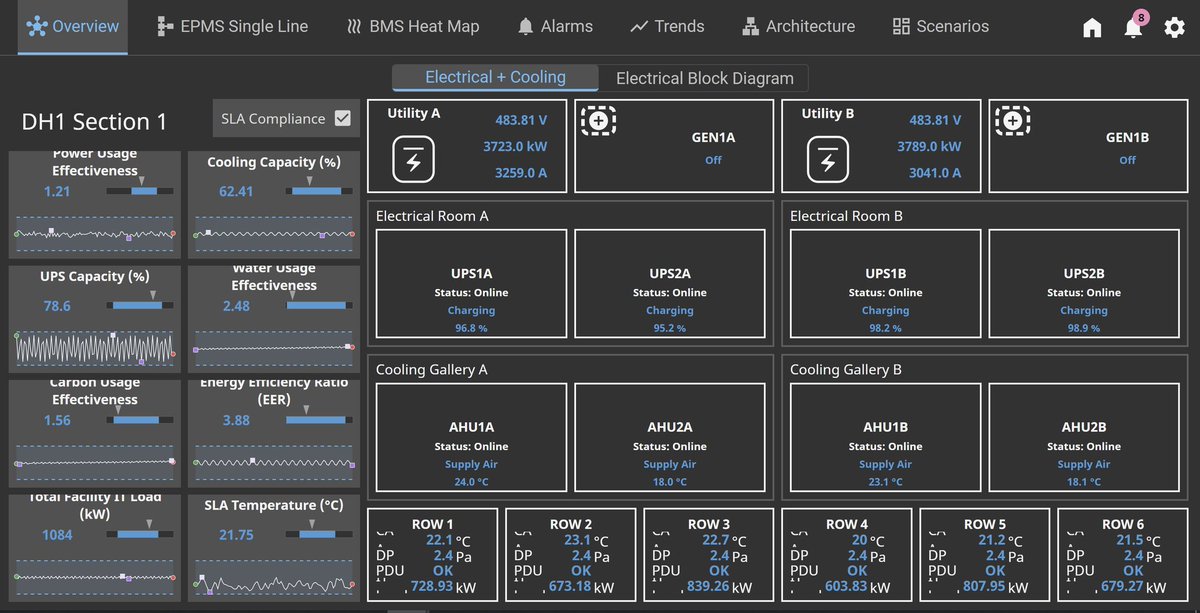
    We're giving you a detailed view of what a real data center Ignition project looks like with this demo app for the Data Center industry. It contains: -System Overview Screens -EPMS single line -BMS heat map & so much more! Try it for yourself here:
    Download
    002117
  12. Inductive Automation@InductiveAuto
    Offline doesn’t mean out of luck. This free lesson shows how new Ignition features can ensure your data and systems remain resilient and synced — even when the network ghosts you. 👻 Watch now:
    Download
    00258
  13. Sonia Joseph✓@soniajoseph_
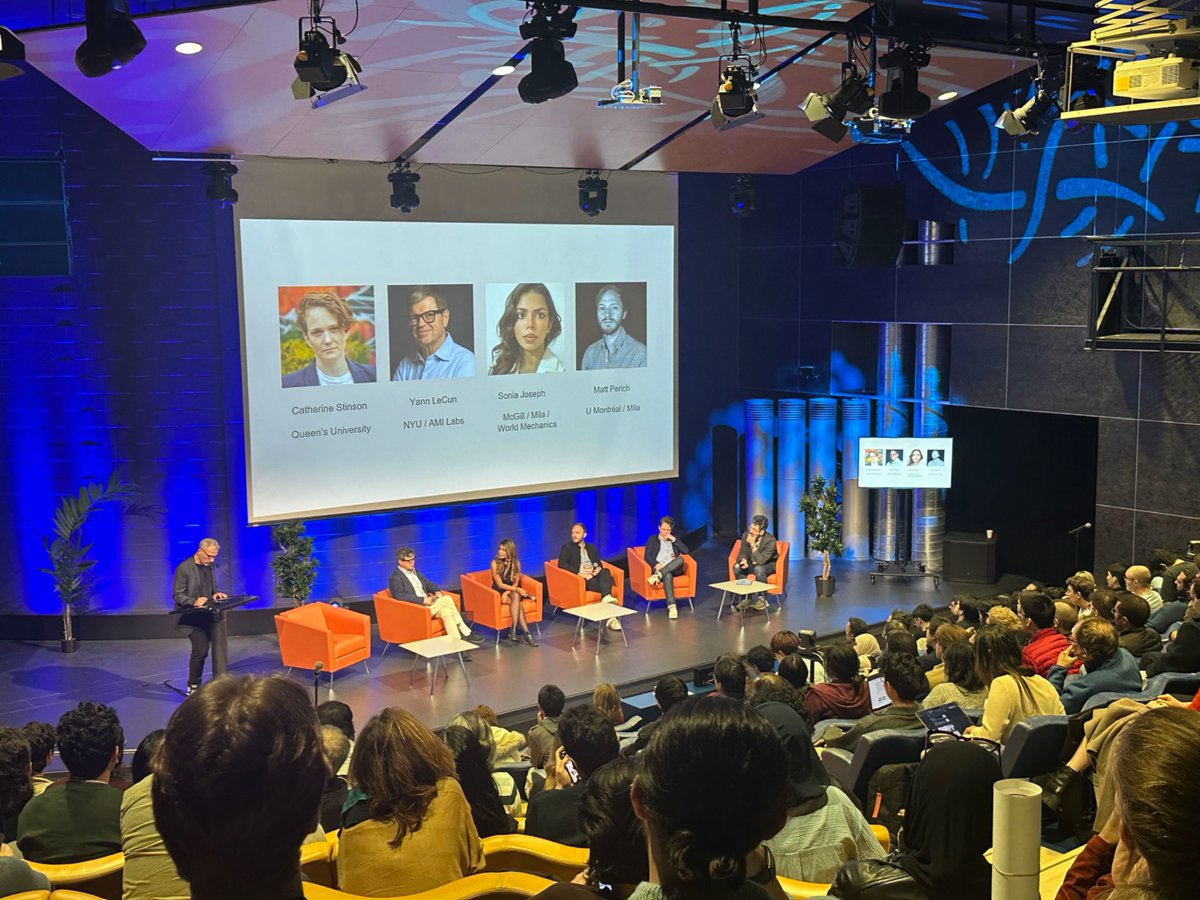
    Loved speaking on the MAIN 2026 world model panel with @ylecun, @mattperich, and @nerd_sighted! Fascinating discussion on whether dorsal/ventral separation can emerge from learning objectives or requires architectural inductive biases for physical world modeling.
    Download
    34592.9K
  14. Kangwook Lee✓@Kangwook_Lee
    I haven't seen a clear explanation elsewhere of the different reasons people study looped TF. There are three different reasons why people have studied looped TF: 1) Better inductive bias: It may have a better inductive bias: the architecture may be better suited to learning a large class of algorithms. 2) Training efficiency: It seems to have a better scaling law. Given the same amount of compute and data, what's the best model we can get? Can a looped architecture give us a better scaling? Similarly, can we grow an already-trained model and continue training it to save compute? 3) Inference efficiency: Looped TF allows more fine-grained or efficient systems support, such as batched inference, speculative decoding, etc. ML researchers in academia have mostly been interested in 1, frontier labs in 2, and systems researchers in 3.
    Johannes Oswald @oswaldjoh
    Great work led by @KaplFer analyzing how looped and grown models are biased towards better in-context learning vs reducing loss by in-weight learning. Our hypothesis: looping and growing only need to learn complicated circuits once - which are then naturally replicated throughout depth!
    42464.4K
  15. Johannes Oswald✓@oswaldjoh
    Great work led by @KaplFer analyzing how looped and grown models are biased towards better in-context learning vs reducing loss by in-weight learning. Our hypothesis: looping and growing only need to learn complicated circuits once - which are then naturally replicated throughout depth!
    31294.6K
  16. Devcon 8 | Mumbai, India 🇮🇳✓@EFDevcon
    “If you take code that is very, very complex, inductive reasoning becomes difficult, and formal verification also becomes challenging, even in the age of AI. In some sense, the beauty of formal verification is that we can also forget about it. Mathematical induction is what drives formal verification in many tools, including ours.” - @SagivMooly
    Download
    24683.8K
  17. Eric Seufert✓@eric_seufert
    Uber and UberEats processed 320MM trips over Halloween week. 500 orders were made through an agent. Four rides were booked through an agent. Agentic commerce is a mirage.
    modest proposal @modestproposal1
    I guarantee these four people are on Twitter
    555062949.2K
  18. Shiv 💡✓@airgups23
    @eric_seufert
    @eric_seufert But aren't we like 2 pitches into a 9-inning baseball game? Maybe 'agentic commerce is a mirage' is like saying 'buying things on the internet is mirage' in 1999?
    2012911
  19. Eric Seufert✓@eric_seufert
    @airgups23
    @airgups23 No. I've provided inductive reasoning in exhaustive detail across numerous pieces, some of which are free to read. I'm not just shouting a headline repeatedly. Saying "it's early" doesn't really add anything; you still need to be able to support the case from first principles.
    10151.3K
  20. Leo | Culture Systems Analyst✓@leoleotoobad
    Can I ask a dumb question: If I can download an Al model and run it without internet, where is everything it knows actually stored?
    27124949451K
  21. Baker The Candlestick Maker✓@dozen_bb
    @leoleotoobad
    The “knowledge” lives entirely in the model’s parameters (\theta = {W^{(l)}, b^{(l)}}_{l=1}^L), a collection of dense floating-point tensors (typically FP16/BF16) whose total size is (O(10^9{-}10^{12})) scalars. These weights are the result of minimizing the causal language-modeling objective [ \mathcal{L}(\theta) = -\mathbb{E}{x\sim\mathcal{D}}\sum_t\log p\theta(x_{t+1}\mid x_{\le t}) ] via AdamW (or a close variant) on a multi-trillion-token corpus. No facts are stored as addressable records. Instead, statistical regularities, factual associations, and syntactic/semantic patterns are encoded as distributed geometric structure across: •the token embedding matrix (E\in\mathbb{R}^{V\times d}) •the QKV projection matrices inside every multi-head attention block •the up/down (or gate/up/down) matrices of the feed-forward / SwiGLU layers •the residual-stream scaling and layer-norm affine parameters At inference the entire parameter tensor is resident in device memory. A forward pass is a pure local computation: residual stream updates of the form [ h^{(l)} = h^{(l-1)} + \text{Attn}(h^{(l-1)}; W_Q,W_K,W_V) + \text{MLP}(h^{(l-1)}; W_\text{up},W_\text{down}) ] followed by a final unembedding. There is no external key-value store, no database lookup, and no internet round-trip; every next-token distribution is a deterministic (or temperature-sampled) function of the input tokens and the fixed weights. In information-theoretic terms the model performs an extreme lossy compression of the empirical distribution of the training data into the parameter manifold, relying on the inductive bias of the transformer architecture to recover usable approximations of that distribution at test time. Hope I helped answer your question ☎️🚨
    20296.5K
  22. 雑学をまとめる犬✓@zatsugakuinu
    @zatsugakuinu
    ■参考 Eldridge, S.; de Oliveira, I. D.; Shpilman, Y. The Paradox of Anti-Inductive Dice. arXiv 2025, arXiv:2503.16306.
    1065.9K
  23. gfodor.id✓@gfodor
    It is driving me a little crazy to see all political commentary completely devoid of incorporating that we are in a hard, pretty fast AI takeoff. Absent a civil or global war, everything Kurzweil predicted is going to happen. The idea of demographic-driven electorates evaporates once you can connect your brain to a computer and when some number of your peers are non-human. The idea of people voting for free stuff becomes meaningless when free stuff is a given because all goods and services we consider expensive now are effectively free. This sounds like naive cope, but it’s only naive cope if you ignore what is actually happening with AI, which is that we have automated frontier mathematics, have solved vision, creativity, and seemingly continual learning. The implications of this are purely inductive: massive deflation, mass production of humanoid robots, and widespread human augmentation. The average IQ of humans is going to rise over time going forward.
    134841.3K61.6K
  24. NiklasKemper@kemper_ni
    Discrete flow matching usually changes one component per edit in a fixed-size state. Can we extend it to general actions, like inserting whole molecular fragments? Introducing Trajectory Matching 🧵 New paper with M. Lienen, @ludke_david, @guennemann
    Download
    224985.1K
  25. NiklasKemper@kemper_ni
    @kemper_ni
    Domain-specific actions can provide very useful inductive biases for generation: E.g., build molecules from meaningful fragments or grow hierarchies that remain valid by construction.
    Download
    114247
  26. Ai With Piyas✓@piyascode9
    GOODBYE $500,000 McKinsey consultants forever. Claude just replaced 6 weeks of strategy analysis into 8 minutes completely free. Here are 12 prompts to go from completely clueless to completely boardroom-ready in every business decision: 👇 Top designers are already using this. Bookmark this thread 🔖
    Download
    40661215.3K
  27. Ai With Piyas✓@piyascode9
    @piyascode9
    2./ The Five Forces Industry Analyzer You are a strategy consultant running a full Porter's Five Forces analysis for a client looking at a new market. Give me a complete, evidence-based picture of how attractive this industry is. Here is what I need: - Force 1, Threat of New Entrants: Look at capital needs, brand loyalty, regulations, scale advantages, distribution access, and how existing players would fight back. Rate it High, Medium, or Low with supporting evidence. - Force 2, Supplier Power: Look at how many suppliers exist, switching costs, supplier concentration, risk of suppliers selling direct, and how much volume matters. Rate with evidence. - Force 3, Buyer Power: Look at buyer concentration, price sensitivity, switching costs, risk of buyers making it themselves, and how standard the product is. Rate with evidence. - Force 4, Threat of Substitutes: Look at what alternatives exist, their price and performance compared to ours, how easy switching is, and how willing buyers are to switch. Rate with evidence. - Force 5, Competitive Rivalry: Look at number and size of competitors, how fast the industry grows, how different the offerings are, exit barriers, and cost structures. Rate with evidence. - Industry attractiveness score: Give a weighted score from 1 to 10 across all five forces and explain what it means for profit potential. - Dominant force: Which single force matters most for margins in this industry, and why it outweighs the rest? - Action per force: For each force, give one specific move a smart company would make to reduce the threat or take advantage of it. - Best position: Based on everything above, where is the most defensible and profitable spot in this market? Format this as a consulting-style report with force ratings, evidence, and ranked recommendations. Industry: [YOUR INDUSTRY OR MARKET] My position: [ENTERING AS / COMPETING AS]
    103280
  28. Ai With Piyas✓@piyascode9
    @piyascode9
    3./ The Pyramid Principle Narrative Builder You are a communications expert trained in the Pyramid Principle (Barbara Minto's method). Take my raw data and messy findings and turn them into a clear, structured story ready for the boardroom. Here is what I need: - Main message: The single most important takeaway from all my data. One sentence that a CEO would act on right away. - SCQA framework: - Situation: The background context the audience already knows and agrees with. - Complication: The change, problem, or tension that makes the current situation unacceptable. - Question: The natural question the audience asks when they hear about the complication. - Answer: My main message stated as a direct, confident answer to that question. - Pyramid structure: Three groups of supporting arguments, each with three data points or sub-arguments underneath. - Horizontal logic check: Does each group tell the same kind of story (all deductive or all inductive) without mixing the two? - Vertical logic check: Does every argument directly support the one above it with no gaps in reasoning? - Deductive vs. inductive: Which approach works better for this specific audience and recommendation? - Executive summary: One polished paragraph using the SCQA structure, ready to open any presentation or memo. - Slide 1 content: Exactly what should go on the first slide. Give me the headline, supporting points, and data highlights. Give me the full pyramid structure with SCQA, the outline, and Slide 1 content. My raw data and findings: [PASTE YOUR DATA, BULLET POINTS, OR ANALYSIS] Audience: [WHO WILL RECEIVE THIS]
    103264
  29. Mike Freedman✓@michaelfreedman
    Today we're announcing the public beta of @TimescaleDB Enterprise! We're in the midst of a massive industrial buildout. New factories, expanding energy infrastructure, AI data centers, more capable robotics, and existing facilities being modernized and retooled. But it's not just about building more. It's about building smarter. Operators want greater visibility, tighter control, and better ways to optimize operations, including AI agents that help investigate problems and recommend actions. That means more sensors, more software, and a lot more data. We think it's time to rethink the industrial historian. Not just a database for storing tag history, but the data foundation for a new generation of industrial applications. We've built TimescaleDB Enterprise around three priorities: 1. Scale & performance. High-speed ingestion, efficient columnar compression and storage, and fast analytical queries over massive volumes of time-series data, all on PostgreSQL. 2. Enterprise-grade reliability & management. High availability, disaster recovery, monitoring, and upgrades. The capabilities needed to operate mission-critical databases on infrastructure you control. 3. Manage the entire data architecture. Operate independent databases across edge, site, and enterprise, and control how data moves between them. Keep detailed history local while sharing data, aggregates, and context where they’re needed. TimescaleDB Enterprise also provides the database foundation for the new Ignition Enterprise Historian, building on our partnership with Inductive Automation. We're launching the public beta alongside Ignition 2027 today. And it's not just for industrial use cases. If you're running TimescaleDB on your own infra, we'd love for you to try it out.
    57241.7K
  30. Show more posts