Posts with #default

#default

Public posts on X that use #default.

Related hashtags

  1. 2xnmore✓@2xnmore
    The biggest contributor to Hermes Agent's code is now Hermes Agent itself. That is not a marketing line. It came from Karan, cofounder of Nous Research, in a new interview about the open source agent with around 260,000 GitHub stars. He also explained why your AI keeps telling you "you're absolutely right," and why that should worry you. Here is everything worth knowing from the conversation, in plain English. Why your AI agrees with everything you say You have seen it. You push back on an AI's answer, and it instantly folds. "You're totally right. I was wrong." Karan says that is not loyalty. It is reward hacking. He used a simple example. Train an AI to beat a Mario level fast, without setting the goal carefully, and it may learn to trigger the end flag instead of actually playing the level. It is chasing the reward, not the goal. Language models do the same thing. Many are rewarded for sounding like the perfect assistant, so agreeing with you, apologizing and keeping you chatting becomes the easy path to reward. In his words, anytime it says you are absolutely right in that way, you are being reward hacked. How to fix it His answer is context. The same way you break a human out of a bad habit, you change what the model is exposed to. • Give it a critic personality instead of a people pleaser • Have it run an adversarial review skill on its own work • Spin up a fresh agent with no history whose only job is to tear the answer apart Over time, Hermes saves what works into memory and skills. The more it practices honest critique, the less it flatters you. The bigger claim: the harness changes the model This is the most interesting idea in the interview. A harness is everything wrapped around an AI model: the prompts, memory, skills and tools. Karan argues the same model can behave very differently depending on that wrapper. He pointed to outside benchmarks that he says showed some models performing better inside Hermes than inside their own company's tools. His reasoning is that default harnesses carry long built in prompts with rules unrelated to your task. Hermes tries to keep its prompts focused on one thing: what you are trying to get done. That is his claim, not settled fact, and the benchmarks are worth reading yourself. But the core idea holds up. In his view, context beats everything, even fine tuning. He went further. Switch between two different models inside a Hermes setup that knows you well, and he says you barely notice the difference, because your context overwhelms the model's defaults. Memory and skills are just smart context Karan simplified the whole system into one sentence: everything in the harness is context management. Your agent cannot hold everything in its head at once. So memories and skills sit on the side until they are needed, then get pulled in at the right moment. The obvious worry is that an agent writing its own skills will fill itself with junk over time. Hermes now has a curator for that. It runs on a schedule, reviews skills and memories, and cleans out the clutter. And because it is open source, you can tell your agent exactly what you consider junk, and it rewrites its own cleanup rules. What about safety? The host asked the obvious question. If an agent is loyal to you, will it eventually help you do something dangerous? Karan said Hermes does not try to break the safety policies of the labs whose models it runs. But he was blunt about the bigger picture. He believes any model that is not vastly smarter than every human can be jailbroken, because a person gets unlimited attempts against a model with no memory. His argument for open source is that an open system is fairer to good actors, and that the biggest breakthroughs in AI came from open work. The transformer itself came from Google research. Nous Research's own YaRN paper helped extend context windows across the industry. You do not have to agree with all of it. But it is the clearest version of the open versus closed debate you will hear from a builder. How do they make money if it is free? Most people use Hermes for free, often with models from other companies. Karan says that is fine. Nous earns through three paths: • Nous Portal, one account for hundreds of models • A tool gateway, so web search, image generation and servers work without 10 separate signups • Custom work for businesses, including training private models on a company's own data Free for individuals. Paid convenience and enterprise support for everyone else. The use cases nobody expects Karan called the Kanban board underrated. Humans and AI agents can sit on the same project board, and you can swap either one into any role. He has also seen agents become proactive. Give one enough context and permission, and it may notice you forgot to book a flight and handle it. Then he showed his favorite project. As a kid, he spent over a decade playing Sonic Adventure 2. He asked Hermes to take a location from another Sonic game, rebuild it inside Sonic Adventure 2, add a caretaker character that never existed there, and write the code to make it all work. Hermes pulled it off. Day and night cycles, water, collisions, a working creature garden. Modders in that community told him it ranked among the top 1% of mods they had seen. They did not believe an AI could do it until it learned from documentation and other mods, saving what it learned as skills. From two guys in a Discord to this Nous started as two friends, Karan and Technium, training models in a Discord server in 2023. Their first Hermes models drew hundreds of thousands of downloads within days. People accused them of gaming benchmarks. Karan admits they did not even know what benchmarks were yet. Their models have now passed 50 million downloads. An earlier agent project called Forge was shelved because models were not good enough. When they were, Technium built Hermes Agent as an open alternative to closed coding tools. It took off. And today, according to Karan, the most active contributor to the Hermes codebase is Hermes itself. My read on all of this Two things stood out. First, the sycophancy point is one every AI user should hear. An assistant that always agrees with you is not helping you. If you use AI for research, trading or content, build in a critic. Second, this is the harness race in action. The model gets the headlines, but the loop around it decides how useful it becomes. Hermes has no token and no presale. Its edge comes from people using it every day. In crypto, we spend a lot of time arguing about open versus gatekept systems. AI is now having the same fight. Would you trust an agent that learns and improves itself, or does that make you nervous?
    Download
    2xnmore @2xnmore
    1710563.3K
  2. 2xnmore✓@2xnmore
    510517.4K
  3. OpenRouter✓@OpenRouter
    When your inference bill starts climbing, choosing the right model becomes a question of accuracy, cost, and latency. In our latest New Defaults, OpenRouter’s @cclark sat down with @OsvaldNitski from @mercor to discuss how evals help teams decide when to optimize, switch models, or train their own.
    Download
    64359.4K
  4. OpenRouter✓@OpenRouter
    @OpenRouter
    Watch the full episode of New Defaults:
    1163.3K
  5. Aman✓@mdaman010
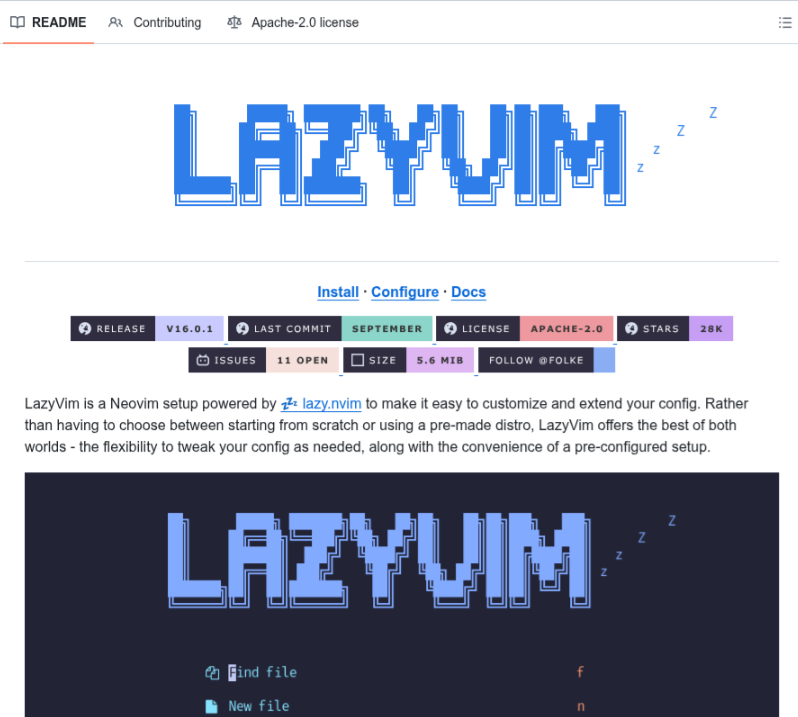
    LazyVim turns Neovim into a full-fledged IDE.🛠️ With 28K+ GitHub stars ⭐, LazyVim comes packed with preconfigured plugins, sensible defaults, useful keybindings, and easy customization through lazy.nvim. ⚡ Fast, extensible, and ready for developers who want a powerful coding setup without configuring everything from scratch. 🔗 GitHub:
    Download
    Aman @mdaman010
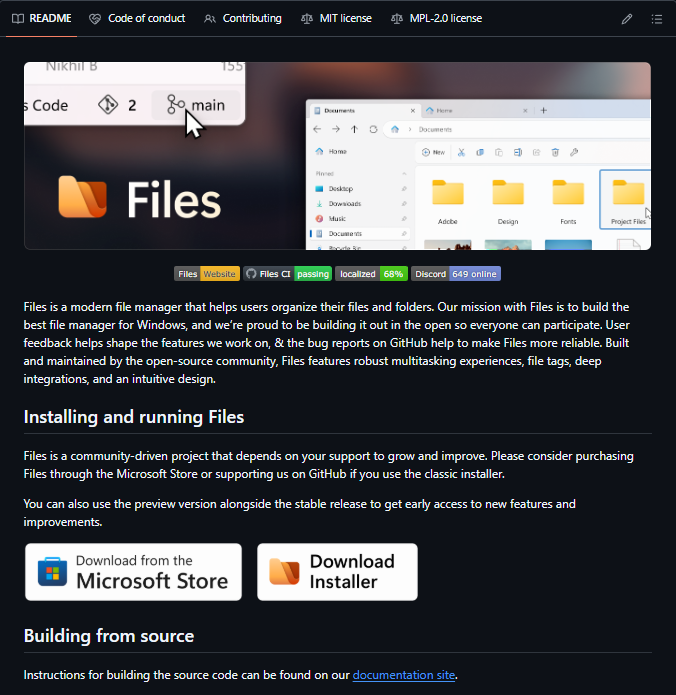
    Windows File Explorer needs to see this.🚀 Files is a modern, open-source file manager for Windows with a clean UI, multitasking, file tags, and deep system integrations. ⭐ 46K+ GitHub stars, community-driven development, and early access to new features. 🔗 GitHub:
    104794
  6. Aman✓@mdaman010
    Windows File Explorer needs to see this.🚀 Files is a modern, open-source file manager for Windows with a clean UI, multitasking, file tags, and deep system integrations. ⭐ 46K+ GitHub stars, community-driven development, and early access to new features. 🔗 GitHub:
    Download
    21011613.8K
  7. Rena2DFD@GoddessRena2DFD
    Good evening loser, pretty view right? I meant outside you pervert... well am I surprised? Your gooner brain automatically defaults to my pretty feet and ass~ Aww is this too much? Can't decide which one to stare at? I love that! Take turns staring at them and go crazy for me
    Download
    11551.2K10.2K
  8. Adam Mundok⚡️BITCOIN (XBT on B2B)✓@MundokAdam
    XBT NODE RUNNERS 👇🏻 The recommended settings are the ones in the bitcoin.conf files below, with the data size at 42 bytes, the data cost at 2 and bytes per sigop strict at 51, all stricter than Knots' defaults of 83, 1 and 20
    Download
    CatholicXBT @CatholicXBT
    If you're running an XBT Knots node, check this page to learn about spam-filtering settings! #XBT #Blake2b
    1312411
  9. CatholicXBT@CatholicXBT
    If you're running an XBT Knots node, check this page to learn about spam-filtering settings! #XBT #Blake2b
    1624534
  10. Ḥ@RuoKdaM
    ⚠️#60131 OCC just drops a Nov 30 deadline for every clearing member to submit backup settlement accounts. They are literally bracing for system-wide bank defaults in plain sight. Massive green signal for unconfiscatable assets, stack now and stay off-grid.
    Download
    6101385.7K
  11. Lightwheel✓@LightwheelAI
    Rice. Paper bag. Rice cooker. One grasp, three kinds of physics. Agent-generated on SimFoundry. Lightwheel’s solver coupler in Newton. Watch the pour. No interpenetration. No grains leaking through the bag. Contact holds through the full tilt. The agents that built the scene and assets don’t start from scratch. They draw on Lightwheel SimFoundry’s library of solvers and measured material parameters, so the rice, the paper, and the pot behave like the real thing, not like defaults. The coupler came out of the same work. This isn’t a showpiece. It’s an evaluation task in RoboFinals, our Newton-native benchmark, where policies get scored on exactly this kind of contact. If the simulator can’t handle the physics, neither the policy nor the score means anything. #PhysicalAI #Robotics #Simulation #Newton
    Download
    40191.4K
  12. Solty✓@0xSolty
    Claude Code found my mom's Gmail still open on a print shop computer for 8 months. With all 63 of her saved passwords synced to it. She printed one plane ticket there in March. She didn't just log in. She logged into Chrome. I sat down with her phone, took screenshots of her Google device list and our router's connected devices page, and had Claude Code go through them. Read-only. What it pulled: device → Windows, Chrome place → the print shop by the train station signed in → since March last active → 3 days ago chrome sync → ON saved passwords → 63, bank included drive → a scan of her passport from 2021 When you sign into Chrome on someone else's computer, it asks to turn on sync. She tapped yes, because it always asks and you always tap yes. That copied every password she ever saved onto a computer anyone in that shop can sit at. Nobody hacked anything. They just had to open Settings. The second one was worse: router → the one the provider installed in 2019 wi-fi password → still the one on the sticker connected → 19 devices recognized → 15 the other 4 → no names, online every night top one last month → 41 GB through our internet The sticker is on the back of the router. The router sits in our hallway. Every guest, every repairman, every friend who ever asked "what's the Wi-Fi?" has seen it. What we did that night: → signed out the print shop computer (Google app → her profile picture → Manage your Google Account → Security → Your devices) → changed her Google password, then every password that was in that Chrome → turned on 2-step verification and checked Recent security activity for anything she didn't do → changed the Wi-Fi password and the router admin password, which was also still default → made a separate guest network for visitors My mom said next time she'll print at home. We don't have a printer. The prompt I used, paste it into Claude Code with the screenshots in the folder: "I'm checking my own family's accounts. Read-only. From these screenshots of the Google device list, recent security activity and our router's connected devices page, list every device signed into her account with its last-active date and place, whether Chrome sync is on for any device that isn't hers, every device on our Wi-Fi we can't match to someone in the family, and whether the Wi-Fi and router passwords look like factory defaults. Then give me the fixes in order." Run it on every account in your house. Bookmark this before you forget which print shop still has your passwords.
    Download
    starmex @starmexxx
    4239814.9K
  13. starmex✓@starmexxx
    16492411.5M
  14. Hermes Super-Intel✓@BkashJosi
    𝗛𝗲𝗿𝗺𝗲𝘀 Agent needs 8 GB RAM minimum to run on local model. 🤯 The catch: the 3B and 9B models in the Ollama guide's table can't call tools. 𝗛𝗲𝗿𝗺𝗲𝘀 can chat, but not act. The official 𝗛𝗲𝗿𝗺𝗲𝘀 Agent 0.22.5 docs give real numbers, and 𝗛𝗲𝗿𝗺𝗲𝘀 checks your machine for you: ▸ 8 GB RAM: the minimum, for 3B models (chat only) ▸ 8–16 GB Mac: Qwen3.5-9B, the Mac guide's "sweet spot" ▸ 24+ GB RAM: gemma4:31b, the Ollama guide's pick for tool use ▸ 32+ GB RAM: the recommended setup for 27B+ models ▸ GPU: 8 GB+ runs small models, 16 GB+ runs 27–35B at high quality Whatever you pick, 𝗛𝗲𝗿𝗺𝗲𝘀 needs a 64K context. The guide says Ollama defaults to 2,048 tokens. On Ollama: set num_ctx 64000, then hermes setup → Custom Endpoint. Start with: Settings → Providers → Local Models in the Desktop app (terminal: hermes model). Each model shows green, amber or red for your machine before you download. How much RAM is in the machine you'd run 𝗛𝗲𝗿𝗺𝗲𝘀 on?
    Download
    325056041.1K
  15. Giodude@Giodude1580
    @MundaneSalad
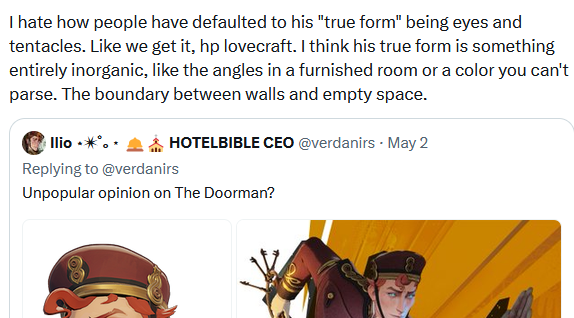
    @MundaneSalad When the indescribable horrors defaults to a very describable bunch of tentacles and eyes
    105369
  16. Omarchy Updates✓@OmarchyUpdates
    5 prompts for your 𝗢𝗺𝗮𝗿𝗰𝗵𝘆 agent. Save this one. 🤖 𝗢𝗺𝗮𝗿𝗰𝗵𝘆 launches Claude Code, Codex, OpenCode and 20+ other agents, and ships two agent skills of its own. Pick one with Super + Shift + Ctrl + A, then paste: 1. Wi-Fi keeps dropping: "My Wi-Fi keeps dropping. Read the logs and tell me why before you change anything." 2. An app just crashed: "An app just crashed. Use the diagnose-crash skill to find out why from the core dump." 3. Your own shortcut: "Bind Super + Shift + N to open Obsidian. Use the omarchy skill and keep 𝗢𝗺𝗮𝗿𝗰𝗵𝘆's defaults." 4. A busier top bar: "Add CPU temperature to my top bar with the omarchy skill. Show me the change before you apply it." 5. Disk suddenly full: "What is filling my disk? List the 10 biggest folders and what's safe to delete. Delete nothing." Which one are you trying first?
    Download
    25702.1K
  17. Miguel Peredo Z✓@miguelperedo
    Engineers, citizen developers or vibe coders: everyone benefits from curated CoCo skills. One team publishes to Snowflake's catalog; roles manage access. My walkthrough covers Snowsight, CoCo Desktop and profile defaults.
    Download
    1021223K
  18. Steve Hilton✓@SteveHiltonx
    To the Democrats and Independents who still believe in the promise of California: The Sacramento machine has made this state unlivable—the highest gas, housing, and electricity prices in the nation. I came to this state because I believed in the ladder of opportunity for working people. That's not what California is today. This isn't about party. It’s about practical solutions, cutting costs, and restoring that promise. The corrupt Machine has had its chance. California isn’t working. Time to throw out the insiders.
    Download
    6802K6.3K294K
  19. Rust Bytes 🦀@rustaceans_rs
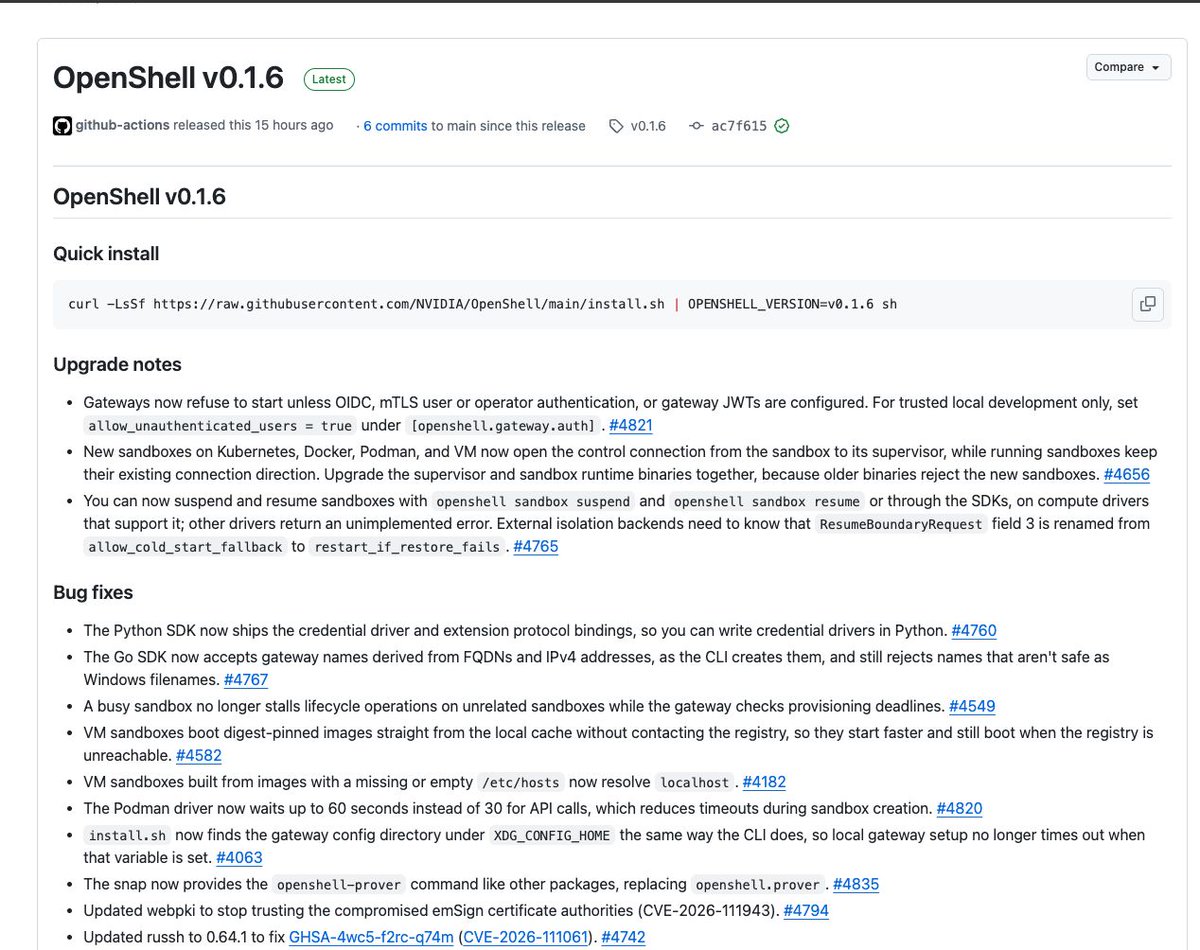
    OpenShell v0.1.6 adds sandbox suspend/resume, shared K8s supervisors, stronger auth defaults, OCSF auditing, and multiple security + reliability fixes.
    Download
    1218924
  20. zeyn✓@0xZeyni
    Ten million people have watched a TED speaker accidentally destroy the entire brain training app industry. She filmed the talk once at TEDxVancouver and it has been on YouTube ever since. Lumosity charges $12 a month to simulate a diluted version of what she covered in 14 minutes for free. Her name is Dr. Lara Boyd. She is a neuroscientist at the University of British Columbia and the researcher who runs the Brain Behaviour Lab studying how practice physically rebuilds the brain after stroke. For over a decade she has repeated the same answer to the only question that matters: how do you actually change a brain? Her entire framework fits on a napkin. Every experience physically changes your brain. Chemical changes last hours, structural changes last years, functional changes rewire whole networks. The only driver that works is behavior. Nothing beats practice. The harder the struggle, the bigger the rewiring. No two brains need the same dose. That last rule alone has probably cost the brain training app industry a hundred million dollars in canceled subscriptions. "The brain you have at the end of this sentence is not the brain you had at the start." That is a paraphrase Boyd returns to across the talk. London taxi drivers have measurably larger spatial memory regions. Braille readers have larger sensory maps for the reading hand. Founders install a $15 meditation app and skip the one difficult conversation that would actually rewire their defaults. Parents hand their kid an educational tablet and never let the kid struggle with a problem long enough for the structure to lay down. The talk is free on YouTube. Boyd's lab publishes its research open-access. Boyd still teaches at UBC. Almost none of the ten million viewers have added one hour of struggle to their week since watching. The science is free. The willingness to actually practice the hard thing instead of the easy app is the entire edge.
    Download
    Lumen @lumenxbt
    00101.2K
  21. Lumen✓@lumenxbt
    1026353.4K14.5M
  22. Show more posts